20.07.2021

Automatisieren für mehr Effizienz

Was wäre, wenn Roboter nicht die Bösewichte sind? Was wäre, wenn das Überlassen von mehr Arbeit an Roboter Ihnen ermöglicht, sich mehr auf die spannenden und unterhaltsamen Dinge zu konzentrieren?

Author

Cape.io

Author

Cape.io

Dieser Beitrag wurde ursprünglich auf der Website von Peach gepostet. Erfahren Sie mehr über das Rebranding von Peach zu Cape.io.

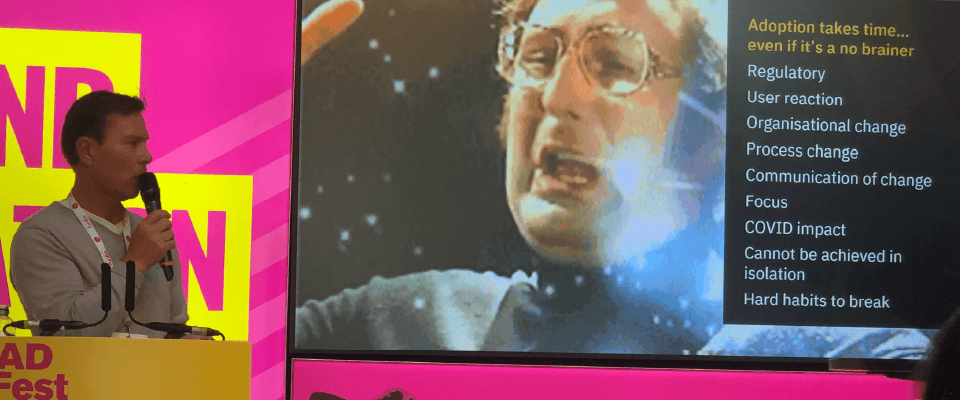
Jason Trout, unser Global Chief Digital Officer, sprach Anfang Juli auf dem Mad//Fest London bei unserer ersten europäischen #IRL-Konferenz. Seine Sitzung behandelte die Bedeutung für die Werbebranche, die Automatisierung zu akzeptieren, und dass die Angst, sie könnte Arbeitsplätze wegnehmen, unbegründet ist. 

1930 dachte John Maynard Keynes, dass wir 30 Stunden pro Woche arbeiten würden und unser Problem zu viel Freizeit wäre. Sein Gedanke? Wie der Druck des 19. Jahrhunderts zeigt, glaubte er, dass wir uns auf Maschinen verlassen könnten, um dasselbe Ergebnis schneller und effizienter zu erzielen, damit wir uns zurücklehnen und entspannen können. Ach, das wünschen wir uns. 


Fast 100 Jahre später haben wir diesen Punkt noch immer nicht erreicht. Stattdessen wird Überarbeitung oft als Engagement interpretiert, nicht als Ineffizienz. Die Visionen von verkürzten Arbeitswochen waren, ob die Autoren es wussten oder nicht, Visionen einer effizienteren Belegschaft. Aber weniger Arbeit zuzugeben wird oft als geringeres Engagement interpretiert. 

Diese Wahrnehmung, nicht engagiert zu wirken, hält Mitarbeiter in geringerwertigen und monotonen Arbeiten gefangen, anstatt die Unterstützung schneller automatisierter Alternativen zu erbitten, die Mitarbeiter von niedrigwertigen Aufgaben befreien, damit sie höherwertige Arbeiten mit weniger Aufwand erledigen und das Geschäft aufwärts skalieren können. 


Warum sollte ich Automatisierung vorschlagen, wenn das bedeutet, dass ich ersetzt werde?  

Diskussionen darüber, wie Automatisierung die Produktivität verbessern und Kosten für Unternehmen senken kann, gehen oft mit Geschichten einher, wie die Automatisierung Arbeitsplätze für Arbeiter wegnimmt.

Laut einem Bericht des McKinsey Global Institute bestehen weniger als 5 % aller Jobs aus Aktivitäten, die vollständig automatisiert werden können.


Viel häufiger wird es die Automatisierung von Bestandteilen eines bestimmten Berufs sein. In etwa 60 % der Berufe könnten mindestens ein Drittel der Aktivitäten, die einen spezifischen Job ausmachen, automatisiert werden. Die gute Nachricht ist, dass die meisten Arbeitnehmer diese Automatisierung in einem positiven Licht sehen und bereit sind, die Automatisierung zu nutzen, die das Potenzial hat, ihre Arbeit — und ihr Leben — besser zu machen.

Die befragten Arbeitnehmer freuen sich darauf, weniger Zeit mit sich wiederholenden manuellen Aufgaben wie der Dateneingabe zu verbringen und mehr Zeit mit lohnenderen Aspekten ihrer Arbeit verbringen zu können. Hier ist ein Blick darauf, wie Automatisierung genau das erreichen könnte — und wie Organisationen an die Automatisierung sich wiederholender Aufgaben für Informationsarbeiter herangehen.


Wie Sie an dem obigen Diagramm sehen können, hat die Werbebranche das zweithöchste Potenzial, Automatisierung zu übernehmen, direkt unter Unterkunft und Verpflegung. 


Das obige Diagramm zerlegt diese 51 % in spezifische Aktivitäten, in denen Automatisierung in der Werbebranche angewendet werden kann.  


Wie viel Zeit verschwenden Sie? 

Laut einer Forbes-Umfrage verbringen 40 % der befragten Arbeitnehmer ein Viertel ihrer Arbeitswoche mit sich wiederholenden Aufgaben wie E-Mails, Dateneingabe und -erfassung. 70 % glauben, dass die größte Chance, Automatisierung anzuwenden, in repetitiver Arbeit liegt; für die Werbebranche wären das Dinge wie die Genehmigung von Assets und Statusaktualisierungsanfragen. 

Schließlich schätzten 60 %, dass sie insgesamt 6+ Stunden Arbeit pro Woche sparen würden, nachdem sie die Automatisierung in die Arbeit eingeführt haben. Dies würde sie von aufwändigen administrativen Aufgaben befreien und ihren Fokus auf Kreativität und profitablere Arbeit ausrichten. 

Die Einführung dauert Zeit — auch wenn es ein Kinderspiel ist 

Der Geschäfts- und Mitarbeiterfall für Automatisierung ist offensichtlich. Warum sind Unternehmen also so langsam mit der Implementierung? Selbst wenn die Logik klar ist, erfordert es Engagement. Es ist ein Prozess, keine schnelle Lösung, der Zeit und Fokus von allen Parteien erfordert — wie das Training eines Welpen stubenrein zu machen.  

Menschen waren schon immer gegen Veränderungen, selbst wenn sie erkennen, dass diese zu ihrem Vorteil sind. Die Änderungen müssen kommuniziert, verstanden und dann gelehrt werden. Dies könnte einen organisatorischen Wandel erfordern, der seine eigenen Herausforderungen mit sich bringt. 

Und natürlich gibt es auch noch Covid-19 — und wie das ungewollt die Einführung von Automatisierung verlangsamt haben könnte. Zum einen könnte Kapital anderswo für das kurzfristige Überleben des Unternehmens reinvestiert werden müssen. Zum anderen wird das Training neuer Prozesse viel schwieriger und zeitaufwändiger, wenn Menschen von zu Hause aus arbeiten, anstatt gemeinsam im Büro. Unternehmen könnten sich entscheiden, die Einführung einfach zu pausieren, bis die Mitarbeiter dauerhaft zurück im Büro sind - und wer weiß wirklich, wann das sein könnte. 

Trotzdem ist es gefährlich, das dringende Bedürfnis der Werbebranche nach Modernisierung zu ignorieren. Mit dem Aufschwung von Digital, Connected TV und Digitale Außenwerbung wird alles nur noch unerträglicher. Digitale Kampagnen kosteneffizient zum Laufen zu bringen erfordert Zeit, Energie und Moral, da Medien mit wiederholenden Aufgaben überlastet werden. 

In einer Umfrage von CoLab fanden sie heraus:

  • 61 % empfanden das Finden von Inhalten als langsam und komplex

  • 62 % gaben zu, dass qualitativ minderwertige Inhalte verwendet werden 

  • 96 % verwenden unterschiedliche Prozesse über mehrere Übergabepunkte hinweg

  • 65 % hatten keine Nachverfolgung darüber, wohin ihre Inhalte verteilt wurden 

Unser Vorschlag? Investieren und jetzt übernehmen, solange Sie noch damit umgehen können - es ist die einzige Antwort für langfristiges Überleben. 


Neuigkeiten

Sei der Konkurrenz immer einen Schritt voraus

Neugierig auf die neuesten Trends im Marketing und Werbung? Abonniere unseren monatlichen Promarketers-Newsletter und bleibe informiert.

27.02.2026

Navigating Channel 4’s 2026 closed caption mandate

As ad compliance requirements tighten across the UK and Europe, closed captioning has evolved from an accessibility checkbox to a strategic necessity. Whether you're managing CTV campaigns or social media creative, automated ad testing for caption quality is no longer optional - it's fundamental to reaching today's fragmented, multi-screen audiences.

The advertising landscape is facing a seismic shift. By March 1, Channel 4 will become the first UK broadcaster to mandate closed captions across all advertising - including linear TV, streaming, and sponsorships.

The mandate is  a redefined standard for global inclusivity. Here is everything you need to know about the new mandate and how to stay ahead of the curve.

26.02.2026

One platform, many realities: How creative automation platforms resolve the global vs. local tension

Scaling global marketing without losing local relevance requires more than brand guidelines and templates - it requires a creative automation platform designed for both global control and local flexibility. Most systems optimize for standardization, but scaling ad creative production across markets demands architecture that enables creative variation and adaptation by local experts without fragmenting brand governance.

Many global advertisers are chasing the same ideal: scale without losing relevance.

Consistency without uniformity.
Efficiency without bureaucracy.

It sounds simple. In practice, it’s one of the hardest tensions to resolve in modern marketing.

The global vs. local challenge isn’t new, but it’s becoming more urgent. As brands expand across markets, channels, and cultures, the question is no longer whether you should scale globally, but how you do so without erasing the nuance that makes marketing effective in the first place.

Everyone is looking for this balance. Very few get it right.

11.02.2026

EPTVI Initiative launches Stage Two to help programmatic TV scale across Europe’s largest advertising markets

Broadcasters, streamers, agencies and ad tech companies including Google Ad Manager, Equativ, Adform, LiveRamp, The Trade Desk, FreeWheel and Cape.io begin work on practical solutions to reduce complexity and speed up adoption.

04.02.2026

The guardrails of growth: Why creative intelligence demands compliance

Generative AI can produce thousands of creative variants, but most compliance systems are still manual, fragmented, and reactive, unable to keep pace with today’s velocity. To move fast without breaking things, the industry needs a new approach: real-time verification, programmatic enforcement, and end-to-end visibility. Embedded inside the stack, not bolted on at the end.

09.01.2026

Every Word Counts - Cape Closed Captioning

Captions have become more than an accessibility tool, they’re now essential for how we watch, understand, and engage with content. Clear, inclusive, and attention-smart, captioning helps every story reach everyone.

04.12.2025

Flying high with AI: How Cape.io revolutionized KLM's email marketing with AirMail

Discover how Cape.io partnered with KLM to build AirMail, an innovative AI co-pilot that generates highly customized email campaigns with unprecedented speed, efficiency, and scale.

Neuigkeiten

Sei der Konkurrenz immer einen Schritt voraus

Neugierig auf die neuesten Trends im Marketing und Werbung? Abonniere unseren monatlichen Promarketers-Newsletter und bleibe informiert.

27.02.2026

Navigating Channel 4’s 2026 closed caption mandate

As ad compliance requirements tighten across the UK and Europe, closed captioning has evolved from an accessibility checkbox to a strategic necessity. Whether you're managing CTV campaigns or social media creative, automated ad testing for caption quality is no longer optional - it's fundamental to reaching today's fragmented, multi-screen audiences.

The advertising landscape is facing a seismic shift. By March 1, Channel 4 will become the first UK broadcaster to mandate closed captions across all advertising - including linear TV, streaming, and sponsorships.

The mandate is  a redefined standard for global inclusivity. Here is everything you need to know about the new mandate and how to stay ahead of the curve.

26.02.2026

One platform, many realities: How creative automation platforms resolve the global vs. local tension

Scaling global marketing without losing local relevance requires more than brand guidelines and templates - it requires a creative automation platform designed for both global control and local flexibility. Most systems optimize for standardization, but scaling ad creative production across markets demands architecture that enables creative variation and adaptation by local experts without fragmenting brand governance.

Many global advertisers are chasing the same ideal: scale without losing relevance.

Consistency without uniformity.
Efficiency without bureaucracy.

It sounds simple. In practice, it’s one of the hardest tensions to resolve in modern marketing.

The global vs. local challenge isn’t new, but it’s becoming more urgent. As brands expand across markets, channels, and cultures, the question is no longer whether you should scale globally, but how you do so without erasing the nuance that makes marketing effective in the first place.

Everyone is looking for this balance. Very few get it right.

11.02.2026

EPTVI Initiative launches Stage Two to help programmatic TV scale across Europe’s largest advertising markets

Broadcasters, streamers, agencies and ad tech companies including Google Ad Manager, Equativ, Adform, LiveRamp, The Trade Desk, FreeWheel and Cape.io begin work on practical solutions to reduce complexity and speed up adoption.

04.02.2026

The guardrails of growth: Why creative intelligence demands compliance

Generative AI can produce thousands of creative variants, but most compliance systems are still manual, fragmented, and reactive, unable to keep pace with today’s velocity. To move fast without breaking things, the industry needs a new approach: real-time verification, programmatic enforcement, and end-to-end visibility. Embedded inside the stack, not bolted on at the end.

09.01.2026

Every Word Counts - Cape Closed Captioning

Captions have become more than an accessibility tool, they’re now essential for how we watch, understand, and engage with content. Clear, inclusive, and attention-smart, captioning helps every story reach everyone.

04.12.2025

Flying high with AI: How Cape.io revolutionized KLM's email marketing with AirMail

Discover how Cape.io partnered with KLM to build AirMail, an innovative AI co-pilot that generates highly customized email campaigns with unprecedented speed, efficiency, and scale.

Neuigkeiten

Sei der Konkurrenz immer einen Schritt voraus

Neugierig auf die neuesten Trends im Marketing und Werbung? Abonniere unseren monatlichen Promarketers-Newsletter und bleibe informiert.

27.02.2026

Navigating Channel 4’s 2026 closed caption mandate

As ad compliance requirements tighten across the UK and Europe, closed captioning has evolved from an accessibility checkbox to a strategic necessity. Whether you're managing CTV campaigns or social media creative, automated ad testing for caption quality is no longer optional - it's fundamental to reaching today's fragmented, multi-screen audiences.

The advertising landscape is facing a seismic shift. By March 1, Channel 4 will become the first UK broadcaster to mandate closed captions across all advertising - including linear TV, streaming, and sponsorships.

The mandate is  a redefined standard for global inclusivity. Here is everything you need to know about the new mandate and how to stay ahead of the curve.

26.02.2026

One platform, many realities: How creative automation platforms resolve the global vs. local tension

Scaling global marketing without losing local relevance requires more than brand guidelines and templates - it requires a creative automation platform designed for both global control and local flexibility. Most systems optimize for standardization, but scaling ad creative production across markets demands architecture that enables creative variation and adaptation by local experts without fragmenting brand governance.

Many global advertisers are chasing the same ideal: scale without losing relevance.

Consistency without uniformity.
Efficiency without bureaucracy.

It sounds simple. In practice, it’s one of the hardest tensions to resolve in modern marketing.

The global vs. local challenge isn’t new, but it’s becoming more urgent. As brands expand across markets, channels, and cultures, the question is no longer whether you should scale globally, but how you do so without erasing the nuance that makes marketing effective in the first place.

Everyone is looking for this balance. Very few get it right.

11.02.2026

EPTVI Initiative launches Stage Two to help programmatic TV scale across Europe’s largest advertising markets

Broadcasters, streamers, agencies and ad tech companies including Google Ad Manager, Equativ, Adform, LiveRamp, The Trade Desk, FreeWheel and Cape.io begin work on practical solutions to reduce complexity and speed up adoption.

04.02.2026

The guardrails of growth: Why creative intelligence demands compliance

Generative AI can produce thousands of creative variants, but most compliance systems are still manual, fragmented, and reactive, unable to keep pace with today’s velocity. To move fast without breaking things, the industry needs a new approach: real-time verification, programmatic enforcement, and end-to-end visibility. Embedded inside the stack, not bolted on at the end.

09.01.2026

Every Word Counts - Cape Closed Captioning

Captions have become more than an accessibility tool, they’re now essential for how we watch, understand, and engage with content. Clear, inclusive, and attention-smart, captioning helps every story reach everyone.

04.12.2025

Flying high with AI: How Cape.io revolutionized KLM's email marketing with AirMail

Discover how Cape.io partnered with KLM to build AirMail, an innovative AI co-pilot that generates highly customized email campaigns with unprecedented speed, efficiency, and scale.

Kontakt aufnehmen

Lassen Sie uns Ihnen zeigen, was Cape.io leisten kann.

Intelligente Kampagnenautomatisierung

Cape.io vernetzt Ihr Team, DAM, Ad-Server, DSPs, Tools und mehr, sodass Sie nichts herausreißen oder ersetzen müssen.

Copyright © 2025 Cape.io alle Rechte vorbehalten

Deutsch

Kontakt aufnehmen

Lassen Sie uns Ihnen zeigen, was Cape.io leisten kann.

Intelligente Kampagnenautomatisierung

Cape.io vernetzt Ihr Team, DAM, Ad-Server, DSPs, Tools und mehr, sodass Sie nichts herausreißen oder ersetzen müssen.

Copyright © 2025 Cape.io alle Rechte vorbehalten

Deutsch

Kontakt aufnehmen

Lassen Sie uns Ihnen zeigen, was Cape.io leisten kann.

Intelligente Kampagnenautomatisierung

Cape.io vernetzt Ihr Team, DAM, Ad-Server, DSPs, Tools und mehr, sodass Sie nichts herausreißen oder ersetzen müssen.

Copyright © 2025 Cape.io alle Rechte vorbehalten

Deutsch