Die Repräsentation von LGBTQIA+ in Werbeanzeigen hat noch einen langen Weg vor sich

Cat Blyth, Peach's Marketing Manager, schreibt über die Entwicklung der LGBTQIA+-Repräsentation in der Werbung und fragt, was Marken besser machen könnten.

Author

Author

Dieser Beitrag wurde ursprünglich auf der Webseite von Peach veröffentlicht. Erfahren Sie mehr über das Rebranding von Peach zu Cape.io.

LGBTQIA+: Lesbisch, Schwul, Bisexuell, Transgender, Intersexuell, Queer/Fragend, Asexuell.

Das Vereinigte Königreich strahlte 1998 seine erste Werbung mit einem schwulen Paar aus - genauer gesagt zwei Männern. Es handelte sich um eine Werbung für das Körperspray Impulse, erstellt von Ogilvy & Mather. Sie fällt unter die Kategorie der 'Zurückziehen und Enthüllen' Werbungen, eine Art von komödiantischer Inszenierung, bei der dem Zuschauer nicht alle Informationen bis zum Ende präsentiert werden. In diesem Fall hilft ein Mann einer Frau, ihre Einkäufe aufzuheben, eine Art charmante Begegnung voller Andeutungen und koketten Gesten, bevor er Arm in Arm mit seinem Freund davonzieht. War es ein Fortschritt, nicht-heterosexuelle Beziehungen überhaupt im Fernsehen zu sehen? Sicher. War es progressiv – angesichts der Tatsache, dass die Homosexualität der Männer effektiv die Pointe war? Nicht ganz. 

Es gibt zahlreiche andere Beispiele aus dieser Zeit, die genau dasselbe tun. Eine Toyota-Werbung von 2006 zeigt, wie ein Vater und eine Tochter darauf warten, den neuen Partner der Tochter kennenzulernen, der sich in einer 'Wende' als Frau entpuppt. 2008 machte Pepsi Max seine eigene Version mit einer Gruppe von männlichen Freunden, die ihren Kumpel ermutigen, endlich mit der Person zu sprechen, die er die ganze Nacht ins Visier genommen hat, Kelly Brook. Stattdessen steuert er direkt auf den Mann hinter ihr zu, sehr zum Schock seiner Freunde. 

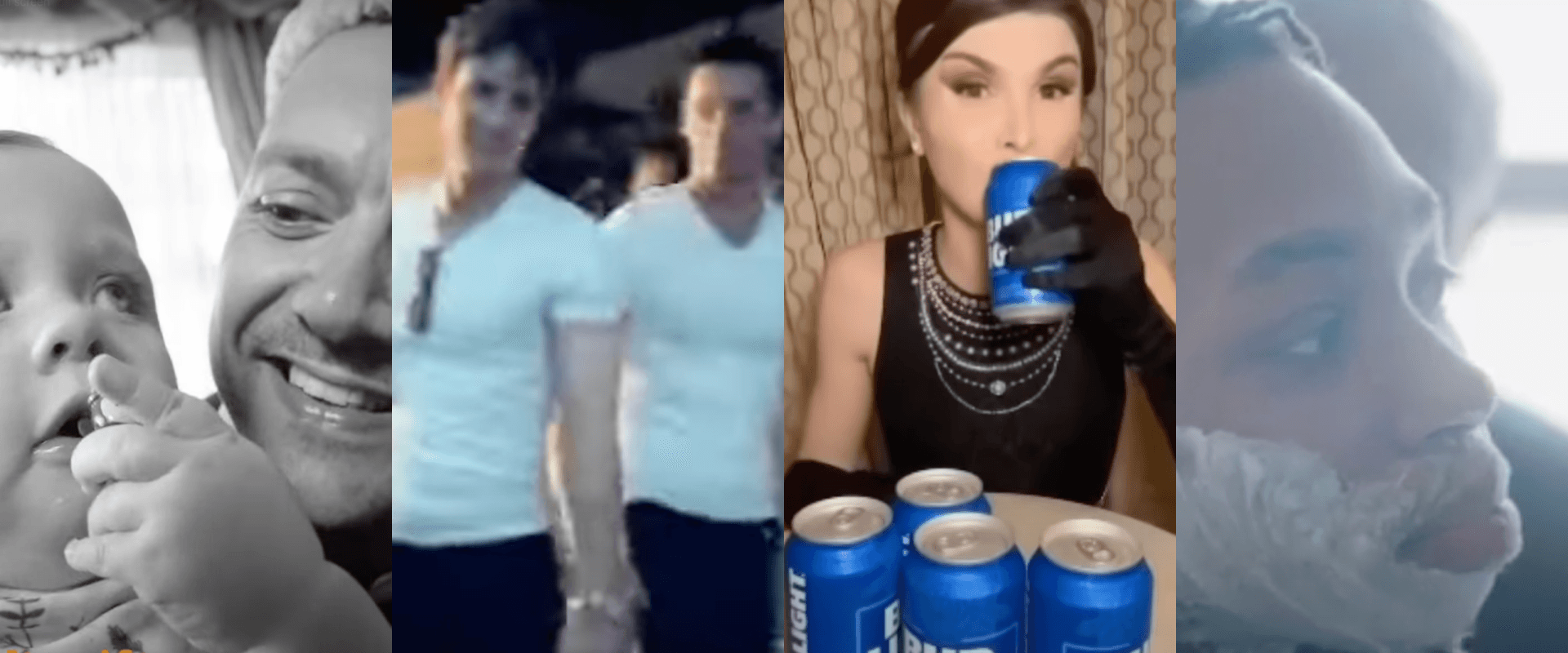
Der Einsatz von homosexuellen und lesbischen Handlungssträngen war definitiv ein wenig ein Schockeffekt und ein Weg, über Kontroversen Presse und Aufmerksamkeit zu gewinnen. Glücklicherweise hat sich das im Laufe der Jahre stark verändert, ebenso wie die Einstellung der Öffentlichkeit. Heinz Werbung von 2008 verfolgte einen anderen Ansatz, eine Familie, die sich auf Schule und Arbeit vorbereitet, mit den zwei männlichen Elternteilen, die sich einen schnellen Kuss geben. Damals zog sie einige Beschwerden des Publikums nach sich. Dennoch schien es ein Wendepunkt zu sein, da das Paar und ihre Beziehung mit so viel Normalität präsentiert wurden, wie man es an einem geschäftigen Wochentagmorgen erwarten kann. 

Marken sind natürlich motiviert, LGBTQIA+ Menschen in Werbungen zu zeigen, da diese Menschen einen Teil ihrer Zielgruppe bilden. Unbestimmtheit ist aus den Werbungen verschwunden und ebenso die unlustige 'Wende'. Heute sehen wir viel eher Werbungen wie die von Heinz, wo gewöhnliche Menschen, die zufällig Teil der LGBTQIA+ Gemeinschaft sind, ihrer Arbeit nachgehen oder das beworbene Produkt nutzen. Schwule Väter waren kürzlich nicht nur in einem, sondern in zwei Weihnachtswerbungen zu sehen, für Tesco und Sainsbury's, wobei die Marken eine inklusive und vielfältige Vision von Familien während der Feiertage präsentierten. 


Standbild aus der Weihnachtswerbung von Sainsbury's 2017

Fortschritt verläuft selten geradlinig (Wortspiel beabsichtigt). Kürzlich holte Budweiser die TikTok-Star Dylan Mulvaney, um Bud Light zu bewerben – ein Schritt, der sich für einige Segmente der US-amerikanischen Zielgruppe von Budweiser als so 'kontrovers' erwies, dass die Marke ihren Spitzenplatz als das beliebteste Bier Amerikas verlor. Die Werbung selbst zeigt, wie Dylan für den damals neuen „Easy Carry Contest“ der Marke wirbt, während sie eine transgender Frau ist. Die Marke zog den Zorn der Konservativen auf sich, die ähnlich auf vergangene „woke“ Werbungen von Gillette und Nike reagierten. Gillette änderte seinen Slogan zu „The best a man can be“ (von „The best a man can get“), während in der Werbung Themen der toxischen Männlichkeit untersucht wurden. 2019 veröffentlichte Gillette auch einen Spot, in dem ein Vater seinem Trans-Sohn zeigt, wie man sich rasiert, passend genannt „First Shave“. Die Werbungen, obwohl sie einige verärgerten, schadeten letztlich nicht den Verkaufszahlen, obwohl sich noch zeigen muss, welchen Einfluss dies auf die Verkaufszahlen von Bud Light im nächsten Jahr oder so haben wird.  

Da mehr Marken Mitglieder der LGBTQIA+ Gemeinschaft kontaktieren, um in ihren Werbungen aufzutreten, ist es wichtig, daran zu erinnern, dass die Existenz dieser Menschen durch die Online-Negativität auf reale und bedeutungsvolle Weise betroffen ist. Eine von Karmarama, Teil von Accenture Song, zusammen mit Gay Times in Auftrag gegebene Studie ergab, dass 82% der Befragten glauben, dass die Darstellung von LGBTQIA+ Personen in der Werbung tokenistisch ist, wobei viele die Überzeugung äußern, dass Marken als vielfältig wahrgenommen werden möchten, ohne immer die notwendigen Änderungen hinter den Kulissen vorzunehmen, um mehr Vielfalt zu schaffen. Viele erwähnten auch, dass Marken außerhalb des Pride-Monats daran arbeiten müssen. 

In einer Stonewall-Studie hat mehr als ein Drittel der Befragten ihre sexuelle Orientierung am Arbeitsplatz aus Angst vor Diskriminierung verborgen. Dies ist nicht nur auf die Werbebranche beschränkt, sondern repräsentativ für das Arbeitsumfeld im Allgemeinen. Wenn die Werbebranche jedoch von der Darstellung von LGBTQIA+ in Werbungen profitiert, ohne auch echte langfristige interne Veränderungen zu bewirken, ist das zweifellos falsch. 

Es ergibt Sinn für Marken, die Gesellschaft heute authentisch darzustellen, konsistent und so, dass es zur Normalität wird. Wir alle wissen, dass eine Werbung oder ein regenbogenfarbiges Logo auf LinkedIn allein nicht ausreicht — wir dürfen nicht vergessen, dass es in der heutigen Gesellschaft Menschen gibt, die gerne anderen Rechte entziehen würden.


Neuigkeiten

Sei der Konkurrenz immer einen Schritt voraus

Neugierig auf die neuesten Trends im Marketing und Werbung? Abonniere unseren monatlichen Promarketers-Newsletter und bleibe informiert.

18.03.2026

No more chocolate at breakfast? Navigating the new LHF ad rules this Easter

As ad compliance requirements evolve in 2026, UK confectionery brands face new restrictions on less healthy food (LHF) advertising. With the January 5 watershed now in effect, ad quality assurance systems must validate timing, placement, and product identifiability to avoid clearance failures this Easter season.

16.03.2026

The future of inclusion: How Cape.io powered Virgin Media Television’s fully accessible ad break during the Men’s Six Nations

As Channel 4’s closed-captioning mandate came into effect in March 2026, Cape.io partnered with Virgin Media Television, Omnicom Media Group and VoiceBox to deliver a truly accessible ad break during the Guinness Men’s Six Nations. More than ad compliance, this moment proved that accessibility can operate at the highest level of live sports broadcasting.

27.02.2026

Navigating Channel 4’s 2026 closed caption mandate

As ad compliance requirements tighten across the UK and Europe, closed captioning has evolved from an accessibility checkbox to a strategic necessity. Whether you're managing CTV campaigns or social media creative, automated ad testing for caption quality is no longer optional - it's fundamental to reaching today's fragmented, multi-screen audiences.

The advertising landscape is facing a seismic shift. By March 1, Channel 4 will become the first UK broadcaster to mandate closed captions across all advertising - including linear TV, streaming, and sponsorships.

The mandate is  a redefined standard for global inclusivity. Here is everything you need to know about the new mandate and how to stay ahead of the curve.

26.02.2026

One platform, many realities: How creative automation platforms resolve the global vs. local tension

Scaling global marketing without losing local relevance requires more than brand guidelines and templates - it requires a creative automation platform designed for both global control and local flexibility. Most systems optimize for standardization, but scaling ad creative production across markets demands architecture that enables creative variation and adaptation by local experts without fragmenting brand governance.

Many global advertisers are chasing the same ideal: scale without losing relevance.

Consistency without uniformity.
Efficiency without bureaucracy.

It sounds simple. In practice, it’s one of the hardest tensions to resolve in modern marketing.

The global vs. local challenge isn’t new, but it’s becoming more urgent. As brands expand across markets, channels, and cultures, the question is no longer whether you should scale globally, but how you do so without erasing the nuance that makes marketing effective in the first place.

Everyone is looking for this balance. Very few get it right.

11.02.2026

EPTVI Initiative launches Stage Two to help programmatic TV scale across Europe’s largest advertising markets

Broadcasters, streamers, agencies and ad tech companies including Google Ad Manager, Equativ, Adform, LiveRamp, The Trade Desk, FreeWheel and Cape.io begin work on practical solutions to reduce complexity and speed up adoption.

04.02.2026

The guardrails of growth: Why creative intelligence demands compliance

Generative AI can produce thousands of creative variants, but most compliance systems are still manual, fragmented, and reactive, unable to keep pace with today’s velocity. To move fast without breaking things, the industry needs a new approach: real-time verification, programmatic enforcement, and end-to-end visibility. Embedded inside the stack, not bolted on at the end.

Neuigkeiten

Sei der Konkurrenz immer einen Schritt voraus

Neugierig auf die neuesten Trends im Marketing und Werbung? Abonniere unseren monatlichen Promarketers-Newsletter und bleibe informiert.

18.03.2026

No more chocolate at breakfast? Navigating the new LHF ad rules this Easter

As ad compliance requirements evolve in 2026, UK confectionery brands face new restrictions on less healthy food (LHF) advertising. With the January 5 watershed now in effect, ad quality assurance systems must validate timing, placement, and product identifiability to avoid clearance failures this Easter season.

16.03.2026

The future of inclusion: How Cape.io powered Virgin Media Television’s fully accessible ad break during the Men’s Six Nations

As Channel 4’s closed-captioning mandate came into effect in March 2026, Cape.io partnered with Virgin Media Television, Omnicom Media Group and VoiceBox to deliver a truly accessible ad break during the Guinness Men’s Six Nations. More than ad compliance, this moment proved that accessibility can operate at the highest level of live sports broadcasting.

27.02.2026

Navigating Channel 4’s 2026 closed caption mandate

As ad compliance requirements tighten across the UK and Europe, closed captioning has evolved from an accessibility checkbox to a strategic necessity. Whether you're managing CTV campaigns or social media creative, automated ad testing for caption quality is no longer optional - it's fundamental to reaching today's fragmented, multi-screen audiences.

The advertising landscape is facing a seismic shift. By March 1, Channel 4 will become the first UK broadcaster to mandate closed captions across all advertising - including linear TV, streaming, and sponsorships.

The mandate is  a redefined standard for global inclusivity. Here is everything you need to know about the new mandate and how to stay ahead of the curve.

26.02.2026

One platform, many realities: How creative automation platforms resolve the global vs. local tension

Scaling global marketing without losing local relevance requires more than brand guidelines and templates - it requires a creative automation platform designed for both global control and local flexibility. Most systems optimize for standardization, but scaling ad creative production across markets demands architecture that enables creative variation and adaptation by local experts without fragmenting brand governance.

Many global advertisers are chasing the same ideal: scale without losing relevance.

Consistency without uniformity.
Efficiency without bureaucracy.

It sounds simple. In practice, it’s one of the hardest tensions to resolve in modern marketing.

The global vs. local challenge isn’t new, but it’s becoming more urgent. As brands expand across markets, channels, and cultures, the question is no longer whether you should scale globally, but how you do so without erasing the nuance that makes marketing effective in the first place.

Everyone is looking for this balance. Very few get it right.

11.02.2026

EPTVI Initiative launches Stage Two to help programmatic TV scale across Europe’s largest advertising markets

Broadcasters, streamers, agencies and ad tech companies including Google Ad Manager, Equativ, Adform, LiveRamp, The Trade Desk, FreeWheel and Cape.io begin work on practical solutions to reduce complexity and speed up adoption.

04.02.2026

The guardrails of growth: Why creative intelligence demands compliance

Generative AI can produce thousands of creative variants, but most compliance systems are still manual, fragmented, and reactive, unable to keep pace with today’s velocity. To move fast without breaking things, the industry needs a new approach: real-time verification, programmatic enforcement, and end-to-end visibility. Embedded inside the stack, not bolted on at the end.

Neuigkeiten

Sei der Konkurrenz immer einen Schritt voraus

Neugierig auf die neuesten Trends im Marketing und Werbung? Abonniere unseren monatlichen Promarketers-Newsletter und bleibe informiert.

18.03.2026

No more chocolate at breakfast? Navigating the new LHF ad rules this Easter

As ad compliance requirements evolve in 2026, UK confectionery brands face new restrictions on less healthy food (LHF) advertising. With the January 5 watershed now in effect, ad quality assurance systems must validate timing, placement, and product identifiability to avoid clearance failures this Easter season.

16.03.2026

The future of inclusion: How Cape.io powered Virgin Media Television’s fully accessible ad break during the Men’s Six Nations

As Channel 4’s closed-captioning mandate came into effect in March 2026, Cape.io partnered with Virgin Media Television, Omnicom Media Group and VoiceBox to deliver a truly accessible ad break during the Guinness Men’s Six Nations. More than ad compliance, this moment proved that accessibility can operate at the highest level of live sports broadcasting.

27.02.2026

Navigating Channel 4’s 2026 closed caption mandate

As ad compliance requirements tighten across the UK and Europe, closed captioning has evolved from an accessibility checkbox to a strategic necessity. Whether you're managing CTV campaigns or social media creative, automated ad testing for caption quality is no longer optional - it's fundamental to reaching today's fragmented, multi-screen audiences.

The advertising landscape is facing a seismic shift. By March 1, Channel 4 will become the first UK broadcaster to mandate closed captions across all advertising - including linear TV, streaming, and sponsorships.

The mandate is  a redefined standard for global inclusivity. Here is everything you need to know about the new mandate and how to stay ahead of the curve.

26.02.2026

One platform, many realities: How creative automation platforms resolve the global vs. local tension

Scaling global marketing without losing local relevance requires more than brand guidelines and templates - it requires a creative automation platform designed for both global control and local flexibility. Most systems optimize for standardization, but scaling ad creative production across markets demands architecture that enables creative variation and adaptation by local experts without fragmenting brand governance.

Many global advertisers are chasing the same ideal: scale without losing relevance.

Consistency without uniformity.
Efficiency without bureaucracy.

It sounds simple. In practice, it’s one of the hardest tensions to resolve in modern marketing.

The global vs. local challenge isn’t new, but it’s becoming more urgent. As brands expand across markets, channels, and cultures, the question is no longer whether you should scale globally, but how you do so without erasing the nuance that makes marketing effective in the first place.

Everyone is looking for this balance. Very few get it right.

11.02.2026

EPTVI Initiative launches Stage Two to help programmatic TV scale across Europe’s largest advertising markets

Broadcasters, streamers, agencies and ad tech companies including Google Ad Manager, Equativ, Adform, LiveRamp, The Trade Desk, FreeWheel and Cape.io begin work on practical solutions to reduce complexity and speed up adoption.

04.02.2026

The guardrails of growth: Why creative intelligence demands compliance

Generative AI can produce thousands of creative variants, but most compliance systems are still manual, fragmented, and reactive, unable to keep pace with today’s velocity. To move fast without breaking things, the industry needs a new approach: real-time verification, programmatic enforcement, and end-to-end visibility. Embedded inside the stack, not bolted on at the end.

Kontakt aufnehmen

Lassen Sie uns Ihnen zeigen, was Cape.io leisten kann.

Intelligente Kampagnenautomatisierung

Cape.io vernetzt Ihr Team, DAM, Ad-Server, DSPs, Tools und mehr, sodass Sie nichts herausreißen oder ersetzen müssen.

Copyright © 2025 Cape.io alle Rechte vorbehalten

Deutsch

Kontakt aufnehmen

Lassen Sie uns Ihnen zeigen, was Cape.io leisten kann.

Intelligente Kampagnenautomatisierung

Cape.io vernetzt Ihr Team, DAM, Ad-Server, DSPs, Tools und mehr, sodass Sie nichts herausreißen oder ersetzen müssen.

Copyright © 2025 Cape.io alle Rechte vorbehalten

Deutsch

Kontakt aufnehmen

Lassen Sie uns Ihnen zeigen, was Cape.io leisten kann.

Intelligente Kampagnenautomatisierung

Cape.io vernetzt Ihr Team, DAM, Ad-Server, DSPs, Tools und mehr, sodass Sie nichts herausreißen oder ersetzen müssen.

Copyright © 2025 Cape.io alle Rechte vorbehalten

Deutsch