PeachLive Frankreich: Zurück in die Zukunft des Fernsehens - eine Zusammenfassung

Addressable TV kommt ab dem 1. Juli nach Frankreich. Peach veranstaltete ein Webinar mit Vordenkern aus der gesamten Lieferkette, um zu diskutieren, wie sie diese aufregende Gelegenheit optimal nutzen.

Author

Cape.io

Author

Cape.io

„Wenn Addressable TV eine bessere Kontrolle und Überwachung der Investitionen ermöglicht, wird es zu einem ernsthaften Konkurrenten der GAFAs auf nationaler Ebene.“

- Guy Chauvel, WNP, in einem Gespräch über die Dominanz der GAFAs im digitalen Markt 

Dieses Webinar konzentrierte sich auf: 

  • Die Auswirkungen, die Addressable TV in Frankreich haben wird und die Chancen für Werbetreibende.  

  • Was wissen wir über die neuen Vorschriften, die im Juli erwartet werden? 

  • Potenzielle strategische Herausforderungen, denen sich der TV-Markt bei der Modernisierung stellen muss  

  • Wie sich die Selbstregulierung der Werbung entwickeln muss, um sich erfolgreich in diesen neuen Markt zu integrieren 

  • Möglichkeiten & Begrenzungen: Wie weit kann man mit dem Targeting gehen? 

Bitte beachten Sie, dass das Webinar auf Französisch ist. 

„Das seit 1992 bestehende Selbstregulierungssystem war immer sehr anpassungsfähig. [...] Es ist ein System, das sich ständig weiterentwickelt und von der Branche getragen und geleitet wird. [...] Unser Ziel ist es, den Markt zu begleiten, ohne ihn einzuschränken.“ 

- Mohamed Mansouri, über die Entwicklung der französischen Werbekontrolle durch die ARPP

Verschoben von April aufgrund von COVID-19, wird im Juli schließlich ein neues französisches Gesetz in Kraft treten, das Addressable TV ins Land bringt. Dies führt zu datengesteuerter Werbung in einem der stärksten Medien: TV — verbindet das Beste aus linear und digital in einem einzigen Verkaufsargument für Mediaagenturen und Werbetreibende. 

Die Auswirkung auf die Werbeausgaben wird prognostiziert, von 100 bis 220 Millionen Euro bis 2023 zu steigen — mit dem Potenzial, die Anzahl der potenziellen Werbetreibenden um das Zehnfache zu erhöhen (Quelle: SNPTV). 

Laut Mathieu Lacombe  von Danone, steht Addressable TV definitiv auf der Agenda und ist der nächste logische Schritt für die Fortschritte des linearen TVs. Eine effektive Segmentierung der Zielgruppen wird helfen, die Kluft zwischen TV und Digital zu verringern und TV-Werbung zu einer viel zugänglicheren Investition für viele zu machen:

„Tribal-Targeting bedeutet, dass wir uns die Zeit nehmen, für jede dieser Gruppen eine andere Geschichte zu erzählen. Addressable TV ist die logische Fortsetzung von allem, was durch digital bereits begonnen wurde. Es ist eine Möglichkeit, weiterhin genau zu sein, wie wir unsere Werbeausgaben investieren und wie wir uns vermarkten.“ 

Hortense Thomine-Desmazures von M6 Publicité erklärte jedoch, dass für Addressable TV, um wirklich erfolgreich zu sein, einige Dinge vereinfacht und verfügbar sein müssen:

„Die wesentliche Voraussetzung ist, das Qualitätsniveau des TV-Mediums zu halten. Dies ist ein bedeutendes Technologieprojekt, das den Wechsel vom linearen zum digitalen Stream erfordert, ohne die Werbungserfahrung zu verschlechtern. [...] Eine weitere Voraussetzung wird sein, den Werbetreibenden einige Tools zur Analyse und Messung der Kampagnenleistung zu bieten. Wirksamkeitsnachweis ist entscheidend.“ 

Eine echte TV-„Revolution“ wird noch diskutiert. Olivier Roberdeau von MindShare denkt jedoch, dass die Schlussfolgerungen schneller kommen könnten, als wir denken...

„In Bezug auf KPIs können wir unseren Kunden und Werbetreibenden vertrauen, um Feedback zu den Kampagnen zu erhalten [...] Addressable TV, das sehr nah an digital ist, wird es uns ermöglichen, die ersten Ergebnisse sehr schnell zu lesen.“

Wenn diese potenziellen Anlaufschwierigkeiten behoben werden, hebt Guy Chauvel von WNP die wahre Stärke hervor, die Addressable TV den Vermarktern bieten kann: 

„Was diese Technologie bietet, ist die Möglichkeit, Bevölkerungssegmente basierend auf präzisen Kriterien (insbesondere Verhaltensdaten) zu bestimmen, die es ermöglichen, spezifische Inhalte anzusprechen. Auf diese Weise gewinnen wir viel an Relevanz: in Bezug auf Einblicke, Ideen und Ausführung. Es vervielfacht auch das Volumen der Inhalte, die vor diesen Segmenten erstellt, produziert und genutzt werden.“ 

Es bleibt abzuwarten, wie genau Vermarkter das volle Potenzial von Addressable TV nutzen, wenn es nächsten Monat in Frankreich eingeführt wird. 

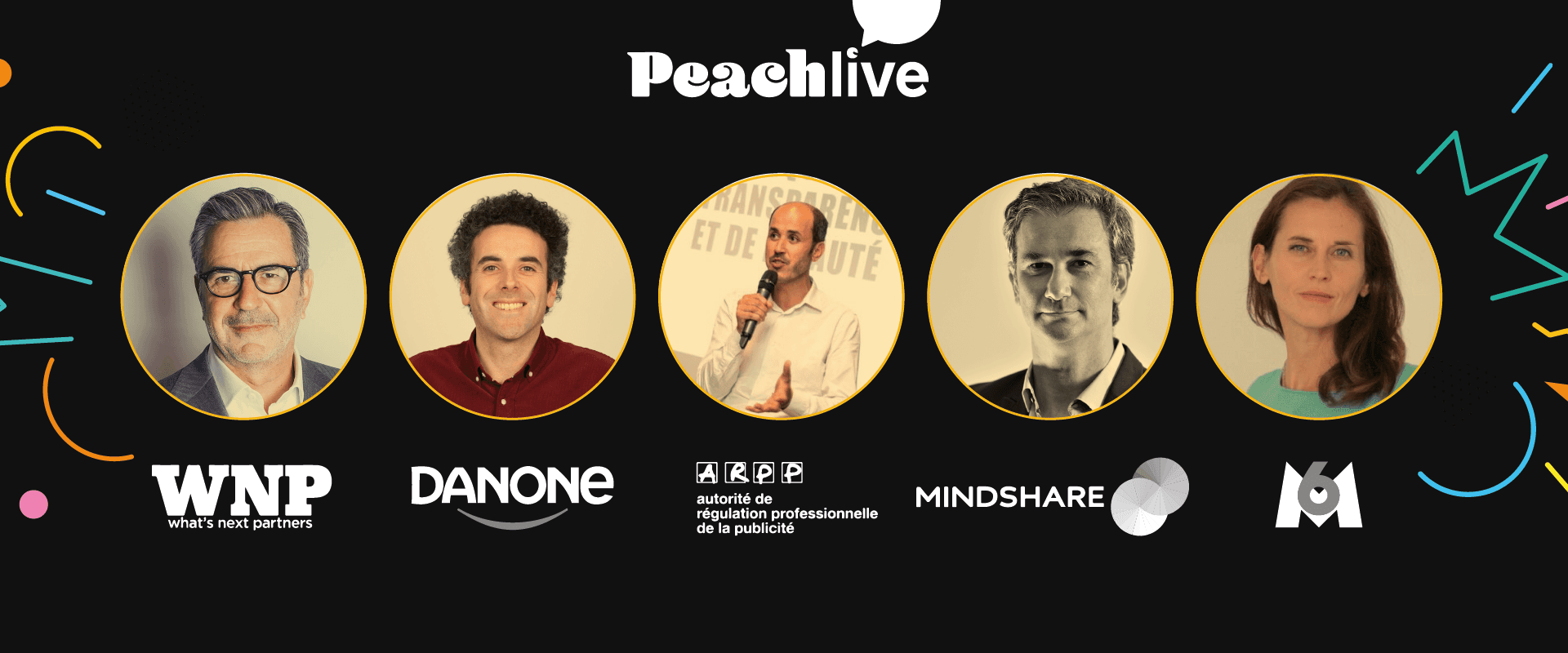
Zu den Rednern gehörten: 

  • Guy Chauvel, Gründer und Präsident, WNP

  • Mathieu Lacombe, Head of Media & Digital, Danone France

  • Mohamed Mansouri, stellvertretender Direktor, ARPP  

  • Olivier Roberdeau, Direktor der Abteilung Screen (TV & Video), Mindshare France

  • Hortense Thomine-Desmazures, stellvertretende Geschäftsführerin für Digital, M6 Publicité

  • Moderiert von Mathieu Brisset, Geschäftsführer Europa, Peach

Möchten Sie wissen, wie Peach Addressable TV ein bisschen einfacher machen kann?


Kontaktieren Sie uns jetzt

Neuigkeiten

Sei der Konkurrenz immer einen Schritt voraus

Neugierig auf die neuesten Trends im Marketing und Werbung? Abonniere unseren monatlichen Promarketers-Newsletter und bleibe informiert.

18.03.2026

No more chocolate at breakfast? Navigating the new LHF ad rules this Easter

As ad compliance requirements evolve in 2026, UK confectionery brands face new restrictions on less healthy food (LHF) advertising. With the January 5 watershed now in effect, ad quality assurance systems must validate timing, placement, and product identifiability to avoid clearance failures this Easter season.

16.03.2026

The future of inclusion: How Cape.io powered Virgin Media Television’s fully accessible ad break during the Men’s Six Nations

As Channel 4’s closed-captioning mandate came into effect in March 2026, Cape.io partnered with Virgin Media Television, Omnicom Media Group and VoiceBox to deliver a truly accessible ad break during the Guinness Men’s Six Nations. More than ad compliance, this moment proved that accessibility can operate at the highest level of live sports broadcasting.

27.02.2026

Navigating Channel 4’s 2026 closed caption mandate

As ad compliance requirements tighten across the UK and Europe, closed captioning has evolved from an accessibility checkbox to a strategic necessity. Whether you're managing CTV campaigns or social media creative, automated ad testing for caption quality is no longer optional - it's fundamental to reaching today's fragmented, multi-screen audiences.

The advertising landscape is facing a seismic shift. By March 1, Channel 4 will become the first UK broadcaster to mandate closed captions across all advertising - including linear TV, streaming, and sponsorships.

The mandate is  a redefined standard for global inclusivity. Here is everything you need to know about the new mandate and how to stay ahead of the curve.

26.02.2026

One platform, many realities: How creative automation platforms resolve the global vs. local tension

Scaling global marketing without losing local relevance requires more than brand guidelines and templates - it requires a creative automation platform designed for both global control and local flexibility. Most systems optimize for standardization, but scaling ad creative production across markets demands architecture that enables creative variation and adaptation by local experts without fragmenting brand governance.

Many global advertisers are chasing the same ideal: scale without losing relevance.

Consistency without uniformity.
Efficiency without bureaucracy.

It sounds simple. In practice, it’s one of the hardest tensions to resolve in modern marketing.

The global vs. local challenge isn’t new, but it’s becoming more urgent. As brands expand across markets, channels, and cultures, the question is no longer whether you should scale globally, but how you do so without erasing the nuance that makes marketing effective in the first place.

Everyone is looking for this balance. Very few get it right.

11.02.2026

EPTVI Initiative launches Stage Two to help programmatic TV scale across Europe’s largest advertising markets

Broadcasters, streamers, agencies and ad tech companies including Google Ad Manager, Equativ, Adform, LiveRamp, The Trade Desk, FreeWheel and Cape.io begin work on practical solutions to reduce complexity and speed up adoption.

04.02.2026

The guardrails of growth: Why creative intelligence demands compliance

Generative AI can produce thousands of creative variants, but most compliance systems are still manual, fragmented, and reactive, unable to keep pace with today’s velocity. To move fast without breaking things, the industry needs a new approach: real-time verification, programmatic enforcement, and end-to-end visibility. Embedded inside the stack, not bolted on at the end.

Neuigkeiten

Sei der Konkurrenz immer einen Schritt voraus

Neugierig auf die neuesten Trends im Marketing und Werbung? Abonniere unseren monatlichen Promarketers-Newsletter und bleibe informiert.

18.03.2026

No more chocolate at breakfast? Navigating the new LHF ad rules this Easter

As ad compliance requirements evolve in 2026, UK confectionery brands face new restrictions on less healthy food (LHF) advertising. With the January 5 watershed now in effect, ad quality assurance systems must validate timing, placement, and product identifiability to avoid clearance failures this Easter season.

16.03.2026

The future of inclusion: How Cape.io powered Virgin Media Television’s fully accessible ad break during the Men’s Six Nations

As Channel 4’s closed-captioning mandate came into effect in March 2026, Cape.io partnered with Virgin Media Television, Omnicom Media Group and VoiceBox to deliver a truly accessible ad break during the Guinness Men’s Six Nations. More than ad compliance, this moment proved that accessibility can operate at the highest level of live sports broadcasting.

27.02.2026

Navigating Channel 4’s 2026 closed caption mandate

As ad compliance requirements tighten across the UK and Europe, closed captioning has evolved from an accessibility checkbox to a strategic necessity. Whether you're managing CTV campaigns or social media creative, automated ad testing for caption quality is no longer optional - it's fundamental to reaching today's fragmented, multi-screen audiences.

The advertising landscape is facing a seismic shift. By March 1, Channel 4 will become the first UK broadcaster to mandate closed captions across all advertising - including linear TV, streaming, and sponsorships.

The mandate is  a redefined standard for global inclusivity. Here is everything you need to know about the new mandate and how to stay ahead of the curve.

26.02.2026

One platform, many realities: How creative automation platforms resolve the global vs. local tension

Scaling global marketing without losing local relevance requires more than brand guidelines and templates - it requires a creative automation platform designed for both global control and local flexibility. Most systems optimize for standardization, but scaling ad creative production across markets demands architecture that enables creative variation and adaptation by local experts without fragmenting brand governance.

Many global advertisers are chasing the same ideal: scale without losing relevance.

Consistency without uniformity.
Efficiency without bureaucracy.

It sounds simple. In practice, it’s one of the hardest tensions to resolve in modern marketing.

The global vs. local challenge isn’t new, but it’s becoming more urgent. As brands expand across markets, channels, and cultures, the question is no longer whether you should scale globally, but how you do so without erasing the nuance that makes marketing effective in the first place.

Everyone is looking for this balance. Very few get it right.

11.02.2026

EPTVI Initiative launches Stage Two to help programmatic TV scale across Europe’s largest advertising markets

Broadcasters, streamers, agencies and ad tech companies including Google Ad Manager, Equativ, Adform, LiveRamp, The Trade Desk, FreeWheel and Cape.io begin work on practical solutions to reduce complexity and speed up adoption.

04.02.2026

The guardrails of growth: Why creative intelligence demands compliance

Generative AI can produce thousands of creative variants, but most compliance systems are still manual, fragmented, and reactive, unable to keep pace with today’s velocity. To move fast without breaking things, the industry needs a new approach: real-time verification, programmatic enforcement, and end-to-end visibility. Embedded inside the stack, not bolted on at the end.

Neuigkeiten

Sei der Konkurrenz immer einen Schritt voraus

Neugierig auf die neuesten Trends im Marketing und Werbung? Abonniere unseren monatlichen Promarketers-Newsletter und bleibe informiert.

18.03.2026

No more chocolate at breakfast? Navigating the new LHF ad rules this Easter

As ad compliance requirements evolve in 2026, UK confectionery brands face new restrictions on less healthy food (LHF) advertising. With the January 5 watershed now in effect, ad quality assurance systems must validate timing, placement, and product identifiability to avoid clearance failures this Easter season.

16.03.2026

The future of inclusion: How Cape.io powered Virgin Media Television’s fully accessible ad break during the Men’s Six Nations

As Channel 4’s closed-captioning mandate came into effect in March 2026, Cape.io partnered with Virgin Media Television, Omnicom Media Group and VoiceBox to deliver a truly accessible ad break during the Guinness Men’s Six Nations. More than ad compliance, this moment proved that accessibility can operate at the highest level of live sports broadcasting.

27.02.2026

Navigating Channel 4’s 2026 closed caption mandate

As ad compliance requirements tighten across the UK and Europe, closed captioning has evolved from an accessibility checkbox to a strategic necessity. Whether you're managing CTV campaigns or social media creative, automated ad testing for caption quality is no longer optional - it's fundamental to reaching today's fragmented, multi-screen audiences.

The advertising landscape is facing a seismic shift. By March 1, Channel 4 will become the first UK broadcaster to mandate closed captions across all advertising - including linear TV, streaming, and sponsorships.

The mandate is  a redefined standard for global inclusivity. Here is everything you need to know about the new mandate and how to stay ahead of the curve.

26.02.2026

One platform, many realities: How creative automation platforms resolve the global vs. local tension

Scaling global marketing without losing local relevance requires more than brand guidelines and templates - it requires a creative automation platform designed for both global control and local flexibility. Most systems optimize for standardization, but scaling ad creative production across markets demands architecture that enables creative variation and adaptation by local experts without fragmenting brand governance.

Many global advertisers are chasing the same ideal: scale without losing relevance.

Consistency without uniformity.
Efficiency without bureaucracy.

It sounds simple. In practice, it’s one of the hardest tensions to resolve in modern marketing.

The global vs. local challenge isn’t new, but it’s becoming more urgent. As brands expand across markets, channels, and cultures, the question is no longer whether you should scale globally, but how you do so without erasing the nuance that makes marketing effective in the first place.

Everyone is looking for this balance. Very few get it right.

11.02.2026

EPTVI Initiative launches Stage Two to help programmatic TV scale across Europe’s largest advertising markets

Broadcasters, streamers, agencies and ad tech companies including Google Ad Manager, Equativ, Adform, LiveRamp, The Trade Desk, FreeWheel and Cape.io begin work on practical solutions to reduce complexity and speed up adoption.

04.02.2026

The guardrails of growth: Why creative intelligence demands compliance

Generative AI can produce thousands of creative variants, but most compliance systems are still manual, fragmented, and reactive, unable to keep pace with today’s velocity. To move fast without breaking things, the industry needs a new approach: real-time verification, programmatic enforcement, and end-to-end visibility. Embedded inside the stack, not bolted on at the end.

Kontakt aufnehmen

Lassen Sie uns Ihnen zeigen, was Cape.io leisten kann.

Intelligente Kampagnenautomatisierung

Cape.io vernetzt Ihr Team, DAM, Ad-Server, DSPs, Tools und mehr, sodass Sie nichts herausreißen oder ersetzen müssen.

Copyright © 2025 Cape.io alle Rechte vorbehalten

Deutsch

Kontakt aufnehmen

Lassen Sie uns Ihnen zeigen, was Cape.io leisten kann.

Intelligente Kampagnenautomatisierung

Cape.io vernetzt Ihr Team, DAM, Ad-Server, DSPs, Tools und mehr, sodass Sie nichts herausreißen oder ersetzen müssen.

Copyright © 2025 Cape.io alle Rechte vorbehalten

Deutsch

Kontakt aufnehmen

Lassen Sie uns Ihnen zeigen, was Cape.io leisten kann.

Intelligente Kampagnenautomatisierung

Cape.io vernetzt Ihr Team, DAM, Ad-Server, DSPs, Tools und mehr, sodass Sie nichts herausreißen oder ersetzen müssen.

Copyright © 2025 Cape.io alle Rechte vorbehalten

Deutsch