/
/
/
Como escalar criativos de programmatic Mídia exterior digital: resolvendo o gargalo dos formatos
Como escalar criativos de programmatic Mídia exterior digital: resolvendo o gargalo dos formatos
A Mídia exterior digital oferece às marcas um enorme potencial criativo, desde mensagens hiperlocais a campanhas dinâmicas ativadas pelo clima, hora e localização. Mas dar vida a esse potencial significa produzir um número enorme de variações criativas em um cenário fragmentado de tamanhos e formatos de tela.
Key takeaways
O programmatic buying pode dimensionar a mídia rapidamente, mas o criativo ainda precisa funcionar em inúmeros tamanhos de tela, proporções de tela e formatos de editores.
Centralize formatos e automatize o redimensionamento para que o criativo se adapte a diferentes ambientes sem precisar reconstruir cada versão manualmente.
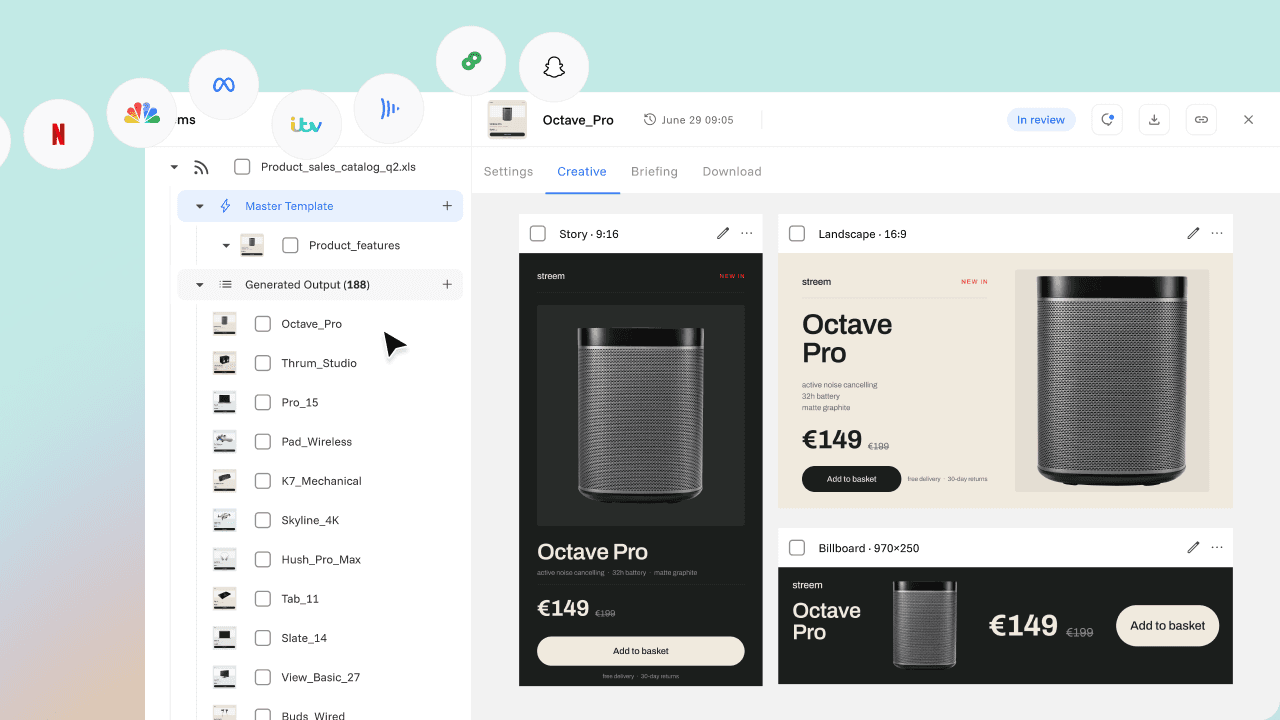
O workflow modular de Mídia exterior digital da Cape.io torna possível editar uma única campanha e gerar criativos específicos para cada formato, tornando as campanhas acionadas por dados geográficos e climáticos mais práticas em escala.

O Digital Out-of-Home Programático (pDOOH) está passando por um crescimento massivo. O investimento em pDOOH deve crescer em média 49% nos próximos 18 meses, com 91% dos compradores integrando-o em seu planejamento digital e programático mais amplo — em comparação com apenas 41% há dois anos. Quase um terço dos anunciantes está reservando orçamentos totalmente novos para isso.
O dinheiro, o inventário e a infraestrutura de compra de mídia amadureceram rapidamente. No entanto, a produção de criativos não acompanhou o ritmo.
Hoje, as equipes de mídia podem comprar impressões em milhares de telas, faixas horárias e geografias com apenas alguns cliques. Mas o criativo real que aparece nessas telas ainda é construído da mesma forma que há uma década: um designer, um arquivo, um tamanho de cada vez. O lado da compra avançou rapidamente, deixando a produção de criativos parada na linha de largada.
Essa lacuna é onde as campanhas omnichannel perdem silenciosamente sua força e é exatamente o problema que a Plataforma de Automação criativa da Cape.io foi criada para resolver.
Um grande desafio no PDOOH é que os processos de Criativo não acompanharam o ritmo no pDOOH: o gargalo do redimensionamento
Pergunte a qualquer Marca ou agência que execute uma campanha séria de Mídia exterior digital qual é o seu maior obstáculo, e a resposta raramente é o plano de mídia. É transformar uma única peça de criativo nas centenas de variantes de tamanho e proporção de tela que uma compra real de Mídia exterior digital exige.
Uma campanha padrão requer:
Paisagem 16:9 para outdoors digitais de beira de estrada.
Telas verticais altas para ambientes de trânsito e varejo.
Faixas ultra-largas para shoppings e aeroportos.
Formatos quadrados para mobiliário urbano.
Dezenas de dimensões não padronizadas e específicas do editor.
Feito manualmente, isso não é uma tarefa de design; é um pesadelo de versionamento. Cada formato requer seu próprio corte, lógica de layout e etapa de Garantia de qualidade (QA). Isso consome os cronogramas de produção, introduz inconsistências na Marca e transforma uma edição simples de última hora do cliente em um ciclo completo de reprodução.
Essa restrição limita o que é criativamente possível. As marcas têm ideias para publicidade out-of-home dinamicamente personalizada, sensível ao contexto geográfico e à hora do dia. Mas produzir o enorme volume de ativos necessários tem sido historicamente lento e caro demais para tentar em escala.
Como a Cape.io acelera a produção de Mídia exterior digital
A Cape.io baseia-se em uma premissa simples: crie uma campanha uma vez e deixe a plataforma lidar com a multiplicação. Veja como removemos completamente o gargalo de formato.
Comece a partir de uma biblioteca de formatos centralizada: A biblioteca da Cape.io cobre toda a variedade de tamanhos de Mídia exterior digital e pDOOH, incluindo formatos não padronizados específicos de editores. Em vez de instruir um designer a recriar um layout, você seleciona todos os formatos que sua campanha precisa diretamente da biblioteca em uma única etapa.
Transferência de estilo algorítmica: A Cape.io aplica automaticamente sua lógica de layout, tipografia, cores e posicionamento de imagens a cada formato selecionado. Centenas de criações individuais tornam-se uma única decisão de design. Os designers mantêm controle manual total para ajustar posicionamentos específicos.
Modelagem dinâmica e edição em lote: Uma vez que uma campanha é construída, você não precisa mais recriar o criativo; você apenas o edita. Altere um título ou mude um plano de fundo, e essa alteração se propaga por todos os formatos do conjunto instantaneamente.
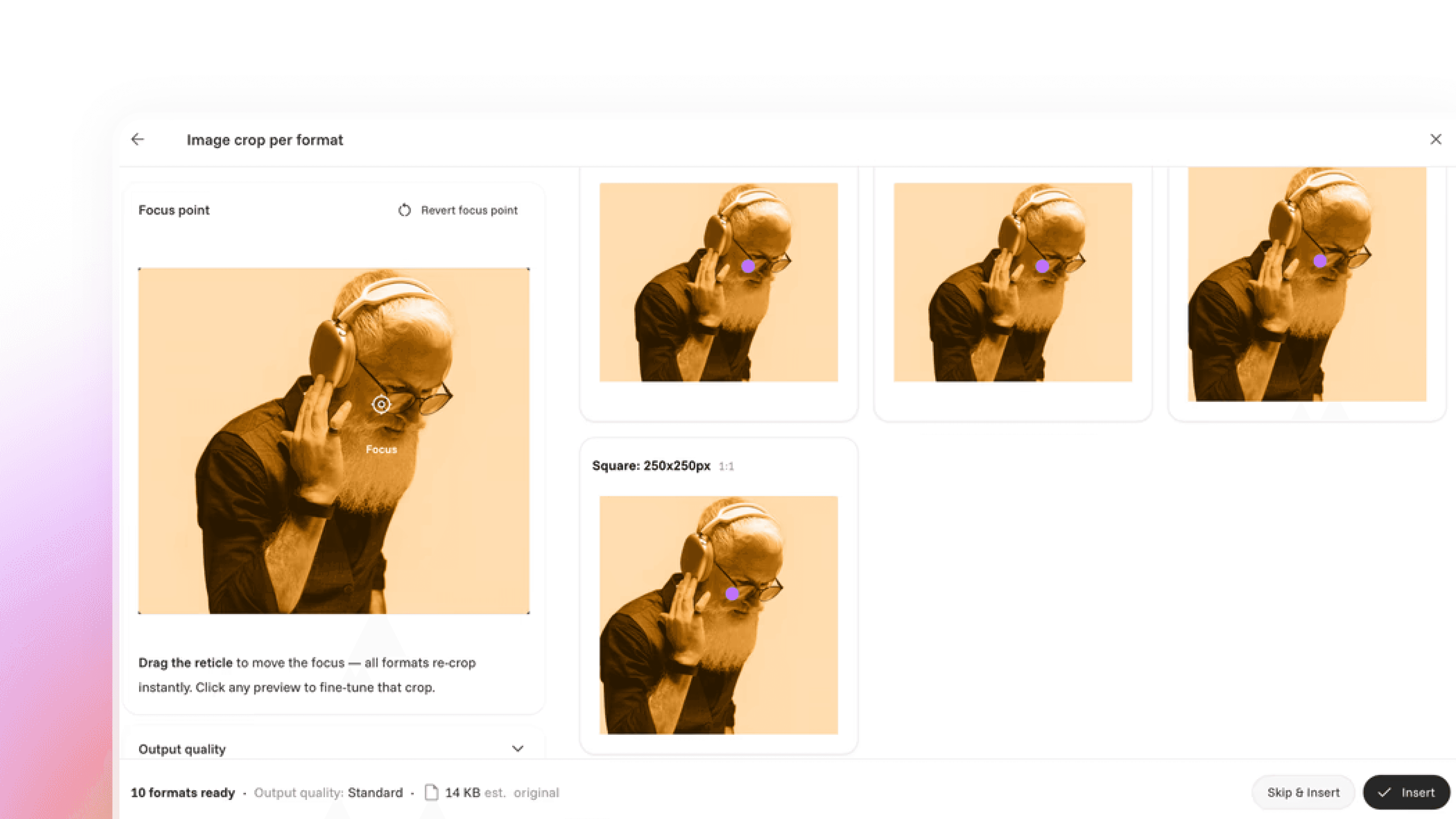
Redimensionamento baseado em IA: A diversidade de formatos de Mídia exterior digital é implacável no dimensionamento. Uma imagem principal composta para um outdoor de 16:9 raramente funciona em uma tela de trânsito de 9:16. O cortador automático baseado em IA da Cape.io analisa cada imagem de fundo e determina de forma inteligente como dimensioná-la e reposicioná-la por formato, mantendo o assunto no enquadramento e a composição intacta. Novamente, os designers ainda têm o poder de edição final.
Agora que podemos alterar o criativo de Mídia exterior digital em hipervelocidade, quando a criação e a atualização de criativos se tornam tão rápidas, as campanhas podem finalmente usar variações, como personalizar as mensagens por geografia, clima ou hora do dia, em vez de se contentarem com uma única execução estática.
Casos de uso de Automação criativa de Mídia exterior digital por perfil
Marcas corporativas com alto investimento em OOH: Os prazos de produção não ditam mais a ambição criativa. Criativos localizados, adaptados ao período do dia e sempre atualizados tornam-se viáveis em toda a sua presença de telas, sem aumentar a equipe interna de design.
Agências Criativas e de Mídia: Modelos e edições em lote permitem que uma única equipe de produção atenda a mais campanhas de clientes e lide com revisões sem o aumento linear nas horas faturáveis. A margem é protegida sem sacrificar a qualidade.
Editores de Mídia exterior digital: Criativos melhores são benéficos para todos. Qualquer formato não padronizado em seu inventário torna-se mais fácil para os anunciantes preencherem com criativos de alta qualidade e alinhados com a Marca, eliminando uma grande barreira.
DSPs de Mídia exterior digital (Demand-Side Platforms): Retornos mais rápidos de criativos significam menos campanhas paradas e mais inventário ativado com ativos do tamanho correto, melhorando diretamente as taxas de preenchimento e o desempenho das campanhas.
Perguntas Frequentes (FAQ)
O que é DOOH Programático (pDOOH)? O DOOH programático é a compra, venda e entrega automatizada de publicidade digital out-of-home. Permite que os profissionais de marketing comprem inventário de outdoors e telas de trânsito em tempo real com base em gatilhos de dados específicos, como clima, hora do dia ou fluxo de pessoas.
Como a Automação criativa melhora as campanhas de Mídia exterior digital? O software de automação criativa elimina a versão manual de anúncios. Ao usar cortes por IA e modelos dinâmicos, as marcas podem gerar instantaneamente centenas de tamanhos de anúncios de Mídia exterior digital a partir de um único design mestre, permitindo lançamentos de campanhas mais rápidos e mensagens hiperlocalizadas.
A Cape.io consegue lidar com tamanhos de anúncios não padronizados de editores? Sim. A Cape.io apresenta uma biblioteca de formatos abrangente que inclui tanto as dimensões padrão de Mídia exterior digital quanto requisitos específicos e não padronizados de editores, permitindo que os designers dimensionem automaticamente o criativo para caber com precisão em qualquer tela.
Pronto para escalar sua publicidade out-of-home? Entre em contato com nossa equipe para conversar sobre sua lista de formatos de Mídia exterior digital e ver a Plataforma Cape.io em ação.
Category