12 de jan. de 2023

Uma imagem vale mais que mil cliques: como usar a análise visual para melhores campanhas

Comece com Anúncios mais Inteligentes usando AI de Análise Visual: como a Cape otimiza o Criativo antes mesmo de você lançar


Otimizar seus anúncios pode parecer um jogo de adivinhação sem fim. Quais elementos realmente impulsionam o desempenho? Quais ajustes no criativo realmente fazem a diferença?

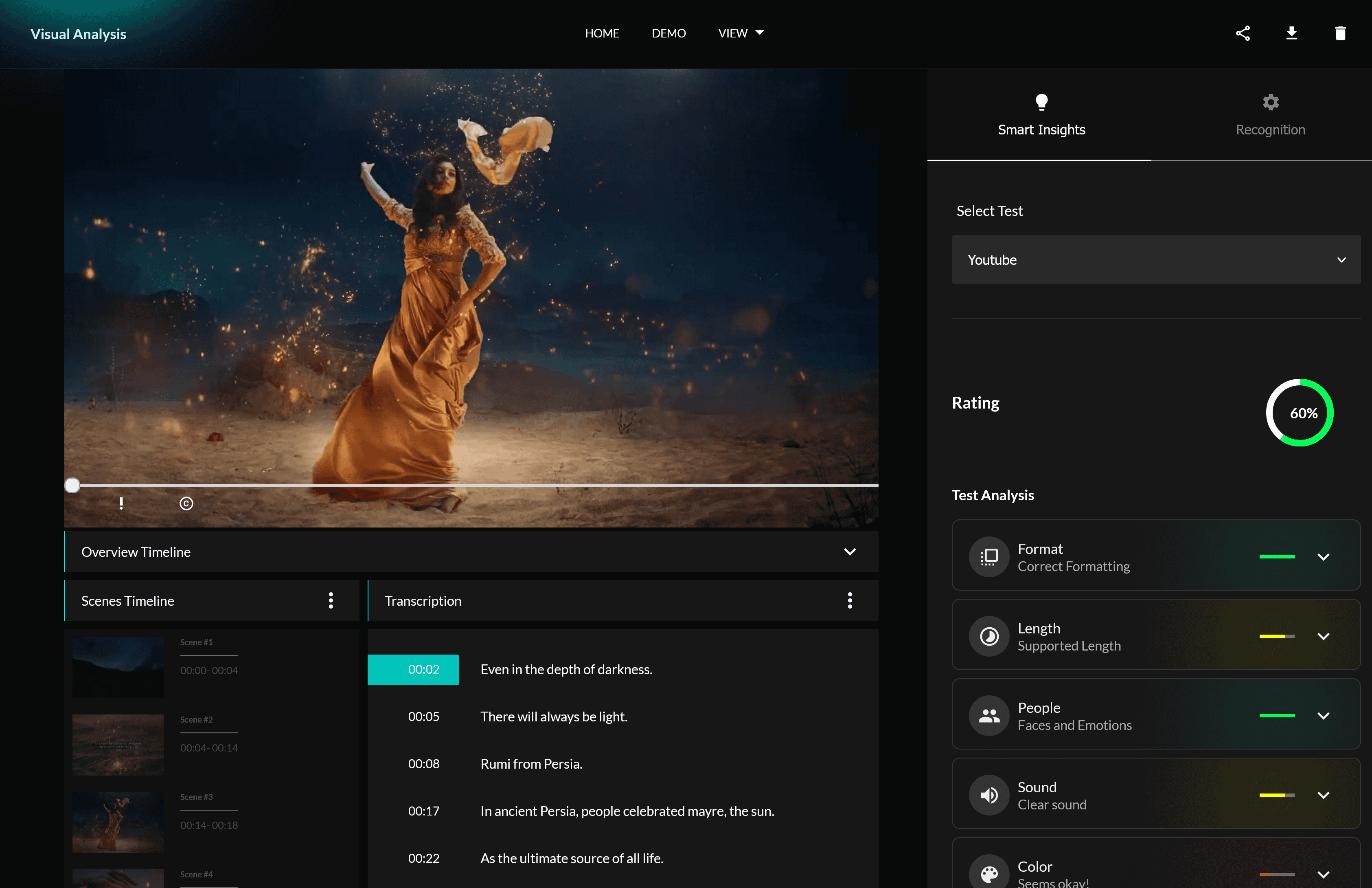
Com AI de Análise Visual, a Cape traz clareza baseada em dados para suas decisões criativas; capacitando você a melhorar a eficácia do anúncio antes que sua campanha esteja no ar.

O Que É AI de Análise Visual?


A AI de Análise Visual usa visão computacional para avaliar criativos de anúncios da mesma forma que um humano faria - mas mais rápido, em escala e com precisão. Ela analisa visuais com base em princípios de design comprovados e insights de desempenho para ajudar a prever quais anúncios têm mais chance de sucesso.

À medida que o marketing digital se torna cada vez mais visual, a Cape facilita a otimização do processo criativo cedo; economizando tempo, reduzindo revisões e melhorando os resultados.

Como a Cape Usa Análise Visual para Melhorar o Desempenho de Anúncios


A plataforma da Cape aproveita AI de Análise Visual para ajudar você a:

  • Avaliar criativos antes de publicar
    Obter insights preditivos sobre layout, equilíbrio de texto, posicionamento de logotipo, brilho, contraste e mais (antes que o anúncio chegue ao mercado).

  • Fornecer feedback em tempo real durante o design
    Apoiar sua equipe criativa com sugestões instantâneas e práticas enquanto estão construindo o anúncio - não depois que ele já está em execução.

  • Automatizar a otimização visual em escala
    Usando ferramentas como Google Vision API e bibliotecas avançadas de JavaScript, a Cape avalia anúncios com base em referências de design de melhores práticas para identificar áreas de melhoria.

O Que a AI Visual da Cape Mede


O sistema da Cape avalia uma ampla gama de componentes criativos, incluindo:

  • Composição e contraste de cores

  • Brilho e clareza da imagem

  • Regra dos terços e layout geral

  • Posicionamento e tamanho do logotipo

  • Visibilidade, comprimento e hierarquia do texto

  • Presença facial e sinais emocionais

  • Balanço visual e desordem


Esses critérios são baseados em pesquisas que conectam o design visual ao desempenho real dos anúncios, transformando decisões criativas subjetivas em escolhas objetivas e baseadas em dados.
O Que Vem a Seguir: Otimização Criativa Autoaprendente


O sistema atual da Cape prevê a qualidade dos anúncios com base em princípios visuais e dados de desempenho. Nosso próximo passo é construir um modelo de autoaprendizado que vincule essas previsões diretamente aos resultados da campanha.

O resultado: otimização criativa totalmente automatizada e em constante melhoria, onde cada design se torna mais inteligente a cada campanha.

Notícias

Fique à frente da curva

Curioso sobre as novidades em marketing e publicidade? Assine nossa newsletter mensal Promarketers.

23 de abr. de 2026

Agentic AI vs AI wrappers vs custom AI: How to choose your path

You're about to spend $500K on an AI initiative. You've got 3 options on the table, and they'll lead you to wildly different places. Pick wrong, and you're rebuilding in 18 months. Pick right, and you'll have a system that scales, costs less to maintain, and actually does what executives promised.

The choice is between wrapping existing AI models, building custom AI solutions from scratch, or going agentic. Most teams don't understand the real trade-offs until they're locked into the wrong one.

30 de mar. de 2026

Operationalizing AI in advertising: Why it must be embedded, not bolted on

Operationalizing AI in advertising isn’t about adding another tool to your stack. It’s about embedding intelligence into the systems that govern creative production, compliance, and delivery, so automation scales without creating more operational friction.

18 de mar. de 2026

No more chocolate at breakfast? Navigating the new LHF ad rules this Easter

As ad compliance requirements evolve in 2026, UK confectionery brands face new restrictions on less healthy food (LHF) advertising. With the January 5 watershed now in effect, ad quality assurance systems must validate timing, placement, and product identifiability to avoid clearance failures this Easter season.

16 de mar. de 2026

The future of inclusion: How Cape.io powered Virgin Media Television’s fully accessible ad break during the Men’s Six Nations

As Channel 4’s closed-captioning mandate came into effect in March 2026, Cape.io partnered with Virgin Media Television, Omnicom Media Group and VoiceBox to deliver a truly accessible ad break during the Guinness Men’s Six Nations. More than ad compliance, this moment proved that accessibility can operate at the highest level of live sports broadcasting.

27 de fev. de 2026

Navigating Channel 4’s 2026 closed caption mandate

As ad compliance requirements tighten across the UK and Europe, closed captioning has evolved from an accessibility checkbox to a strategic necessity. Whether you're managing CTV campaigns or social media creative, automated ad testing for caption quality is no longer optional - it's fundamental to reaching today's fragmented, multi-screen audiences.

The advertising landscape is facing a seismic shift. By March 1, Channel 4 will become the first UK broadcaster to mandate closed captions across all advertising - including linear TV, streaming, and sponsorships.

The mandate is  a redefined standard for global inclusivity. Here is everything you need to know about the new mandate and how to stay ahead of the curve.

26 de fev. de 2026

One platform, many realities: How creative automation platforms resolve the global vs. local tension

Scaling global marketing without losing local relevance requires more than brand guidelines and templates - it requires a creative automation platform designed for both global control and local flexibility. Most systems optimize for standardization, but scaling ad creative production across markets demands architecture that enables creative variation and adaptation by local experts without fragmenting brand governance.

Many global advertisers are chasing the same ideal: scale without losing relevance.

Consistency without uniformity.
Efficiency without bureaucracy.

It sounds simple. In practice, it’s one of the hardest tensions to resolve in modern marketing.

The global vs. local challenge isn’t new, but it’s becoming more urgent. As brands expand across markets, channels, and cultures, the question is no longer whether you should scale globally, but how you do so without erasing the nuance that makes marketing effective in the first place.

Everyone is looking for this balance. Very few get it right.

Notícias

Fique à frente da curva

Curioso sobre as novidades em marketing e publicidade? Assine nossa newsletter mensal Promarketers.

23 de abr. de 2026

Agentic AI vs AI wrappers vs custom AI: How to choose your path

You're about to spend $500K on an AI initiative. You've got 3 options on the table, and they'll lead you to wildly different places. Pick wrong, and you're rebuilding in 18 months. Pick right, and you'll have a system that scales, costs less to maintain, and actually does what executives promised.

The choice is between wrapping existing AI models, building custom AI solutions from scratch, or going agentic. Most teams don't understand the real trade-offs until they're locked into the wrong one.

30 de mar. de 2026

Operationalizing AI in advertising: Why it must be embedded, not bolted on

Operationalizing AI in advertising isn’t about adding another tool to your stack. It’s about embedding intelligence into the systems that govern creative production, compliance, and delivery, so automation scales without creating more operational friction.

18 de mar. de 2026

No more chocolate at breakfast? Navigating the new LHF ad rules this Easter

As ad compliance requirements evolve in 2026, UK confectionery brands face new restrictions on less healthy food (LHF) advertising. With the January 5 watershed now in effect, ad quality assurance systems must validate timing, placement, and product identifiability to avoid clearance failures this Easter season.

16 de mar. de 2026

The future of inclusion: How Cape.io powered Virgin Media Television’s fully accessible ad break during the Men’s Six Nations

As Channel 4’s closed-captioning mandate came into effect in March 2026, Cape.io partnered with Virgin Media Television, Omnicom Media Group and VoiceBox to deliver a truly accessible ad break during the Guinness Men’s Six Nations. More than ad compliance, this moment proved that accessibility can operate at the highest level of live sports broadcasting.

27 de fev. de 2026

Navigating Channel 4’s 2026 closed caption mandate

As ad compliance requirements tighten across the UK and Europe, closed captioning has evolved from an accessibility checkbox to a strategic necessity. Whether you're managing CTV campaigns or social media creative, automated ad testing for caption quality is no longer optional - it's fundamental to reaching today's fragmented, multi-screen audiences.

The advertising landscape is facing a seismic shift. By March 1, Channel 4 will become the first UK broadcaster to mandate closed captions across all advertising - including linear TV, streaming, and sponsorships.

The mandate is  a redefined standard for global inclusivity. Here is everything you need to know about the new mandate and how to stay ahead of the curve.

26 de fev. de 2026

One platform, many realities: How creative automation platforms resolve the global vs. local tension

Scaling global marketing without losing local relevance requires more than brand guidelines and templates - it requires a creative automation platform designed for both global control and local flexibility. Most systems optimize for standardization, but scaling ad creative production across markets demands architecture that enables creative variation and adaptation by local experts without fragmenting brand governance.

Many global advertisers are chasing the same ideal: scale without losing relevance.

Consistency without uniformity.
Efficiency without bureaucracy.

It sounds simple. In practice, it’s one of the hardest tensions to resolve in modern marketing.

The global vs. local challenge isn’t new, but it’s becoming more urgent. As brands expand across markets, channels, and cultures, the question is no longer whether you should scale globally, but how you do so without erasing the nuance that makes marketing effective in the first place.

Everyone is looking for this balance. Very few get it right.

Notícias

Fique à frente da curva

Curioso sobre as novidades em marketing e publicidade? Assine nossa newsletter mensal Promarketers.

23 de abr. de 2026

Agentic AI vs AI wrappers vs custom AI: How to choose your path

You're about to spend $500K on an AI initiative. You've got 3 options on the table, and they'll lead you to wildly different places. Pick wrong, and you're rebuilding in 18 months. Pick right, and you'll have a system that scales, costs less to maintain, and actually does what executives promised.

The choice is between wrapping existing AI models, building custom AI solutions from scratch, or going agentic. Most teams don't understand the real trade-offs until they're locked into the wrong one.

30 de mar. de 2026

Operationalizing AI in advertising: Why it must be embedded, not bolted on

Operationalizing AI in advertising isn’t about adding another tool to your stack. It’s about embedding intelligence into the systems that govern creative production, compliance, and delivery, so automation scales without creating more operational friction.

18 de mar. de 2026

No more chocolate at breakfast? Navigating the new LHF ad rules this Easter

As ad compliance requirements evolve in 2026, UK confectionery brands face new restrictions on less healthy food (LHF) advertising. With the January 5 watershed now in effect, ad quality assurance systems must validate timing, placement, and product identifiability to avoid clearance failures this Easter season.

16 de mar. de 2026

The future of inclusion: How Cape.io powered Virgin Media Television’s fully accessible ad break during the Men’s Six Nations

As Channel 4’s closed-captioning mandate came into effect in March 2026, Cape.io partnered with Virgin Media Television, Omnicom Media Group and VoiceBox to deliver a truly accessible ad break during the Guinness Men’s Six Nations. More than ad compliance, this moment proved that accessibility can operate at the highest level of live sports broadcasting.

27 de fev. de 2026

Navigating Channel 4’s 2026 closed caption mandate

As ad compliance requirements tighten across the UK and Europe, closed captioning has evolved from an accessibility checkbox to a strategic necessity. Whether you're managing CTV campaigns or social media creative, automated ad testing for caption quality is no longer optional - it's fundamental to reaching today's fragmented, multi-screen audiences.

The advertising landscape is facing a seismic shift. By March 1, Channel 4 will become the first UK broadcaster to mandate closed captions across all advertising - including linear TV, streaming, and sponsorships.

The mandate is  a redefined standard for global inclusivity. Here is everything you need to know about the new mandate and how to stay ahead of the curve.

26 de fev. de 2026

One platform, many realities: How creative automation platforms resolve the global vs. local tension

Scaling global marketing without losing local relevance requires more than brand guidelines and templates - it requires a creative automation platform designed for both global control and local flexibility. Most systems optimize for standardization, but scaling ad creative production across markets demands architecture that enables creative variation and adaptation by local experts without fragmenting brand governance.

Many global advertisers are chasing the same ideal: scale without losing relevance.

Consistency without uniformity.
Efficiency without bureaucracy.

It sounds simple. In practice, it’s one of the hardest tensions to resolve in modern marketing.

The global vs. local challenge isn’t new, but it’s becoming more urgent. As brands expand across markets, channels, and cultures, the question is no longer whether you should scale globally, but how you do so without erasing the nuance that makes marketing effective in the first place.

Everyone is looking for this balance. Very few get it right.

Entre em contato

Vamos mostrar o que a Cape.io pode fazer.

Automação de Campanhas Inteligentes

Cape.io conecta sua equipe, DAM, servidores de anúncios, DSPs, ferramentas e mais, para que você não precise arrancar e substituir.

© 2025 Cape.io. Todos os direitos reservados

Portuguese

Entre em contato

Vamos mostrar o que a Cape.io pode fazer.

Automação de Campanhas Inteligentes

Cape.io conecta sua equipe, DAM, servidores de anúncios, DSPs, ferramentas e mais, para que você não precise arrancar e substituir.

© 2025 Cape.io. Todos os direitos reservados

Portuguese

Entre em contato

Vamos mostrar o que a Cape.io pode fazer.

Automação de Campanhas Inteligentes

Cape.io conecta sua equipe, DAM, servidores de anúncios, DSPs, ferramentas e mais, para que você não precise arrancar e substituir.

© 2025 Cape.io. Todos os direitos reservados

Portuguese