16 sie 2018

Automatyczny pilot

Dlaczego ci, którzy stworzą najlepsze kampanie wideo jutra, przyjmują nową technologię już dziś.

Tags

Author

Cape.io

Author

Cape.io

Ten post został pierwotnie opublikowany na blogach IMD i Honeycomb. Dowiedz się więcej o zmianie nazwy z Peach na Cape.io.

To ekscytujący czas dla twórców. Możliwości przełomowych kampanii reklamowych rozwijają się w różnych mediach. Reklama adresowalna jest teraz w zasięgu ręki, co sprawia, że każda reklama jest bardziej istotna dla tych, którzy ją zobaczą. Dziś świetna kreacja może mieć większy wpływ niż kiedykolwiek wcześniej.

Jednak wielu twórców i agencji mediowych czuje się sfrustrowanych. Widzą potencjał reklamy spersonalizowanej, ale gdy nawet jedna reklama na ekranach jest tak skomplikowana, realizacja kampanii celowanej wydaje się niemożliwa.

To nie jest niemożliwe. W rzeczywistości jest zaskakująco proste. Ale jak w przypadku wielu rzeczy w życiu, kluczem do sukcesu jest przygotowanie.

Agencje, które teraz usprawniają przepływy pracy, są gotowe na sukces. Nawet jeśli nie są jeszcze gotowe na dostarczenie kampanii adresowalnej, agencje mogą uwolnić się od uciążliwych przepływów pracy opartych na technologii sprzed dziesięcioleci.

Poprawiając efektywność dziś, od razu oszczędzą czas i pieniądze. A gdy tylko będą gotowi na zbudowanie swojej pierwszej kampanii celowanej, nic ich nie powstrzyma.

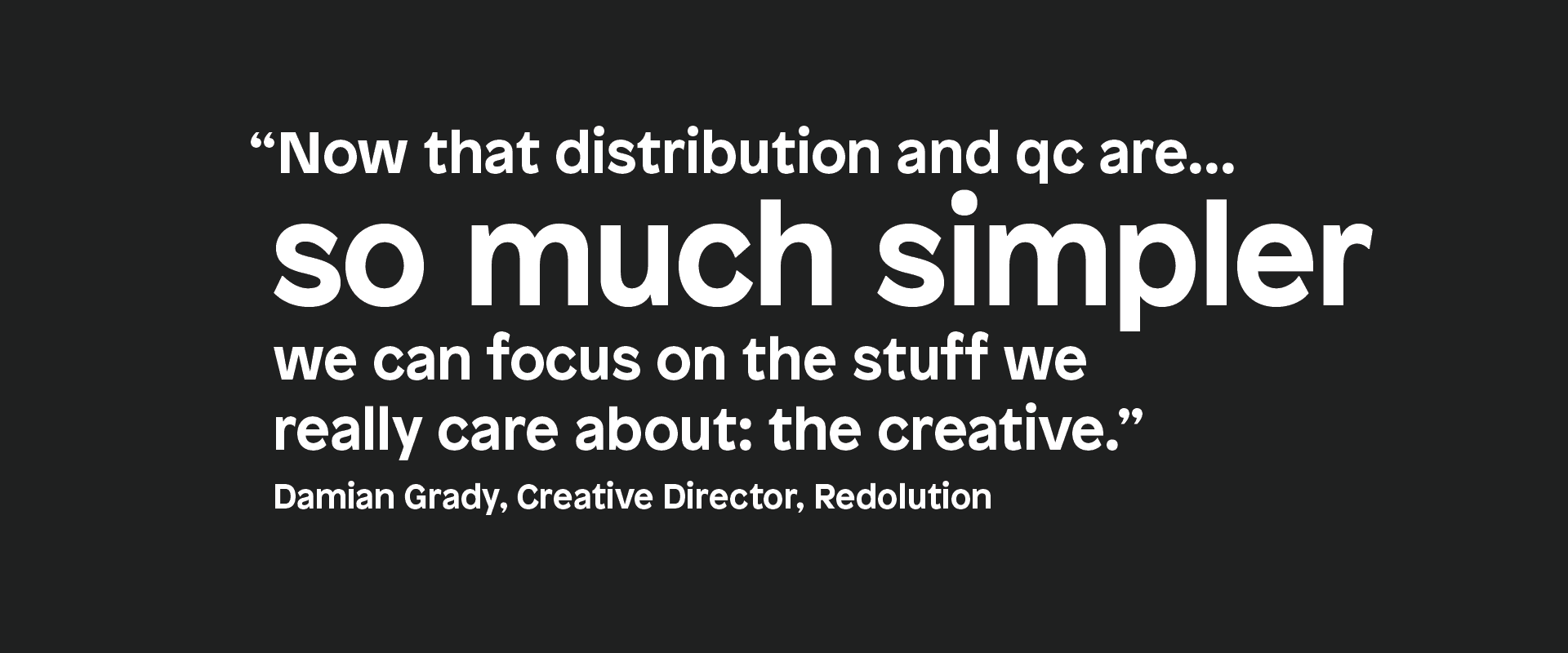
"Twoja platforma zaoszczędziła nam 75% czasu, który wcześniej spędzaliśmy na Kontrola jakości i dystrybucji... możemy teraz zarządzać dystrybucją szybciej i łatwiej, koncentrując nasze wysiłki na innych częściach biznesu."

- Michael Messih, Kierownik Produkcji - Hogarth

Ukierunkowana reklama: więcej treści, większy wpływ

Zanim pojawią się jeszcze bardziej rozwinięte telewizory połączone z siecią w coraz większej liczbie gospodarstw domowych, sprytnie ukierunkowana reklama jest już rzeczywistością: W Wielkiej Brytanii działa ramię adresowalne Sky, Sky Adsmart, które samo dociera do 42% brytyjskich gospodarstw domowych. Pokazywanie subtelnie różnych komunikatów starannie wyselekcjonowanej demografii odbiorców może mieć dramatyczny wpływ na zaangażowanie marki, a teraz jest to łatwe do zrealizowania przez reklamodawców.

I to nie tylko dla dużych marek: lokalni reklamodawcy mogą teraz budować małe kampanie, które będą pokazywane w określonych obszarach geograficznych. Tak więc, oprócz tworzenia bardziej trafnych i – co ważne – bardziej opłacalnych kampanii, technologia adresowalna otwiera reklamę telewizyjną dla całkowicie nowej grupy marek: 70% reklamodawców Sky Adsmart w Wielkiej Brytanii nigdy wcześniej nie reklamowało się w telewizji.

To celowane reklamowanie oznacza, że w każdej kampanii różne reklamy mogą być wyświetlane w różnych gospodarstwach domowych. Kampanie mogą zawierać setki, a nawet tysiące wersji każdej reklamy, uwzględniając różne iteracje treści wideo, zlokalizowane informacje (np. numer telefonu lokalnego punktu marki) i więcej.

Na przykład niedawna kampania Forda w USA miała 32 tysiące wersji. Trzydzieści dwa tysiące. Ręczne systemy dystrybucji zbudowane dla tradycyjnych kampanii telewizyjnych po prostu nie są w stanie dostarczyć takiej ilości.

Dystrybucja reklam ewoluuje, aby umożliwić ukierunkowane treści

To tsunami możliwości w branży nie jest tylko wyzwaniem dla twórców. Oznacza to również, że ci, którzy stoją za złożonymi procesami dystrybucyjnymi każdej kampanii, szybko się rozwijają. Budujemy technologię, której agencje potrzebują, aby uprościć przepływy pracy i usprawnić procesy, aby poradziły sobie z nową ilością reklam w rosnącym krajobrazie medialnym.

A oczywiście upraszczanie przepływów pracy zawsze oszczędza czas, pieniądze i wysiłek, więc z biznesowego punktu widzenia warto przejść na uproszczone procesy szybciej niż później. Fala reklam adresowalnych nadchodzi. Woskuj swoją przenośną deskę teraz i zacznij się przebijać, albo przygotuj się na to, że zostaniesz zmyty.

Kontrola jakości w różnicy

Pierwszym krokiem w kierunku uproszczenia dla agencji myślących przyszłościowo jest przyjęcie automatyzacji tam, gdzie to możliwe. Zautomatyzowana techniczna kontrola jakości (Kontrola jakości) znajduje się wysoko na liście oczywistych oszczędności czasowych.

„Korzystanie z Peach dramatycznie poprawiło nasze procesy dystrybucji. Auto QC i dostawy 24/7 oszczędzają zespołowi ogromne ilości czasu i wysiłku każdego tygodnia. Teraz możemy przesyłać pliki do QC w dowolnym momencie i niemal natychmiast dowiedzieć się, czy są jakieś problemy do rozwiązania.”

 - Fiona Battersby, Szef Działu Biznesowego Ogilvy

Krótkie podsumowanie, jak są QC'dowane reklamy wideo:

Każda reklama telewizyjna musi być sprawdzona pod kątem błędów technicznych, zanim zostanie dystrybuowana. Chociaż nadawcy często prowadzą własne QC, internetowe destynacje zazwyczaj tego nie robią. Ta wczesna QC zapewnia, że pliki nie zostaną odrzucone przez nadawców i że nie pojawią się online filmy niskiej jakości.

Tradycyjnie to wstępne QC przeprowadzał inżynier nadawczy, który oglądał każdą reklamę i flagował wszelkie problemy. Problem polega na tym, że nawet najlepszy inżynier nadawczy ma tylko jedną parę oczu, a nawet najbardziej oddani muszą kiedyś wrócić do domu. Ta ręczna QC po prostu nie jest opłacalną opcją dla żadnej marki, której celem jest stworzenie setek super ukierunkowanych reklam, ani dla kogokolwiek, kto pali nocną lampkę, aby dotrzymać morderczego terminu.

Jest alternatywa. Zaufany, zautomatyzowany system Kontrola jakości Peach sprawdza reklamy w ciągu kilku sekund. Jeśli zostaną wykryte jakiekolwiek problemy, natychmiast informuje o tym przesyłającego – aby mógł dostosować pliki i ponownie je przesłać. Dokładnie identyfikując ponad 95% odrzuceń treści, Auto QC jest bardziej niezawodny niż człowiek i, w przeciwieństwie do nas słabych ludzi, może zatwierdzać dziesiątki tysięcy plików non stop.

Dla agencji gotowych do dystrybucji dużej ilości reklam celowanych w różnych mediach oraz dla tych, którzy rozpaczliwie starają się uzyskać akceptowaną i dostarczoną pojedynczą reklamę po godzinie 17:00, aby móc położyć dzieci spać, Auto QC jest przełomem.

A przyjmując automatyzację wcześnie, agencje mogą wykorzystać ekscytujące możliwości, gdy tylko się pojawią.

Przyszłość jest tutaj. Co cię powstrzymuje?

--------

W Peach jesteśmy oddani budowaniu technologii mającej na celu optymalizację kreatywności - teraz i w przyszłości. Zbudowaliśmy nasze zaawansowane Auto QC, aby zapewnić jakość, uprościć twoje przepływy pracy i zapewnić bezproblemowe dostawy 24/7.

Aby dowiedzieć się więcej o Auto QC i jak możemy pomóc ci być gotowym na przyszłość reklamy, skontaktuj się z nami.



Aktualności

Bądź na bieżąco z trendami

Ciekawy najnowszych trendów w marketingu i reklamie?
Zapisz się do naszego miesięcznego biuletynu Promarketers.

30 mar 2026

Operationalizing AI in advertising: Why it must be embedded, not bolted on

Operationalizing AI in advertising isn’t about adding another tool to your stack. It’s about embedding intelligence into the systems that govern creative production, compliance, and delivery, so automation scales without creating more operational friction.

18 mar 2026

No more chocolate at breakfast? Navigating the new LHF ad rules this Easter

As ad compliance requirements evolve in 2026, UK confectionery brands face new restrictions on less healthy food (LHF) advertising. With the January 5 watershed now in effect, ad quality assurance systems must validate timing, placement, and product identifiability to avoid clearance failures this Easter season.

16 mar 2026

The future of inclusion: How Cape.io powered Virgin Media Television’s fully accessible ad break during the Men’s Six Nations

As Channel 4’s closed-captioning mandate came into effect in March 2026, Cape.io partnered with Virgin Media Television, Omnicom Media Group and VoiceBox to deliver a truly accessible ad break during the Guinness Men’s Six Nations. More than ad compliance, this moment proved that accessibility can operate at the highest level of live sports broadcasting.

27 lut 2026

Navigating Channel 4’s 2026 closed caption mandate

As ad compliance requirements tighten across the UK and Europe, closed captioning has evolved from an accessibility checkbox to a strategic necessity. Whether you're managing CTV campaigns or social media creative, automated ad testing for caption quality is no longer optional - it's fundamental to reaching today's fragmented, multi-screen audiences.

The advertising landscape is facing a seismic shift. By March 1, Channel 4 will become the first UK broadcaster to mandate closed captions across all advertising - including linear TV, streaming, and sponsorships.

The mandate is  a redefined standard for global inclusivity. Here is everything you need to know about the new mandate and how to stay ahead of the curve.

26 lut 2026

One platform, many realities: How creative automation platforms resolve the global vs. local tension

Scaling global marketing without losing local relevance requires more than brand guidelines and templates - it requires a creative automation platform designed for both global control and local flexibility. Most systems optimize for standardization, but scaling ad creative production across markets demands architecture that enables creative variation and adaptation by local experts without fragmenting brand governance.

Many global advertisers are chasing the same ideal: scale without losing relevance.

Consistency without uniformity.
Efficiency without bureaucracy.

It sounds simple. In practice, it’s one of the hardest tensions to resolve in modern marketing.

The global vs. local challenge isn’t new, but it’s becoming more urgent. As brands expand across markets, channels, and cultures, the question is no longer whether you should scale globally, but how you do so without erasing the nuance that makes marketing effective in the first place.

Everyone is looking for this balance. Very few get it right.

11 lut 2026

EPTVI Initiative launches Stage Two to help programmatic TV scale across Europe’s largest advertising markets

Broadcasters, streamers, agencies and ad tech companies including Google Ad Manager, Equativ, Adform, LiveRamp, The Trade Desk, FreeWheel and Cape.io begin work on practical solutions to reduce complexity and speed up adoption.

Aktualności

Bądź na bieżąco z trendami

Ciekawy najnowszych trendów w marketingu i reklamie?
Zapisz się do naszego miesięcznego biuletynu Promarketers.

30 mar 2026

Operationalizing AI in advertising: Why it must be embedded, not bolted on

Operationalizing AI in advertising isn’t about adding another tool to your stack. It’s about embedding intelligence into the systems that govern creative production, compliance, and delivery, so automation scales without creating more operational friction.

18 mar 2026

No more chocolate at breakfast? Navigating the new LHF ad rules this Easter

As ad compliance requirements evolve in 2026, UK confectionery brands face new restrictions on less healthy food (LHF) advertising. With the January 5 watershed now in effect, ad quality assurance systems must validate timing, placement, and product identifiability to avoid clearance failures this Easter season.

16 mar 2026

The future of inclusion: How Cape.io powered Virgin Media Television’s fully accessible ad break during the Men’s Six Nations

As Channel 4’s closed-captioning mandate came into effect in March 2026, Cape.io partnered with Virgin Media Television, Omnicom Media Group and VoiceBox to deliver a truly accessible ad break during the Guinness Men’s Six Nations. More than ad compliance, this moment proved that accessibility can operate at the highest level of live sports broadcasting.

27 lut 2026

Navigating Channel 4’s 2026 closed caption mandate

As ad compliance requirements tighten across the UK and Europe, closed captioning has evolved from an accessibility checkbox to a strategic necessity. Whether you're managing CTV campaigns or social media creative, automated ad testing for caption quality is no longer optional - it's fundamental to reaching today's fragmented, multi-screen audiences.

The advertising landscape is facing a seismic shift. By March 1, Channel 4 will become the first UK broadcaster to mandate closed captions across all advertising - including linear TV, streaming, and sponsorships.

The mandate is  a redefined standard for global inclusivity. Here is everything you need to know about the new mandate and how to stay ahead of the curve.

26 lut 2026

One platform, many realities: How creative automation platforms resolve the global vs. local tension

Scaling global marketing without losing local relevance requires more than brand guidelines and templates - it requires a creative automation platform designed for both global control and local flexibility. Most systems optimize for standardization, but scaling ad creative production across markets demands architecture that enables creative variation and adaptation by local experts without fragmenting brand governance.

Many global advertisers are chasing the same ideal: scale without losing relevance.

Consistency without uniformity.
Efficiency without bureaucracy.

It sounds simple. In practice, it’s one of the hardest tensions to resolve in modern marketing.

The global vs. local challenge isn’t new, but it’s becoming more urgent. As brands expand across markets, channels, and cultures, the question is no longer whether you should scale globally, but how you do so without erasing the nuance that makes marketing effective in the first place.

Everyone is looking for this balance. Very few get it right.

11 lut 2026

EPTVI Initiative launches Stage Two to help programmatic TV scale across Europe’s largest advertising markets

Broadcasters, streamers, agencies and ad tech companies including Google Ad Manager, Equativ, Adform, LiveRamp, The Trade Desk, FreeWheel and Cape.io begin work on practical solutions to reduce complexity and speed up adoption.

Aktualności

Bądź na bieżąco z trendami

Ciekawy najnowszych trendów w marketingu i reklamie?
Zapisz się do naszego miesięcznego biuletynu Promarketers.

30 mar 2026

Operationalizing AI in advertising: Why it must be embedded, not bolted on

Operationalizing AI in advertising isn’t about adding another tool to your stack. It’s about embedding intelligence into the systems that govern creative production, compliance, and delivery, so automation scales without creating more operational friction.

18 mar 2026

No more chocolate at breakfast? Navigating the new LHF ad rules this Easter

As ad compliance requirements evolve in 2026, UK confectionery brands face new restrictions on less healthy food (LHF) advertising. With the January 5 watershed now in effect, ad quality assurance systems must validate timing, placement, and product identifiability to avoid clearance failures this Easter season.

16 mar 2026

The future of inclusion: How Cape.io powered Virgin Media Television’s fully accessible ad break during the Men’s Six Nations

As Channel 4’s closed-captioning mandate came into effect in March 2026, Cape.io partnered with Virgin Media Television, Omnicom Media Group and VoiceBox to deliver a truly accessible ad break during the Guinness Men’s Six Nations. More than ad compliance, this moment proved that accessibility can operate at the highest level of live sports broadcasting.

27 lut 2026

Navigating Channel 4’s 2026 closed caption mandate

As ad compliance requirements tighten across the UK and Europe, closed captioning has evolved from an accessibility checkbox to a strategic necessity. Whether you're managing CTV campaigns or social media creative, automated ad testing for caption quality is no longer optional - it's fundamental to reaching today's fragmented, multi-screen audiences.

The advertising landscape is facing a seismic shift. By March 1, Channel 4 will become the first UK broadcaster to mandate closed captions across all advertising - including linear TV, streaming, and sponsorships.

The mandate is  a redefined standard for global inclusivity. Here is everything you need to know about the new mandate and how to stay ahead of the curve.

26 lut 2026

One platform, many realities: How creative automation platforms resolve the global vs. local tension

Scaling global marketing without losing local relevance requires more than brand guidelines and templates - it requires a creative automation platform designed for both global control and local flexibility. Most systems optimize for standardization, but scaling ad creative production across markets demands architecture that enables creative variation and adaptation by local experts without fragmenting brand governance.

Many global advertisers are chasing the same ideal: scale without losing relevance.

Consistency without uniformity.
Efficiency without bureaucracy.

It sounds simple. In practice, it’s one of the hardest tensions to resolve in modern marketing.

The global vs. local challenge isn’t new, but it’s becoming more urgent. As brands expand across markets, channels, and cultures, the question is no longer whether you should scale globally, but how you do so without erasing the nuance that makes marketing effective in the first place.

Everyone is looking for this balance. Very few get it right.

11 lut 2026

EPTVI Initiative launches Stage Two to help programmatic TV scale across Europe’s largest advertising markets

Broadcasters, streamers, agencies and ad tech companies including Google Ad Manager, Equativ, Adform, LiveRamp, The Trade Desk, FreeWheel and Cape.io begin work on practical solutions to reduce complexity and speed up adoption.

Skontaktuj się

Pokażemy Ci, co Cape.io może zrobić.

Intelligent Campaign Automation

Cape.io łączy się z Twoim DAM, serwerami reklam, DSP, narzędziami do zarządzania przepływem pracy i nie tylko, więc nie musisz wymieniać ani zastępować.

© 2025 Cape.io. Wszelkie prawa zastrzeżone

Polski

Skontaktuj się

Pokażemy Ci, co Cape.io może zrobić.

Intelligent Campaign Automation

Cape.io łączy się z Twoim DAM, serwerami reklam, DSP, narzędziami do zarządzania przepływem pracy i nie tylko, więc nie musisz wymieniać ani zastępować.

© 2025 Cape.io. Wszelkie prawa zastrzeżone

Polski

Skontaktuj się

Pokażemy Ci, co Cape.io może zrobić.

Intelligent Campaign Automation

Cape.io łączy się z Twoim DAM, serwerami reklam, DSP, narzędziami do zarządzania przepływem pracy i nie tylko, więc nie musisz wymieniać ani zastępować.

© 2025 Cape.io. Wszelkie prawa zastrzeżone

Polski