DCO w spadku: czy nadal warto to wdrażać?

Istnieje mądrzejsze podejście do personalizacji w świecie, w którym priorytetem jest prywatność

Author

Author

Czy nadszedł czas, aby odejść od DCO? Inteligentniejsze podejście do personalizacji w świecie priorytetów prywatności


Reklama Digital nadal się rozwija i to szybko. Jedną z technik, która od dawna jest uznawana za przynoszącą spersonalizowane doświadczenia, jest Dynamiczna Optymalizacja Kreacji (DCO). Obiecuje dostarczanie dopasowanych reklam na dużą skalę, wykorzystując dane do dostosowywania elementów kreacji do indywidualnych użytkowników w czasie rzeczywistym.


Ale jest haczyk: w dzisiejszym krajobrazie zorientowanym na prywatność, wdrażanie pełnoskalowych kampanii DCO stało się coraz bardziej skomplikowane i, dla wielu marek, mniej skuteczne.


Więc pytanie brzmi: Czy DCO nadal jest warte inwestycji?

Co to jest DCO?


Dynamiczna Optymalizacja Kreacji to metoda, która buduje wiele wariantów reklamowych na bazie jednej kreacji. Personalizuje takie elementy jak tekst, obrazy czy wezwania do działania na podstawie danych wejściowych, takich jak:

  • Zachowanie użytkownika w sieci

  • Typ urządzenia i lokalizacja

  • External data feeds (np. pogoda, pora dnia, dostępność produktów)


Wynikiem jest dostosowane doświadczenie reklamowe mające na celu zwiększenie trafności i zaangażowania.

Dlaczego Reklamodawcy ponownie rozważają DCO


Mimo swoich obietnic, DCO jest drogie i skomplikowane w zarządzaniu, zwłaszcza na dużą skalę. A wraz z zanikiem plików cookie stron trzecich i rosnącą presją regulacyjną, wdrażanie naprawdę spersonalizowanych, opartych na danych kampanii na rynkach jest bardziej wyzwaniem niż kiedykolwiek. Co jest jeszcze bardziej wymowne? Badania pokazują, że DCO stanowi tylko około 10% ogólnej skuteczności reklam. To dużo wysiłku na niewielki fragment wpływu.

Lepsze podejście: Automatyzacja kampanii oparta na feedach i priorytetach prywatności


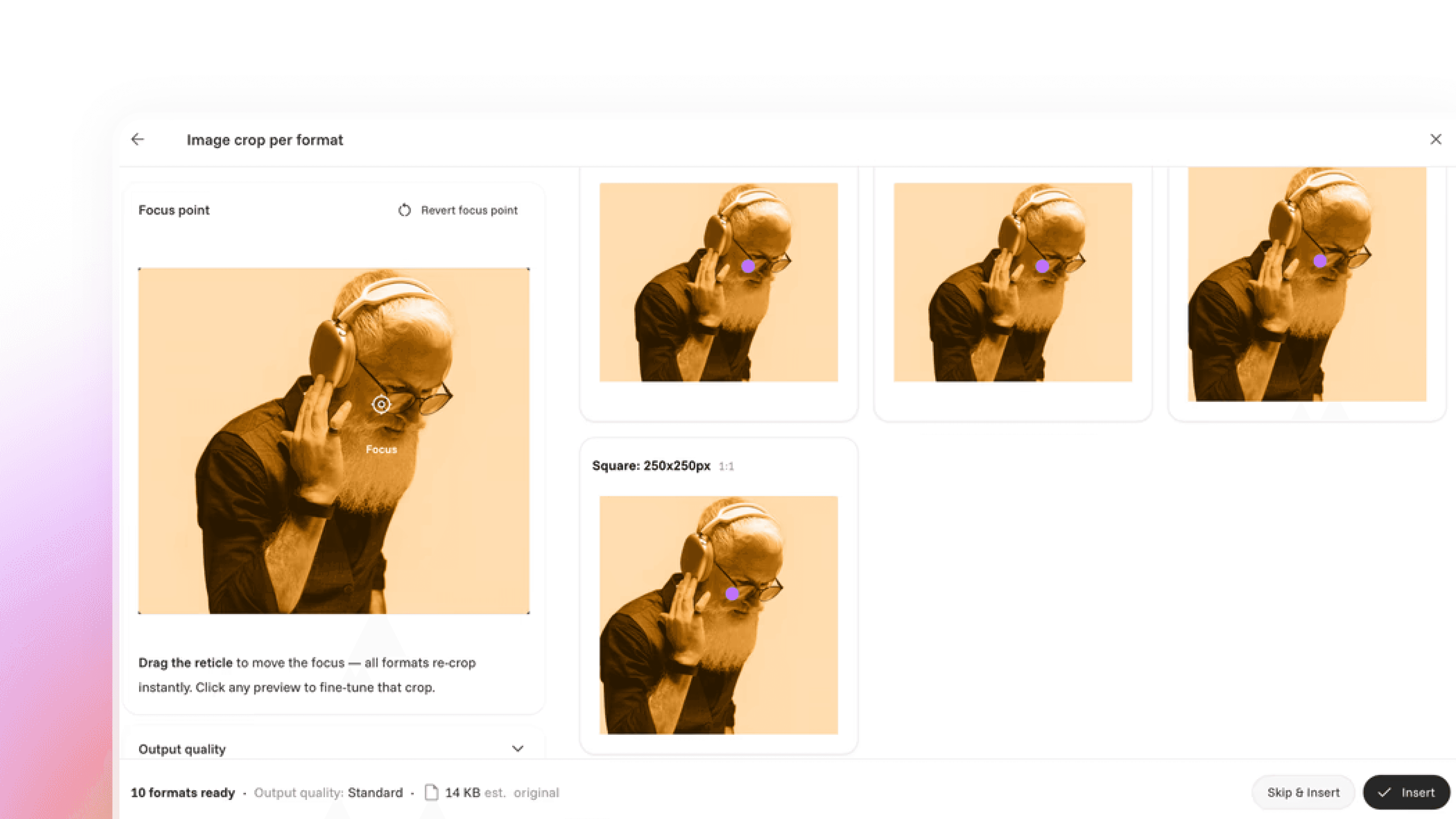
W Cape wierzymy, że istnieje inteligentniejszy, bardziej skalowalny sposób personalizacji reklam bez polegania na plikach cookie czy kosztownych stosach technologicznych. Cape umożliwia reklamodawcom budowanie pełnych kampanii opartych na danych za pomocą strumieni danych w czasie rzeczywistym, sygnałów kontekstowych i jednej głównej kreacji.

Oto, jak to działa:


  • Użyj jednego szablonu do generowania tysięcy wariantów
    Łatwo dostosuj kreację do zainteresowań odbiorców, języków, rynków czy promocji. Nie wymaga to ręcznego wysiłku.

  • Wykorzystaj dane pierwszej strony i kontekstowe
    Podłącz swoje dane (takie jak preferencje klientów czy strumienie produktów) oraz zewnętrzne sygnały (jak pogoda czy pora dnia), aby tworzyć reklamy, które są na czasie, trafne i lokalizowane.

  • Zautomatyzuj aktualizacje kreacji
    Dostosuj ceny, wiadomości, wizualizacje czy tłumaczenia w czasie rzeczywistym, a następnie automatycznie publikuj lub wstrzymuj kampanie na podstawie wyzwalaczy takich jak zapasy czy wydajność.

  • Pomijanie polegania na ciasteczkach
    Podejście Cape koncentruje się na inteligentnej automatyzacji i kontekstowej trafności, dzięki czemu możesz osiągnąć personalizację na dużą skalę, nie naruszając standardów prywatności.


Więc, czy powinieneś odejść od DCO?


Jeśli Twoim celem jest dostarczanie angażujących, spersonalizowanych doświadczeń reklamowych, które są opłacalne, szybkie do wdrożenia i odporne na przyszłość: tak. Koncentrując się na 90% sukcesu kampanii, który leży w inteligentnym ustawieniu, zwinności kreacji i automatyzacji, zyskasz większą wartość, lepszą wydajność i znacznie większą efektywność niż tradycyjne samo DCO może zaoferować.


Gotowy do personalizacji bez obciążeń związanych z DCO?
Dowiedz się, jak Cape pomaga wiodącym markom skalować trafne, hiperlokalne, oparte na danych kampanie - bez ciasteczek i złożoności.

Aktualności

Bądź na bieżąco z trendami

Ciekawy najnowszych trendów w marketingu i reklamie?
Zapisz się do naszego miesięcznego biuletynu Promarketers.

18 mar 2026

No more chocolate at breakfast? Navigating the new LHF ad rules this Easter

As ad compliance requirements evolve in 2026, UK confectionery brands face new restrictions on less healthy food (LHF) advertising. With the January 5 watershed now in effect, ad quality assurance systems must validate timing, placement, and product identifiability to avoid clearance failures this Easter season.

16 mar 2026

The future of inclusion: How Cape.io powered Virgin Media Television’s fully accessible ad break during the Men’s Six Nations

As Channel 4’s closed-captioning mandate came into effect in March 2026, Cape.io partnered with Virgin Media Television, Omnicom Media Group and VoiceBox to deliver a truly accessible ad break during the Guinness Men’s Six Nations. More than ad compliance, this moment proved that accessibility can operate at the highest level of live sports broadcasting.

27 lut 2026

Navigating Channel 4’s 2026 closed caption mandate

As ad compliance requirements tighten across the UK and Europe, closed captioning has evolved from an accessibility checkbox to a strategic necessity. Whether you're managing CTV campaigns or social media creative, automated ad testing for caption quality is no longer optional - it's fundamental to reaching today's fragmented, multi-screen audiences.

The advertising landscape is facing a seismic shift. By March 1, Channel 4 will become the first UK broadcaster to mandate closed captions across all advertising - including linear TV, streaming, and sponsorships.

The mandate is  a redefined standard for global inclusivity. Here is everything you need to know about the new mandate and how to stay ahead of the curve.

26 lut 2026

One platform, many realities: How creative automation platforms resolve the global vs. local tension

Scaling global marketing without losing local relevance requires more than brand guidelines and templates - it requires a creative automation platform designed for both global control and local flexibility. Most systems optimize for standardization, but scaling ad creative production across markets demands architecture that enables creative variation and adaptation by local experts without fragmenting brand governance.

Many global advertisers are chasing the same ideal: scale without losing relevance.

Consistency without uniformity.
Efficiency without bureaucracy.

It sounds simple. In practice, it’s one of the hardest tensions to resolve in modern marketing.

The global vs. local challenge isn’t new, but it’s becoming more urgent. As brands expand across markets, channels, and cultures, the question is no longer whether you should scale globally, but how you do so without erasing the nuance that makes marketing effective in the first place.

Everyone is looking for this balance. Very few get it right.

11 lut 2026

EPTVI Initiative launches Stage Two to help programmatic TV scale across Europe’s largest advertising markets

Broadcasters, streamers, agencies and ad tech companies including Google Ad Manager, Equativ, Adform, LiveRamp, The Trade Desk, FreeWheel and Cape.io begin work on practical solutions to reduce complexity and speed up adoption.

4 lut 2026

The guardrails of growth: Why creative intelligence demands compliance

Generative AI can produce thousands of creative variants, but most compliance systems are still manual, fragmented, and reactive, unable to keep pace with today’s velocity. To move fast without breaking things, the industry needs a new approach: real-time verification, programmatic enforcement, and end-to-end visibility. Embedded inside the stack, not bolted on at the end.

Aktualności

Bądź na bieżąco z trendami

Ciekawy najnowszych trendów w marketingu i reklamie?
Zapisz się do naszego miesięcznego biuletynu Promarketers.

18 mar 2026

No more chocolate at breakfast? Navigating the new LHF ad rules this Easter

As ad compliance requirements evolve in 2026, UK confectionery brands face new restrictions on less healthy food (LHF) advertising. With the January 5 watershed now in effect, ad quality assurance systems must validate timing, placement, and product identifiability to avoid clearance failures this Easter season.

16 mar 2026

The future of inclusion: How Cape.io powered Virgin Media Television’s fully accessible ad break during the Men’s Six Nations

As Channel 4’s closed-captioning mandate came into effect in March 2026, Cape.io partnered with Virgin Media Television, Omnicom Media Group and VoiceBox to deliver a truly accessible ad break during the Guinness Men’s Six Nations. More than ad compliance, this moment proved that accessibility can operate at the highest level of live sports broadcasting.

27 lut 2026

Navigating Channel 4’s 2026 closed caption mandate

As ad compliance requirements tighten across the UK and Europe, closed captioning has evolved from an accessibility checkbox to a strategic necessity. Whether you're managing CTV campaigns or social media creative, automated ad testing for caption quality is no longer optional - it's fundamental to reaching today's fragmented, multi-screen audiences.

The advertising landscape is facing a seismic shift. By March 1, Channel 4 will become the first UK broadcaster to mandate closed captions across all advertising - including linear TV, streaming, and sponsorships.

The mandate is  a redefined standard for global inclusivity. Here is everything you need to know about the new mandate and how to stay ahead of the curve.

26 lut 2026

One platform, many realities: How creative automation platforms resolve the global vs. local tension

Scaling global marketing without losing local relevance requires more than brand guidelines and templates - it requires a creative automation platform designed for both global control and local flexibility. Most systems optimize for standardization, but scaling ad creative production across markets demands architecture that enables creative variation and adaptation by local experts without fragmenting brand governance.

Many global advertisers are chasing the same ideal: scale without losing relevance.

Consistency without uniformity.
Efficiency without bureaucracy.

It sounds simple. In practice, it’s one of the hardest tensions to resolve in modern marketing.

The global vs. local challenge isn’t new, but it’s becoming more urgent. As brands expand across markets, channels, and cultures, the question is no longer whether you should scale globally, but how you do so without erasing the nuance that makes marketing effective in the first place.

Everyone is looking for this balance. Very few get it right.

11 lut 2026

EPTVI Initiative launches Stage Two to help programmatic TV scale across Europe’s largest advertising markets

Broadcasters, streamers, agencies and ad tech companies including Google Ad Manager, Equativ, Adform, LiveRamp, The Trade Desk, FreeWheel and Cape.io begin work on practical solutions to reduce complexity and speed up adoption.

4 lut 2026

The guardrails of growth: Why creative intelligence demands compliance

Generative AI can produce thousands of creative variants, but most compliance systems are still manual, fragmented, and reactive, unable to keep pace with today’s velocity. To move fast without breaking things, the industry needs a new approach: real-time verification, programmatic enforcement, and end-to-end visibility. Embedded inside the stack, not bolted on at the end.

Aktualności

Bądź na bieżąco z trendami

Ciekawy najnowszych trendów w marketingu i reklamie?
Zapisz się do naszego miesięcznego biuletynu Promarketers.

18 mar 2026

No more chocolate at breakfast? Navigating the new LHF ad rules this Easter

As ad compliance requirements evolve in 2026, UK confectionery brands face new restrictions on less healthy food (LHF) advertising. With the January 5 watershed now in effect, ad quality assurance systems must validate timing, placement, and product identifiability to avoid clearance failures this Easter season.

16 mar 2026

The future of inclusion: How Cape.io powered Virgin Media Television’s fully accessible ad break during the Men’s Six Nations

As Channel 4’s closed-captioning mandate came into effect in March 2026, Cape.io partnered with Virgin Media Television, Omnicom Media Group and VoiceBox to deliver a truly accessible ad break during the Guinness Men’s Six Nations. More than ad compliance, this moment proved that accessibility can operate at the highest level of live sports broadcasting.

27 lut 2026

Navigating Channel 4’s 2026 closed caption mandate

As ad compliance requirements tighten across the UK and Europe, closed captioning has evolved from an accessibility checkbox to a strategic necessity. Whether you're managing CTV campaigns or social media creative, automated ad testing for caption quality is no longer optional - it's fundamental to reaching today's fragmented, multi-screen audiences.

The advertising landscape is facing a seismic shift. By March 1, Channel 4 will become the first UK broadcaster to mandate closed captions across all advertising - including linear TV, streaming, and sponsorships.

The mandate is  a redefined standard for global inclusivity. Here is everything you need to know about the new mandate and how to stay ahead of the curve.

26 lut 2026

One platform, many realities: How creative automation platforms resolve the global vs. local tension

Scaling global marketing without losing local relevance requires more than brand guidelines and templates - it requires a creative automation platform designed for both global control and local flexibility. Most systems optimize for standardization, but scaling ad creative production across markets demands architecture that enables creative variation and adaptation by local experts without fragmenting brand governance.

Many global advertisers are chasing the same ideal: scale without losing relevance.

Consistency without uniformity.
Efficiency without bureaucracy.

It sounds simple. In practice, it’s one of the hardest tensions to resolve in modern marketing.

The global vs. local challenge isn’t new, but it’s becoming more urgent. As brands expand across markets, channels, and cultures, the question is no longer whether you should scale globally, but how you do so without erasing the nuance that makes marketing effective in the first place.

Everyone is looking for this balance. Very few get it right.

11 lut 2026

EPTVI Initiative launches Stage Two to help programmatic TV scale across Europe’s largest advertising markets

Broadcasters, streamers, agencies and ad tech companies including Google Ad Manager, Equativ, Adform, LiveRamp, The Trade Desk, FreeWheel and Cape.io begin work on practical solutions to reduce complexity and speed up adoption.

4 lut 2026

The guardrails of growth: Why creative intelligence demands compliance

Generative AI can produce thousands of creative variants, but most compliance systems are still manual, fragmented, and reactive, unable to keep pace with today’s velocity. To move fast without breaking things, the industry needs a new approach: real-time verification, programmatic enforcement, and end-to-end visibility. Embedded inside the stack, not bolted on at the end.

Skontaktuj się

Pokażemy Ci, co Cape.io może zrobić.

Intelligent Campaign Automation

Cape.io łączy się z Twoim DAM, serwerami reklam, DSP, narzędziami do zarządzania przepływem pracy i nie tylko, więc nie musisz wymieniać ani zastępować.

© 2025 Cape.io. Wszelkie prawa zastrzeżone

Polski

Skontaktuj się

Pokażemy Ci, co Cape.io może zrobić.

Intelligent Campaign Automation

Cape.io łączy się z Twoim DAM, serwerami reklam, DSP, narzędziami do zarządzania przepływem pracy i nie tylko, więc nie musisz wymieniać ani zastępować.

© 2025 Cape.io. Wszelkie prawa zastrzeżone

Polski

Skontaktuj się

Pokażemy Ci, co Cape.io może zrobić.

Intelligent Campaign Automation

Cape.io łączy się z Twoim DAM, serwerami reklam, DSP, narzędziami do zarządzania przepływem pracy i nie tylko, więc nie musisz wymieniać ani zastępować.

© 2025 Cape.io. Wszelkie prawa zastrzeżone

Polski