Nawigowanie po wyzwaniach mediów detalicznych

Coraz więcej dużych detalistów uruchamia i zarządza własnymi platformami reklamowymi. Ten ruch jest znany jako media detaliczne. W samym 2023 roku Amazon wygenerował 46,9 miliarda dolarów przychodu z reklam, głównie z sponsorowanych umiejscowień na swojej stronie. Jest jasne: media detaliczne stanowią ogromną szansę na wzrost. Ale przychodzą też z pewnymi trudnościami.

Czym Tak Naprawdę Są Media Detaliczne?

Media detaliczne obejmują wiele obszarów, ale w swojej istocie polegają na tym, że detaliści stają się platformami reklamowymi, pozwalając markom reklamować się bezpośrednio na swoich stronach internetowych lub w aplikacjach. To oznacza, że marki mogą dotrzeć do kupujących dokładnie wtedy, gdy podejmują decyzje zakupowe. Jest to potężna możliwość, ale tylko jeśli zostanie dobrze wykonana.

Trzy Główne Wyzwania w Reklamie Mediów Detalicznych

Gdy detaliści rozwijają swoje media, odkrywają, jak złożone mogą być operacje reklamowe. Niektóre z największych wyzwań to:

  1. Chaos Kreatywny na Dużą Skalę
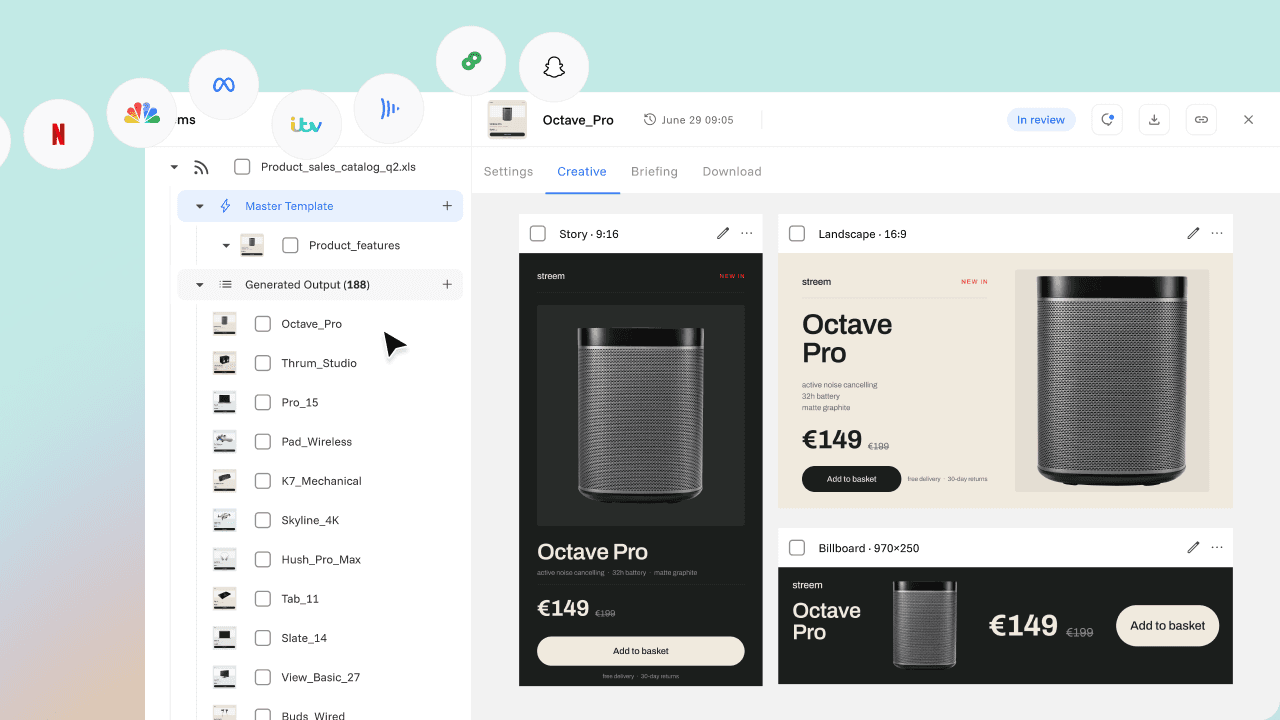
    Media detaliczne oznaczają skalę; wielu reklamodawców, wiele kreacji i nieskończone wariacje. Bez usprawnionego procesu wniosków kreatywnych, zatwierdzeń i aktualizacji, kampanie mogą zostać opóźnione lub wykolejone.

  2. Spójność Marki na Dużą Skalę
    Niezależnie od tego, czy reklamy są tworzone wewnętrznie, czy przez reklamodawców, kluczowe jest, aby każdy element wydawał się zgodny z marką. Proces twórczy musi być intuicyjny dla osób spoza działu projektowego, ale jednocześnie na tyle elastyczny, aby spełniać standardy marki.

  3. Wsparcie dla Długiego Ogona
    Mniejsi reklamodawcy często nie mają zasobów do tworzenia reklam wysokiej jakości. Potrzebują narzędzi samoobsługowych (najlepiej z automatyzacją i AI), które pozwolą im tworzyć świetne kreacje bez potrzeby posiadania zespołu projektowego.

Jak Cape Przekształca Operacje Mediów Detalicznych

Cape dostarcza detalistom infrastrukturę do zasilania wysokowydajnych, bezpiecznych dla marki kampanii reklamowych na dużą skalę. Oto jak:

  • Uruchom Zgodnie z Marką, Na Czas
    Cape ułatwia produkcję i uruchomienie w pełni zgodnych z marką zasobów w każdym formacie; display, wideo, w aplikacji, email, druk i więcej. Wbudowane bariery ochronne zapewniają, że wszystko pozostaje zgodne z marką, a przyjazny interfejs przyspiesza realizację.

  • Współpracuj i Rozwijaj Się z Łatwością
    W miarę wzrostu liczby kampanii Cape centralizuje współpracę. Zespoły (i reklamodawcy) mogą uzyskać dostęp do wszystkiego w jednym miejscu - briefy, szablony, zatwierdzenia - umożliwiając szybsze realizacje i spójne wykonanie.

  • Optymalizuj i Poprawiaj Automatycznie
    Cape automatyzuje powtarzalne zadania, dzięki czemu Twój zespół może skupić się na strategii. Dzięki wbudowanemu raportowaniu możesz śledzić wydajność kampanii, uczyć się na podstawie tego, co działa, i optymalizować przyszłe kampanie z pewnością.

Kliencki Case Study: Holenderski Gigant Detaliczny Zasila Swoją Platformę z Cape

Jeden z największych detalistów online w Holandii zwrócił się ku Cape, aby pomóc zarządzać tworzeniem reklam wewnętrznie i zapewnić, że każda reklama, niezależnie od tego, czy jest tworzona wewnętrznie, czy przez zewnętrznych reklamodawców, spełnia ich ścisłe wymagania dotyczące brandingu.

Dzięki Cape wdrożyli samoobsługowy kreator reklam za pomocą intuicyjnych, zgodnych z marką szablonów. Reklamodawcy mogą teraz szybko tworzyć swoje własne zasoby, korzystając z generowanych przez AI wariacji i wbudowanych kontroli zgodności. Rezultat? Wysokiej jakości, konsekwentnie brandowane reklamy; dostarczane szybciej i z mniejszym nadzorem.

Gotowy na odblokowanie pełnego potencjału swojej sieci mediów detalicznych?
Cape to sposób na skalowanie kreacji, pozostanie zgodnym i wsparcie każdego reklamodawcy bez kompromisów.

Aktualności

Bądź na bieżąco z trendami

Ciekawy najnowszych trendów w marketingu i reklamie?
Zapisz się do naszego miesięcznego biuletynu Promarketers.

18 mar 2026

No more chocolate at breakfast? Navigating the new LHF ad rules this Easter

As ad compliance requirements evolve in 2026, UK confectionery brands face new restrictions on less healthy food (LHF) advertising. With the January 5 watershed now in effect, ad quality assurance systems must validate timing, placement, and product identifiability to avoid clearance failures this Easter season.

16 mar 2026

The future of inclusion: How Cape.io powered Virgin Media Television’s fully accessible ad break during the Men’s Six Nations

As Channel 4’s closed-captioning mandate came into effect in March 2026, Cape.io partnered with Virgin Media Television, Omnicom Media Group and VoiceBox to deliver a truly accessible ad break during the Guinness Men’s Six Nations. More than ad compliance, this moment proved that accessibility can operate at the highest level of live sports broadcasting.

27 lut 2026

Navigating Channel 4’s 2026 closed caption mandate

As ad compliance requirements tighten across the UK and Europe, closed captioning has evolved from an accessibility checkbox to a strategic necessity. Whether you're managing CTV campaigns or social media creative, automated ad testing for caption quality is no longer optional - it's fundamental to reaching today's fragmented, multi-screen audiences.

The advertising landscape is facing a seismic shift. By March 1, Channel 4 will become the first UK broadcaster to mandate closed captions across all advertising - including linear TV, streaming, and sponsorships.

The mandate is  a redefined standard for global inclusivity. Here is everything you need to know about the new mandate and how to stay ahead of the curve.

26 lut 2026

One platform, many realities: How creative automation platforms resolve the global vs. local tension

Scaling global marketing without losing local relevance requires more than brand guidelines and templates - it requires a creative automation platform designed for both global control and local flexibility. Most systems optimize for standardization, but scaling ad creative production across markets demands architecture that enables creative variation and adaptation by local experts without fragmenting brand governance.

Many global advertisers are chasing the same ideal: scale without losing relevance.

Consistency without uniformity.
Efficiency without bureaucracy.

It sounds simple. In practice, it’s one of the hardest tensions to resolve in modern marketing.

The global vs. local challenge isn’t new, but it’s becoming more urgent. As brands expand across markets, channels, and cultures, the question is no longer whether you should scale globally, but how you do so without erasing the nuance that makes marketing effective in the first place.

Everyone is looking for this balance. Very few get it right.

11 lut 2026

EPTVI Initiative launches Stage Two to help programmatic TV scale across Europe’s largest advertising markets

Broadcasters, streamers, agencies and ad tech companies including Google Ad Manager, Equativ, Adform, LiveRamp, The Trade Desk, FreeWheel and Cape.io begin work on practical solutions to reduce complexity and speed up adoption.

4 lut 2026

The guardrails of growth: Why creative intelligence demands compliance

Generative AI can produce thousands of creative variants, but most compliance systems are still manual, fragmented, and reactive, unable to keep pace with today’s velocity. To move fast without breaking things, the industry needs a new approach: real-time verification, programmatic enforcement, and end-to-end visibility. Embedded inside the stack, not bolted on at the end.

Aktualności

Bądź na bieżąco z trendami

Ciekawy najnowszych trendów w marketingu i reklamie?
Zapisz się do naszego miesięcznego biuletynu Promarketers.

18 mar 2026

No more chocolate at breakfast? Navigating the new LHF ad rules this Easter

As ad compliance requirements evolve in 2026, UK confectionery brands face new restrictions on less healthy food (LHF) advertising. With the January 5 watershed now in effect, ad quality assurance systems must validate timing, placement, and product identifiability to avoid clearance failures this Easter season.

16 mar 2026

The future of inclusion: How Cape.io powered Virgin Media Television’s fully accessible ad break during the Men’s Six Nations

As Channel 4’s closed-captioning mandate came into effect in March 2026, Cape.io partnered with Virgin Media Television, Omnicom Media Group and VoiceBox to deliver a truly accessible ad break during the Guinness Men’s Six Nations. More than ad compliance, this moment proved that accessibility can operate at the highest level of live sports broadcasting.

27 lut 2026

Navigating Channel 4’s 2026 closed caption mandate

As ad compliance requirements tighten across the UK and Europe, closed captioning has evolved from an accessibility checkbox to a strategic necessity. Whether you're managing CTV campaigns or social media creative, automated ad testing for caption quality is no longer optional - it's fundamental to reaching today's fragmented, multi-screen audiences.

The advertising landscape is facing a seismic shift. By March 1, Channel 4 will become the first UK broadcaster to mandate closed captions across all advertising - including linear TV, streaming, and sponsorships.

The mandate is  a redefined standard for global inclusivity. Here is everything you need to know about the new mandate and how to stay ahead of the curve.

26 lut 2026

One platform, many realities: How creative automation platforms resolve the global vs. local tension

Scaling global marketing without losing local relevance requires more than brand guidelines and templates - it requires a creative automation platform designed for both global control and local flexibility. Most systems optimize for standardization, but scaling ad creative production across markets demands architecture that enables creative variation and adaptation by local experts without fragmenting brand governance.

Many global advertisers are chasing the same ideal: scale without losing relevance.

Consistency without uniformity.
Efficiency without bureaucracy.

It sounds simple. In practice, it’s one of the hardest tensions to resolve in modern marketing.

The global vs. local challenge isn’t new, but it’s becoming more urgent. As brands expand across markets, channels, and cultures, the question is no longer whether you should scale globally, but how you do so without erasing the nuance that makes marketing effective in the first place.

Everyone is looking for this balance. Very few get it right.

11 lut 2026

EPTVI Initiative launches Stage Two to help programmatic TV scale across Europe’s largest advertising markets

Broadcasters, streamers, agencies and ad tech companies including Google Ad Manager, Equativ, Adform, LiveRamp, The Trade Desk, FreeWheel and Cape.io begin work on practical solutions to reduce complexity and speed up adoption.

4 lut 2026

The guardrails of growth: Why creative intelligence demands compliance

Generative AI can produce thousands of creative variants, but most compliance systems are still manual, fragmented, and reactive, unable to keep pace with today’s velocity. To move fast without breaking things, the industry needs a new approach: real-time verification, programmatic enforcement, and end-to-end visibility. Embedded inside the stack, not bolted on at the end.

Aktualności

Bądź na bieżąco z trendami

Ciekawy najnowszych trendów w marketingu i reklamie?
Zapisz się do naszego miesięcznego biuletynu Promarketers.

18 mar 2026

No more chocolate at breakfast? Navigating the new LHF ad rules this Easter

As ad compliance requirements evolve in 2026, UK confectionery brands face new restrictions on less healthy food (LHF) advertising. With the January 5 watershed now in effect, ad quality assurance systems must validate timing, placement, and product identifiability to avoid clearance failures this Easter season.

16 mar 2026

The future of inclusion: How Cape.io powered Virgin Media Television’s fully accessible ad break during the Men’s Six Nations

As Channel 4’s closed-captioning mandate came into effect in March 2026, Cape.io partnered with Virgin Media Television, Omnicom Media Group and VoiceBox to deliver a truly accessible ad break during the Guinness Men’s Six Nations. More than ad compliance, this moment proved that accessibility can operate at the highest level of live sports broadcasting.

27 lut 2026

Navigating Channel 4’s 2026 closed caption mandate

As ad compliance requirements tighten across the UK and Europe, closed captioning has evolved from an accessibility checkbox to a strategic necessity. Whether you're managing CTV campaigns or social media creative, automated ad testing for caption quality is no longer optional - it's fundamental to reaching today's fragmented, multi-screen audiences.

The advertising landscape is facing a seismic shift. By March 1, Channel 4 will become the first UK broadcaster to mandate closed captions across all advertising - including linear TV, streaming, and sponsorships.

The mandate is  a redefined standard for global inclusivity. Here is everything you need to know about the new mandate and how to stay ahead of the curve.

26 lut 2026

One platform, many realities: How creative automation platforms resolve the global vs. local tension

Scaling global marketing without losing local relevance requires more than brand guidelines and templates - it requires a creative automation platform designed for both global control and local flexibility. Most systems optimize for standardization, but scaling ad creative production across markets demands architecture that enables creative variation and adaptation by local experts without fragmenting brand governance.

Many global advertisers are chasing the same ideal: scale without losing relevance.

Consistency without uniformity.
Efficiency without bureaucracy.

It sounds simple. In practice, it’s one of the hardest tensions to resolve in modern marketing.

The global vs. local challenge isn’t new, but it’s becoming more urgent. As brands expand across markets, channels, and cultures, the question is no longer whether you should scale globally, but how you do so without erasing the nuance that makes marketing effective in the first place.

Everyone is looking for this balance. Very few get it right.

11 lut 2026

EPTVI Initiative launches Stage Two to help programmatic TV scale across Europe’s largest advertising markets

Broadcasters, streamers, agencies and ad tech companies including Google Ad Manager, Equativ, Adform, LiveRamp, The Trade Desk, FreeWheel and Cape.io begin work on practical solutions to reduce complexity and speed up adoption.

4 lut 2026

The guardrails of growth: Why creative intelligence demands compliance

Generative AI can produce thousands of creative variants, but most compliance systems are still manual, fragmented, and reactive, unable to keep pace with today’s velocity. To move fast without breaking things, the industry needs a new approach: real-time verification, programmatic enforcement, and end-to-end visibility. Embedded inside the stack, not bolted on at the end.

Skontaktuj się

Pokażemy Ci, co Cape.io może zrobić.

Intelligent Campaign Automation

Cape.io łączy się z Twoim DAM, serwerami reklam, DSP, narzędziami do zarządzania przepływem pracy i nie tylko, więc nie musisz wymieniać ani zastępować.

© 2025 Cape.io. Wszelkie prawa zastrzeżone

Polski

Skontaktuj się

Pokażemy Ci, co Cape.io może zrobić.

Intelligent Campaign Automation

Cape.io łączy się z Twoim DAM, serwerami reklam, DSP, narzędziami do zarządzania przepływem pracy i nie tylko, więc nie musisz wymieniać ani zastępować.

© 2025 Cape.io. Wszelkie prawa zastrzeżone

Polski

Skontaktuj się

Pokażemy Ci, co Cape.io może zrobić.

Intelligent Campaign Automation

Cape.io łączy się z Twoim DAM, serwerami reklam, DSP, narzędziami do zarządzania przepływem pracy i nie tylko, więc nie musisz wymieniać ani zastępować.

© 2025 Cape.io. Wszelkie prawa zastrzeżone

Polski