A representação LGBTQIA+ em anúncios ainda tem um longo caminho a percorrer

Cat Blyth, gerente de marketing da Peach, escreve sobre a evolução da representação LGBTQIA+ na publicidade enquanto questiona o que as marcas poderiam fazer melhor também

Author

Author

Este texto foi originalmente publicado no site da Peach. Descubra mais sobre a mudança de marca de Peach para Cape.io.

LGBTQIA+: Lésbica, Gay, Bissexual, Transgênero, Intersexo, Queer/Questionamento, Assexual.

O Reino Unido exibiu seu primeiro anúncio apresentando um casal gay - dois homens para ser preciso - em 1998. Foi um anúncio para o spray corporal, Impulse, criado por Ogilvy & Mather. Ele se enquadra na categoria de anúncios de 'recuar e revelar', um tipo de montagem cômica onde o espectador não recebe todas as peças da informação até o final. Nesse caso, um homem ajuda uma mulher a pegar suas compras, um tipo de encontro casual cheio de sugestões e ares de flerte, antes de sair de braços dados com seu namorado. Foi progresso ver relacionamentos não-heterossexuais sendo retratados na TV? Certamente. Foi progressista - considerando que a homossexualidade dos homens era efetivamente a piada final? Não exatamente. 

Há vários outros exemplos daquela época que fazem exatamente o mesmo. Um anúncio da Toyota de 2006 mostra um pai e uma filha esperando para conhecer o novo parceiro da filha que, em uma 'reviravolta', se revela ser uma mulher. Em 2008, a Pepsi Max fez sua própria versão com um grupo de amigos incentivando seu colega a finalmente ir falar com quem acham que ele estava paquerando a noite toda, Kelly Brook. Ao invés disso, ele vai direto para o homem atrás dela, para o choque de seus amigos. 

Usar histórias gay e lésbicas era definitivamente um pouco de uma tática de choque e uma maneira de gerar imprensa e atenção através da controvérsia. Felizmente, isso mudou muito ao longo dos anos, assim como a atitude do público. O anúncio da Heinz de 2008 adotou uma abordagem diferente, uma família se preparando para a escola e o trabalho, com os dois pais do mesmo sexo compartilhando um rápido beijo. Na época, atraiu algumas reclamações do público. Ainda assim, pareceu um ponto de virada com o casal e seu relacionamento apresentados com tanta normalidade quanto se pode esperar em uma manhã movimentada durante a semana. 

As marcas são, claro, incentivadas a apresentar pessoas LGBTQIA+ nos anúncios, uma vez que essas pessoas fazem parte de seu público-alvo. A vagueza saiu dos anúncios e, com ela, a 'reviravolta' sem graça. Hoje, é muito mais provável vermos anúncios como o da Heinz, onde pessoas comuns simplesmente fazem parte da comunidade LGBTQIA+ vivendo suas vidas ou usando qualquer produto que estão anunciando. Pais gays recentemente apareceram em não um, mas dois anúncios de Natal, para Tesco e Sainsbury’s, respectivamente, com as marcas apresentando uma visão inclusiva e diversa das famílias durante o período festivo. 


imagem do anúncio de Natal de 2017 da Sainsbury's

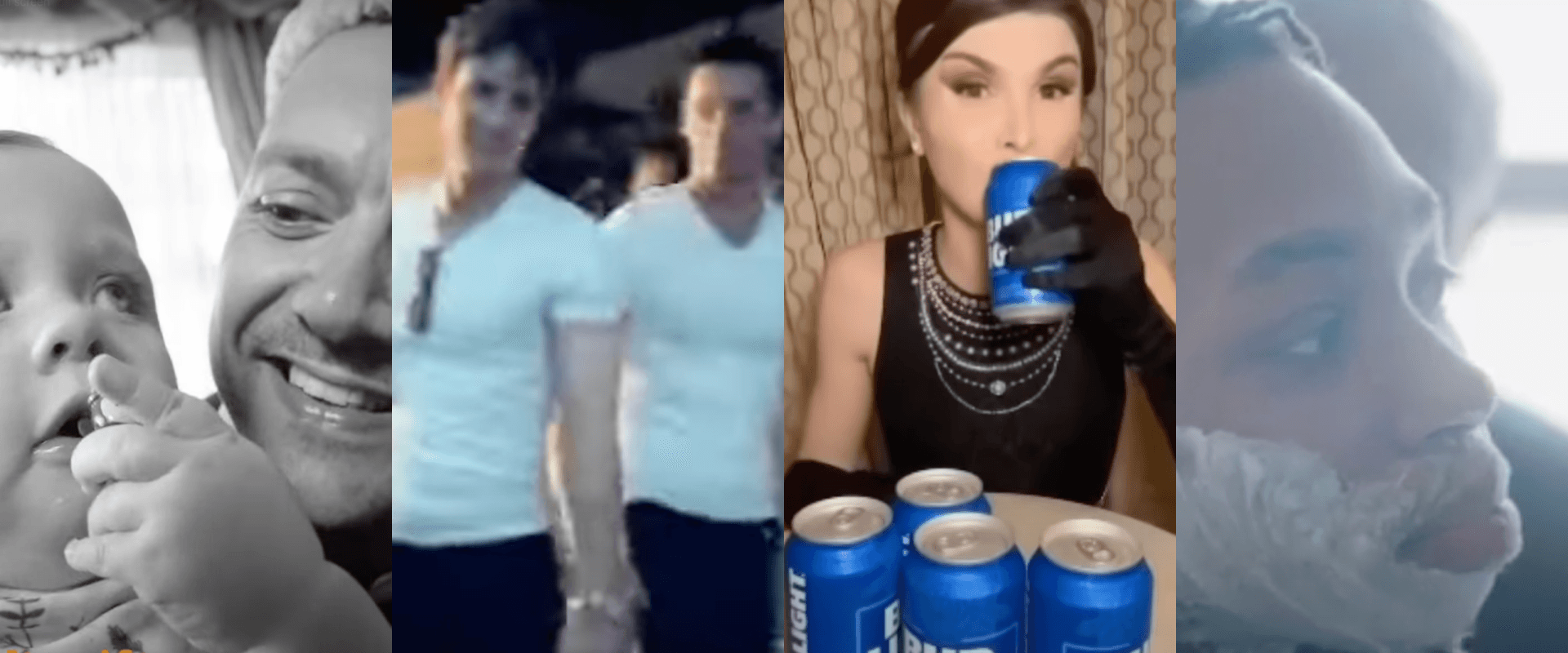
O progresso raramente acontece em linha reta (desculpe o trocadilho). Recentemente, a Budweiser chamou a estrela do TikTok Dylan Mulvaney para anunciar a Bud Light - um movimento que se mostrou tão 'controverso' para alguns segmentos do público americano da Budweiser que a marca perdeu seu lugar como a cerveja favorita da América. O anúncio em si mostra Dylan promovendo o então novo ‘Easy Carry Contest’ da marca enquanto é uma mulher transgênero. A marca atraiu a ira dos conservadores que reagiram de forma semelhante aos anúncios 'woke' anteriores da Gillette e da Nike. A Gillette mudou seu slogan para ‘O melhor que um homem pode ser’ (de ‘O melhor que um homem pode ter’) enquanto explorava questões de masculinidade tóxica no anúncio. Em 2019, a Gillette também lançou um vídeo apresentando um pai ensinando seu filho trans a se barbear, chamado apropriadamente de ‘Primeiro Barbear’. Os anúncios, apesar de irritarem alguns, não prejudicaram as vendas, embora ainda falte ver qual será o impacto nas vendas da Bud Light ao longo do próximo ano aproximadamente.  

Com mais marcas buscando membros da comunidade LGBTQIA+ para aparecerem em seus anúncios, é importante lembrar que a existência dessas pessoas é afetada pela negatividade online de maneiras reais e significativas. Um estudo encomendado pela Karmarama, parte da Accenture Song, em parceria com Gay Times, constatou que 82% dos entrevistados acreditam que a representação de pessoas LGBTQIA+ na publicidade é tokenista, com muitos citando a crença de que as marcas querem ser vistas como diversas sem sempre fazer as mudanças necessárias nos bastidores para criar mais diversidade. Muitos também mencionaram que as marcas precisam trabalhar nisso fora do mês do Orgulho. 

Em um estudo da Stonewall, mais de um terço dos entrevistados escondeu sua orientação sexual no trabalho com medo de discriminação. Isso não se limita apenas à indústria de publicidade, mas é representativo de todo o ambiente de trabalho. No entanto, se a indústria da publicidade está lucrando com a participação de LGBTQIA+ nos anúncios sem fazer qualquer mudança real e duradoura internamente também, isso é indubitavelmente errado. 

Faz sentido para as marcas representar autenticamente a sociedade hoje, de forma consistente e no grau em que isso se torne comum. Todos sabemos que um anúncio ou um logotipo com bandeira arco-íris no Linkedin não são suficientes — não podemos esquecer que há pessoas na sociedade atual que ficariam felizes em retirar os direitos dos outros.


Notícias

Fique à frente da curva

Curioso sobre as novidades em marketing e publicidade? Assine nossa newsletter mensal Promarketers.

18 de mar. de 2026

No more chocolate at breakfast? Navigating the new LHF ad rules this Easter

As ad compliance requirements evolve in 2026, UK confectionery brands face new restrictions on less healthy food (LHF) advertising. With the January 5 watershed now in effect, ad quality assurance systems must validate timing, placement, and product identifiability to avoid clearance failures this Easter season.

16 de mar. de 2026

The future of inclusion: How Cape.io powered Virgin Media Television’s fully accessible ad break during the Men’s Six Nations

As Channel 4’s closed-captioning mandate came into effect in March 2026, Cape.io partnered with Virgin Media Television, Omnicom Media Group and VoiceBox to deliver a truly accessible ad break during the Guinness Men’s Six Nations. More than ad compliance, this moment proved that accessibility can operate at the highest level of live sports broadcasting.

27 de fev. de 2026

Navigating Channel 4’s 2026 closed caption mandate

As ad compliance requirements tighten across the UK and Europe, closed captioning has evolved from an accessibility checkbox to a strategic necessity. Whether you're managing CTV campaigns or social media creative, automated ad testing for caption quality is no longer optional - it's fundamental to reaching today's fragmented, multi-screen audiences.

The advertising landscape is facing a seismic shift. By March 1, Channel 4 will become the first UK broadcaster to mandate closed captions across all advertising - including linear TV, streaming, and sponsorships.

The mandate is  a redefined standard for global inclusivity. Here is everything you need to know about the new mandate and how to stay ahead of the curve.

26 de fev. de 2026

One platform, many realities: How creative automation platforms resolve the global vs. local tension

Scaling global marketing without losing local relevance requires more than brand guidelines and templates - it requires a creative automation platform designed for both global control and local flexibility. Most systems optimize for standardization, but scaling ad creative production across markets demands architecture that enables creative variation and adaptation by local experts without fragmenting brand governance.

Many global advertisers are chasing the same ideal: scale without losing relevance.

Consistency without uniformity.
Efficiency without bureaucracy.

It sounds simple. In practice, it’s one of the hardest tensions to resolve in modern marketing.

The global vs. local challenge isn’t new, but it’s becoming more urgent. As brands expand across markets, channels, and cultures, the question is no longer whether you should scale globally, but how you do so without erasing the nuance that makes marketing effective in the first place.

Everyone is looking for this balance. Very few get it right.

11 de fev. de 2026

EPTVI Initiative launches Stage Two to help programmatic TV scale across Europe’s largest advertising markets

Broadcasters, streamers, agencies and ad tech companies including Google Ad Manager, Equativ, Adform, LiveRamp, The Trade Desk, FreeWheel and Cape.io begin work on practical solutions to reduce complexity and speed up adoption.

4 de fev. de 2026

The guardrails of growth: Why creative intelligence demands compliance

Generative AI can produce thousands of creative variants, but most compliance systems are still manual, fragmented, and reactive, unable to keep pace with today’s velocity. To move fast without breaking things, the industry needs a new approach: real-time verification, programmatic enforcement, and end-to-end visibility. Embedded inside the stack, not bolted on at the end.

Notícias

Fique à frente da curva

Curioso sobre as novidades em marketing e publicidade? Assine nossa newsletter mensal Promarketers.

18 de mar. de 2026

No more chocolate at breakfast? Navigating the new LHF ad rules this Easter

As ad compliance requirements evolve in 2026, UK confectionery brands face new restrictions on less healthy food (LHF) advertising. With the January 5 watershed now in effect, ad quality assurance systems must validate timing, placement, and product identifiability to avoid clearance failures this Easter season.

16 de mar. de 2026

The future of inclusion: How Cape.io powered Virgin Media Television’s fully accessible ad break during the Men’s Six Nations

As Channel 4’s closed-captioning mandate came into effect in March 2026, Cape.io partnered with Virgin Media Television, Omnicom Media Group and VoiceBox to deliver a truly accessible ad break during the Guinness Men’s Six Nations. More than ad compliance, this moment proved that accessibility can operate at the highest level of live sports broadcasting.

27 de fev. de 2026

Navigating Channel 4’s 2026 closed caption mandate

As ad compliance requirements tighten across the UK and Europe, closed captioning has evolved from an accessibility checkbox to a strategic necessity. Whether you're managing CTV campaigns or social media creative, automated ad testing for caption quality is no longer optional - it's fundamental to reaching today's fragmented, multi-screen audiences.

The advertising landscape is facing a seismic shift. By March 1, Channel 4 will become the first UK broadcaster to mandate closed captions across all advertising - including linear TV, streaming, and sponsorships.

The mandate is  a redefined standard for global inclusivity. Here is everything you need to know about the new mandate and how to stay ahead of the curve.

26 de fev. de 2026

One platform, many realities: How creative automation platforms resolve the global vs. local tension

Scaling global marketing without losing local relevance requires more than brand guidelines and templates - it requires a creative automation platform designed for both global control and local flexibility. Most systems optimize for standardization, but scaling ad creative production across markets demands architecture that enables creative variation and adaptation by local experts without fragmenting brand governance.

Many global advertisers are chasing the same ideal: scale without losing relevance.

Consistency without uniformity.
Efficiency without bureaucracy.

It sounds simple. In practice, it’s one of the hardest tensions to resolve in modern marketing.

The global vs. local challenge isn’t new, but it’s becoming more urgent. As brands expand across markets, channels, and cultures, the question is no longer whether you should scale globally, but how you do so without erasing the nuance that makes marketing effective in the first place.

Everyone is looking for this balance. Very few get it right.

11 de fev. de 2026

EPTVI Initiative launches Stage Two to help programmatic TV scale across Europe’s largest advertising markets

Broadcasters, streamers, agencies and ad tech companies including Google Ad Manager, Equativ, Adform, LiveRamp, The Trade Desk, FreeWheel and Cape.io begin work on practical solutions to reduce complexity and speed up adoption.

4 de fev. de 2026

The guardrails of growth: Why creative intelligence demands compliance

Generative AI can produce thousands of creative variants, but most compliance systems are still manual, fragmented, and reactive, unable to keep pace with today’s velocity. To move fast without breaking things, the industry needs a new approach: real-time verification, programmatic enforcement, and end-to-end visibility. Embedded inside the stack, not bolted on at the end.

Notícias

Fique à frente da curva

Curioso sobre as novidades em marketing e publicidade? Assine nossa newsletter mensal Promarketers.

18 de mar. de 2026

No more chocolate at breakfast? Navigating the new LHF ad rules this Easter

As ad compliance requirements evolve in 2026, UK confectionery brands face new restrictions on less healthy food (LHF) advertising. With the January 5 watershed now in effect, ad quality assurance systems must validate timing, placement, and product identifiability to avoid clearance failures this Easter season.

16 de mar. de 2026

The future of inclusion: How Cape.io powered Virgin Media Television’s fully accessible ad break during the Men’s Six Nations

As Channel 4’s closed-captioning mandate came into effect in March 2026, Cape.io partnered with Virgin Media Television, Omnicom Media Group and VoiceBox to deliver a truly accessible ad break during the Guinness Men’s Six Nations. More than ad compliance, this moment proved that accessibility can operate at the highest level of live sports broadcasting.

27 de fev. de 2026

Navigating Channel 4’s 2026 closed caption mandate

As ad compliance requirements tighten across the UK and Europe, closed captioning has evolved from an accessibility checkbox to a strategic necessity. Whether you're managing CTV campaigns or social media creative, automated ad testing for caption quality is no longer optional - it's fundamental to reaching today's fragmented, multi-screen audiences.

The advertising landscape is facing a seismic shift. By March 1, Channel 4 will become the first UK broadcaster to mandate closed captions across all advertising - including linear TV, streaming, and sponsorships.

The mandate is  a redefined standard for global inclusivity. Here is everything you need to know about the new mandate and how to stay ahead of the curve.

26 de fev. de 2026

One platform, many realities: How creative automation platforms resolve the global vs. local tension

Scaling global marketing without losing local relevance requires more than brand guidelines and templates - it requires a creative automation platform designed for both global control and local flexibility. Most systems optimize for standardization, but scaling ad creative production across markets demands architecture that enables creative variation and adaptation by local experts without fragmenting brand governance.

Many global advertisers are chasing the same ideal: scale without losing relevance.

Consistency without uniformity.
Efficiency without bureaucracy.

It sounds simple. In practice, it’s one of the hardest tensions to resolve in modern marketing.

The global vs. local challenge isn’t new, but it’s becoming more urgent. As brands expand across markets, channels, and cultures, the question is no longer whether you should scale globally, but how you do so without erasing the nuance that makes marketing effective in the first place.

Everyone is looking for this balance. Very few get it right.

11 de fev. de 2026

EPTVI Initiative launches Stage Two to help programmatic TV scale across Europe’s largest advertising markets

Broadcasters, streamers, agencies and ad tech companies including Google Ad Manager, Equativ, Adform, LiveRamp, The Trade Desk, FreeWheel and Cape.io begin work on practical solutions to reduce complexity and speed up adoption.

4 de fev. de 2026

The guardrails of growth: Why creative intelligence demands compliance

Generative AI can produce thousands of creative variants, but most compliance systems are still manual, fragmented, and reactive, unable to keep pace with today’s velocity. To move fast without breaking things, the industry needs a new approach: real-time verification, programmatic enforcement, and end-to-end visibility. Embedded inside the stack, not bolted on at the end.

Entre em contato

Vamos mostrar o que a Cape.io pode fazer.

Automação de Campanhas Inteligentes

Cape.io conecta sua equipe, DAM, servidores de anúncios, DSPs, ferramentas e mais, para que você não precise arrancar e substituir.

© 2025 Cape.io. Todos os direitos reservados

Portuguese

Entre em contato

Vamos mostrar o que a Cape.io pode fazer.

Automação de Campanhas Inteligentes

Cape.io conecta sua equipe, DAM, servidores de anúncios, DSPs, ferramentas e mais, para que você não precise arrancar e substituir.

© 2025 Cape.io. Todos os direitos reservados

Portuguese

Entre em contato

Vamos mostrar o que a Cape.io pode fazer.

Automação de Campanhas Inteligentes

Cape.io conecta sua equipe, DAM, servidores de anúncios, DSPs, ferramentas e mais, para que você não precise arrancar e substituir.

© 2025 Cape.io. Todos os direitos reservados

Portuguese