/
/
/
Wie Sie programmatische Digitale Außenwerbung Creative skalieren: Lösung für den Format-Engpass
Wie Sie programmatische Digitale Außenwerbung Creative skalieren: Lösung für den Format-Engpass
Digitale Außenwerbung bietet Marken ein enormes kreatives Potenzial, von hyperlokalen Botschaften bis hin zu dynamischen Kampagnen, die durch Wetter, Zeit und Ort ausgelöst werden. Doch dieses Potenzial zum Leben zu erwecken, bedeutet, eine enorme Anzahl kreativer Variationen über eine fragmentierte Landschaft von Bildschirmgrößen und -formaten hinweg zu produzieren.
Key takeaways
Programmatic Buying kann Media-Kampagnen schnell skalieren, aber das Creative muss dennoch auf unzähligen Bildschirmgrößen, Seitenverhältnissen und Publisher-Formaten funktionieren.
Zentralisieren Sie Formate und automatisieren Sie die Größenanpassung, damit sich Creatives an verschiedene Umgebungen anpassen können, ohne jede Version manuell neu erstellen zu müssen.
Cape.io’s modularer Digitale Außenwerbung-Workflow macht es möglich, eine einzelne Kampagne zu bearbeiten und formatspezifische Creatives zu generieren, was geo- und wettergesteuerte Kampagnen in großem Stil praxistauglicher macht.

Programmatische digitale Außenwerbung (pDOOH) verzeichnet ein massives Wachstum. Die Investitionen in pDOOH werden in den nächsten 18 Monaten um durchschnittlich 49 % steigen, wobei 91 % der Einkäufer dies in ihre breitere digitale und programmatische Planung einbeziehen – gegenüber nur 41 % vor zwei Jahren. Fast ein Drittel der Werbetreibenden stellt dafür völlig neue Budgets bereit.
Das Geld, das Inventar und die Infrastruktur für den Mediaeinkauf haben sich rasant weiterentwickelt. Die kreative Produktion hat jedoch nicht Schritt gehalten.
Heute können Mediateams mit wenigen Klicks Impressionen auf Tausenden von Bildschirmen, zu verschiedenen Tageszeiten und in verschiedenen Regionen kaufen. Aber die tatsächliche Kreation, die auf diesen Bildschirmen erscheint, wird immer noch so erstellt wie vor einem Jahrzehnt: ein Designer, eine Datei, eine Größe nach der anderen. Die Einkaufsseite ist nach vorne gesprintet und hat die kreative Produktion an der Startlinie stehen lassen.
In dieser Lücke verlieren Omnichannel-Kampagnen stillschweigend ihren Vorsprung, und genau dieses Problem soll die Kreativ-Automatisierungs-Plattform von Cape.io lösen.
Eine große Herausforderung bei PDOOH ist, dass die kreativen Prozesse in pDOOH nicht Schritt gehalten haben: der Engpass bei der Größenanpassung
Fragt man eine Marke oder eine Agentur, die eine ernsthafte DOOH-Kampagne durchführt, nach ihrer größten Hürde, lautet die Antwort selten der Mediaplan. Es ist die Umwandlung eines einzelnen kreativen Inhalts in die Hunderte von Größen- und Seitenverhältnisvarianten, die ein echter DOOH-Einkauf erfordert.
Eine Standardkampagne erfordert:
Querformat 16:9 für digitale Plakatwände am Straßenrand.
Hohe Hochformat-Bildschirme für Transit- und Einzelhandelsumgebungen.
Ultrabreite Streifen für Einkaufszentren und Flughäfen.
Quadratische Formate für Stadtmöblierung.
Dutzende von herstellerspezifischen, nicht standardisierten Abmessungen.
Manuell durchgeführt, ist dies keine Designaufgabe, sondern ein Albtraum bei der Versionierung. Jedes Format erfordert einen eigenen Zuschnitt, eine eigene Layout-Logik und einen eigenen Durchlauf zur Qualitätssicherung (QA). Dies verschlingt Produktionszeitpläne, führt zu Markeninkonsistenzen und macht eine einfache, späte Kundenänderung zu einem vollständigen Reproduktionszyklus.
Diese Einschränkung deckelt das, was kreativ möglich ist. Marken haben die Ideen für georelevante, tageszeitabhängige und dynamisch personalisierte Außenwerbung. Aber die Produktion der schieren Menge an benötigten Assets war in der Vergangenheit zu langsam und zu teuer, um sie im großen Stil zu versuchen.
Wie Cape.io die DOOH-Produktion beschleunigt
Cape.io basiert auf einer einfachen Prämisse: Entwerfen Sie eine Kampagne einmal, und überlassen Sie der Plattform die Vervielfachung. So beseitigen wir den Format-Engpass vollständig.
Starten Sie mit einer zentralisierten Formatbibliothek: Die Bibliothek von Cape.io deckt die gesamte Palette der DOOH- und pDOOH-Größen ab, einschließlich anbieterspezifischer Nicht-Standards. Anstatt einen Designer mit dem Neuaufbau eines Layouts zu beauftragen, wählen Sie in einem Durchgang jedes Format, das Ihre Kampagne benötigt, direkt aus der Bibliothek aus.
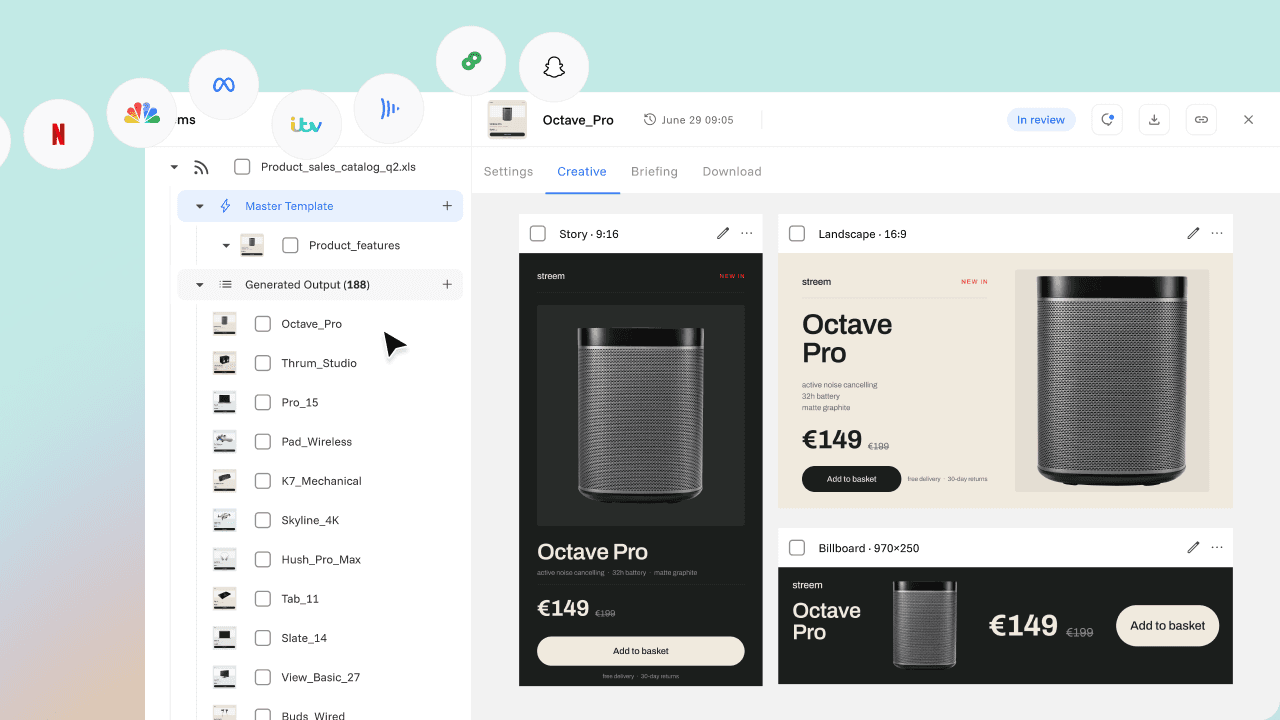
Algorithmischer Stiltransfer: Cape.io wendet seine Layout-Logik, Typografie, Farben und Bildplatzierung automatisch auf jedes ausgewählte Format an. Hunderte von einzelnen Builds werden zu einer einzigen Designentscheidung. Designer behalten die volle manuelle Kontrolle, um bestimmte Platzierungen fein abzustimmen.
Dynamische Vorlagen und Massenbearbeitung: Sobald eine Kampagne erstellt ist, bauen Sie die Kreation nicht mehr neu auf, sondern Sie bearbeiten sie. Ändern Sie eine Schlagzeile oder tauschen Sie einen Hintergrund aus, und diese Änderung wird sofort auf jedes Format im Set übertragen.
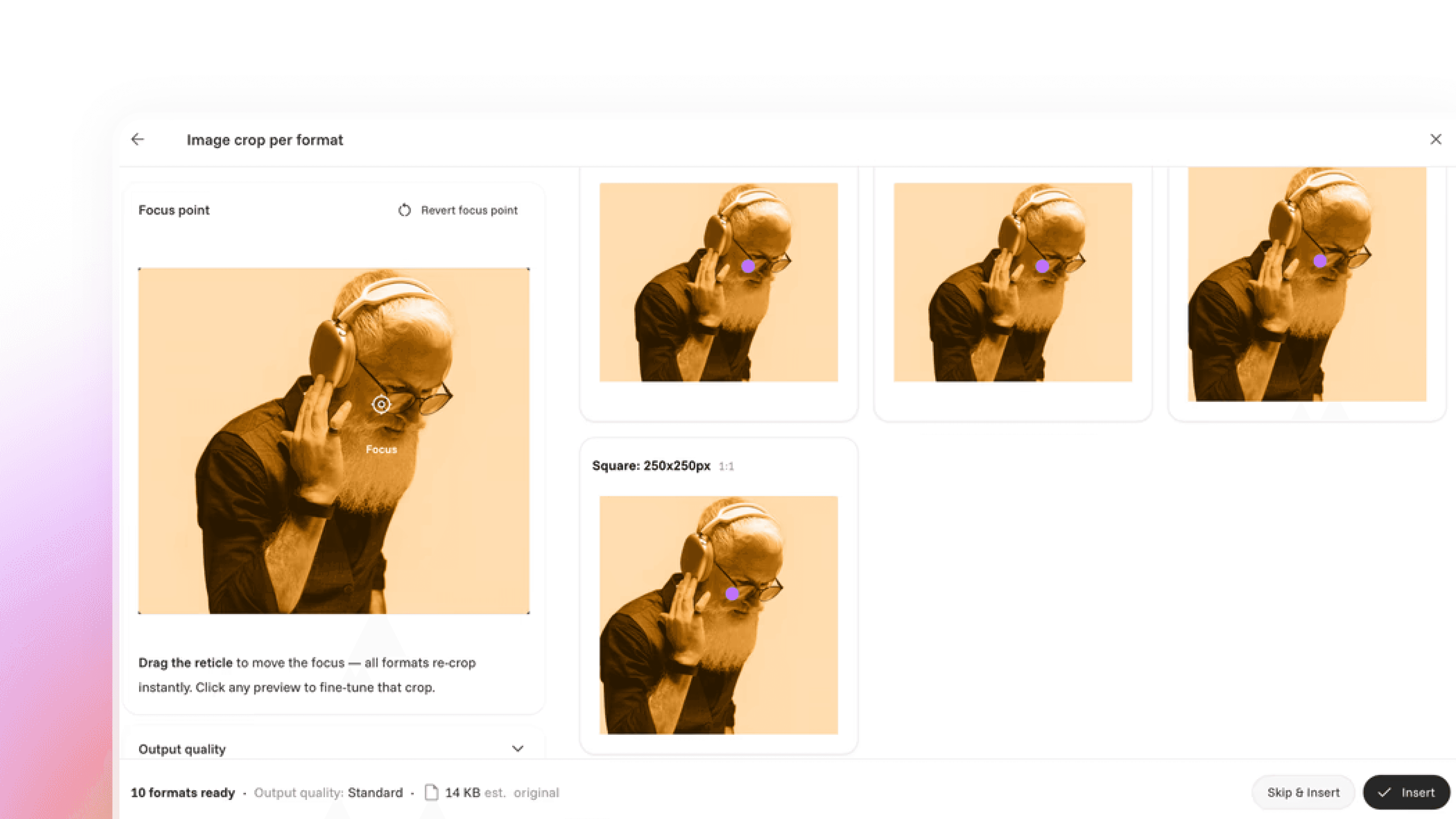
KI-gestützte Größenanpassung: Die Formatvielfalt bei DOOH ist extrem fordernd bei der Skalierung. Ein Hauptmotiv, das für eine 16:9-Plakatwand komponiert wurde, funktioniert selten auf einem 9:16-Transitbildschirm. Der KI-Autocropper von Cape.io analysiert jedes Hintergrundbild und ermittelt intelligent, wie es pro Format skaliert und neu positioniert werden muss, damit das Motiv im Bild bleibt und die Komposition erhalten bleibt. Auch hier haben die Designer das letzte Wort bei der Bearbeitung.
Da wir DOOH-Kreationen jetzt in rasantem Tempo ändern können, und wenn das Erstellen und Aktualisieren von Kreationen so schnell geht, können Kampagnen endlich Variationen nutzen, wie z. B. die Anpassung der Botschaften an die Region, das Wetter oder die Tageszeit, anstatt sich mit einer einzigen statischen Umsetzung zufriedenzugeben.
Anwendungsfälle für DOOH-Kreativ-Automatisierung nach Persona
Unternehmensmarken mit hohen OOH-Ausgaben: Produktionsvorlaufzeiten bestimmen nicht mehr den kreativen Ehrgeiz. Lokalisierte, tageszeitabhängige und immer aktuelle Kreationen werden über Ihre gesamte Bildschirmfläche hinweg realisierbar, ohne dass die Zahl der internen Designer erhöht werden muss.
Kreativ- und Mediaagenturen: Vorlagen und Massenbearbeitungen ermöglichen es einem einzigen Produktionsteam, mehr Kundenkampagnen zu betreuen und Überarbeitungen ohne lineare Skalierung der abrechenbaren Stunden zu bewältigen. Die Marge wird geschützt, ohne dass die Qualität leidet.
DOOH-Publisher: Bessere Kreation ist besser für alle. Jedes nicht standardisierte Format in Ihrem Inventar lässt sich für Werbetreibende einfacher mit hochwertigen, markenkonformen Kreationen füllen, was eine große Hürde beseitigt.
DOOH DSPs (Demand-Side-Plattformen): Schnellere kreative Bearbeitungszeiten bedeuten weniger ins Stocken geratene Kampagnen und mehr Inventar, das mit richtig dimensionierten Assets aktiviert wird, was die Fill-Rates und die Kampagnenleistung direkt verbessert.
Häufig gestellte Fragen (FAQ)
Was ist Programmatic DOOH (pDOOH)? Programmatic DOOH ist der automatisierte Einkauf, Verkauf und die Auslieferung von digitaler Außenwerbung. Es ermöglicht Werbetreibenden, Inventar für Plakatwände und Transitbildschirme in Echtzeit auf der Grundlage bestimmter Datenauslöser wie Wetter, Tageszeit oder Fußgängerverkehr der Zielgruppe zu erwerben.
Wie verbessert Kreativ-Automatisierung DOOH-Kampagnen? Software zur Kreativ-Automatisierung eliminiert die manuelle Erstellung von Anzeigenversionen. Durch den Einsatz von KI-Zuschnitten und dynamischen Vorlagen können Marken aus einem einzigen Master-Design sofort Hunderte von DOOH-Anzeigengrößen generieren, was schnellere Kampagnenstarts und hyperlokale Botschaften ermöglicht.
Kann Cape.io auch nicht-standardisierte Anzeigenformate von Publishern verarbeiten? Ja. Cape.io verfügt über eine umfassende Formatbibliothek, die sowohl Standard-DOOH-Dimensionen als auch spezifische, nicht-standardisierte Anforderungen von Publishern enthält, sodass Designer Kreationen automatisch skalieren können, um sie präzise an jeden Bildschirm anzupassen.
Sind Sie bereit, Ihre Außenwerbung zu skalieren? Setzen Sie sich mit unserem Team in Verbindung, um Ihre DOOH-Formatliste durchzusprechen und die Cape.io-Plattform in Aktion zu sehen.
Category