Die besten Plattformen für Kreativ-Automatisierung in 2026 (und für wen sich welche tatsächlich eignet)
Die besten Plattformen für Kreativ-Automatisierung in 2026 (und für wen sich welche tatsächlich eignet)
Jeder Anbieter in diesem Bereich wird Ihnen sagen, dass er der Beste ist. Es können nicht alle Recht haben.
Die Wahrheit ist weitaus nützlicher als ein einziger Gewinner: Plattformen für Kreativ-Automatisierung lösen grundlegend unterschiedliche Probleme. Einige sind für Enterprise Governance ausgelegt. Einige sind auf Geschwindigkeit ausgelegt. Andere wiederum decken kaum mehr als Paid Social ab. Die falsche Kategorie für Ihren tatsächlichen Engpass zu wählen, ist der teure Fehler, nicht die „falsche“ Marke zu wählen.
Wichtigste Erkenntnisse
Es gibt nicht die eine „beste“ Plattform für Kreativ-Automatisierung. Verschiedene Tools lösen unterschiedliche Engpässe in den Bereichen Produktion, Medien und Workflow.
Wählen Sie die Technologie passend zu dem Problem, das Sie lösen müssen – sei es High-Volume Creative Production, globale Markenkonsistenz, Media-Optimierung oder End-to-End-Kampagnenausführung.
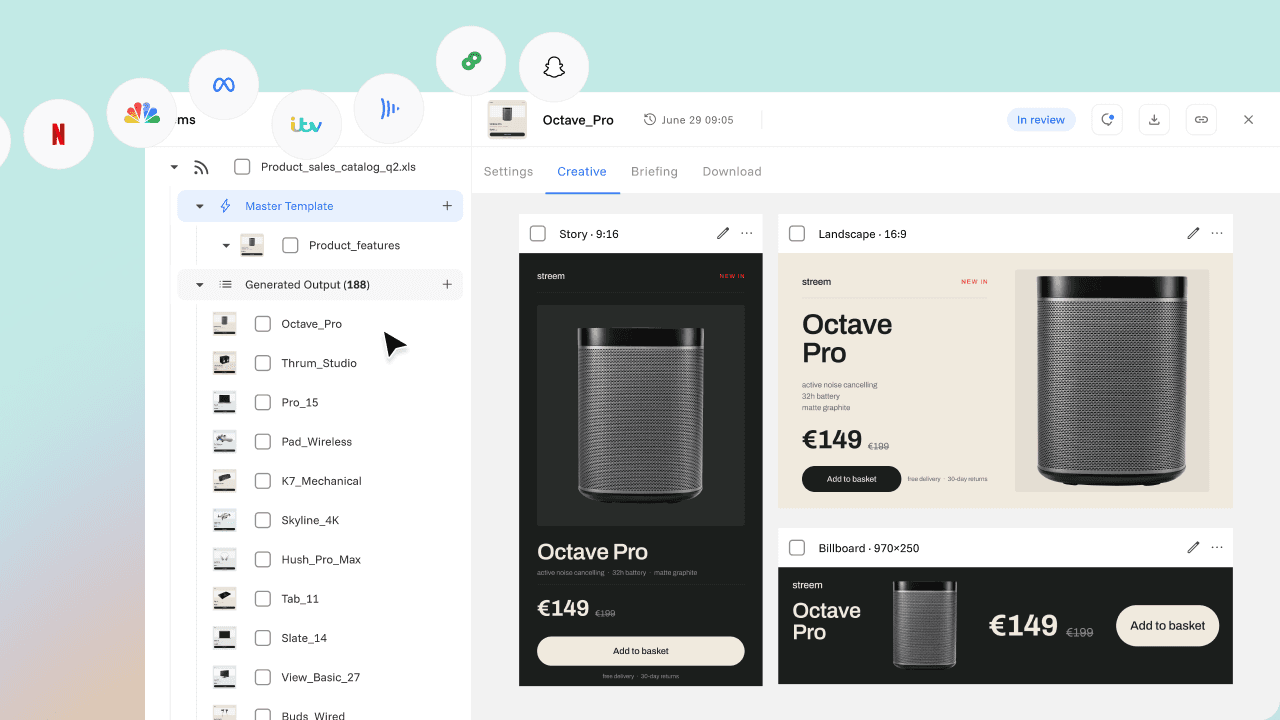
Kreativ- und Medienoptimierung funktionieren am besten zusammen. Cape.io verbindet kreative Produktion, Compliance-Validierung, Kampagnenplanung und -aktivierung, sodass Teams einen größeren Teil des Werbelebenszyklus in einem einzigen Workflow verwalten können.
Hier ist eine praktische Übersicht darüber, wer im Jahr 2026 worin gut ist und wohin sich die Kategorie tatsächlich entwickelt.
Schneller Vergleich
Plattform | Bestens geeignet für | Teamgröße |
|---|---|---|
Cape.io | Vollständiger Kampagnen-Lebenszyklus, eine Plattform | Mittelstand bis Großunternehmen |
Celtra | Enterprise Creative Governance | Großunternehmen |
Smartly.io | Paid Social Kreativ + Media-Einkauf | Großunternehmen |
Bannerflow | Omnichannel Banner-/Display-Produktion | Mittelstand bis Großunternehmen |
Storyteq | Marken-kontrollierte Kreativ-Zusammenarbeit in großem Stil | Mittelstand |
Rocketium | Hohe Geschwindigkeit bei der Produktion von großem Kreativ-Volumen | Mittelstand |
Creatify | KI-unterstützte Kreativ-Erstellung, kleinere Budgets | Klein- bis Mittelstand |
Hunch | Intelligence-Ebene auf Ihrem bestehenden Stack | Jede (Add-on) |
Was „Kreativ-Automatisierung“ heute tatsächlich bedeutet
Vor einigen Jahren bedeutete dies nur eines: Die Größe einer Banner-Werbung automatisch anzupassen, anstatt sie manuell neu zu erstellen. Das ist immer noch ein Teil davon. Aber die Kategorie hat sich stark erweitert.
Die besten Plattformen decken heute die KI-unterstützte Kreativ-Generierung, dynamische Personalisierung, automatisierte Compliance-Prüfungen und die direkte Veröffentlichung über Social, Display, Connected TV und Rundfunk ab. Der Druck, der diese Expansion antreibt, ist spürbar: mehr Kanäle, weniger Zeit und zunehmend auch tatsächliche rechtliche Vorgaben darüber, was in eine Werbung darf und was nicht.
Wie wir diese Liste zusammengestellt haben
Wir haben nicht jede Plattform bei jeder Funktion bewertet. Ein solcher Ansatz führt zu langen, unbrauchbaren Listen, bei denen jeder in einer vagen Kategorie „gewinnt“. Stattdessen haben wir uns fünf Aspekte angesehen, die diese Tools tatsächlich voneinander unterscheiden:
Kreative Flexibilität und Qualität – echte kreative Kontrolle oder standardisierte Vorlagen-Ergebnisse, die auch so aussehen
KI-Fähigkeit – tief in Entscheidungen integriert oder nur als nettes Extra obendrauf gesetzt
Workflow und Governance – wie gut Freigaben und Marken-Konsistenz über Teams hinweg gehandhabt werden
Skalierbarkeit und Zuverlässigkeit – hält sie auch bei hohem Volumen und in mehreren Märkten stand
Support-Tiefe – wie viel persönliche Unterstützung man tatsächlich erhält
Keine Plattform gewinnt in allen fünf Bereichen. Das ist kein Manko dieser Liste, sondern genau der Punkt.
Die Plattformen
Cape.io – bestens geeignet, um den gesamten Kampagnen-Lebenszyklus zu verbinden
Die meisten Plattformen auf dieser Liste sind auf einen Teil des Prozesses spezialisiert, meist auf die Kreativ-Produktion. Der Ansatz von Cape.io ist ein anderer: Planung, Kreativ-Produktion, Compliance-Prüfung und Aktivierung in einem einzigen Workflow über Social, Display, Connected TV und Rundfunk hinweg zu verbinden. Cape.io hat zudem die Sicherheitsebene direkt integriert, sodass Sie Risiken bei Ihren Kreativ-Inhalten nahtlos minimieren können.
Wenn Ihr eigentlicher Engpass nicht lautet „wir können nicht schnell genug Kreativ-Inhalte erstellen“, sondern „Kreativ-Abteilung, Media-Einkauf und Compliance arbeiten alle in separaten Tools, die nicht miteinander kommunizieren“, dann ist dies genau die Lücke, für die Cape.io gebaut wurde.
Finden Sie heraus, wie Cape.io Ihren Workflow verbindet
Celtra – bestens geeignet für Enterprise Creative Governance
Celtra hat sich im Bereich des Enterprise Creative Managements einen echten Namen gemacht, insbesondere für Teams, die mit mehreren Marken, Märkten oder Produktlinien jonglieren und dabei stets markenkonform bleiben müssen, ohne die Produktion auszubremsen.
Dank der Tools zur Stärkung von Marketern können auch nicht-technische Teams Kreativ-Inhalte erstellen, ohne jedes Mal das Design oder die Entwicklung hinzuziehen zu müssen. Das ist besonders wichtig, wenn Sie Kreativ-Prozesse in echtem Großmaßstab verwalten.
Bestens geeignet für: Enterprise-Teams, bei denen die Konsistenz über viele verschiedene Stakeholder hinweg die eigentliche Herausforderung darstellt.
Smartly.io – bestens geeignet für Paid Social mit direkter Verknüpfung zum Media-Budget
Die Stärke von Smartly.io ist sehr spezifisch: Die Kreativ-Produktion ist eng mit Paid Social und dem programmatischen Media-Einkauf verzahnt, wobei Connected TV als digitales Werbeformat integriert ist.
Weniger ausgereift ist hingegen der Bereich Rundfunk und Advanced TV, lineare Ausspielung oder das Broadcaster-Trafficking. Dies ist eine andere Disziplin als der digitale Connected TV-Einkauf und gehört nicht zum Kernbereich von Smartly.io.
Bestens geeignet für: Performance- und Paid-Social-Teams, bei denen Media-Budget und Kreativ-Inhalte gemeinsam verwaltet werden.
Bannerflow – bestens geeignet für die Omnichannel Banner- und Display-Produktion
DSPs und Social-Kanäle, und veröffentlicht über namhafte Partner auf Digitale Außenwerbung. Das macht es zu einer wirklich starken Option für Teams, die hohe Volumina über viele digitale und Out-of-Home-Platzierungen hinweg produzieren.
Der Kernfokus bleibt auf Digital und Digitale Außenwerbung gerichtet, anstatt auf Rundfunk oder lineares Fernsehen auszuweiten – das ist gut zu wissen, wenn Ihr Mediamix neben Digital auch traditionellen Rundfunk umfasst.
Bestens geeignet für: Marken und Agenturen, die große Mengen an Display-, Social- und Digitale Außenwerbung-Kreativ-Inhalten produzieren.
Storyteq – bestens geeignet für marken-kontrollierte Zusammenarbeit über Märkte hinweg
Das gesamte Konzept von Storyteq widmet sich einem spezifischen Problem: Wie ermöglicht man es lokalen oder regionalen Teams, Kreativ-Inhalte anzupassen, ohne die Vorgaben der Zentrale zu verletzen?
Es hält auch echtem Großbetrieb stand, mit einer soliden KI-unterstützten Produktion hinter der Governance-Ebene – also kein bloßes Kollaborations-Tool, das auf eine schwache Kreativ-Engine aufgesetzt wurde.
Bestens geeignet für: Regionenübergreifende Marken, die ein Gleichgewicht zwischen zentraler Kontrolle und lokaler Anpassung suchen.
Rocketium – bestens geeignet für Produktionsgeschwindigkeit bei hohem Volumen
Rocketium ist darauf ausgelegt, eine Vielzahl von Kreativ-Varianten schnell zu erstellen, ohne auf die Governance-Kontrollen zu verzichten, die größere Teams benötigen, um die Markenkonformität zu wahren.
Wenn Geschwindigkeit und Volumen Ihre eigentlichen Engpässe sind, ist dies eine starke Option, bei der Sie keine Kompromisse bei der Kontrolle eingehen müssen.
Bestens geeignet für: Teams, bei denen Geschwindigkeit Vorrang vor tiefgehenden Kontrollen für mehrere Märkte hat.
Creatify – bestens geeignet für KI-unterstützte Kreativ-Erstellung bei kleinerem Budget
Der Funktionsumfang von Creatify ist mittlerweile weit über einen einfachen KI-unterstützten Generator hinausgewachsen. Es ist jetzt eine absolut leistungsfähige Option und nicht mehr nur ein abgespecktes Einstiegstool.
Es bietet nach wie vor ein besonders gutes Preis-Leistungs-Verhältnis für kleinere Teams und knappere Budgets, die sich nicht an eine große Enterprise-Plattform binden möchten, ohne dabei auf grundlegende Funktionen beschränkt zu sein.
Bestens geeignet für: Kleinere Teams, die KI-unterstützte Kreativ-Erstellung ohne große Plattform-Bindung nutzen wollen.
Hunch – bestens geeignet als Intelligence-Ebene, nicht als Ersatz
Hunch geht clever vor: Anstatt zu behaupten, jede etablierte DCO-Plattform in Sachen Funktionen zu übertreffen, positioniert es sich als eine Ebene, die Intelligenz auf Kreativ-Ebene hinzufügt – sei es auf einer bestehenden Plattform oder als eigenständiger Ausgangspunkt.
Es setzt kein vorhandenes DCO-Tool voraus, um Mehrwert zu bieten. Das macht es flexibel für Teams, die sowohl einen bestehenden Stack ergänzen als auch ganz neu mit einem fokussierten, datengesteuerten Ansatz starten möchten.
Bestens geeignet für: Teams, die eine fokussierte Intelligence-Ebene auf einer bestehenden Plattform wünschen, anstatt diese komplett zu wechseln.
Für welche sollten Sie sich also tatsächlich entscheiden?
Beginnen Sie dort, wo Ihr Prozess tatsächlich ins Stocken gerät, und nicht mit einer Funktions-Checkliste.
Isolierte Tools für Planung, Produktion, Compliance und Aktivierung? Eine Plattform für den gesamten Lebenszyklus wie Cape.io löst das eigentliche Problem besser als eine weitere Einzellösung.
Der Engpass liegt bei Geschwindigkeit und Volumen? Rocketium ist genau dafür gebaut.
Der Engpass liegt bei der Brand Governance über Märkte hinweg? Celtra oder Storyteq.
Kreative Erstellung findet direkt innerhalb des Paid-Social-Budgets statt? Smartly.io.
Das Budget schließt eine Enterprise-Plattform aus? Creatify oder eine Ebene wie Hunch auf Ihrem bereits vorhandenen Setup.
Es lohnt sich auch, ehrlich zu sein, was Sie nicht benötigen. Nicht jedes Team braucht eine marktübergreifende Governance. Die Plattform an Ihren tatsächlichen Engpass anzupassen, ist besser, als sich für die längste Funktionsliste zu entscheiden.
Häufig gestellte Fragen
Was ist der Unterschied zwischen Kreativ-Automatisierung und DCO?
Kreativ-Automatisierung ist die übergeordnete Kategorie: das Produzieren und Skalieren von Kreativ-Inhalten, ohne alles manuell neu erstellen zu müssen. Die dynamische Kreativoptimierung (DCO) ist ein spezifischer Teilbereich davon, bei dem Kreativ-Inhalte automatisch und in Echtzeit basierend auf Zielgruppe oder Kontext angepasst werden. Die meisten Plattformen für Kreativ-Automatisierung enthalten DCO-Fähigkeiten, aber nicht jedes DCO-Tool deckt den gesamten Workflow ab.
Brauche ich eine vollständige Plattform oder nur ein Produktions-Tool?
Das hängt ganz davon ab, wo die eigentliche Schwachstelle liegt. Wenn die Produktion Ihr einziger Engpass ist und alles andere bereits funktioniert, reicht ein spezialisiertes Tool möglicherweise aus. Wenn jedoch Planung, Compliance und Aktivierung ebenfalls voneinander isoliert sind, löst eine Plattform für den gesamten Lebenszyklus das eigentliche Problem umfassender.
Wie wichtig ist KI hierbei tatsächlich?
Das variiert stark je nach Plattform – von KI als unterstützendes Feature bis hin zu KI, die direkt in Entscheidungen eingebunden ist, etwa was produziert oder wie es personalisiert werden soll. Keine der Optionen ist automatisch besser. Es hängt davon ab, wie viel Kontrolle Sie behalten oder abgeben möchten.
Können diese Plattformen tatsächlich bei der Anzeigen-Compliance helfen?
Einige können das, und es ist ein wachsender Bereich in dieser Kategorie, da die regulatorischen Anforderungen rund um die Werbung stetig zunehmen. Nicht jede Plattform auf dieser Liste betrachtet Compliance als Kernfunktion. Es lohnt sich, dies direkt mit dem jeweiligen Anbieter abzuklären, bevor man davon ausgeht, dass es abgedeckt ist.
Bevor Sie sich festlegen
Es gibt im Jahr 2026 keine einheitliche „beste“ Plattform, sondern nur diejenige, die am besten zu der Stelle passt, an der Ihr Prozess ins Stocken gerät. Enterprise Governance, Paid-Social-Integration, Produktionsgeschwindigkeit und die Verknüpfung des gesamten Lebenszyklus sind völlig unterschiedliche Probleme, und die dafür entwickelten Tools spiegeln das wider.
Wenn Ihre Lücke darin besteht, die Kreativ-Produktion mit Compliance und der kanalspezifischen Aktivierung zu verbinden, dann ist Cape.io genau dafür gebaut.
Kategorie