Diseñado para la publicidad: una mejor manera de compartir activos de video

Solo comparte archivos de video y ¡listo! Tan fácil como el correo electrónico, pero diseñado para publicidad: organizado, seguro, con Control de calidad — y listo para convertirse en una campaña con colaboradores. Kiran Earwaker sobre nuestra nueva función fácil de compartir recursos de video.

Esto fue publicado originalmente en el sitio web de Peach. Descubre más sobre la nueva marca de Peach a Cape.io.

James Clark comparte archivos fácilmente con colaboradores en Peach


Cuando comenzamos a analizar cómo ayudar a nuestros clientes a gestionar la entrega de anuncios de TV, activos de video sociales, servidores de anuncios, BVoD y destinos de Anuncio, nos acercamos a una serie de usuarios en toda la industria cuya responsabilidad es manejar estos archivos digitales.

Una de las principales cosas que vimos fue que las agencias todavía dependen mucho de correos electrónicos y otras herramientas para compartir archivos como WeTransfer y Dropbox. Aunque este método es una solución simple, también puede crear muchos problemas a largo plazo:

  • Los correos electrónicos se pierden debido a bandejas de entrada saturadas y rotación de personal

  • Los enlaces de WeTransfer caducan en 14 días

  • Las páginas de descarga pueden ser bloqueadas por firewalls internos

  • Los archivos tienen que ser descargados y luego subidos a múltiples sistemas

  • ¡No son seguros!

Incluso después de que los encargados de tráfico de campaña (AdOps, equipos de programática, etc.) logran conseguir los archivos correctos, existe el riesgo de que el archivo falle en la carga o por un transmisor debido a especificaciones incorrectas del archivo. Dependiendo de dónde esté el problema en el flujo de trabajo, se convierte en responsabilidad de esa persona devolverlo en la cadena para asegurarse de que el problema esté resuelto.

Todo esto lleva demasiado tiempo. La gente lo describe como desordenado (¡al menos!) — luchando por localizar, re-renderizar y actualizar archivos. Mucho puede salir mal y a menudo lo hace — lo que lleva a la frustración.

Peach, por supuesto, resuelve estos problemas, pero hablando con nuestros clientes nos dimos cuenta de que podíamos hacerlo más fácil. Antes de hoy, Peach pedía a los usuarios que ingresaran mucha información solo para cargar un video digital. Queríamos deshacernos de este proceso complicado y hacer que todo fuera mucho más eficiente y fácil de usar.

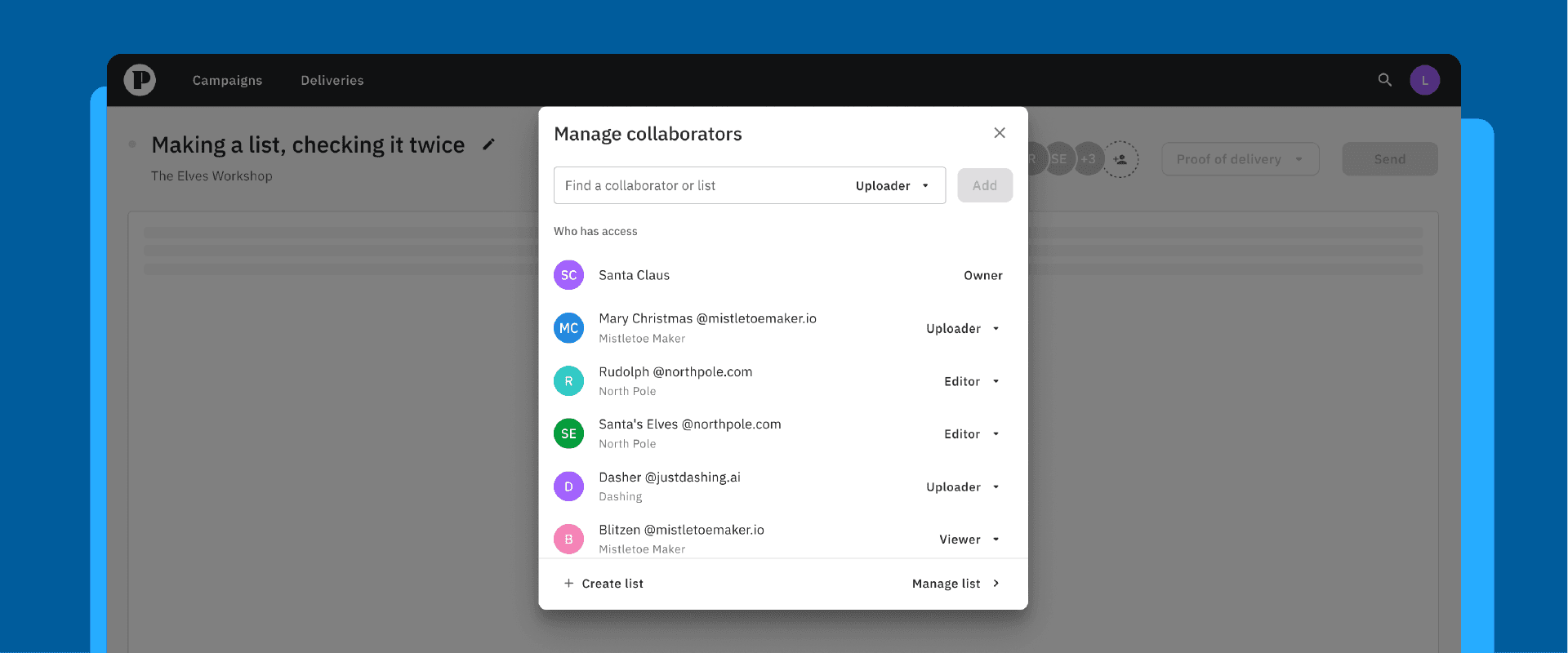
Exploramos maneras de simplificar esto. Después de muchas ideas e investigaciones, decidimos que un gran primer paso es simplemente permitir a los usuarios subir archivos digitales — sin añadir información primero. Una vez cargados, Peach reconoce automáticamente el tipo de anuncio, la relación de aspecto y la duración. El título se configura luego basado en el nombre del archivo subido. Los Anuncios pueden compartirse rápidamente con otro colaborador para añadir destinos, distribuir los archivos o trabajar con activadores. Tenemos muchos otros pasos que queremos dar para hacer este proceso aún más fácil para nuestros usuarios, pero creemos que este es un paso emocionante hacia hacer el manejo de campañas digitales más sencillo.

Nota: Ahora mismo no soportamos activos de TV lineal para esta función.

Noticias

Mantente a la vanguardia

¿Tienes curiosidad sobre lo último en marketing y publicidad? Suscríbete a nuestro boletín mensual de Promarketers.

23 abr 2026

Agentic AI vs AI wrappers vs custom AI: How to choose your path

You're about to spend $500K on an AI initiative. You've got 3 options on the table, and they'll lead you to wildly different places. Pick wrong, and you're rebuilding in 18 months. Pick right, and you'll have a system that scales, costs less to maintain, and actually does what executives promised.

The choice is between wrapping existing AI models, building custom AI solutions from scratch, or going agentic. Most teams don't understand the real trade-offs until they're locked into the wrong one.

30 mar 2026

Operationalizing AI in advertising: Why it must be embedded, not bolted on

Operationalizing AI in advertising isn’t about adding another tool to your stack. It’s about embedding intelligence into the systems that govern creative production, compliance, and delivery, so automation scales without creating more operational friction.

18 mar 2026

No more chocolate at breakfast? Navigating the new LHF ad rules this Easter

As ad compliance requirements evolve in 2026, UK confectionery brands face new restrictions on less healthy food (LHF) advertising. With the January 5 watershed now in effect, ad quality assurance systems must validate timing, placement, and product identifiability to avoid clearance failures this Easter season.

16 mar 2026

The future of inclusion: How Cape.io powered Virgin Media Television’s fully accessible ad break during the Men’s Six Nations

As Channel 4’s closed-captioning mandate came into effect in March 2026, Cape.io partnered with Virgin Media Television, Omnicom Media Group and VoiceBox to deliver a truly accessible ad break during the Guinness Men’s Six Nations. More than ad compliance, this moment proved that accessibility can operate at the highest level of live sports broadcasting.

27 feb 2026

Navigating Channel 4’s 2026 closed caption mandate

As ad compliance requirements tighten across the UK and Europe, closed captioning has evolved from an accessibility checkbox to a strategic necessity. Whether you're managing CTV campaigns or social media creative, automated ad testing for caption quality is no longer optional - it's fundamental to reaching today's fragmented, multi-screen audiences.

The advertising landscape is facing a seismic shift. By March 1, Channel 4 will become the first UK broadcaster to mandate closed captions across all advertising - including linear TV, streaming, and sponsorships.

The mandate is  a redefined standard for global inclusivity. Here is everything you need to know about the new mandate and how to stay ahead of the curve.

26 feb 2026

One platform, many realities: How creative automation platforms resolve the global vs. local tension

Scaling global marketing without losing local relevance requires more than brand guidelines and templates - it requires a creative automation platform designed for both global control and local flexibility. Most systems optimize for standardization, but scaling ad creative production across markets demands architecture that enables creative variation and adaptation by local experts without fragmenting brand governance.

Many global advertisers are chasing the same ideal: scale without losing relevance.

Consistency without uniformity.
Efficiency without bureaucracy.

It sounds simple. In practice, it’s one of the hardest tensions to resolve in modern marketing.

The global vs. local challenge isn’t new, but it’s becoming more urgent. As brands expand across markets, channels, and cultures, the question is no longer whether you should scale globally, but how you do so without erasing the nuance that makes marketing effective in the first place.

Everyone is looking for this balance. Very few get it right.

Noticias

Mantente a la vanguardia

¿Tienes curiosidad sobre lo último en marketing y publicidad? Suscríbete a nuestro boletín mensual de Promarketers.

23 abr 2026

Agentic AI vs AI wrappers vs custom AI: How to choose your path

You're about to spend $500K on an AI initiative. You've got 3 options on the table, and they'll lead you to wildly different places. Pick wrong, and you're rebuilding in 18 months. Pick right, and you'll have a system that scales, costs less to maintain, and actually does what executives promised.

The choice is between wrapping existing AI models, building custom AI solutions from scratch, or going agentic. Most teams don't understand the real trade-offs until they're locked into the wrong one.

30 mar 2026

Operationalizing AI in advertising: Why it must be embedded, not bolted on

Operationalizing AI in advertising isn’t about adding another tool to your stack. It’s about embedding intelligence into the systems that govern creative production, compliance, and delivery, so automation scales without creating more operational friction.

18 mar 2026

No more chocolate at breakfast? Navigating the new LHF ad rules this Easter

As ad compliance requirements evolve in 2026, UK confectionery brands face new restrictions on less healthy food (LHF) advertising. With the January 5 watershed now in effect, ad quality assurance systems must validate timing, placement, and product identifiability to avoid clearance failures this Easter season.

16 mar 2026

The future of inclusion: How Cape.io powered Virgin Media Television’s fully accessible ad break during the Men’s Six Nations

As Channel 4’s closed-captioning mandate came into effect in March 2026, Cape.io partnered with Virgin Media Television, Omnicom Media Group and VoiceBox to deliver a truly accessible ad break during the Guinness Men’s Six Nations. More than ad compliance, this moment proved that accessibility can operate at the highest level of live sports broadcasting.

27 feb 2026

Navigating Channel 4’s 2026 closed caption mandate

As ad compliance requirements tighten across the UK and Europe, closed captioning has evolved from an accessibility checkbox to a strategic necessity. Whether you're managing CTV campaigns or social media creative, automated ad testing for caption quality is no longer optional - it's fundamental to reaching today's fragmented, multi-screen audiences.

The advertising landscape is facing a seismic shift. By March 1, Channel 4 will become the first UK broadcaster to mandate closed captions across all advertising - including linear TV, streaming, and sponsorships.

The mandate is  a redefined standard for global inclusivity. Here is everything you need to know about the new mandate and how to stay ahead of the curve.

26 feb 2026

One platform, many realities: How creative automation platforms resolve the global vs. local tension

Scaling global marketing without losing local relevance requires more than brand guidelines and templates - it requires a creative automation platform designed for both global control and local flexibility. Most systems optimize for standardization, but scaling ad creative production across markets demands architecture that enables creative variation and adaptation by local experts without fragmenting brand governance.

Many global advertisers are chasing the same ideal: scale without losing relevance.

Consistency without uniformity.
Efficiency without bureaucracy.

It sounds simple. In practice, it’s one of the hardest tensions to resolve in modern marketing.

The global vs. local challenge isn’t new, but it’s becoming more urgent. As brands expand across markets, channels, and cultures, the question is no longer whether you should scale globally, but how you do so without erasing the nuance that makes marketing effective in the first place.

Everyone is looking for this balance. Very few get it right.

Noticias

Mantente a la vanguardia

¿Tienes curiosidad sobre lo último en marketing y publicidad? Suscríbete a nuestro boletín mensual de Promarketers.

23 abr 2026

Agentic AI vs AI wrappers vs custom AI: How to choose your path

You're about to spend $500K on an AI initiative. You've got 3 options on the table, and they'll lead you to wildly different places. Pick wrong, and you're rebuilding in 18 months. Pick right, and you'll have a system that scales, costs less to maintain, and actually does what executives promised.

The choice is between wrapping existing AI models, building custom AI solutions from scratch, or going agentic. Most teams don't understand the real trade-offs until they're locked into the wrong one.

30 mar 2026

Operationalizing AI in advertising: Why it must be embedded, not bolted on

Operationalizing AI in advertising isn’t about adding another tool to your stack. It’s about embedding intelligence into the systems that govern creative production, compliance, and delivery, so automation scales without creating more operational friction.

18 mar 2026

No more chocolate at breakfast? Navigating the new LHF ad rules this Easter

As ad compliance requirements evolve in 2026, UK confectionery brands face new restrictions on less healthy food (LHF) advertising. With the January 5 watershed now in effect, ad quality assurance systems must validate timing, placement, and product identifiability to avoid clearance failures this Easter season.

16 mar 2026

The future of inclusion: How Cape.io powered Virgin Media Television’s fully accessible ad break during the Men’s Six Nations

As Channel 4’s closed-captioning mandate came into effect in March 2026, Cape.io partnered with Virgin Media Television, Omnicom Media Group and VoiceBox to deliver a truly accessible ad break during the Guinness Men’s Six Nations. More than ad compliance, this moment proved that accessibility can operate at the highest level of live sports broadcasting.

27 feb 2026

Navigating Channel 4’s 2026 closed caption mandate

As ad compliance requirements tighten across the UK and Europe, closed captioning has evolved from an accessibility checkbox to a strategic necessity. Whether you're managing CTV campaigns or social media creative, automated ad testing for caption quality is no longer optional - it's fundamental to reaching today's fragmented, multi-screen audiences.

The advertising landscape is facing a seismic shift. By March 1, Channel 4 will become the first UK broadcaster to mandate closed captions across all advertising - including linear TV, streaming, and sponsorships.

The mandate is  a redefined standard for global inclusivity. Here is everything you need to know about the new mandate and how to stay ahead of the curve.

26 feb 2026

One platform, many realities: How creative automation platforms resolve the global vs. local tension

Scaling global marketing without losing local relevance requires more than brand guidelines and templates - it requires a creative automation platform designed for both global control and local flexibility. Most systems optimize for standardization, but scaling ad creative production across markets demands architecture that enables creative variation and adaptation by local experts without fragmenting brand governance.

Many global advertisers are chasing the same ideal: scale without losing relevance.

Consistency without uniformity.
Efficiency without bureaucracy.

It sounds simple. In practice, it’s one of the hardest tensions to resolve in modern marketing.

The global vs. local challenge isn’t new, but it’s becoming more urgent. As brands expand across markets, channels, and cultures, the question is no longer whether you should scale globally, but how you do so without erasing the nuance that makes marketing effective in the first place.

Everyone is looking for this balance. Very few get it right.

Ponte en contacto

Te mostraremos lo que Cape.io puede hacer.

Automatización de Campañas Inteligentes

Cape.io conecta a tu equipo, DAM, servidores de anuncios, DSP, herramientas y más, para que no necesites desmantelar y reemplazar.

© 2025 Cape.io. Todos los derechos reservados

Spanish

Ponte en contacto

Te mostraremos lo que Cape.io puede hacer.

Automatización de Campañas Inteligentes

Cape.io conecta a tu equipo, DAM, servidores de anuncios, DSP, herramientas y más, para que no necesites desmantelar y reemplazar.

© 2025 Cape.io. Todos los derechos reservados

Spanish

Ponte en contacto

Te mostraremos lo que Cape.io puede hacer.

Automatización de Campañas Inteligentes

Cape.io conecta a tu equipo, DAM, servidores de anuncios, DSP, herramientas y más, para que no necesites desmantelar y reemplazar.

© 2025 Cape.io. Todos los derechos reservados

Spanish