/
/
/
Comment faire évoluer la création en DOOH programmatique : résoudre le goulot d'étranglement des formats
Comment faire évoluer la création en DOOH programmatique : résoudre le goulot d'étranglement des formats
Le DOOH offre aux marques un énorme potentiel créatif, allant des messages hyper-locaux aux campagnes dynamiques déclenchées par la météo, l'heure et la localisation. Mais pour donner vie à ce potentiel, il faut produire un nombre énorme de variations créatives à travers un paysage fragmenté de tailles et de formats d'écrans.
Key takeaways
L'achat programmatic permet de diffuser des médias à grande échelle rapidement, mais la création doit toujours s'adapter à d'innombrables tailles d'écran, formats d'image et formats d'éditeurs.
Centralisez les formats et automatisez le redimensionnement pour que le creative puisse s'adapter aux différents environnements sans avoir à reconstruire manuellement chaque version.
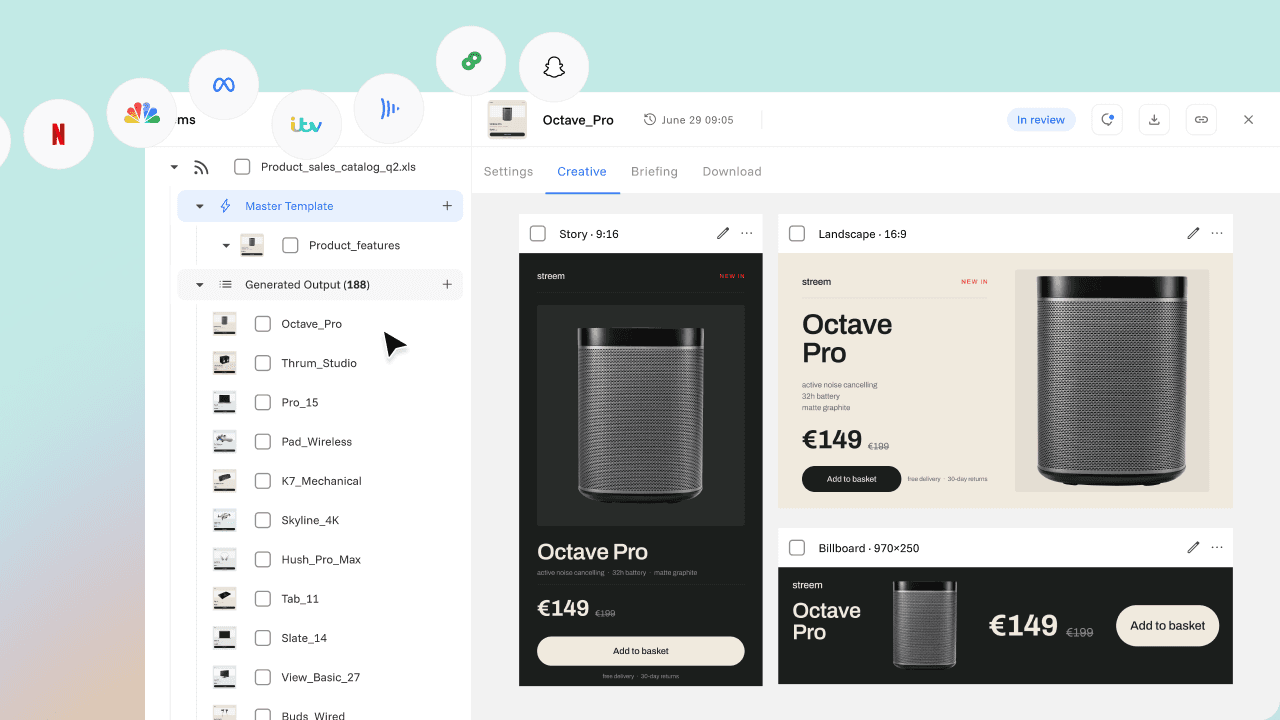
Le workflow DOOH modulaire de Cape.io permet de modifier une seule campagne et de générer des créations spécifiques à chaque format, rendant les campagnes basées sur la géolocalisation et la météo plus faciles à déployer à grande échelle.

Le Programmatic Digital Out-of-Home (pDOOH) connaît une croissance massive. L'investissement dans le pDOOH devrait croître en moyenne de 49 % au cours des 18 prochains mois, 91 % des acheteurs l'intégrant dans leur planification globale digitale et programmatique, contre seulement 41 % il y a deux ans. Près d'un tiers des annonceurs y consacrent des budgets entièrement nouveaux.
L'argent, l'inventaire et l'infrastructure d'achat média ont tous mûri rapidement. Cependant, la production de contenu Créatif n'a pas suivi le rythme.
Aujourd'hui, les équipes média peuvent acheter des impressions sur des milliers d'écrans, de tranches horaires et de zones géographiques en quelques clics. Mais le contenu Créatif réel apparaissant sur ces écrans est toujours conçu comme il y a dix ans : un designer, un fichier, une taille à la fois. Le côté achat a sprinté vers l'avant, laissant la production créative sur la ligne de départ.
C'est dans cet écart que les campagnes omnicanales perdent discrètement leur efficacité, et c'est précisément le problème que la Plateforme de Creative automation de Cape.io a été conçue pour résoudre.
Un défi de taille dans le PDOOH : les processus de création n'ont pas suivi le rythme dans le pDOOH : le goulot d'étranglement du redimensionnement
Demandez à n'importe quelle Marque ou agence menant une campagne DOOH sérieuse quel est leur plus grand obstacle, et la réponse est rarement le plan média. Il s'agit plutôt de transformer un unique élément de création en centaines de variantes de tailles et de ratios d'aspect exigées par un véritable achat DOOH.
Une campagne standard nécessite :
Un format paysage 16:9 pour les panneaux d'affichage digitaux routiers.
Des écrans de format portrait vertical pour les environnements de transport et de vente au détail.
Des bandes ultra-larges pour les centres commerciaux et les aéroports.
Des formats carrés pour le mobilier urbain.
Des dizaines de dimensions non standards spécifiques aux éditeurs.
Effectué manuellement, cela n'est plus une tâche de design ; c'est un cauchemar de déclinaison de versions. Chaque format nécessite son propre recadrage, sa logique de mise en page et sa phase de QA. Cela consomme des délais de production, introduit des incohérences pour la Marque et transforme une simple modification de fin de parcours demandée par le client en un cycle complet de reproduction.
Cette contrainte limite ce qui est possible sur le plan Créatif. Les marques ont des idées de publicité extérieure géo-ciblées, adaptées à l'heure de la journée et personnalisées de manière dynamique. Mais produire le volume massif de ressources requis a historiquement été trop lent et trop coûteux pour être envisagé à grande échelle.
Comment Cape.io accélère la production DOOH
Cape.io repose sur un principe simple : concevez une campagne une seule fois, et laissez la Plateforme gérer la multiplication. Voici comment nous éliminons complètement le goulot d'étranglement du format.
Commencez à partir d'une bibliothèque de formats centralisée : la bibliothèque de Cape.io couvre l'ensemble des tailles DOOH et pDOOH, y compris les formats non standards spécifiques aux éditeurs. Au lieu de briefer un designer pour reconstruire une mise en page, vous sélectionnez directement dans la bibliothèque chaque format dont votre campagne a besoin en une seule fois.
Transfert de style algorithmique : Cape.io applique automatiquement sa logique de mise en page, sa typographie, ses couleurs et le placement des images à chaque format sélectionné. Des centaines de créations individuelles se transforment en une seule décision de design. Les designers conservent un contrôle manuel total pour peaufiner des placements spécifiques.
Création de templates dynamiques et édition en masse : une fois la campagne créée, vous ne reconstruisez plus le contenu Créatif ; vous le modifiez. Modifiez un titre ou remplacez un arrière-plan, et ce changement se propage instantanément sur tous les formats de la série.
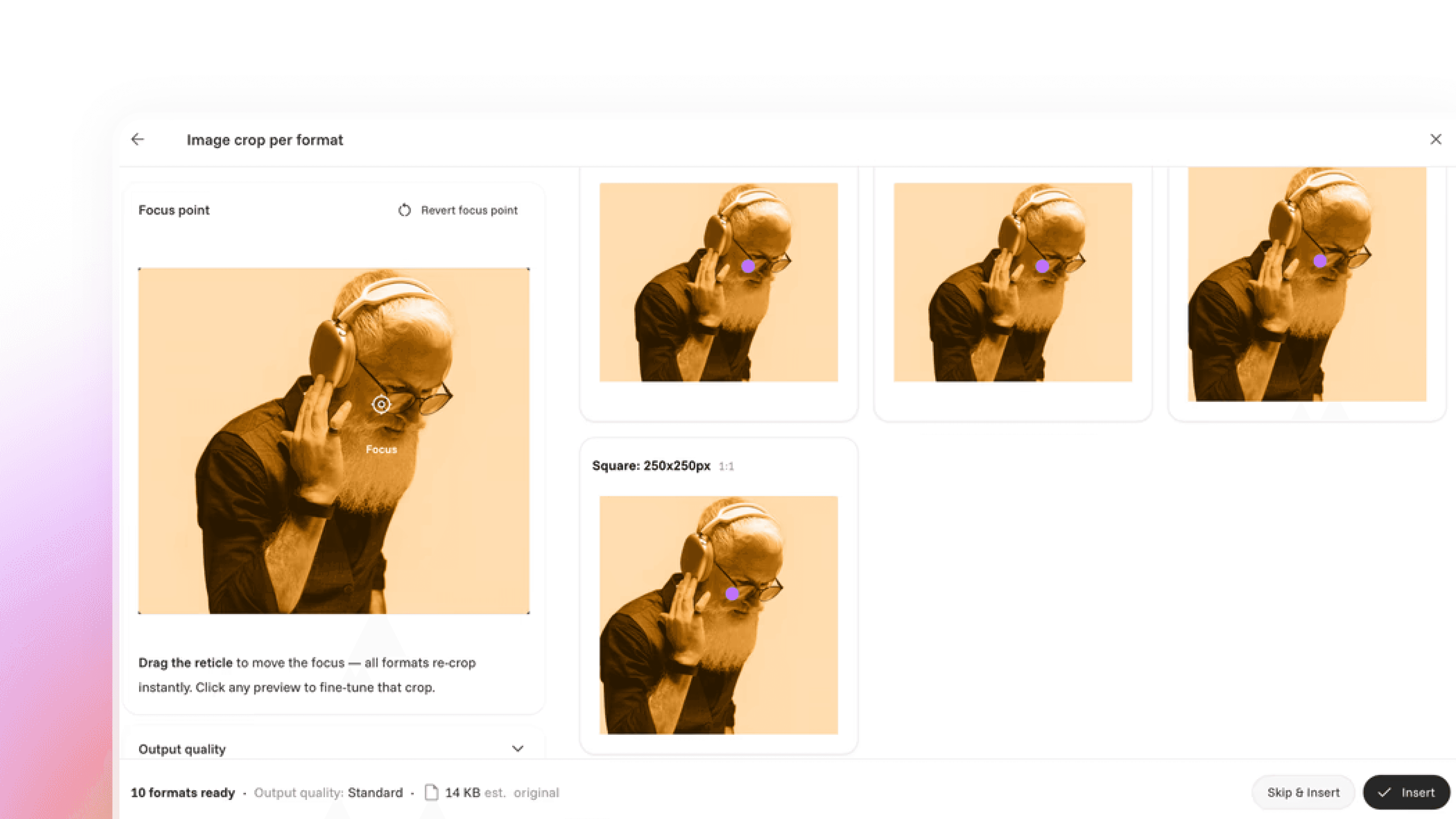
Redimensionnement alimenté par l'IA : la diversité des formats DOOH est redoutable pour la mise à l'échelle. Une image principale conçue pour un panneau d'affichage 16:9 fonctionne rarement sur un écran de transport 9:16. L'outil de recadrage automatique par IA de Cape.io analyse chaque image d'arrière-plan et détermine intelligemment comment la redimensionner et la repositionner pour chaque format, en gardant le sujet dans le cadre et la composition intacte. Là encore, les designers disposent toujours du pouvoir de modification final.
Maintenant que nous pouvons modifier le contenu Créatif DOOH à une vitesse fulgurante, lorsque la création et la mise à jour des éléments deviennent aussi rapides, les campagnes peuvent enfin utiliser la variation, par exemple en adaptant les messages selon la géographie, la météo ou l'heure de la journée, au lieu de se contenter d'une seule exécution statique.
Cas d'usage du Creative automation DOOH par profil
Grandes entreprises avec des dépenses OOH élevées : les délais de production ne dictent plus l'ambition de création. Un contenu Créatif localisé, adapté à la journée et toujours à jour devient réalisable sur l'ensemble de votre réseau d'écrans, sans augmenter les effectifs de design internes.
Agences de création et d'achat média : les templates et les modifications en masse permettent à une seule équipe de production de gérer davantage de campagnes clients et d'effectuer des révisions sans augmentation linéaire des heures facturables. La marge est protégée sans sacrifier la qualité.
Éditeurs DOOH : un meilleur contenu Créatif profite à tous. Chaque format non standard de votre inventaire devient plus facile à remplir pour les annonceurs avec un contenu Créatif de haute qualité, respectant la Marque, ce qui élimine un obstacle majeur.
DSPs DOOH (Demand-Side Platforms) : des délais d'exécution créatifs plus rapides se traduisent par moins de campagnes bloquées et plus d'inventaires activés avec des ressources aux dimensions appropriées, ce qui améliore directement les taux de remplissage et les performances des campagnes.
Foire Aux Questions (FAQ)
Qu'est-ce que le Programmatic DOOH (pDOOH) ? Le programmatic DOOH désigne l'achat, la vente et la diffusion automatisés de publicités Digital Out-of-Home. Il permet aux spécialistes du marketing d'acheter des inventaires de panneaux d'affichage et d'écrans de transport en temps réel en fonction de déclencheurs de données spécifiques comme la météo, l'heure de la journée ou le flux de piétons.
Comment le Creative automation améliore-t-il les campagnes DOOH ? Les logiciels de Creative automation éliminent la création manuelle de déclinaisons publicitaires. En utilisant le recadrage par IA et des templates dynamiques, les marques peuvent générer instantanément des centaines de tailles d'annonces DOOH à partir d'un seul design principal, permettant des lancements de campagnes plus rapides et des messages hyper-localisés.
Cape.io peut-il gérer les formats publicitaires non standards des éditeurs ? Oui. Cape.io propose une bibliothèque de formats complète qui comprend à la fois les dimensions DOOH standards et les exigences non standards spécifiques des éditeurs, permettant aux designers de redimensionner automatiquement le contenu Créatif pour l'adapter avec précision à n'importe quel écran.
Prêt à faire passer votre publicité extérieure à la vitesse supérieure ? Contactez notre équipe pour étudier votre liste de formats DOOH et voir la Plateforme Cape.io en action.
Category