20 lug 2021

Automatizza per eliminare

E se i robot non fossero i cattivi? E se… lasciare che i robot facciano più lavoro ti permettesse di dedicarti di più alle cose divertenti?

Author

Cape.io

Author

Cape.io

Questo è stato originariamente pubblicato sul sito di Peach. Scopri di più su il rebrand da Peach a Cape.io.

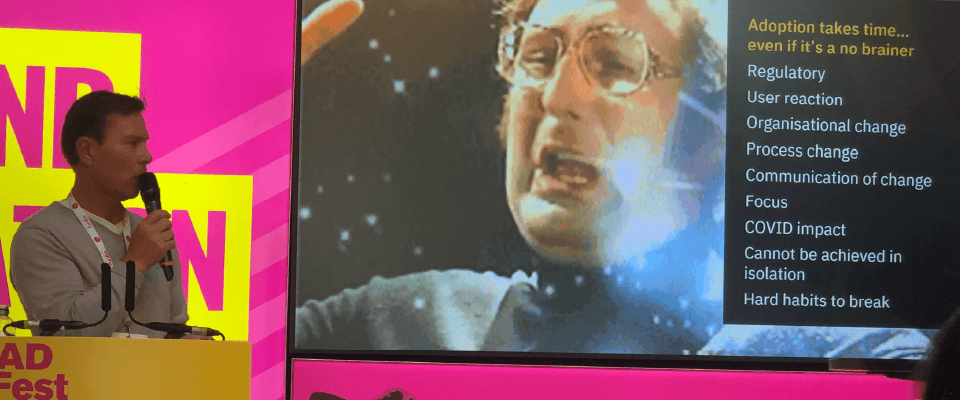
Jason Trout, il nostro Global Chief Digitale Officer ha parlato al Mad//Fest London all'inizio di luglio alla nostra prima conferenza europea #IRL. La sua sessione ha trattato l'importanza per l'industria della Pubblicità di abbracciare l'automazione e che la paura che possa rubare posti di lavoro è infondata. 

Nel 1930, John Maynard Keynes pensava che avremmo lavorato 30 ore a settimana e il nostro problema sarebbe stato troppo tempo libero. Il suo pensiero? Come raffigurato nella stampa del XIX secolo, pensava che avremmo potuto fare affidamento sulle macchine per produrre lo stesso output più rapidamente ed efficientemente... così da poterci rilassare. Noi ci speriamo. 


Quasi 100 anni dopo e non abbiamo ancora raggiunto quel punto. Invece, il superlavoro è spesso interpretato come impegno, piuttosto che inefficienza. Le visioni di settimane lavorative ridotte erano, che gli autori lo sapessero o no, visioni di una forza lavoro più efficiente. Ma ammettere di fare meno lavoro è spesso interpretato come un minor impegno. 

Questa percezione di non sembrare dedicati, di conseguenza, mantiene i dipendenti chiusi in lavori di basso valore e monotoni invece di richiedere il supporto di alternative automatizzate più veloci che liberano i dipendenti per compiere lavori di qualità superiore con meno sforzo, permettendo all'azienda di crescere. 


Perché dovrei suggerire l'automazione se questo significa che sarò sostituito?  

Le conversazioni su come l'automazione possa migliorare la produttività e ridurre i costi per le aziende sono spesso accompagnate da storie su come l'automazione stia togliendo posti di lavoro ai lavoratori.

Secondo un rapporto del McKinsey Global Institute, meno del 5% dei lavori consiste in attività che possono essere completamente automatizzate.


Molto più comune sarà l'automazione delle attività costitutive per un dato ruolo. In circa il 60% delle occupazioni, almeno un terzo delle attività che compongono un lavoro specifico potrebbe essere automatizzato. La buona notizia è che la maggior parte dei lavoratori vede questa automazione in modo positivo ed è desiderosa di sfruttare l'automazione che ha il potenziale di migliorare il proprio lavoro — e la propria vita.

I lavoratori intervistati sono impazienti di passare meno tempo su compiti manuali ripetitivi come l'immissione di dati, per passare più tempo sugli aspetti gratificanti del loro lavoro. Ecco uno sguardo a come l'automazione potrebbe fare proprio questo — e come le organizzazioni stanno affrontando l'automazione dei compiti ripetitivi per i lavoratori dell'informazione.


Come si può vedere dal grafico sopra, l'industria della Pubblicità ha il secondo più alto potenziale di adozione dell'automazione, appena sotto i servizi di alloggio e ristorazione. 


Il grafico sopra suddivide quel 51% in attività specifiche in cui l'automazione può essere applicata nell'industria della Pubblicità.  


Quanto tempo stai sprecando? 

Secondo un sondaggio sui lavoratori di Forbes, il 40% degli intervistati trascorre un quarto della settimana lavorativa in attività ripetitive come email, immissione e raccolta dati. Il 70% credeva che la maggiore opportunità di applicare l'automazione fosse nel lavoro ripetitivo, per l'industria della Pubblicità questo significherebbe cose come l'approvazione di asset e richieste di aggiornamento dello stato. 

Infine, il 60% stimava che avrebbero in totale risparmiato più di 6 ore di lavoro a settimana dopo l'introduzione dell'automazione al lavoro. Questo li libererebbe dai compiti amministrativi pesanti e riallineerebbe il loro focus sulla creatività e il lavoro più redditizio. 

L'adozione richiede tempo — anche se è ovvio 

Il caso aziendale e dei dipendenti per l'automazione è ovvio. Quindi perché le aziende sono così lente nell'implementazione? Anche quando la logica è chiara, richiede impegno. È un processo, non una soluzione rapida, che richiede tempo e focus da parte di tutti — come addestrare un cucciolo al vasino.  

Le persone sono sempre state avverse al cambiamento anche se lo riconoscono come benefico per loro. I cambiamenti devono essere comunicati, compresi e poi insegnati. Questo potrebbe richiedere un cambiamento organizzativo che porta con sé sfide proprie. 

E, ovviamente, c'è anche il Covid-19 — e come questo potrebbe aver rallentato involontariamente l'adozione dell'automazione. In primo luogo, potrebbero essere richiesti capitali per essere reinvestiti altrove per la sopravvivenza aziendale a breve termine. In secondo luogo, la formazione sui nuovi processi diventa molto più difficile e richiede tempo quando le persone lavorano da casa anziché insieme in ufficio. Le aziende potrebbero decidere di sospendere l'adozione fino a quando i dipendenti non saranno definitivamente tornati in ufficio — e chi può davvero sapere quando ciò potrebbe accadere. 

Nonostante tutto, ignorare il bisogno disperato di modernizzare l'industria della Pubblicità è pericoloso. Con l'esplosione del Digitale, TV Connessa e DOOH, le cose saranno sempre più insostenibili. Lanciare campagne digitali costa tempo, energia e morale poiché i media sono impantanati in compiti ripetitivi. 

In un sondaggio condotto da CoLab hanno scoperto che:

  • Il 61% ritiene che l'approvvigionamento di contenuti sia lento e complesso

  • Il 62% riconosce che si utilizza contenuto di scarsa qualità 

  • Il 96% utilizza processi diversi in vari punti di consegna

  • Il 65% non ha alcun tracciamento di dove i loro contenuti sono stati distribuiti 

Il nostro suggerimento? Investite e adottate ora mentre siete ancora capaci di gestire – è l'unica risposta per la sopravvivenza a lungo termine. 

 

Notizie

Anticipa le tendenze

Sei curioso di scoprire le ultime novità nel marketing e nella pubblicità? Iscriviti alla nostra newsletter mensile Promarketers.

27 feb 2026

Navigating Channel 4’s 2026 closed caption mandate

As ad compliance requirements tighten across the UK and Europe, closed captioning has evolved from an accessibility checkbox to a strategic necessity. Whether you're managing CTV campaigns or social media creative, automated ad testing for caption quality is no longer optional - it's fundamental to reaching today's fragmented, multi-screen audiences.

The advertising landscape is facing a seismic shift. By March 1, Channel 4 will become the first UK broadcaster to mandate closed captions across all advertising - including linear TV, streaming, and sponsorships.

The mandate is  a redefined standard for global inclusivity. Here is everything you need to know about the new mandate and how to stay ahead of the curve.

26 feb 2026

One platform, many realities: How creative automation platforms resolve the global vs. local tension

Scaling global marketing without losing local relevance requires more than brand guidelines and templates - it requires a creative automation platform designed for both global control and local flexibility. Most systems optimize for standardization, but scaling ad creative production across markets demands architecture that enables creative variation and adaptation by local experts without fragmenting brand governance.

Many global advertisers are chasing the same ideal: scale without losing relevance.

Consistency without uniformity.
Efficiency without bureaucracy.

It sounds simple. In practice, it’s one of the hardest tensions to resolve in modern marketing.

The global vs. local challenge isn’t new, but it’s becoming more urgent. As brands expand across markets, channels, and cultures, the question is no longer whether you should scale globally, but how you do so without erasing the nuance that makes marketing effective in the first place.

Everyone is looking for this balance. Very few get it right.

11 feb 2026

EPTVI Initiative launches Stage Two to help programmatic TV scale across Europe’s largest advertising markets

Broadcasters, streamers, agencies and ad tech companies including Google Ad Manager, Equativ, Adform, LiveRamp, The Trade Desk, FreeWheel and Cape.io begin work on practical solutions to reduce complexity and speed up adoption.

4 feb 2026

The guardrails of growth: Why creative intelligence demands compliance

Generative AI can produce thousands of creative variants, but most compliance systems are still manual, fragmented, and reactive, unable to keep pace with today’s velocity. To move fast without breaking things, the industry needs a new approach: real-time verification, programmatic enforcement, and end-to-end visibility. Embedded inside the stack, not bolted on at the end.

9 gen 2026

Every Word Counts - Cape Closed Captioning

Captions have become more than an accessibility tool, they’re now essential for how we watch, understand, and engage with content. Clear, inclusive, and attention-smart, captioning helps every story reach everyone.

4 dic 2025

Flying high with AI: How Cape.io revolutionized KLM's email marketing with AirMail

Discover how Cape.io partnered with KLM to build AirMail, an innovative AI co-pilot that generates highly customized email campaigns with unprecedented speed, efficiency, and scale.

Notizie

Anticipa le tendenze

Sei curioso di scoprire le ultime novità nel marketing e nella pubblicità? Iscriviti alla nostra newsletter mensile Promarketers.

27 feb 2026

Navigating Channel 4’s 2026 closed caption mandate

As ad compliance requirements tighten across the UK and Europe, closed captioning has evolved from an accessibility checkbox to a strategic necessity. Whether you're managing CTV campaigns or social media creative, automated ad testing for caption quality is no longer optional - it's fundamental to reaching today's fragmented, multi-screen audiences.

The advertising landscape is facing a seismic shift. By March 1, Channel 4 will become the first UK broadcaster to mandate closed captions across all advertising - including linear TV, streaming, and sponsorships.

The mandate is  a redefined standard for global inclusivity. Here is everything you need to know about the new mandate and how to stay ahead of the curve.

26 feb 2026

One platform, many realities: How creative automation platforms resolve the global vs. local tension

Scaling global marketing without losing local relevance requires more than brand guidelines and templates - it requires a creative automation platform designed for both global control and local flexibility. Most systems optimize for standardization, but scaling ad creative production across markets demands architecture that enables creative variation and adaptation by local experts without fragmenting brand governance.

Many global advertisers are chasing the same ideal: scale without losing relevance.

Consistency without uniformity.
Efficiency without bureaucracy.

It sounds simple. In practice, it’s one of the hardest tensions to resolve in modern marketing.

The global vs. local challenge isn’t new, but it’s becoming more urgent. As brands expand across markets, channels, and cultures, the question is no longer whether you should scale globally, but how you do so without erasing the nuance that makes marketing effective in the first place.

Everyone is looking for this balance. Very few get it right.

11 feb 2026

EPTVI Initiative launches Stage Two to help programmatic TV scale across Europe’s largest advertising markets

Broadcasters, streamers, agencies and ad tech companies including Google Ad Manager, Equativ, Adform, LiveRamp, The Trade Desk, FreeWheel and Cape.io begin work on practical solutions to reduce complexity and speed up adoption.

4 feb 2026

The guardrails of growth: Why creative intelligence demands compliance

Generative AI can produce thousands of creative variants, but most compliance systems are still manual, fragmented, and reactive, unable to keep pace with today’s velocity. To move fast without breaking things, the industry needs a new approach: real-time verification, programmatic enforcement, and end-to-end visibility. Embedded inside the stack, not bolted on at the end.

9 gen 2026

Every Word Counts - Cape Closed Captioning

Captions have become more than an accessibility tool, they’re now essential for how we watch, understand, and engage with content. Clear, inclusive, and attention-smart, captioning helps every story reach everyone.

4 dic 2025

Flying high with AI: How Cape.io revolutionized KLM's email marketing with AirMail

Discover how Cape.io partnered with KLM to build AirMail, an innovative AI co-pilot that generates highly customized email campaigns with unprecedented speed, efficiency, and scale.

Notizie

Anticipa le tendenze

Sei curioso di scoprire le ultime novità nel marketing e nella pubblicità? Iscriviti alla nostra newsletter mensile Promarketers.

27 feb 2026

Navigating Channel 4’s 2026 closed caption mandate

As ad compliance requirements tighten across the UK and Europe, closed captioning has evolved from an accessibility checkbox to a strategic necessity. Whether you're managing CTV campaigns or social media creative, automated ad testing for caption quality is no longer optional - it's fundamental to reaching today's fragmented, multi-screen audiences.

The advertising landscape is facing a seismic shift. By March 1, Channel 4 will become the first UK broadcaster to mandate closed captions across all advertising - including linear TV, streaming, and sponsorships.

The mandate is  a redefined standard for global inclusivity. Here is everything you need to know about the new mandate and how to stay ahead of the curve.

26 feb 2026

One platform, many realities: How creative automation platforms resolve the global vs. local tension

Scaling global marketing without losing local relevance requires more than brand guidelines and templates - it requires a creative automation platform designed for both global control and local flexibility. Most systems optimize for standardization, but scaling ad creative production across markets demands architecture that enables creative variation and adaptation by local experts without fragmenting brand governance.

Many global advertisers are chasing the same ideal: scale without losing relevance.

Consistency without uniformity.
Efficiency without bureaucracy.

It sounds simple. In practice, it’s one of the hardest tensions to resolve in modern marketing.

The global vs. local challenge isn’t new, but it’s becoming more urgent. As brands expand across markets, channels, and cultures, the question is no longer whether you should scale globally, but how you do so without erasing the nuance that makes marketing effective in the first place.

Everyone is looking for this balance. Very few get it right.

11 feb 2026

EPTVI Initiative launches Stage Two to help programmatic TV scale across Europe’s largest advertising markets

Broadcasters, streamers, agencies and ad tech companies including Google Ad Manager, Equativ, Adform, LiveRamp, The Trade Desk, FreeWheel and Cape.io begin work on practical solutions to reduce complexity and speed up adoption.

4 feb 2026

The guardrails of growth: Why creative intelligence demands compliance

Generative AI can produce thousands of creative variants, but most compliance systems are still manual, fragmented, and reactive, unable to keep pace with today’s velocity. To move fast without breaking things, the industry needs a new approach: real-time verification, programmatic enforcement, and end-to-end visibility. Embedded inside the stack, not bolted on at the end.

9 gen 2026

Every Word Counts - Cape Closed Captioning

Captions have become more than an accessibility tool, they’re now essential for how we watch, understand, and engage with content. Clear, inclusive, and attention-smart, captioning helps every story reach everyone.

4 dic 2025

Flying high with AI: How Cape.io revolutionized KLM's email marketing with AirMail

Discover how Cape.io partnered with KLM to build AirMail, an innovative AI co-pilot that generates highly customized email campaigns with unprecedented speed, efficiency, and scale.

Contattaci oggi stesso

Vediamo cosa può fare Cape.io.

Automazione Intelligente delle Campagne

Cape.io connette il tuo team, DAM, ad server, DSP, strumenti e altro ancora, così non è necessario strappare e sostituire.

© 2025 Cape.io. Tutti i diritti riservati

Italiano

Contattaci oggi stesso

Vediamo cosa può fare Cape.io.

Automazione Intelligente delle Campagne

Cape.io connette il tuo team, DAM, ad server, DSP, strumenti e altro ancora, così non è necessario strappare e sostituire.

© 2025 Cape.io. Tutti i diritti riservati

Italiano

Contattaci oggi stesso

Vediamo cosa può fare Cape.io.

Automazione Intelligente delle Campagne

Cape.io connette il tuo team, DAM, ad server, DSP, strumenti e altro ancora, così non è necessario strappare e sostituire.

© 2025 Cape.io. Tutti i diritti riservati

Italiano