Meno Tempo? Più Schermi. Come Adattarsi in un'Era di Contenuti di Massa

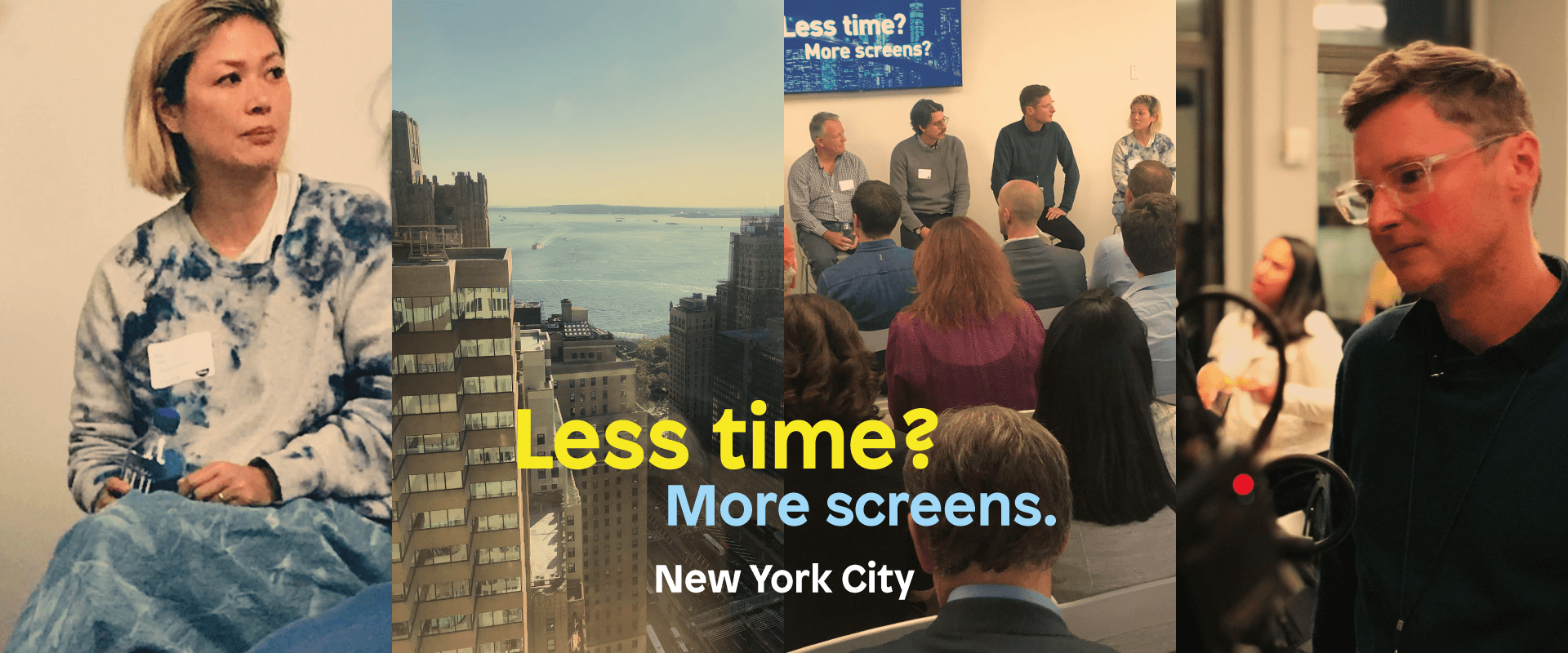
Al nostro evento a New York con Comcast Technology Solutions, Instagram, Droga5, Publicis, Framestore e MCA hanno discusso su cosa significhi per l'industria quando gli schermi sono in aumento e i contenuti sono al massimo storico.

Author

Cape.io

Author

Cape.io

Questo è stato originariamente pubblicato sul sito di Peach. Scopri di più sul rebrand da Peach a Cape.io.

Nel 2019, più dati e più contenuti stanno inondando la cultura a un ritmo allarmante, ma con enormi opportunità per gli inserzionisti e le industrie creative. I recenti cambiamenti nei comportamenti di consumo dei contenuti (come risultato della rapida avanzata della tecnologia) hanno scatenato ondate di cambiamento attraverso l'industria pubblicitaria. I Creativi e le agenzie devono evolversi più velocemente che mai per rimanere al passo con questo nuovo territorio inesplorato, gran parte del quale si trova dietro uno schermo. Le competenze che non sono mai esistite prima sono molto richieste, mentre altre vengono automatizzate.

Per approfondire le complessità di come teniamo il passo in questo mondo multipiattaforma e ricco di contenuti, Peach e Comcast Technology Solutions hanno invitato il direttore globale di Instagram Creative Shop, Kay Hsu; CCO di Publicis North America, Andy Bird; il direttore della produzione cinematografica presso Droga5, Jesse Brihn; il MD di Framestore, Charles Howell; e il fondatore di MCA, Pat Murphy, in una tavola rotonda ospitata dal fondatore e CEO di Little Black Book Matt Cooper.

Qui Sunna Naseer di LBB analizza i punti salienti fondamentali dell'evento formativo di New York...

Targeting dei Dati Digitali

L'accesso ai dati non è mai stato così facile da ottenere - fino alle statistiche individuali dei consumatori. I Marchi e le imprese ora hanno la capacità di creare campagne altamente personalizzate e mirate. Matt Cooper di LBB chiede al panel: "Come sta affrontando l'industria questo cambiamento nell'approccio?"

“I dati sono qui per restare, che ci piaccia o no,” dichiara il fondatore di MCA, Pat Murphy. “ Se hai una grande idea creativa, i dati possono renderla ancora più efficace. Mettere insieme le due cose, penso che sia enorme.”

Kay Hsu, direttore globale di Instagram Creative Shop, ha fatto luce su questo problema: “Quando guardi a come i disruptor stanno creando contenuti, è completamente diverso da come un'agenzia creerebbe tradizionalmente contenuti. Stanno assumendo in modo diverso, stanno assumendo i giovani, stanno usando i loro telefoni, sono meno preziosi. I marchi più grandi possono imparare molto da alcuni di questi marchi dirompenti. La formazione nel settore è ancora piuttosto tradizionale, quindi quando gli studenti escono sono meno preparati per affrontare le ultime esigenze di contenuto.”

Andy Bird, CCO presso Publicis North America è d'accordo: “I Creativi devono imparare diverse discipline e competenze per adattarsi al cambiamento. Il modo in cui forniamo il lavoro e le aspettative dei clienti sono evolute. La strategia creativa a volte sembra nascere dal nulla, ma i clienti amano i fatti, quindi quando vedono un'idea veramente creativa che proviene dai dati, adorano questo. I dati erano una parola spaventosa per i Creativi qualche anno fa, ma non credo lo sia più.”

Automazione & Creatività: Possono Convivere?

“Spero di sì perché è lì che stiamo andando,” dice Andy. “Se non lo facciamo siamo un po' fregati! Dipende da quanto materiale hai da automatizzare e sei molto limitato a causa dei costi. Ci deve essere un modo migliore per integrare l'automazione nel sistema. Tuttavia, l'arte è importante.”

Jesse Brihn, direttore della produzione cinematografica presso Droga5 aggiunge: “Ci sono alcune linee guida che puoi seguire per indurre qualcuno a cliccare o usare qualcosa. Stai creando un processo o output automatico ma hai anche persone incredibilmente intelligenti che hanno costruito le loro carriere sull'arte di rendere automatiche le cose. Instagram ha un'intera piattaforma costruita intorno alle migliori pratiche e linee guida per l'uso, ma non vorresti mai che qualcuno continui a rigurgitare lo stesso tipo di cosa o un bot lo faccia.”

Pat riassume: “Alla fine della giornata, se non hai una creatività eccezionale, non hai niente da automatizzare.”

Budget Ridotti

In tutto il settore, i budget vengono tagliati drasticamente eppure ci si aspetta che il lavoro rimanga altrettanto impattante. Questo ha spinto a una maggiore creatività per produrre la stessa qualità di lavoro con meno.

“Il modo migliore per farlo è la pianificazione preventiva. Vediamo il maggior successo se l'agenzia media e l'agenzia creativa lavorano simbioticamente per pianificare quali asset sono necessari prima di entrare in qualsiasi processo di produzione,” dice Pat. “Il nostro lavoro non riguarda il taglio dei costi o il controllo dei costi. La nostra missione è prendere un budget e ottenere il massimo rendimento. Se lavoriamo bene con le agenzie, allora ottieni la migliore Creatività.”

Jesse osserva: “Non si tratta necessariamente di risparmiare il più possibile perché quello sarà sempre il caso. Si tratta di ampliare le opportunità per posizionarlo correttamente nei modi giusti. Qualcosa che può essere visto come una pubblicità terribile o un contenuto terribile potrebbe non essere in realtà un brutto pezzo di lavoro, potrebbe semplicemente essere mirato nel modo sbagliato. Se usi i dati per aiutare a individuare mercati target e piattaforme, allora puoi fare le cose bene anche con un budget.”

Leggi l'articolo completo su LBB o guarda il video di  tutto l'evento qui

Notizie

Anticipa le tendenze

Sei curioso di scoprire le ultime novità nel marketing e nella pubblicità? Iscriviti alla nostra newsletter mensile Promarketers.

18 mar 2026

No more chocolate at breakfast? Navigating the new LHF ad rules this Easter

As ad compliance requirements evolve in 2026, UK confectionery brands face new restrictions on less healthy food (LHF) advertising. With the January 5 watershed now in effect, ad quality assurance systems must validate timing, placement, and product identifiability to avoid clearance failures this Easter season.

16 mar 2026

The future of inclusion: How Cape.io powered Virgin Media Television’s fully accessible ad break during the Men’s Six Nations

As Channel 4’s closed-captioning mandate came into effect in March 2026, Cape.io partnered with Virgin Media Television, Omnicom Media Group and VoiceBox to deliver a truly accessible ad break during the Guinness Men’s Six Nations. More than ad compliance, this moment proved that accessibility can operate at the highest level of live sports broadcasting.

27 feb 2026

Navigating Channel 4’s 2026 closed caption mandate

As ad compliance requirements tighten across the UK and Europe, closed captioning has evolved from an accessibility checkbox to a strategic necessity. Whether you're managing CTV campaigns or social media creative, automated ad testing for caption quality is no longer optional - it's fundamental to reaching today's fragmented, multi-screen audiences.

The advertising landscape is facing a seismic shift. By March 1, Channel 4 will become the first UK broadcaster to mandate closed captions across all advertising - including linear TV, streaming, and sponsorships.

The mandate is  a redefined standard for global inclusivity. Here is everything you need to know about the new mandate and how to stay ahead of the curve.

26 feb 2026

One platform, many realities: How creative automation platforms resolve the global vs. local tension

Scaling global marketing without losing local relevance requires more than brand guidelines and templates - it requires a creative automation platform designed for both global control and local flexibility. Most systems optimize for standardization, but scaling ad creative production across markets demands architecture that enables creative variation and adaptation by local experts without fragmenting brand governance.

Many global advertisers are chasing the same ideal: scale without losing relevance.

Consistency without uniformity.
Efficiency without bureaucracy.

It sounds simple. In practice, it’s one of the hardest tensions to resolve in modern marketing.

The global vs. local challenge isn’t new, but it’s becoming more urgent. As brands expand across markets, channels, and cultures, the question is no longer whether you should scale globally, but how you do so without erasing the nuance that makes marketing effective in the first place.

Everyone is looking for this balance. Very few get it right.

11 feb 2026

EPTVI Initiative launches Stage Two to help programmatic TV scale across Europe’s largest advertising markets

Broadcasters, streamers, agencies and ad tech companies including Google Ad Manager, Equativ, Adform, LiveRamp, The Trade Desk, FreeWheel and Cape.io begin work on practical solutions to reduce complexity and speed up adoption.

4 feb 2026

The guardrails of growth: Why creative intelligence demands compliance

Generative AI can produce thousands of creative variants, but most compliance systems are still manual, fragmented, and reactive, unable to keep pace with today’s velocity. To move fast without breaking things, the industry needs a new approach: real-time verification, programmatic enforcement, and end-to-end visibility. Embedded inside the stack, not bolted on at the end.

Notizie

Anticipa le tendenze

Sei curioso di scoprire le ultime novità nel marketing e nella pubblicità? Iscriviti alla nostra newsletter mensile Promarketers.

18 mar 2026

No more chocolate at breakfast? Navigating the new LHF ad rules this Easter

As ad compliance requirements evolve in 2026, UK confectionery brands face new restrictions on less healthy food (LHF) advertising. With the January 5 watershed now in effect, ad quality assurance systems must validate timing, placement, and product identifiability to avoid clearance failures this Easter season.

16 mar 2026

The future of inclusion: How Cape.io powered Virgin Media Television’s fully accessible ad break during the Men’s Six Nations

As Channel 4’s closed-captioning mandate came into effect in March 2026, Cape.io partnered with Virgin Media Television, Omnicom Media Group and VoiceBox to deliver a truly accessible ad break during the Guinness Men’s Six Nations. More than ad compliance, this moment proved that accessibility can operate at the highest level of live sports broadcasting.

27 feb 2026

Navigating Channel 4’s 2026 closed caption mandate

As ad compliance requirements tighten across the UK and Europe, closed captioning has evolved from an accessibility checkbox to a strategic necessity. Whether you're managing CTV campaigns or social media creative, automated ad testing for caption quality is no longer optional - it's fundamental to reaching today's fragmented, multi-screen audiences.

The advertising landscape is facing a seismic shift. By March 1, Channel 4 will become the first UK broadcaster to mandate closed captions across all advertising - including linear TV, streaming, and sponsorships.

The mandate is  a redefined standard for global inclusivity. Here is everything you need to know about the new mandate and how to stay ahead of the curve.

26 feb 2026

One platform, many realities: How creative automation platforms resolve the global vs. local tension

Scaling global marketing without losing local relevance requires more than brand guidelines and templates - it requires a creative automation platform designed for both global control and local flexibility. Most systems optimize for standardization, but scaling ad creative production across markets demands architecture that enables creative variation and adaptation by local experts without fragmenting brand governance.

Many global advertisers are chasing the same ideal: scale without losing relevance.

Consistency without uniformity.
Efficiency without bureaucracy.

It sounds simple. In practice, it’s one of the hardest tensions to resolve in modern marketing.

The global vs. local challenge isn’t new, but it’s becoming more urgent. As brands expand across markets, channels, and cultures, the question is no longer whether you should scale globally, but how you do so without erasing the nuance that makes marketing effective in the first place.

Everyone is looking for this balance. Very few get it right.

11 feb 2026

EPTVI Initiative launches Stage Two to help programmatic TV scale across Europe’s largest advertising markets

Broadcasters, streamers, agencies and ad tech companies including Google Ad Manager, Equativ, Adform, LiveRamp, The Trade Desk, FreeWheel and Cape.io begin work on practical solutions to reduce complexity and speed up adoption.

4 feb 2026

The guardrails of growth: Why creative intelligence demands compliance

Generative AI can produce thousands of creative variants, but most compliance systems are still manual, fragmented, and reactive, unable to keep pace with today’s velocity. To move fast without breaking things, the industry needs a new approach: real-time verification, programmatic enforcement, and end-to-end visibility. Embedded inside the stack, not bolted on at the end.

Notizie

Anticipa le tendenze

Sei curioso di scoprire le ultime novità nel marketing e nella pubblicità? Iscriviti alla nostra newsletter mensile Promarketers.

18 mar 2026

No more chocolate at breakfast? Navigating the new LHF ad rules this Easter

As ad compliance requirements evolve in 2026, UK confectionery brands face new restrictions on less healthy food (LHF) advertising. With the January 5 watershed now in effect, ad quality assurance systems must validate timing, placement, and product identifiability to avoid clearance failures this Easter season.

16 mar 2026

The future of inclusion: How Cape.io powered Virgin Media Television’s fully accessible ad break during the Men’s Six Nations

As Channel 4’s closed-captioning mandate came into effect in March 2026, Cape.io partnered with Virgin Media Television, Omnicom Media Group and VoiceBox to deliver a truly accessible ad break during the Guinness Men’s Six Nations. More than ad compliance, this moment proved that accessibility can operate at the highest level of live sports broadcasting.

27 feb 2026

Navigating Channel 4’s 2026 closed caption mandate

As ad compliance requirements tighten across the UK and Europe, closed captioning has evolved from an accessibility checkbox to a strategic necessity. Whether you're managing CTV campaigns or social media creative, automated ad testing for caption quality is no longer optional - it's fundamental to reaching today's fragmented, multi-screen audiences.

The advertising landscape is facing a seismic shift. By March 1, Channel 4 will become the first UK broadcaster to mandate closed captions across all advertising - including linear TV, streaming, and sponsorships.

The mandate is  a redefined standard for global inclusivity. Here is everything you need to know about the new mandate and how to stay ahead of the curve.

26 feb 2026

One platform, many realities: How creative automation platforms resolve the global vs. local tension

Scaling global marketing without losing local relevance requires more than brand guidelines and templates - it requires a creative automation platform designed for both global control and local flexibility. Most systems optimize for standardization, but scaling ad creative production across markets demands architecture that enables creative variation and adaptation by local experts without fragmenting brand governance.

Many global advertisers are chasing the same ideal: scale without losing relevance.

Consistency without uniformity.
Efficiency without bureaucracy.

It sounds simple. In practice, it’s one of the hardest tensions to resolve in modern marketing.

The global vs. local challenge isn’t new, but it’s becoming more urgent. As brands expand across markets, channels, and cultures, the question is no longer whether you should scale globally, but how you do so without erasing the nuance that makes marketing effective in the first place.

Everyone is looking for this balance. Very few get it right.

11 feb 2026

EPTVI Initiative launches Stage Two to help programmatic TV scale across Europe’s largest advertising markets

Broadcasters, streamers, agencies and ad tech companies including Google Ad Manager, Equativ, Adform, LiveRamp, The Trade Desk, FreeWheel and Cape.io begin work on practical solutions to reduce complexity and speed up adoption.

4 feb 2026

The guardrails of growth: Why creative intelligence demands compliance

Generative AI can produce thousands of creative variants, but most compliance systems are still manual, fragmented, and reactive, unable to keep pace with today’s velocity. To move fast without breaking things, the industry needs a new approach: real-time verification, programmatic enforcement, and end-to-end visibility. Embedded inside the stack, not bolted on at the end.

Contattaci oggi stesso

Vediamo cosa può fare Cape.io.

Automazione Intelligente delle Campagne

Cape.io connette il tuo team, DAM, ad server, DSP, strumenti e altro ancora, così non è necessario strappare e sostituire.

© 2025 Cape.io. Tutti i diritti riservati

Italiano

Contattaci oggi stesso

Vediamo cosa può fare Cape.io.

Automazione Intelligente delle Campagne

Cape.io connette il tuo team, DAM, ad server, DSP, strumenti e altro ancora, così non è necessario strappare e sostituire.

© 2025 Cape.io. Tutti i diritti riservati

Italiano

Contattaci oggi stesso

Vediamo cosa può fare Cape.io.

Automazione Intelligente delle Campagne

Cape.io connette il tuo team, DAM, ad server, DSP, strumenti e altro ancora, così non è necessario strappare e sostituire.

© 2025 Cape.io. Tutti i diritti riservati

Italiano