How to scale programmatic DOOH creative: solving the format bottleneck

DOOH offers brands huge creative potential, from hyper-local messaging to dynamic campaigns triggered by weather, time, and location. But bringing that potential to life means producing an enormous number of creative variations across a fragmented landscape of screen sizes and formats.

Programmatic Digital Out-of-Home (pDOOH) is experiencing massive growth. In APAC alone, investment in programmatic DOOH is forecast to surge 44% globally over the next 18 months.

The money, the inventory, and the media buying infrastructure have all matured rapidly. However, creative production has not kept pace.

Today, media teams can buy impressions across thousands of screens, dayparts, and geographies with a few clicks. But the actual creative appearing on those screens is still built the way it was a decade ago: one designer, one file, one size at a time. The buying side sprinted ahead, leaving creative production standing at the start line.

That gap is where omnichannel campaigns quietly lose their edge and it is exactly the problem Cape.io’s Creative Automation platform was built to solve.

A huge challenge in PDOOH it that Creative processes have not kept up in pDOOH: the resizing bottleneck

Ask any brand or agency running a serious DOOH campaign what their biggest hurdle is, and the answer is rarely the media plan. It is turning a single piece of creative into the hundreds of size and aspect-ratio variants that a real DOOH buy demands.

A standard campaign requires:

  • Landscape 16:9 for roadside digital billboards.

  • Tall portrait screens for transit and retail environments.

  • Ultra-wide strips for malls and airports.

  • Square formats for street furniture.

  • Dozens of publisher-specific, non-standard dimensions.

Done manually, this is not a design task; it is a versioning nightmare. Every format requires its own crop, layout logic, and Quality Assurance (QA) pass. This eats up production timelines, introduces brand inconsistencies, and turns a simple late-stage client edit into a full reproduction cycle.

This constraint caps what is creatively possible. Brands have the ideas for geo-relevant, time-of-day-aware, dynamically personalized out-of-home advertising. But producing the sheer volume of assets required has historically been too slow and expensive to attempt at scale.

How Cape.io accelerates DOOH production

Cape.io is built around a simple premise: design a campaign once, and let the platform handle the multiplication. Here is how we remove the format bottleneck entirely.

  • Start from a centralized format library: Cape.io's library covers the full spread of DOOH and pDOOH sizes, including publisher-specific non-standards. Instead of briefing a designer to rebuild a layout, you select every format your campaign needs directly from the library in one pass.

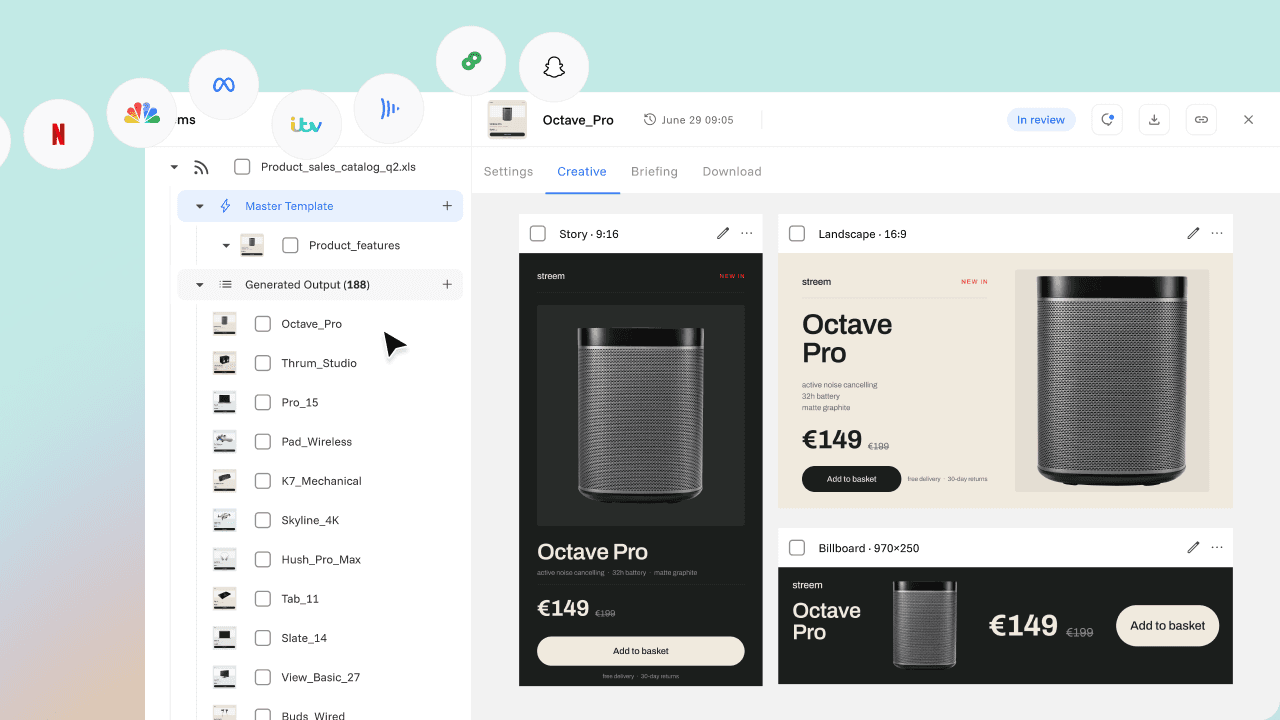
  • Algorithmic style transfer: Cape.io automatically applies its layout logic, typography, colors, and imagery placement to every selected format. Hundreds of individual builds become a single design decision. Designers retain full manual control to fine-tune specific placements.

  • Dynamic templating and bulk editing: Once a campaign is built, you are no longer rebuilding creative; you are editing it. Change a headline or swap a background, and that change propagates across every format in the set instantly.

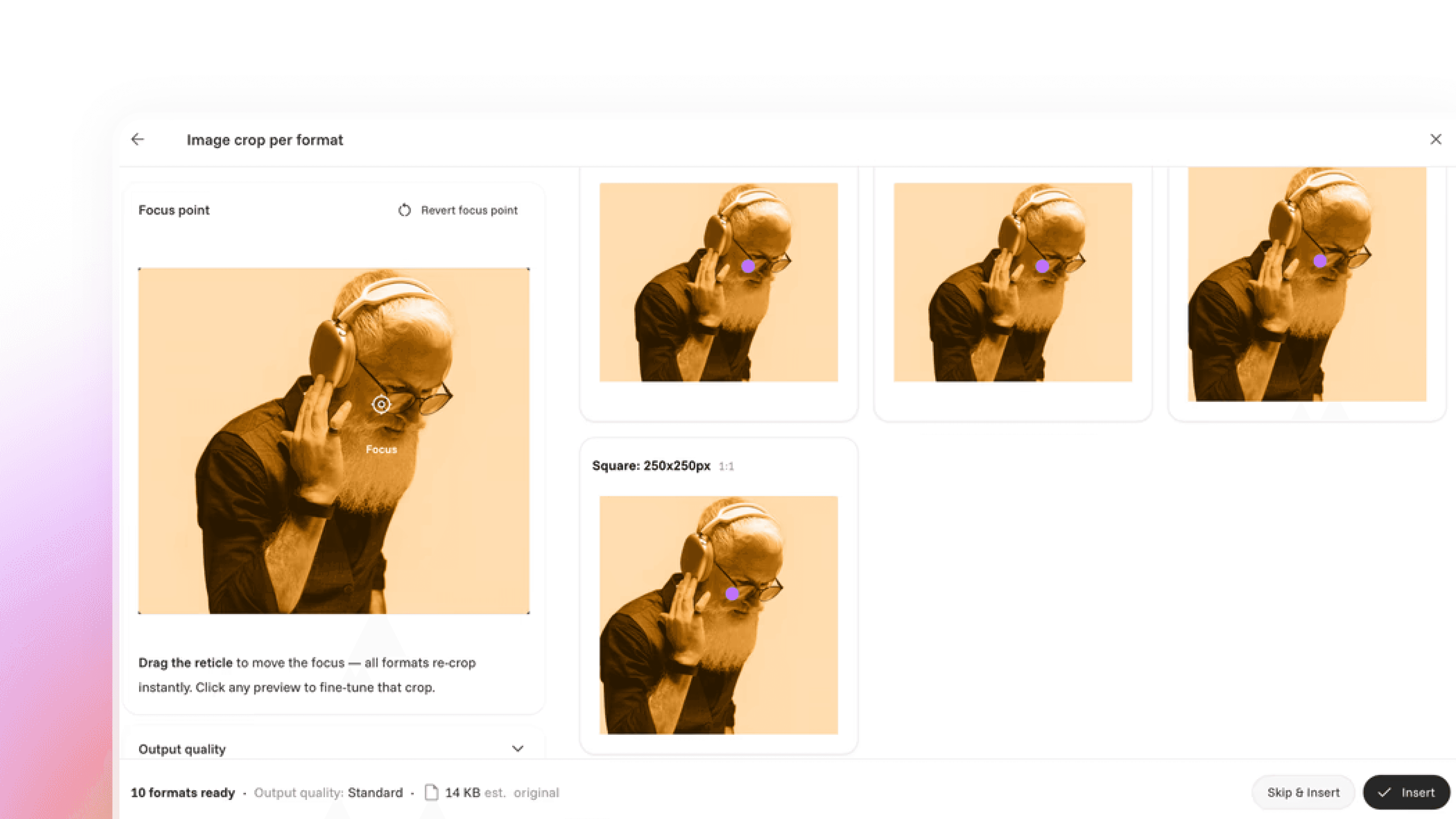
  • AI-powered Resizing: DOOH format diversity is brutal on scaling. A hero shot composed for a 16:9 billboard rarely works on a 9:16 transit screen. Cape.io's AI autocropper analyzes each background image and intelligently determines how to scale and reposition it per format, keeping the subject in frame and the composition intact. Again Designers still have final edit power

Now that we can change DOOH creative at hyper speed, ehen building and updating creative becomes this fast, campaigns can finally use variation such as tailoring messaging by geography, weather, or time of day, instead of settling for a single static execution.

DOOH Creative Automation use cases by persona

  • Enterprise Brands with high OOH spend: Production lead times no longer dictate creative ambition. Localized, dayparted, and always-current creative becomes achievable across your full screen footprint, without increasing in-house design headcount.

  • Creative and Media agencies: Templating and bulk edits allow a single production team to service more client campaigns and handle revisions without the linear scaling in billable hours. Margin is protected without sacrificing quality.

  • DOOH publishers: Better creative is better for Every non-standard format in your inventory becomes easier for advertisers to fill with high-quality, on-brand creative, removing a major barrier

  • DOOH DSPs (Demand-Side Platforms): Faster creative turnarounds mean fewer stalled campaigns and more inventory activated with properly sized assets, directly improving fill rates and campaign performance.

Frequently Asked Questions (FAQ)

What is Programmatic DOOH (pDOOH)? Programmatic DOOH is the automated buying, selling, and delivery of digital out-of-home advertising. It allows marketers to purchase billboard and transit screen inventory in real-time based on specific data triggers like weather, time of day, or audience foot traffic.

How does Creative Automation improve DOOH campaigns? Creative automation software eliminates manual ad versioning. By using AI cropping and dynamic templating, brands can instantly generate hundreds of DOOH ad sizes from a single master design, allowing for faster campaign launches and hyper-localized messaging.

Can Cape.io handle non-standard publisher ad sizes? Yes. Cape.io features a comprehensive format library that includes both standard DOOH dimensions and specific, non-standard publisher requirements, allowing designers to automatically scale creative to fit any screen accurately.

Ready to scale your out-of-home advertising? Get in touch with our team to talk through your DOOH format list and see the Cape.io platform in action.

2026年8月3日

闭环:在 Cape.io 中引入 Campaign Analytics

Campaign Analytics 现在已在 Cape.io 上线。

2026年6月26日

隆重推出:Auto Cropper

在我们的 Creative automation 解决方案中引入全新的 AI 驱动自动裁剪功能。

合规检查示例

2025年10月7日

全新:Ad compliance,轻松实现

AI驱动的广告合规工具,旨在让您轻松遵守全球各地的规则

2025年6月9日

Sidekick:能随便提问,一切都变得更容易了

为您介绍 Sidekick,这是一款平台内置的助手。它能在 Cape 的各个板块(从 Template Designer 到 Campaign Designer)中为您提供实时的上下文解答,扫清所有障碍,让您可以专注于创意工作。

2025年3月11日

通过智能 campaign 自动化,简化亚马逊 storefront 的创建

创建 Amazon 品牌旗舰店不应该成为瓶颈

2024年12月2日

Cape Advanced TV 新功能:通过全新的列表功能,更快速地添加协作者

仔细列好清单,一遍遍检查

2024年11月19日

应对零售媒体 (retail media) 面临的挑战

越来越多的零售商正在转型为广告平台,零售媒体(Retail Media)如今已成为一个巨大的增长机遇。但在发展过程中也伴随着实实在在的成长阵痛。以下是它的具体定义以及如何应对这一趋势。

2024年11月14日

Cape Check & Go 新增功能:专属您自己的(工作)空间

全新的 Cape Check & Go 用户体验让您可以更快速地上传、进行 QA、管理、预览和传输文件,从而让您对营销活动拥有更多的控制权和可见性。

2024年10月23日

简化 Google Ads 审批:Cape.io 如何预防广告拒登

很少有像广告被拒登那样拖慢营销活动进度的事情了,而在 Google Ads 上,这种情况常见得令人沮丧。以下是 Cape.io 如何构建主动安全防范措施,以便及早发现问题并充满信心本地发布。

2024年10月21日

变革展示广告:自动化如何改变广告创意生成

Display 广告