20 jul 2021

Automatizar para eliminar

¿Qué pasa si los robots no son los villanos? ¿Qué pasa si… permitir que los robots hagan más trabajo te permite hacer más de las cosas divertidas?
Author

Cape.io

Author

Cape.io

Esto fue publicado originalmente en el sitio web de Peach. Descubra más sobre el cambio de marca de Peach a Cape.io.

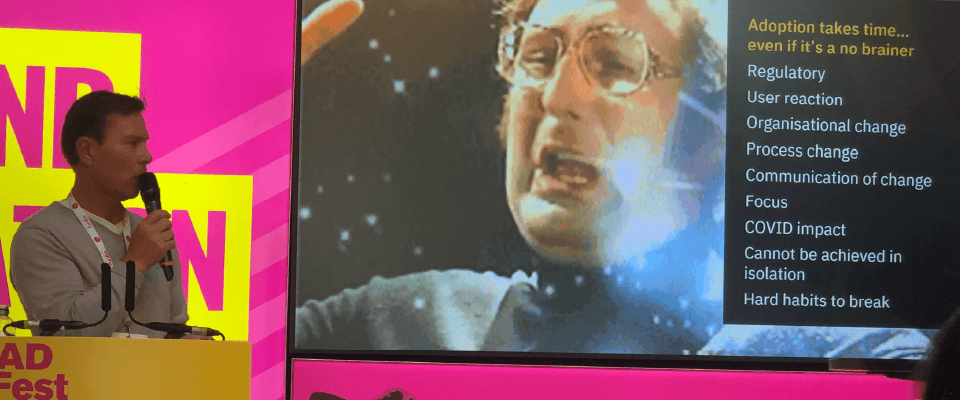
Jason Trout, nuestro Director Global Digital habló en Mad//Fest Londres a principios de julio en nuestra primera conferencia europea #IRL. Su sesión cubrió la importancia para la industria del anuncio de adoptar la automatización y que el temor de que pueda robar empleos no tiene fundamento. 

En 1930, John Maynard Keynes pensó que trabajaríamos 30 horas a la semana y que nuestro problema sería demasiado tiempo libre. ¿Su pensamiento? Al igual que retratos del siglo XIX, pensó que podríamos confiar en las máquinas para producir el mismo resultado más rápido y eficientemente… así podríamos relajarnos. ¡Vaya, lo deseamos. 


Casi 100 años después y todavía no hemos alcanzado ese punto. En cambio, el exceso de trabajo a menudo se interpreta como compromiso, en lugar de ineficiencia. Las visiones de semanas laborales reducidas eran, sin que los autores lo supieran o no, visiones de una fuerza laboral más efectiva. Pero admitir hacer menos trabajo a menudo se interpreta como que uno se preocupa menos. 

Esa percepción de no parecer dedicado, en consecuencia, mantiene a los empleados confinados en trabajos de bajo valor y mundanos en lugar de solicitar el apoyo de alternativas automatizadas más rápidas que liberan a los empleados para realizar trabajos de mayor nivel con menos esfuerzo, permitiendo que la empresa crezca hacia arriba. 


¿Por qué sugeriría la automatización si eso significa que seré reemplazado?  

Las conversaciones sobre cómo la automatización puede mejorar la productividad y reducir costos para las empresas a menudo van de la mano con historias de cómo la automatización está quitando empleos a los trabajadores.

Según un informe del McKinsey Global Institute, menos del 5% de los trabajos consisten en actividades que pueden ser completamente automatizadas.


Será mucho más común la automatización de actividades constitutivas para un rol dado. En aproximadamente el 60% de las ocupaciones, al menos un tercio de las actividades que conforman un trabajo específico podrían ser automatizadas. La buena noticia es que la mayoría de los trabajadores ve esta automatización de manera positiva y están ansiosos por aprovechar la automatización que tiene el potencial de mejorar su trabajo — y sus vidas —.

Los trabajadores encuestados esperan pasar menos tiempo en tareas manuales repetitivas como la entrada de datos, y pasar más tiempo en aspectos gratificantes de su trabajo. Aquí hay un vistazo a cómo la automatización podría hacer justamente eso - y cómo las organizaciones están abordando la automatización de tareas repetitivas para los trabajadores de información.


Como puedes ver en el gráfico anterior, la industria del anuncio tiene el segundo mayor potencial para adoptar la automatización, justo por debajo de los servicios de alojamiento y alimentación. 


El gráfico anterior desglosa ese 51% en actividades específicas donde la automatización puede aplicarse en la industria del anuncio.  


¿Cuánto tiempo estás desperdiciando? 

Según una encuesta de trabajadores de Forbes, el 40% de los encuestados pasa una cuarta parte de su semana laboral en tareas repetitivas tales como correos electrónicos, entrada y recopilación de datos. El 70% creía que la mayor oportunidad para aplicar la automatización es al trabajo repetitivo, para la industria del anuncio eso serían cosas como aprobar activos y solicitudes de actualización de estado. 

Finalmente, el 60% estimó que en total ahorraría más de 6 horas de trabajo a la semana después de la introducción de la automatización al trabajo. Esto los liberaría de tareas administrativas pesadas y realinearía su enfoque en la creatividad y el trabajo más rentable. 

La adopción lleva tiempo — a pesar de que es obvio 

El argumento empresarial y de los empleados para la automatización es obvio. Entonces, ¿por qué las empresas son tan lentas en su implementación? Incluso cuando la lógica es clara, se requiere compromiso. Es un proceso, no una solución rápida, requiriendo tiempo y enfoque de todas las partes — como entrenar a un cachorro para ir al baño.  

La gente siempre ha sido reacia al cambio, incluso si reconoce que está allí para beneficiarlos. Los cambios necesitan ser comunicados, entendidos y luego enseñados. Esto podría requerir un cambio organizacional que viene con sus propios desafíos. 

Y, por supuesto, también está el Covid-19 — y cómo eso puede haber ralentizado inadvertidamente la adopción de la automatización. Primero, se puede requerir capital para ser reinvertido en otros lugares para la supervivencia empresarial a corto plazo. En segundo lugar, el entrenamiento de nuevos procesos se vuelve mucho más difícil y requiere más tiempo cuando las personas trabajan desde casa en lugar de juntas en la oficina. Las empresas pueden decidir simplemente pausar la adopción hasta que los empleados vuelvan a la oficina de manera permanente - y realmente, quién sabe cuándo podría ser eso. 

No obstante, es peligroso ignorar la necesidad desesperada de la industria del anuncio de modernizarse. Con la explosión de lo digital, la TV Conectada y la Publicidad exterior digital, las cosas solo van a volverse más insoportables. Poner en marcha campañas digitales cuesta tiempo, energía y moral mientras los medios se ven obstaculizados por tareas repetitivas. 

En una encuesta realizada por CoLab encontraron que:

  • el 61% encontró la obtención de contenido lenta y compleja

  • el 62% reconoció que el contenido de mala calidad está en uso

  • el 96% utiliza diferentes procesos en múltiples puntos de entrega

  • el 65% no tenía seguimiento de dónde se ha distribuido su contenido 

¿Nuestra sugerencia? Invertir y adoptar ahora mientras todavía puedes hacer frente - es la única respuesta para la supervivencia a largo plazo. 

 

Noticias

Mantente a la vanguardia

¿Tienes curiosidad sobre lo último en marketing y publicidad? Suscríbete a nuestro boletín mensual de Promarketers.

30 mar 2026

Operationalizing AI in advertising: Why it must be embedded, not bolted on

Operationalizing AI in advertising isn’t about adding another tool to your stack. It’s about embedding intelligence into the systems that govern creative production, compliance, and delivery, so automation scales without creating more operational friction.

18 mar 2026

No more chocolate at breakfast? Navigating the new LHF ad rules this Easter

As ad compliance requirements evolve in 2026, UK confectionery brands face new restrictions on less healthy food (LHF) advertising. With the January 5 watershed now in effect, ad quality assurance systems must validate timing, placement, and product identifiability to avoid clearance failures this Easter season.

16 mar 2026

The future of inclusion: How Cape.io powered Virgin Media Television’s fully accessible ad break during the Men’s Six Nations

As Channel 4’s closed-captioning mandate came into effect in March 2026, Cape.io partnered with Virgin Media Television, Omnicom Media Group and VoiceBox to deliver a truly accessible ad break during the Guinness Men’s Six Nations. More than ad compliance, this moment proved that accessibility can operate at the highest level of live sports broadcasting.

27 feb 2026

Navigating Channel 4’s 2026 closed caption mandate

As ad compliance requirements tighten across the UK and Europe, closed captioning has evolved from an accessibility checkbox to a strategic necessity. Whether you're managing CTV campaigns or social media creative, automated ad testing for caption quality is no longer optional - it's fundamental to reaching today's fragmented, multi-screen audiences.

The advertising landscape is facing a seismic shift. By March 1, Channel 4 will become the first UK broadcaster to mandate closed captions across all advertising - including linear TV, streaming, and sponsorships.

The mandate is  a redefined standard for global inclusivity. Here is everything you need to know about the new mandate and how to stay ahead of the curve.

26 feb 2026

One platform, many realities: How creative automation platforms resolve the global vs. local tension

Scaling global marketing without losing local relevance requires more than brand guidelines and templates - it requires a creative automation platform designed for both global control and local flexibility. Most systems optimize for standardization, but scaling ad creative production across markets demands architecture that enables creative variation and adaptation by local experts without fragmenting brand governance.

Many global advertisers are chasing the same ideal: scale without losing relevance.

Consistency without uniformity.
Efficiency without bureaucracy.

It sounds simple. In practice, it’s one of the hardest tensions to resolve in modern marketing.

The global vs. local challenge isn’t new, but it’s becoming more urgent. As brands expand across markets, channels, and cultures, the question is no longer whether you should scale globally, but how you do so without erasing the nuance that makes marketing effective in the first place.

Everyone is looking for this balance. Very few get it right.

11 feb 2026

EPTVI Initiative launches Stage Two to help programmatic TV scale across Europe’s largest advertising markets

Broadcasters, streamers, agencies and ad tech companies including Google Ad Manager, Equativ, Adform, LiveRamp, The Trade Desk, FreeWheel and Cape.io begin work on practical solutions to reduce complexity and speed up adoption.

Noticias

Mantente a la vanguardia

¿Tienes curiosidad sobre lo último en marketing y publicidad? Suscríbete a nuestro boletín mensual de Promarketers.

30 mar 2026

Operationalizing AI in advertising: Why it must be embedded, not bolted on

Operationalizing AI in advertising isn’t about adding another tool to your stack. It’s about embedding intelligence into the systems that govern creative production, compliance, and delivery, so automation scales without creating more operational friction.

18 mar 2026

No more chocolate at breakfast? Navigating the new LHF ad rules this Easter

As ad compliance requirements evolve in 2026, UK confectionery brands face new restrictions on less healthy food (LHF) advertising. With the January 5 watershed now in effect, ad quality assurance systems must validate timing, placement, and product identifiability to avoid clearance failures this Easter season.

16 mar 2026

The future of inclusion: How Cape.io powered Virgin Media Television’s fully accessible ad break during the Men’s Six Nations

As Channel 4’s closed-captioning mandate came into effect in March 2026, Cape.io partnered with Virgin Media Television, Omnicom Media Group and VoiceBox to deliver a truly accessible ad break during the Guinness Men’s Six Nations. More than ad compliance, this moment proved that accessibility can operate at the highest level of live sports broadcasting.

27 feb 2026

Navigating Channel 4’s 2026 closed caption mandate

As ad compliance requirements tighten across the UK and Europe, closed captioning has evolved from an accessibility checkbox to a strategic necessity. Whether you're managing CTV campaigns or social media creative, automated ad testing for caption quality is no longer optional - it's fundamental to reaching today's fragmented, multi-screen audiences.

The advertising landscape is facing a seismic shift. By March 1, Channel 4 will become the first UK broadcaster to mandate closed captions across all advertising - including linear TV, streaming, and sponsorships.

The mandate is  a redefined standard for global inclusivity. Here is everything you need to know about the new mandate and how to stay ahead of the curve.

26 feb 2026

One platform, many realities: How creative automation platforms resolve the global vs. local tension

Scaling global marketing without losing local relevance requires more than brand guidelines and templates - it requires a creative automation platform designed for both global control and local flexibility. Most systems optimize for standardization, but scaling ad creative production across markets demands architecture that enables creative variation and adaptation by local experts without fragmenting brand governance.

Many global advertisers are chasing the same ideal: scale without losing relevance.

Consistency without uniformity.
Efficiency without bureaucracy.

It sounds simple. In practice, it’s one of the hardest tensions to resolve in modern marketing.

The global vs. local challenge isn’t new, but it’s becoming more urgent. As brands expand across markets, channels, and cultures, the question is no longer whether you should scale globally, but how you do so without erasing the nuance that makes marketing effective in the first place.

Everyone is looking for this balance. Very few get it right.

11 feb 2026

EPTVI Initiative launches Stage Two to help programmatic TV scale across Europe’s largest advertising markets

Broadcasters, streamers, agencies and ad tech companies including Google Ad Manager, Equativ, Adform, LiveRamp, The Trade Desk, FreeWheel and Cape.io begin work on practical solutions to reduce complexity and speed up adoption.

Noticias

Mantente a la vanguardia

¿Tienes curiosidad sobre lo último en marketing y publicidad? Suscríbete a nuestro boletín mensual de Promarketers.

30 mar 2026

Operationalizing AI in advertising: Why it must be embedded, not bolted on

Operationalizing AI in advertising isn’t about adding another tool to your stack. It’s about embedding intelligence into the systems that govern creative production, compliance, and delivery, so automation scales without creating more operational friction.

18 mar 2026

No more chocolate at breakfast? Navigating the new LHF ad rules this Easter

As ad compliance requirements evolve in 2026, UK confectionery brands face new restrictions on less healthy food (LHF) advertising. With the January 5 watershed now in effect, ad quality assurance systems must validate timing, placement, and product identifiability to avoid clearance failures this Easter season.

16 mar 2026

The future of inclusion: How Cape.io powered Virgin Media Television’s fully accessible ad break during the Men’s Six Nations

As Channel 4’s closed-captioning mandate came into effect in March 2026, Cape.io partnered with Virgin Media Television, Omnicom Media Group and VoiceBox to deliver a truly accessible ad break during the Guinness Men’s Six Nations. More than ad compliance, this moment proved that accessibility can operate at the highest level of live sports broadcasting.

27 feb 2026

Navigating Channel 4’s 2026 closed caption mandate

As ad compliance requirements tighten across the UK and Europe, closed captioning has evolved from an accessibility checkbox to a strategic necessity. Whether you're managing CTV campaigns or social media creative, automated ad testing for caption quality is no longer optional - it's fundamental to reaching today's fragmented, multi-screen audiences.

The advertising landscape is facing a seismic shift. By March 1, Channel 4 will become the first UK broadcaster to mandate closed captions across all advertising - including linear TV, streaming, and sponsorships.

The mandate is  a redefined standard for global inclusivity. Here is everything you need to know about the new mandate and how to stay ahead of the curve.

26 feb 2026

One platform, many realities: How creative automation platforms resolve the global vs. local tension

Scaling global marketing without losing local relevance requires more than brand guidelines and templates - it requires a creative automation platform designed for both global control and local flexibility. Most systems optimize for standardization, but scaling ad creative production across markets demands architecture that enables creative variation and adaptation by local experts without fragmenting brand governance.

Many global advertisers are chasing the same ideal: scale without losing relevance.

Consistency without uniformity.
Efficiency without bureaucracy.

It sounds simple. In practice, it’s one of the hardest tensions to resolve in modern marketing.

The global vs. local challenge isn’t new, but it’s becoming more urgent. As brands expand across markets, channels, and cultures, the question is no longer whether you should scale globally, but how you do so without erasing the nuance that makes marketing effective in the first place.

Everyone is looking for this balance. Very few get it right.

11 feb 2026

EPTVI Initiative launches Stage Two to help programmatic TV scale across Europe’s largest advertising markets

Broadcasters, streamers, agencies and ad tech companies including Google Ad Manager, Equativ, Adform, LiveRamp, The Trade Desk, FreeWheel and Cape.io begin work on practical solutions to reduce complexity and speed up adoption.

Ponte en contacto

Te mostraremos lo que Cape.io puede hacer.

Automatización de Campañas Inteligentes

Cape.io conecta a tu equipo, DAM, servidores de anuncios, DSP, herramientas y más, para que no necesites desmantelar y reemplazar.

© 2025 Cape.io. Todos los derechos reservados

Spanish

Ponte en contacto

Te mostraremos lo que Cape.io puede hacer.

Automatización de Campañas Inteligentes

Cape.io conecta a tu equipo, DAM, servidores de anuncios, DSP, herramientas y más, para que no necesites desmantelar y reemplazar.

© 2025 Cape.io. Todos los derechos reservados

Spanish

Ponte en contacto

Te mostraremos lo que Cape.io puede hacer.

Automatización de Campañas Inteligentes

Cape.io conecta a tu equipo, DAM, servidores de anuncios, DSP, herramientas y más, para que no necesites desmantelar y reemplazar.

© 2025 Cape.io. Todos los derechos reservados

Spanish