DCO en declive: ¿todavía vale la pena implementarlo?

Hay un enfoque más inteligente para la personalización en un mundo centrado en la privacidad.

Author

Author

¿Es momento de avanzar más allá del DCO? Un enfoque más inteligente para la personalización en un mundo prioritario de privacidad


La publicidad Digital sigue evolucionando, y rápidamente. Una técnica que ha sido aclamada durante mucho tiempo por ofrecer experiencias personalizadas es la Optimización Creativa Dinámica (DCO). Promete anuncios personalizados a gran escala, utilizando datos para ajustar elementos creativos para usuarios individuales en tiempo real.


Pero aquí está el problema: en el panorama consciente de la privacidad de hoy, lanzar campañas de DCO a gran escala se ha vuelto cada vez más complejo y, para muchas marcas, menos impactante.


Entonces la pregunta se convierte en: ¿Vale la pena todavía invertir en DCO?

¿Qué es DCO?


La Optimización Creativa Dinámica es un método que construye múltiples variaciones de anuncios a partir de una única base creativa. Personaliza elementos como texto, imágenes, o llamadas a la acción basándose en entradas de datos como:

  • Comportamiento de navegación del usuario

  • Tipo de dispositivo y ubicación

  • Fuentes de datos externas (por ejemplo, clima, hora del día, disponibilidad de productos)


El resultado es una experiencia publicitaria personalizada destinada a aumentar la relevancia y el compromiso.

Por qué los Anunciantes están reconsiderando el DCO


A pesar de su promesa, el DCO es caro y complejo de gestionar, especialmente a gran escala. Y con el declive de las cookies de terceros y la creciente presión regulatoria, implementar verdaderas campañas personalizadas impulsadas por datos en diferentes mercados es más desafiante que nunca. ¿Más aún? Las investigaciones muestran que el DCO solo representa alrededor del 10% de la efectividad total de los anuncios. Mucho esfuerzo para una pequeña parte del impacto.

El mejor enfoque: Automatización de campañas basada en feeds y prioridad en la privacidad


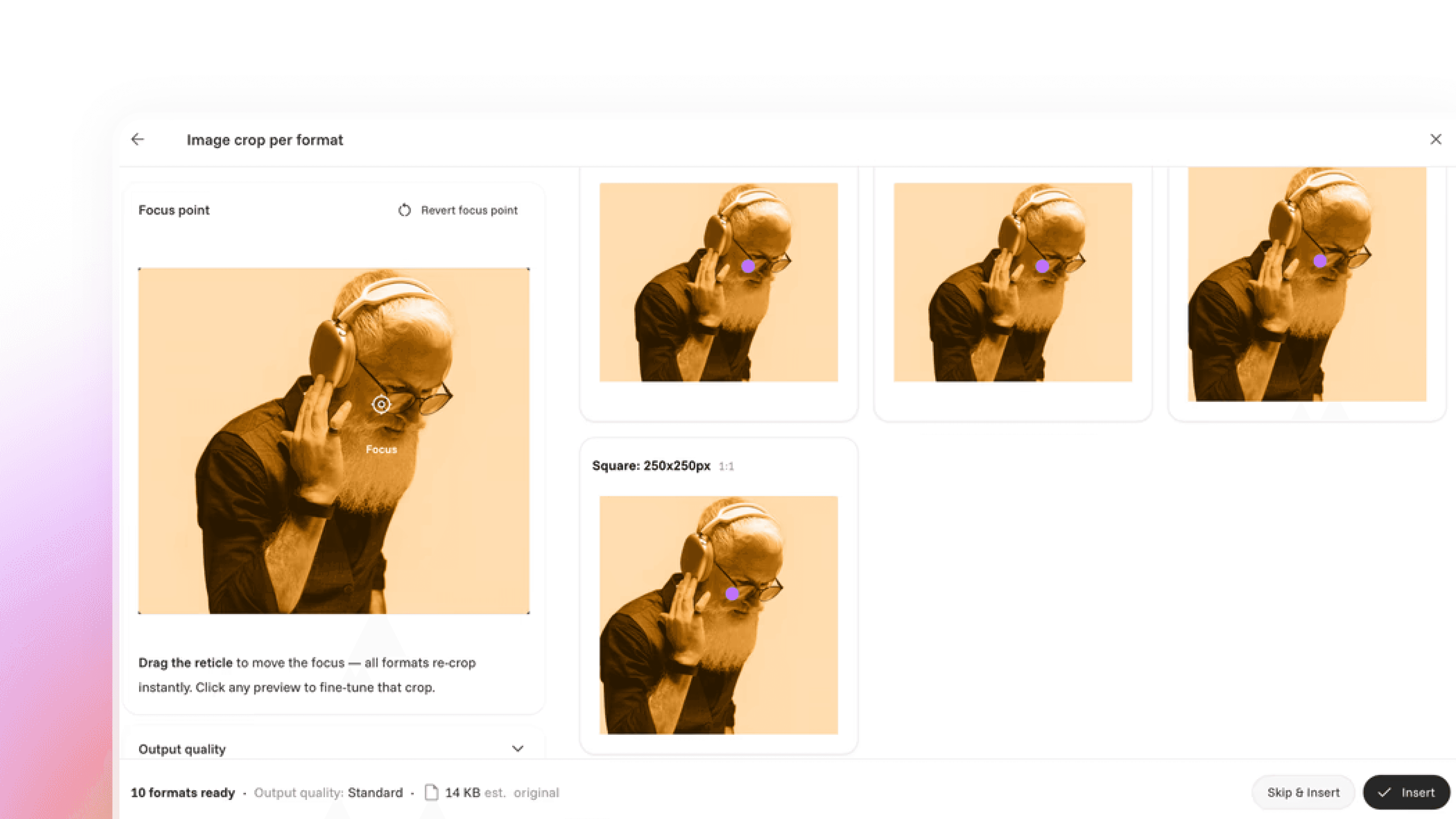
En Cape, creemos que hay una manera más inteligente y escalable de personalizar su publicidad sin depender de cookies o tecnologías costosas. Cape empodera a los anunciantes para construir configuraciones de campaña totalmente impulsadas por datos usando feeds en tiempo real, señales contextuales y un solo creativo maestro.

Así es como funciona:


  • Usar una plantilla para generar miles de variantes
    Adapte fácilmente el creativo para que coincida con los intereses del público, idiomas, mercados o promociones. No se requiere esfuerzo manual.

  • Aprovechar datos propios y contextuales
    Conecte sus propios datos (como preferencias del cliente o feeds de productos) y señales externas (como el clima o la hora del día) para crear anuncios que sean oportunos, relevantes y localizados.

  • Automatizar actualizaciones creativas
    Ajuste precios, mensajes, visuales, o traducciones en tiempo real, luego publique o pause automáticamente campañas basada en activadores como inventario o rendimiento.

  • Evitar la dependencia de cookies
    El enfoque de Cape se centra en la automatización inteligente y la relevancia contextual, para que pueda lograr la personalización a escala, sin violar las normas de privacidad.


Entonces, ¿debería alejarse del DCO?


Si su objetivo es ofrecer experiencias publicitarias atractivas y personalizadas que sean rentables, rápidas de lanzar al mercado, y preparadas para el futuro: sí. Al centrarse en el 90% del éxito de la campaña que se encuentra en una configuración inteligente, agilidad creativa y automatización, obtendrá más valor, mejor rendimiento y una eficiencia mucho mayor de lo que el DCO tradicional puede ofrecer por sí solo.


¿Listo para personalizar sin la carga del DCO?
Descubra cómo Cape ayuda a las marcas líderes a escalar campañas relevantes, hiperlocales e impulsadas por datos, sin cookies ni complejidad.

Noticias

Mantente a la vanguardia

¿Tienes curiosidad sobre lo último en marketing y publicidad? Suscríbete a nuestro boletín mensual de Promarketers.

18 mar 2026

No more chocolate at breakfast? Navigating the new LHF ad rules this Easter

As ad compliance requirements evolve in 2026, UK confectionery brands face new restrictions on less healthy food (LHF) advertising. With the January 5 watershed now in effect, ad quality assurance systems must validate timing, placement, and product identifiability to avoid clearance failures this Easter season.

16 mar 2026

The future of inclusion: How Cape.io powered Virgin Media Television’s fully accessible ad break during the Men’s Six Nations

As Channel 4’s closed-captioning mandate came into effect in March 2026, Cape.io partnered with Virgin Media Television, Omnicom Media Group and VoiceBox to deliver a truly accessible ad break during the Guinness Men’s Six Nations. More than ad compliance, this moment proved that accessibility can operate at the highest level of live sports broadcasting.

27 feb 2026

Navigating Channel 4’s 2026 closed caption mandate

As ad compliance requirements tighten across the UK and Europe, closed captioning has evolved from an accessibility checkbox to a strategic necessity. Whether you're managing CTV campaigns or social media creative, automated ad testing for caption quality is no longer optional - it's fundamental to reaching today's fragmented, multi-screen audiences.

The advertising landscape is facing a seismic shift. By March 1, Channel 4 will become the first UK broadcaster to mandate closed captions across all advertising - including linear TV, streaming, and sponsorships.

The mandate is  a redefined standard for global inclusivity. Here is everything you need to know about the new mandate and how to stay ahead of the curve.

26 feb 2026

One platform, many realities: How creative automation platforms resolve the global vs. local tension

Scaling global marketing without losing local relevance requires more than brand guidelines and templates - it requires a creative automation platform designed for both global control and local flexibility. Most systems optimize for standardization, but scaling ad creative production across markets demands architecture that enables creative variation and adaptation by local experts without fragmenting brand governance.

Many global advertisers are chasing the same ideal: scale without losing relevance.

Consistency without uniformity.
Efficiency without bureaucracy.

It sounds simple. In practice, it’s one of the hardest tensions to resolve in modern marketing.

The global vs. local challenge isn’t new, but it’s becoming more urgent. As brands expand across markets, channels, and cultures, the question is no longer whether you should scale globally, but how you do so without erasing the nuance that makes marketing effective in the first place.

Everyone is looking for this balance. Very few get it right.

11 feb 2026

EPTVI Initiative launches Stage Two to help programmatic TV scale across Europe’s largest advertising markets

Broadcasters, streamers, agencies and ad tech companies including Google Ad Manager, Equativ, Adform, LiveRamp, The Trade Desk, FreeWheel and Cape.io begin work on practical solutions to reduce complexity and speed up adoption.

4 feb 2026

The guardrails of growth: Why creative intelligence demands compliance

Generative AI can produce thousands of creative variants, but most compliance systems are still manual, fragmented, and reactive, unable to keep pace with today’s velocity. To move fast without breaking things, the industry needs a new approach: real-time verification, programmatic enforcement, and end-to-end visibility. Embedded inside the stack, not bolted on at the end.

Noticias

Mantente a la vanguardia

¿Tienes curiosidad sobre lo último en marketing y publicidad? Suscríbete a nuestro boletín mensual de Promarketers.

18 mar 2026

No more chocolate at breakfast? Navigating the new LHF ad rules this Easter

As ad compliance requirements evolve in 2026, UK confectionery brands face new restrictions on less healthy food (LHF) advertising. With the January 5 watershed now in effect, ad quality assurance systems must validate timing, placement, and product identifiability to avoid clearance failures this Easter season.

16 mar 2026

The future of inclusion: How Cape.io powered Virgin Media Television’s fully accessible ad break during the Men’s Six Nations

As Channel 4’s closed-captioning mandate came into effect in March 2026, Cape.io partnered with Virgin Media Television, Omnicom Media Group and VoiceBox to deliver a truly accessible ad break during the Guinness Men’s Six Nations. More than ad compliance, this moment proved that accessibility can operate at the highest level of live sports broadcasting.

27 feb 2026

Navigating Channel 4’s 2026 closed caption mandate

As ad compliance requirements tighten across the UK and Europe, closed captioning has evolved from an accessibility checkbox to a strategic necessity. Whether you're managing CTV campaigns or social media creative, automated ad testing for caption quality is no longer optional - it's fundamental to reaching today's fragmented, multi-screen audiences.

The advertising landscape is facing a seismic shift. By March 1, Channel 4 will become the first UK broadcaster to mandate closed captions across all advertising - including linear TV, streaming, and sponsorships.

The mandate is  a redefined standard for global inclusivity. Here is everything you need to know about the new mandate and how to stay ahead of the curve.

26 feb 2026

One platform, many realities: How creative automation platforms resolve the global vs. local tension

Scaling global marketing without losing local relevance requires more than brand guidelines and templates - it requires a creative automation platform designed for both global control and local flexibility. Most systems optimize for standardization, but scaling ad creative production across markets demands architecture that enables creative variation and adaptation by local experts without fragmenting brand governance.

Many global advertisers are chasing the same ideal: scale without losing relevance.

Consistency without uniformity.
Efficiency without bureaucracy.

It sounds simple. In practice, it’s one of the hardest tensions to resolve in modern marketing.

The global vs. local challenge isn’t new, but it’s becoming more urgent. As brands expand across markets, channels, and cultures, the question is no longer whether you should scale globally, but how you do so without erasing the nuance that makes marketing effective in the first place.

Everyone is looking for this balance. Very few get it right.

11 feb 2026

EPTVI Initiative launches Stage Two to help programmatic TV scale across Europe’s largest advertising markets

Broadcasters, streamers, agencies and ad tech companies including Google Ad Manager, Equativ, Adform, LiveRamp, The Trade Desk, FreeWheel and Cape.io begin work on practical solutions to reduce complexity and speed up adoption.

4 feb 2026

The guardrails of growth: Why creative intelligence demands compliance

Generative AI can produce thousands of creative variants, but most compliance systems are still manual, fragmented, and reactive, unable to keep pace with today’s velocity. To move fast without breaking things, the industry needs a new approach: real-time verification, programmatic enforcement, and end-to-end visibility. Embedded inside the stack, not bolted on at the end.

Noticias

Mantente a la vanguardia

¿Tienes curiosidad sobre lo último en marketing y publicidad? Suscríbete a nuestro boletín mensual de Promarketers.

18 mar 2026

No more chocolate at breakfast? Navigating the new LHF ad rules this Easter

As ad compliance requirements evolve in 2026, UK confectionery brands face new restrictions on less healthy food (LHF) advertising. With the January 5 watershed now in effect, ad quality assurance systems must validate timing, placement, and product identifiability to avoid clearance failures this Easter season.

16 mar 2026

The future of inclusion: How Cape.io powered Virgin Media Television’s fully accessible ad break during the Men’s Six Nations

As Channel 4’s closed-captioning mandate came into effect in March 2026, Cape.io partnered with Virgin Media Television, Omnicom Media Group and VoiceBox to deliver a truly accessible ad break during the Guinness Men’s Six Nations. More than ad compliance, this moment proved that accessibility can operate at the highest level of live sports broadcasting.

27 feb 2026

Navigating Channel 4’s 2026 closed caption mandate

As ad compliance requirements tighten across the UK and Europe, closed captioning has evolved from an accessibility checkbox to a strategic necessity. Whether you're managing CTV campaigns or social media creative, automated ad testing for caption quality is no longer optional - it's fundamental to reaching today's fragmented, multi-screen audiences.

The advertising landscape is facing a seismic shift. By March 1, Channel 4 will become the first UK broadcaster to mandate closed captions across all advertising - including linear TV, streaming, and sponsorships.

The mandate is  a redefined standard for global inclusivity. Here is everything you need to know about the new mandate and how to stay ahead of the curve.

26 feb 2026

One platform, many realities: How creative automation platforms resolve the global vs. local tension

Scaling global marketing without losing local relevance requires more than brand guidelines and templates - it requires a creative automation platform designed for both global control and local flexibility. Most systems optimize for standardization, but scaling ad creative production across markets demands architecture that enables creative variation and adaptation by local experts without fragmenting brand governance.

Many global advertisers are chasing the same ideal: scale without losing relevance.

Consistency without uniformity.
Efficiency without bureaucracy.

It sounds simple. In practice, it’s one of the hardest tensions to resolve in modern marketing.

The global vs. local challenge isn’t new, but it’s becoming more urgent. As brands expand across markets, channels, and cultures, the question is no longer whether you should scale globally, but how you do so without erasing the nuance that makes marketing effective in the first place.

Everyone is looking for this balance. Very few get it right.

11 feb 2026

EPTVI Initiative launches Stage Two to help programmatic TV scale across Europe’s largest advertising markets

Broadcasters, streamers, agencies and ad tech companies including Google Ad Manager, Equativ, Adform, LiveRamp, The Trade Desk, FreeWheel and Cape.io begin work on practical solutions to reduce complexity and speed up adoption.

4 feb 2026

The guardrails of growth: Why creative intelligence demands compliance

Generative AI can produce thousands of creative variants, but most compliance systems are still manual, fragmented, and reactive, unable to keep pace with today’s velocity. To move fast without breaking things, the industry needs a new approach: real-time verification, programmatic enforcement, and end-to-end visibility. Embedded inside the stack, not bolted on at the end.

Ponte en contacto

Te mostraremos lo que Cape.io puede hacer.

Automatización de Campañas Inteligentes

Cape.io conecta a tu equipo, DAM, servidores de anuncios, DSP, herramientas y más, para que no necesites desmantelar y reemplazar.

© 2025 Cape.io. Todos los derechos reservados

Spanish

Ponte en contacto

Te mostraremos lo que Cape.io puede hacer.

Automatización de Campañas Inteligentes

Cape.io conecta a tu equipo, DAM, servidores de anuncios, DSP, herramientas y más, para que no necesites desmantelar y reemplazar.

© 2025 Cape.io. Todos los derechos reservados

Spanish

Ponte en contacto

Te mostraremos lo que Cape.io puede hacer.

Automatización de Campañas Inteligentes

Cape.io conecta a tu equipo, DAM, servidores de anuncios, DSP, herramientas y más, para que no necesites desmantelar y reemplazar.

© 2025 Cape.io. Todos los derechos reservados

Spanish