12 ene 2023

Una imagen vale mil clics: cómo utilizar el análisis visual para mejores campañas

Anuncios más inteligentes comienzan con el análisis visual de IA: cómo Cape optimiza creativos antes de que siquiera lances


Optimizar tus anuncios puede sentirse como un juego de adivinanzas interminable. ¿Qué elementos realmente impulsan el rendimiento? ¿Qué ajustes creativos realmente marcan la diferencia?

Con Análisis Visual de IA, Cape aporta claridad respaldada por datos a tus decisiones creativas; empoderándote para mejorar la efectividad del anuncio antes de que tu campaña siquiera esté en vivo.

¿Qué es el Análisis Visual de IA?


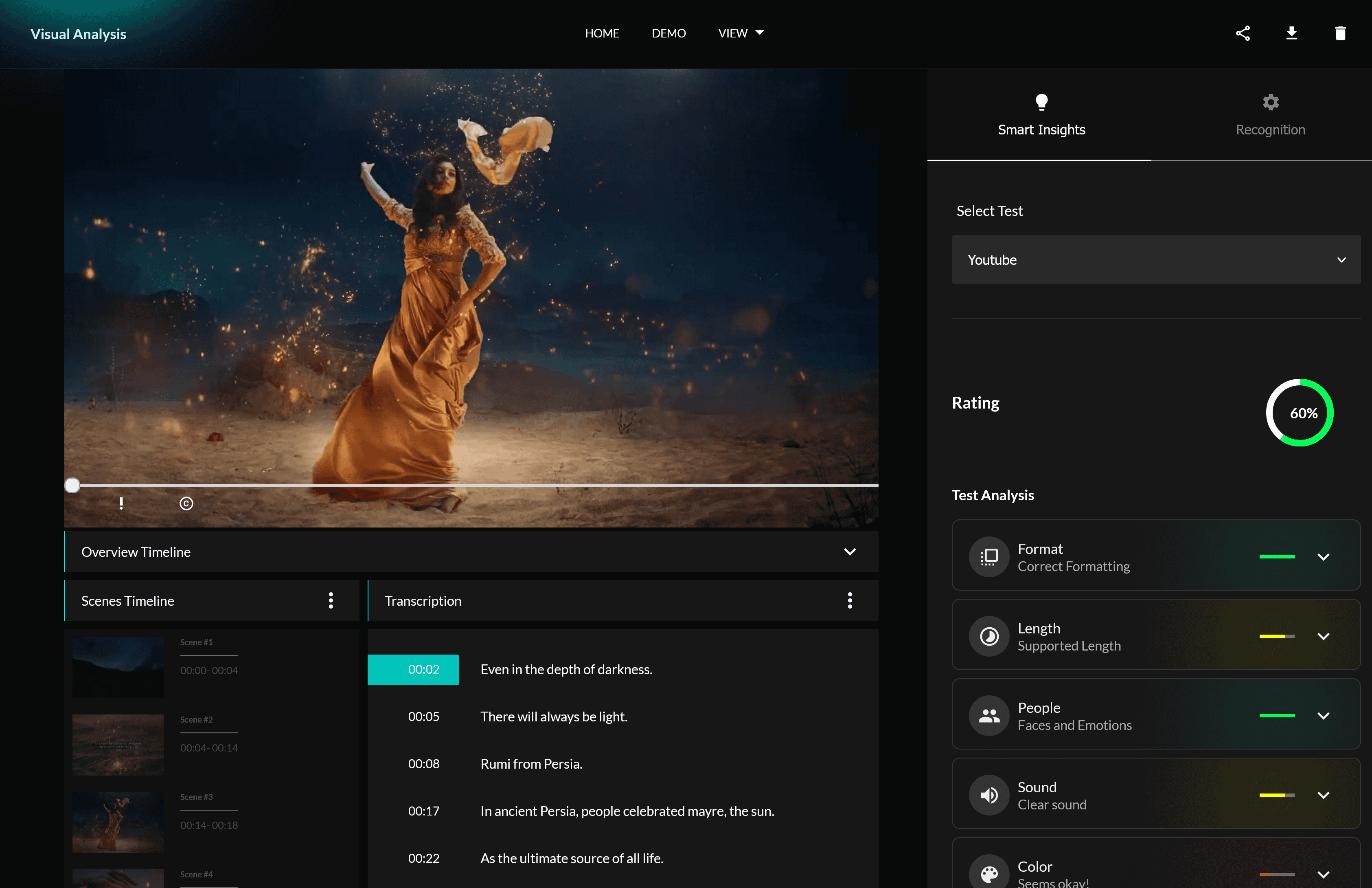
El Análisis Visual de IA utiliza la visión por computadora para evaluar creativos publicitarios como lo haría un humano, pero más rápido, a escala y con precisión. Analiza los visuales en base a principios de diseño probados y conocimientos de rendimiento para ayudar a predecir qué anuncios son más propensos a tener éxito.

A medida que el marketing digital se vuelve cada vez más visual, Cape facilita la optimización temprana del proceso creativo; ahorrando tiempo, reduciendo revisiones y mejorando resultados.

Cómo Cape utiliza el análisis visual para mejorar el rendimiento de anuncios


La plataforma de Cape aprovecha el Análisis Visual de IA para ayudarte a:

  • Evaluar creativos antes de publicarlos
    Obtener información predictiva sobre disposición, equilibrio de texto, colocación de logotipos, brillo, contraste y más (antes de que el anuncio llegue al mercado).

  • Dar retroalimentación en tiempo real durante el diseño
    Apoyar a tu equipo creativo con sugerencias instantáneas y accionables mientras están construyendo el anuncio, no después de que ya esté en marcha.

  • Automatizar la optimización visual a escala
    Usando herramientas como Google Vision API y bibliotecas JavaScript avanzadas, Cape califica anuncios contra referencias de diseño de mejores prácticas para señalar áreas de mejora.

Qué mide el Visual AI de Cape


El sistema de Cape evalúa una amplia gama de componentes creativos, incluyendo:

  • Composición de color y contraste

  • Brillo y claridad de imagen

  • Regla de los tercios y disposición general

  • Colocación y tamaño del logotipo

  • Visibilidad, longitud y jerarquía del texto

  • Presencia facial e indicios emocionales

  • Equilibrio visual y desorden


Estos criterios están basados en investigaciones que conectan el diseño visual con el rendimiento real de los anuncios, convirtiendo decisiones creativas subjetivas en elecciones objetivas e informadas por datos.
¿Qué sigue?: Optimización Creativa de Autoaprendizaje


El sistema actual de Cape predice la calidad del anuncio basado en principios visuales y datos de rendimiento. Nuestro siguiente paso es construir un modelo de autoaprendizaje que vincule estas predicciones directamente con los resultados de las campañas.

El resultado: optimización creativa totalmente automatizada, que mejora continuamente, donde cada diseño se vuelve más inteligente con cada campaña.

Noticias

Mantente a la vanguardia

¿Tienes curiosidad sobre lo último en marketing y publicidad? Suscríbete a nuestro boletín mensual de Promarketers.

23 abr 2026

Agentic AI vs AI wrappers vs custom AI: How to choose your path

You're about to spend $500K on an AI initiative. You've got 3 options on the table, and they'll lead you to wildly different places. Pick wrong, and you're rebuilding in 18 months. Pick right, and you'll have a system that scales, costs less to maintain, and actually does what executives promised.

The choice is between wrapping existing AI models, building custom AI solutions from scratch, or going agentic. Most teams don't understand the real trade-offs until they're locked into the wrong one.

30 mar 2026

Operationalizing AI in advertising: Why it must be embedded, not bolted on

Operationalizing AI in advertising isn’t about adding another tool to your stack. It’s about embedding intelligence into the systems that govern creative production, compliance, and delivery, so automation scales without creating more operational friction.

18 mar 2026

No more chocolate at breakfast? Navigating the new LHF ad rules this Easter

As ad compliance requirements evolve in 2026, UK confectionery brands face new restrictions on less healthy food (LHF) advertising. With the January 5 watershed now in effect, ad quality assurance systems must validate timing, placement, and product identifiability to avoid clearance failures this Easter season.

16 mar 2026

The future of inclusion: How Cape.io powered Virgin Media Television’s fully accessible ad break during the Men’s Six Nations

As Channel 4’s closed-captioning mandate came into effect in March 2026, Cape.io partnered with Virgin Media Television, Omnicom Media Group and VoiceBox to deliver a truly accessible ad break during the Guinness Men’s Six Nations. More than ad compliance, this moment proved that accessibility can operate at the highest level of live sports broadcasting.

27 feb 2026

Navigating Channel 4’s 2026 closed caption mandate

As ad compliance requirements tighten across the UK and Europe, closed captioning has evolved from an accessibility checkbox to a strategic necessity. Whether you're managing CTV campaigns or social media creative, automated ad testing for caption quality is no longer optional - it's fundamental to reaching today's fragmented, multi-screen audiences.

The advertising landscape is facing a seismic shift. By March 1, Channel 4 will become the first UK broadcaster to mandate closed captions across all advertising - including linear TV, streaming, and sponsorships.

The mandate is  a redefined standard for global inclusivity. Here is everything you need to know about the new mandate and how to stay ahead of the curve.

26 feb 2026

One platform, many realities: How creative automation platforms resolve the global vs. local tension

Scaling global marketing without losing local relevance requires more than brand guidelines and templates - it requires a creative automation platform designed for both global control and local flexibility. Most systems optimize for standardization, but scaling ad creative production across markets demands architecture that enables creative variation and adaptation by local experts without fragmenting brand governance.

Many global advertisers are chasing the same ideal: scale without losing relevance.

Consistency without uniformity.
Efficiency without bureaucracy.

It sounds simple. In practice, it’s one of the hardest tensions to resolve in modern marketing.

The global vs. local challenge isn’t new, but it’s becoming more urgent. As brands expand across markets, channels, and cultures, the question is no longer whether you should scale globally, but how you do so without erasing the nuance that makes marketing effective in the first place.

Everyone is looking for this balance. Very few get it right.

Noticias

Mantente a la vanguardia

¿Tienes curiosidad sobre lo último en marketing y publicidad? Suscríbete a nuestro boletín mensual de Promarketers.

23 abr 2026

Agentic AI vs AI wrappers vs custom AI: How to choose your path

You're about to spend $500K on an AI initiative. You've got 3 options on the table, and they'll lead you to wildly different places. Pick wrong, and you're rebuilding in 18 months. Pick right, and you'll have a system that scales, costs less to maintain, and actually does what executives promised.

The choice is between wrapping existing AI models, building custom AI solutions from scratch, or going agentic. Most teams don't understand the real trade-offs until they're locked into the wrong one.

30 mar 2026

Operationalizing AI in advertising: Why it must be embedded, not bolted on

Operationalizing AI in advertising isn’t about adding another tool to your stack. It’s about embedding intelligence into the systems that govern creative production, compliance, and delivery, so automation scales without creating more operational friction.

18 mar 2026

No more chocolate at breakfast? Navigating the new LHF ad rules this Easter

As ad compliance requirements evolve in 2026, UK confectionery brands face new restrictions on less healthy food (LHF) advertising. With the January 5 watershed now in effect, ad quality assurance systems must validate timing, placement, and product identifiability to avoid clearance failures this Easter season.

16 mar 2026

The future of inclusion: How Cape.io powered Virgin Media Television’s fully accessible ad break during the Men’s Six Nations

As Channel 4’s closed-captioning mandate came into effect in March 2026, Cape.io partnered with Virgin Media Television, Omnicom Media Group and VoiceBox to deliver a truly accessible ad break during the Guinness Men’s Six Nations. More than ad compliance, this moment proved that accessibility can operate at the highest level of live sports broadcasting.

27 feb 2026

Navigating Channel 4’s 2026 closed caption mandate

As ad compliance requirements tighten across the UK and Europe, closed captioning has evolved from an accessibility checkbox to a strategic necessity. Whether you're managing CTV campaigns or social media creative, automated ad testing for caption quality is no longer optional - it's fundamental to reaching today's fragmented, multi-screen audiences.

The advertising landscape is facing a seismic shift. By March 1, Channel 4 will become the first UK broadcaster to mandate closed captions across all advertising - including linear TV, streaming, and sponsorships.

The mandate is  a redefined standard for global inclusivity. Here is everything you need to know about the new mandate and how to stay ahead of the curve.

26 feb 2026

One platform, many realities: How creative automation platforms resolve the global vs. local tension

Scaling global marketing without losing local relevance requires more than brand guidelines and templates - it requires a creative automation platform designed for both global control and local flexibility. Most systems optimize for standardization, but scaling ad creative production across markets demands architecture that enables creative variation and adaptation by local experts without fragmenting brand governance.

Many global advertisers are chasing the same ideal: scale without losing relevance.

Consistency without uniformity.
Efficiency without bureaucracy.

It sounds simple. In practice, it’s one of the hardest tensions to resolve in modern marketing.

The global vs. local challenge isn’t new, but it’s becoming more urgent. As brands expand across markets, channels, and cultures, the question is no longer whether you should scale globally, but how you do so without erasing the nuance that makes marketing effective in the first place.

Everyone is looking for this balance. Very few get it right.

Noticias

Mantente a la vanguardia

¿Tienes curiosidad sobre lo último en marketing y publicidad? Suscríbete a nuestro boletín mensual de Promarketers.

23 abr 2026

Agentic AI vs AI wrappers vs custom AI: How to choose your path

You're about to spend $500K on an AI initiative. You've got 3 options on the table, and they'll lead you to wildly different places. Pick wrong, and you're rebuilding in 18 months. Pick right, and you'll have a system that scales, costs less to maintain, and actually does what executives promised.

The choice is between wrapping existing AI models, building custom AI solutions from scratch, or going agentic. Most teams don't understand the real trade-offs until they're locked into the wrong one.

30 mar 2026

Operationalizing AI in advertising: Why it must be embedded, not bolted on

Operationalizing AI in advertising isn’t about adding another tool to your stack. It’s about embedding intelligence into the systems that govern creative production, compliance, and delivery, so automation scales without creating more operational friction.

18 mar 2026

No more chocolate at breakfast? Navigating the new LHF ad rules this Easter

As ad compliance requirements evolve in 2026, UK confectionery brands face new restrictions on less healthy food (LHF) advertising. With the January 5 watershed now in effect, ad quality assurance systems must validate timing, placement, and product identifiability to avoid clearance failures this Easter season.

16 mar 2026

The future of inclusion: How Cape.io powered Virgin Media Television’s fully accessible ad break during the Men’s Six Nations

As Channel 4’s closed-captioning mandate came into effect in March 2026, Cape.io partnered with Virgin Media Television, Omnicom Media Group and VoiceBox to deliver a truly accessible ad break during the Guinness Men’s Six Nations. More than ad compliance, this moment proved that accessibility can operate at the highest level of live sports broadcasting.

27 feb 2026

Navigating Channel 4’s 2026 closed caption mandate

As ad compliance requirements tighten across the UK and Europe, closed captioning has evolved from an accessibility checkbox to a strategic necessity. Whether you're managing CTV campaigns or social media creative, automated ad testing for caption quality is no longer optional - it's fundamental to reaching today's fragmented, multi-screen audiences.

The advertising landscape is facing a seismic shift. By March 1, Channel 4 will become the first UK broadcaster to mandate closed captions across all advertising - including linear TV, streaming, and sponsorships.

The mandate is  a redefined standard for global inclusivity. Here is everything you need to know about the new mandate and how to stay ahead of the curve.

26 feb 2026

One platform, many realities: How creative automation platforms resolve the global vs. local tension

Scaling global marketing without losing local relevance requires more than brand guidelines and templates - it requires a creative automation platform designed for both global control and local flexibility. Most systems optimize for standardization, but scaling ad creative production across markets demands architecture that enables creative variation and adaptation by local experts without fragmenting brand governance.

Many global advertisers are chasing the same ideal: scale without losing relevance.

Consistency without uniformity.
Efficiency without bureaucracy.

It sounds simple. In practice, it’s one of the hardest tensions to resolve in modern marketing.

The global vs. local challenge isn’t new, but it’s becoming more urgent. As brands expand across markets, channels, and cultures, the question is no longer whether you should scale globally, but how you do so without erasing the nuance that makes marketing effective in the first place.

Everyone is looking for this balance. Very few get it right.

Ponte en contacto

Te mostraremos lo que Cape.io puede hacer.

Automatización de Campañas Inteligentes

Cape.io conecta a tu equipo, DAM, servidores de anuncios, DSP, herramientas y más, para que no necesites desmantelar y reemplazar.

© 2025 Cape.io. Todos los derechos reservados

Spanish

Ponte en contacto

Te mostraremos lo que Cape.io puede hacer.

Automatización de Campañas Inteligentes

Cape.io conecta a tu equipo, DAM, servidores de anuncios, DSP, herramientas y más, para que no necesites desmantelar y reemplazar.

© 2025 Cape.io. Todos los derechos reservados

Spanish

Ponte en contacto

Te mostraremos lo que Cape.io puede hacer.

Automatización de Campañas Inteligentes

Cape.io conecta a tu equipo, DAM, servidores de anuncios, DSP, herramientas y más, para que no necesites desmantelar y reemplazar.

© 2025 Cape.io. Todos los derechos reservados

Spanish