¿Menos tiempo? Más pantallas. Cómo adaptarse en una era de contenido masivo

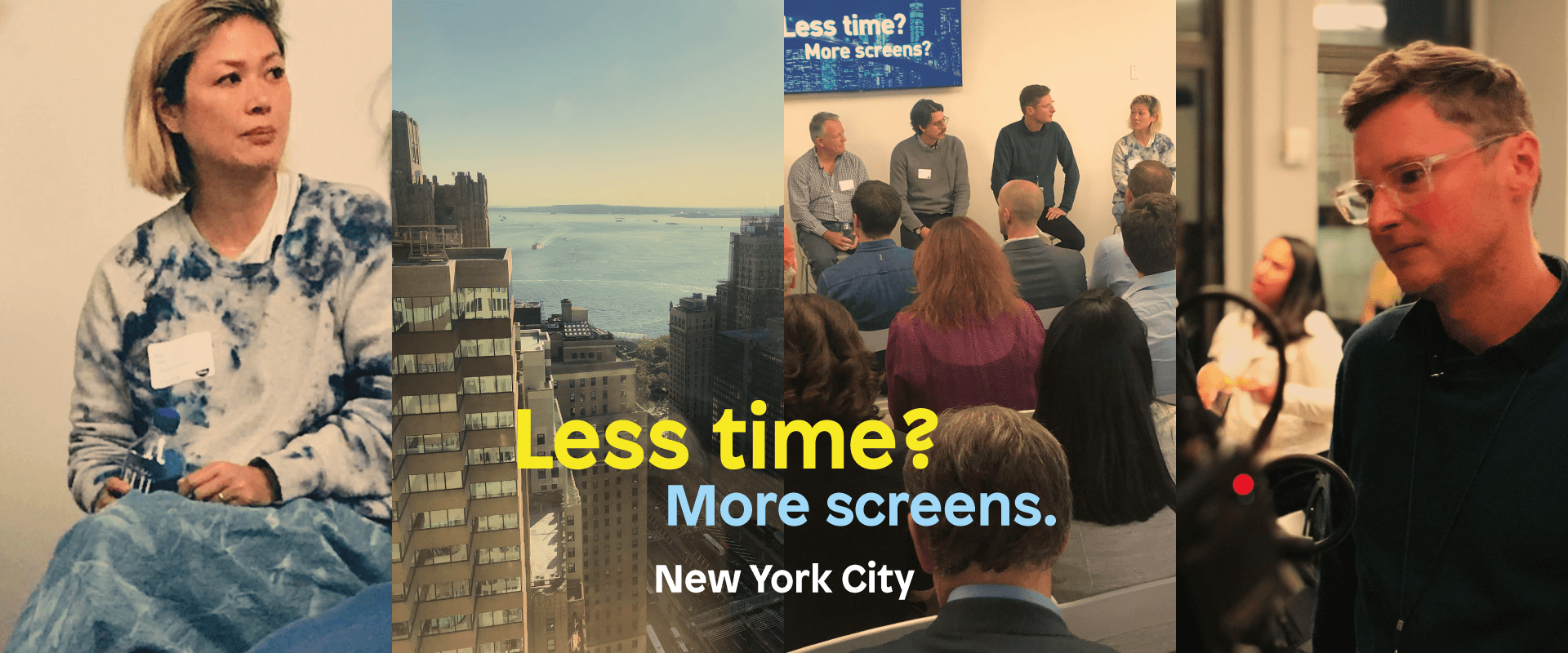
En nuestro evento en Nueva York con Comcast Technology Solutions, Instagram, Droga5, Publicis, Framestore y MCA discutieron lo que significa para la industria cuando las pantallas están en aumento y el contenido está en su punto más alto.

Author

Cape.io

Author

Cape.io

Esto fue publicado originalmente en el sitio web de Peach. Descubre más sobre el cambio de marca de Peach a Cape.io.

En 2019, más datos y más contenido están inundando la cultura a un ritmo alarmante, pero con una oportunidad asombrosa para los anunciantes y las industrias creativas. Los cambios recientes en los comportamientos de consumo de contenido (como resultado de los rápidos avances tecnológicos) han provocado olas de cambio en la industria publicitaria. Los Creativos y las agencias están teniendo que evolucionar más rápido que nunca para mantenerse al día en este nuevo territorio inexplorado, mucho del cual está detrás de una pantalla. Las habilidades que nunca antes existieron están en alta demanda mientras que otras están siendo automatizadas.

Para profundizar en las complejidades de cómo nos mantenemos al día en este mundo multiplataforma y rico en contenido, Peach y Comcast Technology Solutions invitaron a la directora global de Instagram Creative Shop, Kay Hsu; al CCO de Publicis North America, Andy Bird; al director de producción cinematográfica en Droga5, Jesse Brihn; al MD en Framestore, Charles Howell; y al fundador de MCA, Pat Murphy a una mesa redonda organizada por el fundador y CEO de Little Black Book, Matt Cooper.

Aquí, Sunna Naseer de LBB desglosa los aspectos más destacados del evento formativo en Nueva York...

Apuntando a los Datos Digitales

El acceso a los datos nunca ha sido más fácil de obtener, hasta llegar a estadísticas individuales de los consumidores. Las Marcas y las empresas ahora tienen la capacidad de crear campañas altamente personalizadas y dirigidas. Matt Cooper de LBB pregunta al panel: “¿Cómo está lidiando la industria con este cambio de enfoque?”

“Los datos están aquí para quedarse, nos guste o no”, dice el fundador de MCA, Pat Murphy. “ Si tienes una gran idea creativa, los datos pueden hacerla aún más efectiva. Juntos, creo que es enorme.”

Kay Hsu, directora global de Instagram Creative Shop, arrojó luz sobre este tema: “Cuando miras cómo los disruptores están creando contenido, es completamente diferente de cómo una agencia tradicionalmente crearía contenido. Están contratando de manera diferente, están contratando jóvenes, están usando sus teléfonos, son menos preciosos. Las marcas más grandes pueden aprender mucho de algunas de estas marcas disruptivas. La formación en la industria todavía es bastante tradicional, por lo que cuando los estudiantes salen, están menos preparados para abordar las últimas necesidades de contenido.”

Andy Bird, CCO en Publicis North America está de acuerdo: “Los Creativos están teniendo que aprender diferentes disciplinas y habilidades para adaptarse al cambio. La forma en que entregamos trabajo y las expectativas de los clientes han evolucionado. La estrategia creativa a veces surge de la nada, pero a los clientes les encantan los hechos, así que cuando ven una idea realmente creativa que surge de los datos, les encanta. Hace unos años, los datos eran una palabra aterradora para los creativos, pero creo que ya no lo es.”

Automatización y Creatividad: ¿Pueden Coexistir?

“Eso espero, porque es hacia donde vamos”, dice Andy. “¡Si no, estamos un poco fastidiados! Depende de cuánto material tienes que automatizar y estás muy limitado debido al costo. Tiene que haber una mejor manera de integrar la automatización en el sistema. Sin embargo, la artesanía también es importante.”

Jesse Brihn, director de producción cinematográfica en Droga5 agrega: “Hay ciertas pautas que puedes seguir para llevar a alguien a hacer clic o usar algo. Estás creando un proceso o resultado automático, pero también tienes personas increíblemente inteligentes que han construido sus carreras en el arte de hacer cosas automáticas. Instagram tiene toda una plataforma construida alrededor de las mejores prácticas y pautas de uso, pero nunca querrías que alguien siga regurgitando el mismo tipo de cosas o que un bot lo haga.”

Pat resume: “Al final del día, si no tienes un excelente creativo, no tienes nada que automatizar.”

Presupuestos Reducidos

En toda la industria, los presupuestos están siendo recortados y, sin embargo, se espera que el trabajo sea igual de impactante. Esto ha impulsado a más creatividad para producir la misma calidad de trabajo con menos.

“La mejor manera de hacer eso es la planificación previa. Vemos más éxito si la agencia de medios y la agencia creativa trabajan de manera simbiótica para planificar qué activos se requieren antes de entrar en cualquier proceso de producción,” dice Pat. “Nuestro trabajo no se trata de reducir costos o controlar costos. Nuestra misión es tomar un presupuesto y obtener el mayor impacto por el dinero. Si trabajamos bien con las agencias, entonces obtienes la mejor creatividad.”

Jesse señala: “No se trata necesariamente de ahorrar tanto dinero como sea posible porque eso siempre va a ser el caso. Se trata de expandir las oportunidades para posicionarlo correctamente de las maneras correctas. Algo que puede verse como un anuncio terrible o contenido terrible puede no ser en realidad una mala pieza de trabajo, podría simplemente estar dirigido de la manera equivocada. Si usas datos para ayudar a identificar mercados y plataformas objetivo, entonces puedes hacer cosas bien incluso con un presupuesto.”

Lee el artículo completo en LBB o mira el vídeo de todo el evento aquí

Noticias

Mantente a la vanguardia

¿Tienes curiosidad sobre lo último en marketing y publicidad? Suscríbete a nuestro boletín mensual de Promarketers.

18 mar 2026

No more chocolate at breakfast? Navigating the new LHF ad rules this Easter

As ad compliance requirements evolve in 2026, UK confectionery brands face new restrictions on less healthy food (LHF) advertising. With the January 5 watershed now in effect, ad quality assurance systems must validate timing, placement, and product identifiability to avoid clearance failures this Easter season.

16 mar 2026

The future of inclusion: How Cape.io powered Virgin Media Television’s fully accessible ad break during the Men’s Six Nations

As Channel 4’s closed-captioning mandate came into effect in March 2026, Cape.io partnered with Virgin Media Television, Omnicom Media Group and VoiceBox to deliver a truly accessible ad break during the Guinness Men’s Six Nations. More than ad compliance, this moment proved that accessibility can operate at the highest level of live sports broadcasting.

27 feb 2026

Navigating Channel 4’s 2026 closed caption mandate

As ad compliance requirements tighten across the UK and Europe, closed captioning has evolved from an accessibility checkbox to a strategic necessity. Whether you're managing CTV campaigns or social media creative, automated ad testing for caption quality is no longer optional - it's fundamental to reaching today's fragmented, multi-screen audiences.

The advertising landscape is facing a seismic shift. By March 1, Channel 4 will become the first UK broadcaster to mandate closed captions across all advertising - including linear TV, streaming, and sponsorships.

The mandate is  a redefined standard for global inclusivity. Here is everything you need to know about the new mandate and how to stay ahead of the curve.

26 feb 2026

One platform, many realities: How creative automation platforms resolve the global vs. local tension

Scaling global marketing without losing local relevance requires more than brand guidelines and templates - it requires a creative automation platform designed for both global control and local flexibility. Most systems optimize for standardization, but scaling ad creative production across markets demands architecture that enables creative variation and adaptation by local experts without fragmenting brand governance.

Many global advertisers are chasing the same ideal: scale without losing relevance.

Consistency without uniformity.
Efficiency without bureaucracy.

It sounds simple. In practice, it’s one of the hardest tensions to resolve in modern marketing.

The global vs. local challenge isn’t new, but it’s becoming more urgent. As brands expand across markets, channels, and cultures, the question is no longer whether you should scale globally, but how you do so without erasing the nuance that makes marketing effective in the first place.

Everyone is looking for this balance. Very few get it right.

11 feb 2026

EPTVI Initiative launches Stage Two to help programmatic TV scale across Europe’s largest advertising markets

Broadcasters, streamers, agencies and ad tech companies including Google Ad Manager, Equativ, Adform, LiveRamp, The Trade Desk, FreeWheel and Cape.io begin work on practical solutions to reduce complexity and speed up adoption.

4 feb 2026

The guardrails of growth: Why creative intelligence demands compliance

Generative AI can produce thousands of creative variants, but most compliance systems are still manual, fragmented, and reactive, unable to keep pace with today’s velocity. To move fast without breaking things, the industry needs a new approach: real-time verification, programmatic enforcement, and end-to-end visibility. Embedded inside the stack, not bolted on at the end.

Noticias

Mantente a la vanguardia

¿Tienes curiosidad sobre lo último en marketing y publicidad? Suscríbete a nuestro boletín mensual de Promarketers.

18 mar 2026

No more chocolate at breakfast? Navigating the new LHF ad rules this Easter

As ad compliance requirements evolve in 2026, UK confectionery brands face new restrictions on less healthy food (LHF) advertising. With the January 5 watershed now in effect, ad quality assurance systems must validate timing, placement, and product identifiability to avoid clearance failures this Easter season.

16 mar 2026

The future of inclusion: How Cape.io powered Virgin Media Television’s fully accessible ad break during the Men’s Six Nations

As Channel 4’s closed-captioning mandate came into effect in March 2026, Cape.io partnered with Virgin Media Television, Omnicom Media Group and VoiceBox to deliver a truly accessible ad break during the Guinness Men’s Six Nations. More than ad compliance, this moment proved that accessibility can operate at the highest level of live sports broadcasting.

27 feb 2026

Navigating Channel 4’s 2026 closed caption mandate

As ad compliance requirements tighten across the UK and Europe, closed captioning has evolved from an accessibility checkbox to a strategic necessity. Whether you're managing CTV campaigns or social media creative, automated ad testing for caption quality is no longer optional - it's fundamental to reaching today's fragmented, multi-screen audiences.

The advertising landscape is facing a seismic shift. By March 1, Channel 4 will become the first UK broadcaster to mandate closed captions across all advertising - including linear TV, streaming, and sponsorships.

The mandate is  a redefined standard for global inclusivity. Here is everything you need to know about the new mandate and how to stay ahead of the curve.

26 feb 2026

One platform, many realities: How creative automation platforms resolve the global vs. local tension

Scaling global marketing without losing local relevance requires more than brand guidelines and templates - it requires a creative automation platform designed for both global control and local flexibility. Most systems optimize for standardization, but scaling ad creative production across markets demands architecture that enables creative variation and adaptation by local experts without fragmenting brand governance.

Many global advertisers are chasing the same ideal: scale without losing relevance.

Consistency without uniformity.
Efficiency without bureaucracy.

It sounds simple. In practice, it’s one of the hardest tensions to resolve in modern marketing.

The global vs. local challenge isn’t new, but it’s becoming more urgent. As brands expand across markets, channels, and cultures, the question is no longer whether you should scale globally, but how you do so without erasing the nuance that makes marketing effective in the first place.

Everyone is looking for this balance. Very few get it right.

11 feb 2026

EPTVI Initiative launches Stage Two to help programmatic TV scale across Europe’s largest advertising markets

Broadcasters, streamers, agencies and ad tech companies including Google Ad Manager, Equativ, Adform, LiveRamp, The Trade Desk, FreeWheel and Cape.io begin work on practical solutions to reduce complexity and speed up adoption.

4 feb 2026

The guardrails of growth: Why creative intelligence demands compliance

Generative AI can produce thousands of creative variants, but most compliance systems are still manual, fragmented, and reactive, unable to keep pace with today’s velocity. To move fast without breaking things, the industry needs a new approach: real-time verification, programmatic enforcement, and end-to-end visibility. Embedded inside the stack, not bolted on at the end.

Noticias

Mantente a la vanguardia

¿Tienes curiosidad sobre lo último en marketing y publicidad? Suscríbete a nuestro boletín mensual de Promarketers.

18 mar 2026

No more chocolate at breakfast? Navigating the new LHF ad rules this Easter

As ad compliance requirements evolve in 2026, UK confectionery brands face new restrictions on less healthy food (LHF) advertising. With the January 5 watershed now in effect, ad quality assurance systems must validate timing, placement, and product identifiability to avoid clearance failures this Easter season.

16 mar 2026

The future of inclusion: How Cape.io powered Virgin Media Television’s fully accessible ad break during the Men’s Six Nations

As Channel 4’s closed-captioning mandate came into effect in March 2026, Cape.io partnered with Virgin Media Television, Omnicom Media Group and VoiceBox to deliver a truly accessible ad break during the Guinness Men’s Six Nations. More than ad compliance, this moment proved that accessibility can operate at the highest level of live sports broadcasting.

27 feb 2026

Navigating Channel 4’s 2026 closed caption mandate

As ad compliance requirements tighten across the UK and Europe, closed captioning has evolved from an accessibility checkbox to a strategic necessity. Whether you're managing CTV campaigns or social media creative, automated ad testing for caption quality is no longer optional - it's fundamental to reaching today's fragmented, multi-screen audiences.

The advertising landscape is facing a seismic shift. By March 1, Channel 4 will become the first UK broadcaster to mandate closed captions across all advertising - including linear TV, streaming, and sponsorships.

The mandate is  a redefined standard for global inclusivity. Here is everything you need to know about the new mandate and how to stay ahead of the curve.

26 feb 2026

One platform, many realities: How creative automation platforms resolve the global vs. local tension

Scaling global marketing without losing local relevance requires more than brand guidelines and templates - it requires a creative automation platform designed for both global control and local flexibility. Most systems optimize for standardization, but scaling ad creative production across markets demands architecture that enables creative variation and adaptation by local experts without fragmenting brand governance.

Many global advertisers are chasing the same ideal: scale without losing relevance.

Consistency without uniformity.
Efficiency without bureaucracy.

It sounds simple. In practice, it’s one of the hardest tensions to resolve in modern marketing.

The global vs. local challenge isn’t new, but it’s becoming more urgent. As brands expand across markets, channels, and cultures, the question is no longer whether you should scale globally, but how you do so without erasing the nuance that makes marketing effective in the first place.

Everyone is looking for this balance. Very few get it right.

11 feb 2026

EPTVI Initiative launches Stage Two to help programmatic TV scale across Europe’s largest advertising markets

Broadcasters, streamers, agencies and ad tech companies including Google Ad Manager, Equativ, Adform, LiveRamp, The Trade Desk, FreeWheel and Cape.io begin work on practical solutions to reduce complexity and speed up adoption.

4 feb 2026

The guardrails of growth: Why creative intelligence demands compliance

Generative AI can produce thousands of creative variants, but most compliance systems are still manual, fragmented, and reactive, unable to keep pace with today’s velocity. To move fast without breaking things, the industry needs a new approach: real-time verification, programmatic enforcement, and end-to-end visibility. Embedded inside the stack, not bolted on at the end.

Ponte en contacto

Te mostraremos lo que Cape.io puede hacer.

Automatización de Campañas Inteligentes

Cape.io conecta a tu equipo, DAM, servidores de anuncios, DSP, herramientas y más, para que no necesites desmantelar y reemplazar.

© 2025 Cape.io. Todos los derechos reservados

Spanish

Ponte en contacto

Te mostraremos lo que Cape.io puede hacer.

Automatización de Campañas Inteligentes

Cape.io conecta a tu equipo, DAM, servidores de anuncios, DSP, herramientas y más, para que no necesites desmantelar y reemplazar.

© 2025 Cape.io. Todos los derechos reservados

Spanish

Ponte en contacto

Te mostraremos lo que Cape.io puede hacer.

Automatización de Campañas Inteligentes

Cape.io conecta a tu equipo, DAM, servidores de anuncios, DSP, herramientas y más, para que no necesites desmantelar y reemplazar.

© 2025 Cape.io. Todos los derechos reservados

Spanish