23 nov. 2022

Comment Cape.io alimente votre pile technologique publicitaire

Author

Author

Les opérations de publicité et l'achat programmatique de médias ne doivent pas être aussi difficiles

Naviguer dans l'écosystème technologique de la publicité d'aujourd'hui (surtout à travers les serveurs publicitaires et les DSP) peut ressembler à une bataille en montée. L'activation des campagnes est chronophage, coûteuse et dépendante d'une expertise de niche à travers des plates-formes jonchées de complexité et de milliers de réglages. Mais avant même que vos enchères ne soient mises en ligne, il y a un défi plus important : comment rationaliser les approbations créatives, la validation de conformité, le trafic et les versions pour chaque canal et format ?

Explorons les défis et la solution plus intelligente.

Opérations manuelles de publicités : Un enchevêtrement de tâches, d'erreurs et de goulots d'étranglement

Gérer les opérations publicitaires manuellement signifie gérer des détails complexes comme les paramètres d'URL, les conventions de nommage et les spécifications des actifs tout en gardant le rythme avec les besoins dynamiques du marché. Les serveurs publicitaires ne sont pas conçus pour être conviviaux; ils sont construits pour la précision, non pour l'agilité. Et lorsque vous traitez avec des créatifs diversifiés à travers des produits, des publics et des régions, chaque tâche se multiplie.

Les points de douleur courants incluent:

  • Configurations des serveurs publicitaires sujettes à erreur

  • Flexibilité créative limitée

  • Dépendance élevée aux designers et agences

  • Flux de travail d'approbation inefficaces

  • Incapacité à implémenter rapidement des changements

Achat programmatique : Stratégiquement critique, mais techniquement lourd

Les plateformes côté demande (DSP) rendent possibles l'enchère en temps réel et le ciblage d'audience, mais la configuration des campagnes est souvent lente et limitante sur le plan créatif. Sans processus rationalisé, l'achat programmatique de médias souffre de :

  • Tâches manuelles et répétitives qui ralentissent l'optimisation

  • Manque de diversité créative

  • Flux de travail fragmentés sans collaboration intégrée

  • Difficulté à maintenir la cohérence et la conformité

Cape.io : La puissance derrière l'exécution intelligente des campagnes

Cape ne remplace pas votre serveur publicitaire ou DSP - nous les renforçons. En tant que plate-forme neutre vis-à-vis des fournisseurs, Cape s'intègre directement à votre pile publicitaire existante pour automatiser chaque étape avant l'exécution média. Nous unifions la production créative, la validation, et la diffusion cross-canal en une expérience intelligente et sans couture.

Voici comment Cape.io transforme les opérations publicitaires et les flux de travail programmatiques :

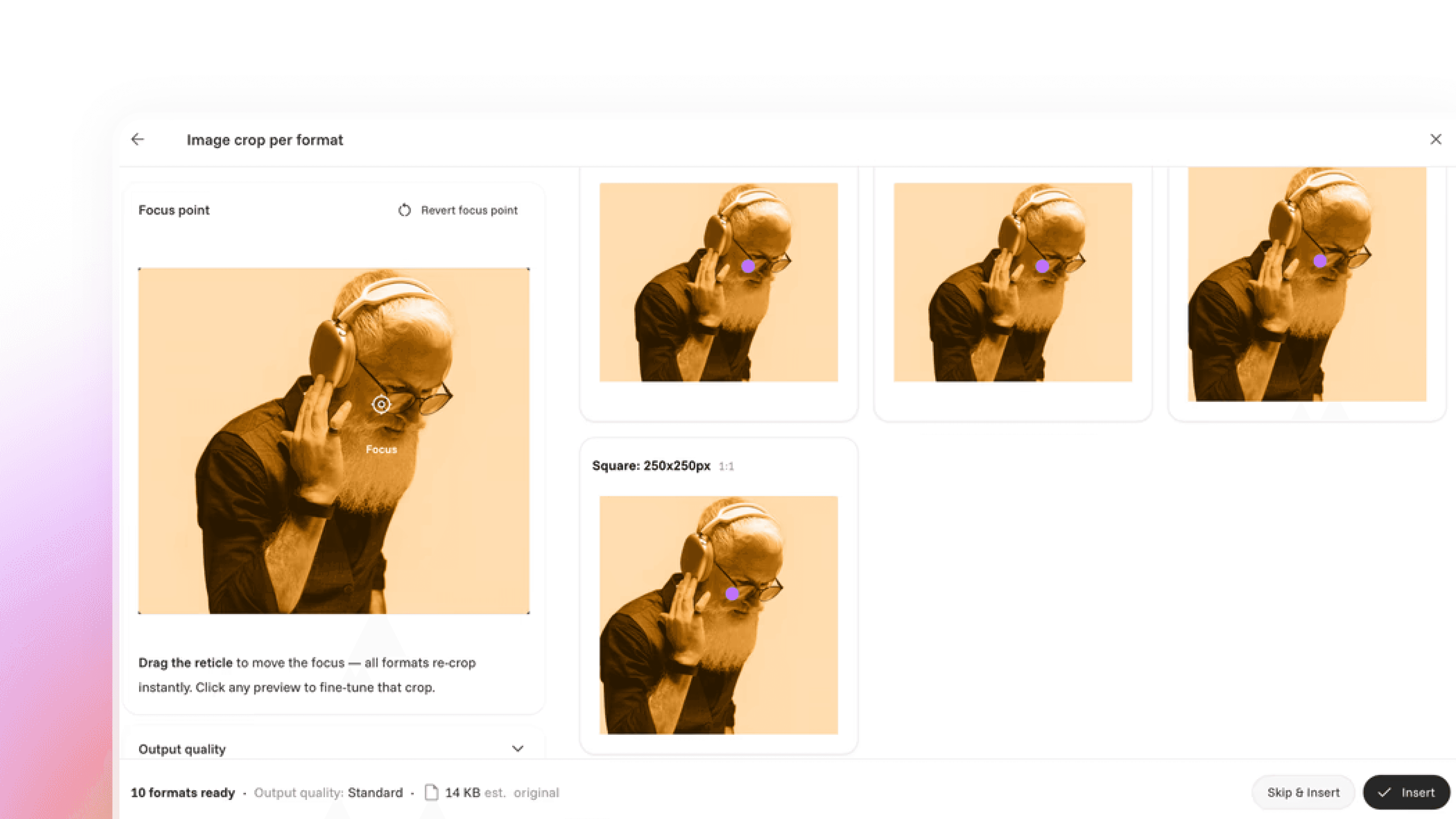
Configuration de campagne unifiée et personnalisée
Fini les configurations standards. Cape s'adapte à votre flux de travail, stratégie de campagne et pile technologique. Campagnes complexes ? Aucun problème. Notre plateforme gère la logique complexe des campagnes avec facilité.

Validation créative automatisée + Conformité
Tous les actifs créatifs sont automatiquement vérifiés pour la conformité à la marque, au format et légale, s'assurant que seules les publicités validées et sans erreur sont diffusées. Dites adieu aux rejets, refontes et risques réglementaires.

Flux de travail collaboratif intégré
Du brief à l'approbation, Cape permet la collaboration en temps réel entre les équipes. Les rôles, droits et flux de révision sont tous intégrés, réduisant les chaînes d'emails et accélérant le temps de mise sur le marché.

Création dynamique automatiseée à grande échelle
Cape permet aux équipes de disposer de modèles intelligents et sécurisés pour la marque et d'outils de versioning automatique. Parfait pour les campagnes multicanales et multi-publics. Générez rapidement des centaines de variantes localisées ou personnalisées sans compromis sur la qualité.

Intégrations directes avec les plates-formes
Nous nous intégrons avec tous les principaux serveurs publicitaires et DSP - Google Marketing Platform, The Trade Desk, Xandr, et plus - pour que vos publicités soient publiées immédiatement, avec tous les paramètres préconfigurés.

Modélisez vos stratégies médias avec des profils de publication
Fixez votre logique d'achat média une fois, puis réappliquez-la sans effort à travers les campagnes. C'est une automatisation qui s'aligne sur votre stratégie, et non l'inverse.

Configuration guidée, pas de supposition de plate-forme
Oubliez les formations longues et les interfaces compliquées. Cape guide intelligemment les utilisateurs à travers les décisions stratégiques, puis construit et applique les bons paramètres de plate-forme en arrière-plan, via API. Vous restez en contrôle sans la complexité technique.

Les campagnes intelligentes commencent avec Cape.io

Cape aide les équipes marketing modernes à en faire plus, avec moins d'effort. En éliminant le fardeau manuel des opérations publicitaires et en apportant l'automatisation, la conformité et la flexibilité créative en un seul endroit, Cape.io alimente l'automatisation intelligente des campagnes, de l'idée à la publicité en direct.

Nouvelles

Anticipez les tendances

Vous êtes curieux des dernières tendances en marketing et publicité ? Abonnez-vous à notre newsletter mensuelle Promarketers.

23 avr. 2026

Agentic AI vs AI wrappers vs custom AI: How to choose your path

You're about to spend $500K on an AI initiative. You've got 3 options on the table, and they'll lead you to wildly different places. Pick wrong, and you're rebuilding in 18 months. Pick right, and you'll have a system that scales, costs less to maintain, and actually does what executives promised.

The choice is between wrapping existing AI models, building custom AI solutions from scratch, or going agentic. Most teams don't understand the real trade-offs until they're locked into the wrong one.

30 mars 2026

Operationalizing AI in advertising: Why it must be embedded, not bolted on

Operationalizing AI in advertising isn’t about adding another tool to your stack. It’s about embedding intelligence into the systems that govern creative production, compliance, and delivery, so automation scales without creating more operational friction.

18 mars 2026

No more chocolate at breakfast? Navigating the new LHF ad rules this Easter

As ad compliance requirements evolve in 2026, UK confectionery brands face new restrictions on less healthy food (LHF) advertising. With the January 5 watershed now in effect, ad quality assurance systems must validate timing, placement, and product identifiability to avoid clearance failures this Easter season.

16 mars 2026

The future of inclusion: How Cape.io powered Virgin Media Television’s fully accessible ad break during the Men’s Six Nations

As Channel 4’s closed-captioning mandate came into effect in March 2026, Cape.io partnered with Virgin Media Television, Omnicom Media Group and VoiceBox to deliver a truly accessible ad break during the Guinness Men’s Six Nations. More than ad compliance, this moment proved that accessibility can operate at the highest level of live sports broadcasting.

27 févr. 2026

Navigating Channel 4’s 2026 closed caption mandate

As ad compliance requirements tighten across the UK and Europe, closed captioning has evolved from an accessibility checkbox to a strategic necessity. Whether you're managing CTV campaigns or social media creative, automated ad testing for caption quality is no longer optional - it's fundamental to reaching today's fragmented, multi-screen audiences.

The advertising landscape is facing a seismic shift. By March 1, Channel 4 will become the first UK broadcaster to mandate closed captions across all advertising - including linear TV, streaming, and sponsorships.

The mandate is  a redefined standard for global inclusivity. Here is everything you need to know about the new mandate and how to stay ahead of the curve.

26 févr. 2026

One platform, many realities: How creative automation platforms resolve the global vs. local tension

Scaling global marketing without losing local relevance requires more than brand guidelines and templates - it requires a creative automation platform designed for both global control and local flexibility. Most systems optimize for standardization, but scaling ad creative production across markets demands architecture that enables creative variation and adaptation by local experts without fragmenting brand governance.

Many global advertisers are chasing the same ideal: scale without losing relevance.

Consistency without uniformity.
Efficiency without bureaucracy.

It sounds simple. In practice, it’s one of the hardest tensions to resolve in modern marketing.

The global vs. local challenge isn’t new, but it’s becoming more urgent. As brands expand across markets, channels, and cultures, the question is no longer whether you should scale globally, but how you do so without erasing the nuance that makes marketing effective in the first place.

Everyone is looking for this balance. Very few get it right.

Nouvelles

Anticipez les tendances

Vous êtes curieux des dernières tendances en marketing et publicité ? Abonnez-vous à notre newsletter mensuelle Promarketers.

23 avr. 2026

Agentic AI vs AI wrappers vs custom AI: How to choose your path

You're about to spend $500K on an AI initiative. You've got 3 options on the table, and they'll lead you to wildly different places. Pick wrong, and you're rebuilding in 18 months. Pick right, and you'll have a system that scales, costs less to maintain, and actually does what executives promised.

The choice is between wrapping existing AI models, building custom AI solutions from scratch, or going agentic. Most teams don't understand the real trade-offs until they're locked into the wrong one.

30 mars 2026

Operationalizing AI in advertising: Why it must be embedded, not bolted on

Operationalizing AI in advertising isn’t about adding another tool to your stack. It’s about embedding intelligence into the systems that govern creative production, compliance, and delivery, so automation scales without creating more operational friction.

18 mars 2026

No more chocolate at breakfast? Navigating the new LHF ad rules this Easter

As ad compliance requirements evolve in 2026, UK confectionery brands face new restrictions on less healthy food (LHF) advertising. With the January 5 watershed now in effect, ad quality assurance systems must validate timing, placement, and product identifiability to avoid clearance failures this Easter season.

16 mars 2026

The future of inclusion: How Cape.io powered Virgin Media Television’s fully accessible ad break during the Men’s Six Nations

As Channel 4’s closed-captioning mandate came into effect in March 2026, Cape.io partnered with Virgin Media Television, Omnicom Media Group and VoiceBox to deliver a truly accessible ad break during the Guinness Men’s Six Nations. More than ad compliance, this moment proved that accessibility can operate at the highest level of live sports broadcasting.

27 févr. 2026

Navigating Channel 4’s 2026 closed caption mandate

As ad compliance requirements tighten across the UK and Europe, closed captioning has evolved from an accessibility checkbox to a strategic necessity. Whether you're managing CTV campaigns or social media creative, automated ad testing for caption quality is no longer optional - it's fundamental to reaching today's fragmented, multi-screen audiences.

The advertising landscape is facing a seismic shift. By March 1, Channel 4 will become the first UK broadcaster to mandate closed captions across all advertising - including linear TV, streaming, and sponsorships.

The mandate is  a redefined standard for global inclusivity. Here is everything you need to know about the new mandate and how to stay ahead of the curve.

26 févr. 2026

One platform, many realities: How creative automation platforms resolve the global vs. local tension

Scaling global marketing without losing local relevance requires more than brand guidelines and templates - it requires a creative automation platform designed for both global control and local flexibility. Most systems optimize for standardization, but scaling ad creative production across markets demands architecture that enables creative variation and adaptation by local experts without fragmenting brand governance.

Many global advertisers are chasing the same ideal: scale without losing relevance.

Consistency without uniformity.
Efficiency without bureaucracy.

It sounds simple. In practice, it’s one of the hardest tensions to resolve in modern marketing.

The global vs. local challenge isn’t new, but it’s becoming more urgent. As brands expand across markets, channels, and cultures, the question is no longer whether you should scale globally, but how you do so without erasing the nuance that makes marketing effective in the first place.

Everyone is looking for this balance. Very few get it right.

Nouvelles

Anticipez les tendances

Vous êtes curieux des dernières tendances en marketing et publicité ? Abonnez-vous à notre newsletter mensuelle Promarketers.

23 avr. 2026

Agentic AI vs AI wrappers vs custom AI: How to choose your path

You're about to spend $500K on an AI initiative. You've got 3 options on the table, and they'll lead you to wildly different places. Pick wrong, and you're rebuilding in 18 months. Pick right, and you'll have a system that scales, costs less to maintain, and actually does what executives promised.

The choice is between wrapping existing AI models, building custom AI solutions from scratch, or going agentic. Most teams don't understand the real trade-offs until they're locked into the wrong one.

30 mars 2026

Operationalizing AI in advertising: Why it must be embedded, not bolted on

Operationalizing AI in advertising isn’t about adding another tool to your stack. It’s about embedding intelligence into the systems that govern creative production, compliance, and delivery, so automation scales without creating more operational friction.

18 mars 2026

No more chocolate at breakfast? Navigating the new LHF ad rules this Easter

As ad compliance requirements evolve in 2026, UK confectionery brands face new restrictions on less healthy food (LHF) advertising. With the January 5 watershed now in effect, ad quality assurance systems must validate timing, placement, and product identifiability to avoid clearance failures this Easter season.

16 mars 2026

The future of inclusion: How Cape.io powered Virgin Media Television’s fully accessible ad break during the Men’s Six Nations

As Channel 4’s closed-captioning mandate came into effect in March 2026, Cape.io partnered with Virgin Media Television, Omnicom Media Group and VoiceBox to deliver a truly accessible ad break during the Guinness Men’s Six Nations. More than ad compliance, this moment proved that accessibility can operate at the highest level of live sports broadcasting.

27 févr. 2026

Navigating Channel 4’s 2026 closed caption mandate

As ad compliance requirements tighten across the UK and Europe, closed captioning has evolved from an accessibility checkbox to a strategic necessity. Whether you're managing CTV campaigns or social media creative, automated ad testing for caption quality is no longer optional - it's fundamental to reaching today's fragmented, multi-screen audiences.

The advertising landscape is facing a seismic shift. By March 1, Channel 4 will become the first UK broadcaster to mandate closed captions across all advertising - including linear TV, streaming, and sponsorships.

The mandate is  a redefined standard for global inclusivity. Here is everything you need to know about the new mandate and how to stay ahead of the curve.

26 févr. 2026

One platform, many realities: How creative automation platforms resolve the global vs. local tension

Scaling global marketing without losing local relevance requires more than brand guidelines and templates - it requires a creative automation platform designed for both global control and local flexibility. Most systems optimize for standardization, but scaling ad creative production across markets demands architecture that enables creative variation and adaptation by local experts without fragmenting brand governance.

Many global advertisers are chasing the same ideal: scale without losing relevance.

Consistency without uniformity.
Efficiency without bureaucracy.

It sounds simple. In practice, it’s one of the hardest tensions to resolve in modern marketing.

The global vs. local challenge isn’t new, but it’s becoming more urgent. As brands expand across markets, channels, and cultures, the question is no longer whether you should scale globally, but how you do so without erasing the nuance that makes marketing effective in the first place.

Everyone is looking for this balance. Very few get it right.

Prendre contact

Découvrez tout ce que Cape.io peut faire pour vous

Automatisation Intelligente des Campagnes

Cape.io connecte votre équipe, votre DAM, vos ad servers, vos DSP et vos autres outils, sans qu’il soit nécessaire de tout remplacer

© 2025 Cape.io. Tous droits réservés

Français

Prendre contact

Découvrez tout ce que Cape.io peut faire pour vous

Automatisation Intelligente des Campagnes

Cape.io connecte votre équipe, votre DAM, vos ad servers, vos DSP et vos autres outils, sans qu’il soit nécessaire de tout remplacer

© 2025 Cape.io. Tous droits réservés

Français

Prendre contact

Découvrez tout ce que Cape.io peut faire pour vous

Automatisation Intelligente des Campagnes

Cape.io connecte votre équipe, votre DAM, vos ad servers, vos DSP et vos autres outils, sans qu’il soit nécessaire de tout remplacer

© 2025 Cape.io. Tous droits réservés

Français