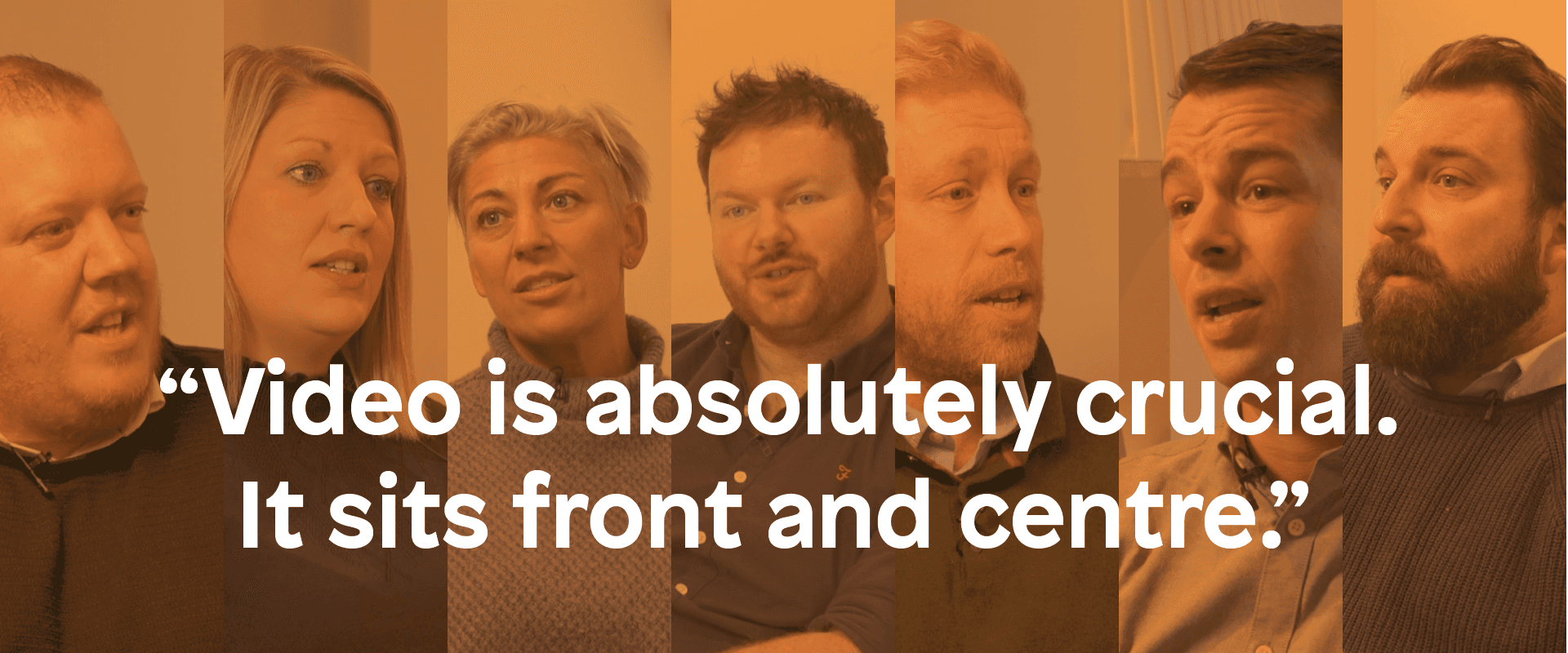
Médias en 2020 : 8 questions pour 7 leaders

Nous avons posé 8 questions à 7 dirigeants des médias pour découvrir où ils en sont en 2020. Quels sont leurs défis ? Qu'est-ce qui est formidable ? Et qu'est-ce qui les excite ?

Author

Cape.io

Author

Cape.io

Ceci a été initialement publié sur le site Peach. En savoir plus sur le changement de marque de Peach à Cape.io.

Wayne Blodwell (Fondateur, The Programmatic Advisory), Natalie Burton (Responsable des opérations d'investissement, PHD), Bobi Carley (Responsable des médias, ISBA), Mark Giblin (Responsable de la demande, Telaria), Paul Gubbins (Responsable programmatique, Unruly), Joseph Harake (Directeur Digital, OMD) et Anthony Mcgregor Clarke (Producteur intégré senior, Oliver) ont parlé à Peach de leur situation en 2020. Qu'est-ce qui les rend optimistes? Qu'est-ce qui les empêche de dormir la nuit?

1 : Quel est le plus grand obstacle pour porter la créativité au niveau supérieur?


« Il y a beaucoup de changements nécessaires afin de s'assurer que nous obtenons la bonne publicité au bon endroit dans les bons formats »
– Bobi Carley, Responsable des médias, ISBA

2 : Quelle est l'importance de la vidéo elle-même dans le succès global de la campagne ?


« Il va y avoir une énorme explosion des budgets publicitaires qui vont passer de la télévision linéaire aux appareils connectés dans les environnements OTT, donc 2020 sera une année de transformation en ce qui concerne la vidéo et la publicité télévisée. »
– Paul Gubbins, Responsable programmatique, Unruly

3 : Qu'est-ce qui freine l'écosystème de la vidéo digitale aujourd'hui?


« Différentes spécifications, différentes plateformes, différentes méthodes de travail. Parfois, il peut être assez difficile de rassembler ces choses. »
– Natalie Burton, Responsable des opérations d'investissement, PHD

4 : Quels sont les défis de travailler avec d'autres parties prenantes ?


« Pour que tout cela fonctionne efficacement, chacun doit faire son travail rapidement efficacement et avec peu d'erreurs, voire aucune… et cela arrive rarement. »
– Anthony Mcgregor Clarke, Producteur intégré senior, Oliver

5 : La vie après les cookies - que voyez-vous comme l'avenir des données d'audience pour informer la créativité ?


« S'assurer à nouveau que nous délivrons le bon message au bon utilisateur au bon moment en fonction des informations qu'ils nous ont consenties à utiliser. »
– Joseph Harake, Directeur Digital, OMD

6 : Est-ce facile de mettre en œuvre une campagne multicanal, trans-territoriale ?


« Comme le nombre de plateformes a explosé — la façon dont les gens travaillent a changé — c'est devenu encore plus compliqué que jamais. Donc, tout ce qui peut aider et soulager cette douleur sera très recherché dans l'industrie. »
– Bobi Carley, Responsable des médias, ISBA

7 : Si vous pouviez réparer une chose pour vos clients, ce serait quoi ?


« Amener mes clients à penser un peu plus au processus et à l'automatisation de ce qu'ils font. »
– Wayne Blodwell, Fondateur, The Programmatic Advisory

8 : Qu'est-ce qui vous excite à propos de 2020 ?


« Il va y avoir une énorme quantité de perturbations positives. Le paysage autour de nous change. Nous appuyons presque sur le bouton de réinitialisation en 2020 par rapport à la façon dont nous avons fait les choses au cours des 10 dernières années. »
– Paul Gubbins, Responsable programmatique, Unruly

Nouvelles

Anticipez les tendances

Vous êtes curieux des dernières tendances en marketing et publicité ? Abonnez-vous à notre newsletter mensuelle Promarketers.

18 mars 2026

No more chocolate at breakfast? Navigating the new LHF ad rules this Easter

As ad compliance requirements evolve in 2026, UK confectionery brands face new restrictions on less healthy food (LHF) advertising. With the January 5 watershed now in effect, ad quality assurance systems must validate timing, placement, and product identifiability to avoid clearance failures this Easter season.

16 mars 2026

The future of inclusion: How Cape.io powered Virgin Media Television’s fully accessible ad break during the Men’s Six Nations

As Channel 4’s closed-captioning mandate came into effect in March 2026, Cape.io partnered with Virgin Media Television, Omnicom Media Group and VoiceBox to deliver a truly accessible ad break during the Guinness Men’s Six Nations. More than ad compliance, this moment proved that accessibility can operate at the highest level of live sports broadcasting.

27 févr. 2026

Navigating Channel 4’s 2026 closed caption mandate

As ad compliance requirements tighten across the UK and Europe, closed captioning has evolved from an accessibility checkbox to a strategic necessity. Whether you're managing CTV campaigns or social media creative, automated ad testing for caption quality is no longer optional - it's fundamental to reaching today's fragmented, multi-screen audiences.

The advertising landscape is facing a seismic shift. By March 1, Channel 4 will become the first UK broadcaster to mandate closed captions across all advertising - including linear TV, streaming, and sponsorships.

The mandate is  a redefined standard for global inclusivity. Here is everything you need to know about the new mandate and how to stay ahead of the curve.

26 févr. 2026

One platform, many realities: How creative automation platforms resolve the global vs. local tension

Scaling global marketing without losing local relevance requires more than brand guidelines and templates - it requires a creative automation platform designed for both global control and local flexibility. Most systems optimize for standardization, but scaling ad creative production across markets demands architecture that enables creative variation and adaptation by local experts without fragmenting brand governance.

Many global advertisers are chasing the same ideal: scale without losing relevance.

Consistency without uniformity.
Efficiency without bureaucracy.

It sounds simple. In practice, it’s one of the hardest tensions to resolve in modern marketing.

The global vs. local challenge isn’t new, but it’s becoming more urgent. As brands expand across markets, channels, and cultures, the question is no longer whether you should scale globally, but how you do so without erasing the nuance that makes marketing effective in the first place.

Everyone is looking for this balance. Very few get it right.

11 févr. 2026

EPTVI Initiative launches Stage Two to help programmatic TV scale across Europe’s largest advertising markets

Broadcasters, streamers, agencies and ad tech companies including Google Ad Manager, Equativ, Adform, LiveRamp, The Trade Desk, FreeWheel and Cape.io begin work on practical solutions to reduce complexity and speed up adoption.

4 févr. 2026

The guardrails of growth: Why creative intelligence demands compliance

Generative AI can produce thousands of creative variants, but most compliance systems are still manual, fragmented, and reactive, unable to keep pace with today’s velocity. To move fast without breaking things, the industry needs a new approach: real-time verification, programmatic enforcement, and end-to-end visibility. Embedded inside the stack, not bolted on at the end.

Nouvelles

Anticipez les tendances

Vous êtes curieux des dernières tendances en marketing et publicité ? Abonnez-vous à notre newsletter mensuelle Promarketers.

18 mars 2026

No more chocolate at breakfast? Navigating the new LHF ad rules this Easter

As ad compliance requirements evolve in 2026, UK confectionery brands face new restrictions on less healthy food (LHF) advertising. With the January 5 watershed now in effect, ad quality assurance systems must validate timing, placement, and product identifiability to avoid clearance failures this Easter season.

16 mars 2026

The future of inclusion: How Cape.io powered Virgin Media Television’s fully accessible ad break during the Men’s Six Nations

As Channel 4’s closed-captioning mandate came into effect in March 2026, Cape.io partnered with Virgin Media Television, Omnicom Media Group and VoiceBox to deliver a truly accessible ad break during the Guinness Men’s Six Nations. More than ad compliance, this moment proved that accessibility can operate at the highest level of live sports broadcasting.

27 févr. 2026

Navigating Channel 4’s 2026 closed caption mandate

As ad compliance requirements tighten across the UK and Europe, closed captioning has evolved from an accessibility checkbox to a strategic necessity. Whether you're managing CTV campaigns or social media creative, automated ad testing for caption quality is no longer optional - it's fundamental to reaching today's fragmented, multi-screen audiences.

The advertising landscape is facing a seismic shift. By March 1, Channel 4 will become the first UK broadcaster to mandate closed captions across all advertising - including linear TV, streaming, and sponsorships.

The mandate is  a redefined standard for global inclusivity. Here is everything you need to know about the new mandate and how to stay ahead of the curve.

26 févr. 2026

One platform, many realities: How creative automation platforms resolve the global vs. local tension

Scaling global marketing without losing local relevance requires more than brand guidelines and templates - it requires a creative automation platform designed for both global control and local flexibility. Most systems optimize for standardization, but scaling ad creative production across markets demands architecture that enables creative variation and adaptation by local experts without fragmenting brand governance.

Many global advertisers are chasing the same ideal: scale without losing relevance.

Consistency without uniformity.
Efficiency without bureaucracy.

It sounds simple. In practice, it’s one of the hardest tensions to resolve in modern marketing.

The global vs. local challenge isn’t new, but it’s becoming more urgent. As brands expand across markets, channels, and cultures, the question is no longer whether you should scale globally, but how you do so without erasing the nuance that makes marketing effective in the first place.

Everyone is looking for this balance. Very few get it right.

11 févr. 2026

EPTVI Initiative launches Stage Two to help programmatic TV scale across Europe’s largest advertising markets

Broadcasters, streamers, agencies and ad tech companies including Google Ad Manager, Equativ, Adform, LiveRamp, The Trade Desk, FreeWheel and Cape.io begin work on practical solutions to reduce complexity and speed up adoption.

4 févr. 2026

The guardrails of growth: Why creative intelligence demands compliance

Generative AI can produce thousands of creative variants, but most compliance systems are still manual, fragmented, and reactive, unable to keep pace with today’s velocity. To move fast without breaking things, the industry needs a new approach: real-time verification, programmatic enforcement, and end-to-end visibility. Embedded inside the stack, not bolted on at the end.

Nouvelles

Anticipez les tendances

Vous êtes curieux des dernières tendances en marketing et publicité ? Abonnez-vous à notre newsletter mensuelle Promarketers.

18 mars 2026

No more chocolate at breakfast? Navigating the new LHF ad rules this Easter

As ad compliance requirements evolve in 2026, UK confectionery brands face new restrictions on less healthy food (LHF) advertising. With the January 5 watershed now in effect, ad quality assurance systems must validate timing, placement, and product identifiability to avoid clearance failures this Easter season.

16 mars 2026

The future of inclusion: How Cape.io powered Virgin Media Television’s fully accessible ad break during the Men’s Six Nations

As Channel 4’s closed-captioning mandate came into effect in March 2026, Cape.io partnered with Virgin Media Television, Omnicom Media Group and VoiceBox to deliver a truly accessible ad break during the Guinness Men’s Six Nations. More than ad compliance, this moment proved that accessibility can operate at the highest level of live sports broadcasting.

27 févr. 2026

Navigating Channel 4’s 2026 closed caption mandate

As ad compliance requirements tighten across the UK and Europe, closed captioning has evolved from an accessibility checkbox to a strategic necessity. Whether you're managing CTV campaigns or social media creative, automated ad testing for caption quality is no longer optional - it's fundamental to reaching today's fragmented, multi-screen audiences.

The advertising landscape is facing a seismic shift. By March 1, Channel 4 will become the first UK broadcaster to mandate closed captions across all advertising - including linear TV, streaming, and sponsorships.

The mandate is  a redefined standard for global inclusivity. Here is everything you need to know about the new mandate and how to stay ahead of the curve.

26 févr. 2026

One platform, many realities: How creative automation platforms resolve the global vs. local tension

Scaling global marketing without losing local relevance requires more than brand guidelines and templates - it requires a creative automation platform designed for both global control and local flexibility. Most systems optimize for standardization, but scaling ad creative production across markets demands architecture that enables creative variation and adaptation by local experts without fragmenting brand governance.

Many global advertisers are chasing the same ideal: scale without losing relevance.

Consistency without uniformity.
Efficiency without bureaucracy.

It sounds simple. In practice, it’s one of the hardest tensions to resolve in modern marketing.

The global vs. local challenge isn’t new, but it’s becoming more urgent. As brands expand across markets, channels, and cultures, the question is no longer whether you should scale globally, but how you do so without erasing the nuance that makes marketing effective in the first place.

Everyone is looking for this balance. Very few get it right.

11 févr. 2026

EPTVI Initiative launches Stage Two to help programmatic TV scale across Europe’s largest advertising markets

Broadcasters, streamers, agencies and ad tech companies including Google Ad Manager, Equativ, Adform, LiveRamp, The Trade Desk, FreeWheel and Cape.io begin work on practical solutions to reduce complexity and speed up adoption.

4 févr. 2026

The guardrails of growth: Why creative intelligence demands compliance

Generative AI can produce thousands of creative variants, but most compliance systems are still manual, fragmented, and reactive, unable to keep pace with today’s velocity. To move fast without breaking things, the industry needs a new approach: real-time verification, programmatic enforcement, and end-to-end visibility. Embedded inside the stack, not bolted on at the end.

Prendre contact

Découvrez tout ce que Cape.io peut faire pour vous

Automatisation Intelligente des Campagnes

Cape.io connecte votre équipe, votre DAM, vos ad servers, vos DSP et vos autres outils, sans qu’il soit nécessaire de tout remplacer

© 2025 Cape.io. Tous droits réservés

Français

Prendre contact

Découvrez tout ce que Cape.io peut faire pour vous

Automatisation Intelligente des Campagnes

Cape.io connecte votre équipe, votre DAM, vos ad servers, vos DSP et vos autres outils, sans qu’il soit nécessaire de tout remplacer

© 2025 Cape.io. Tous droits réservés

Français

Prendre contact

Découvrez tout ce que Cape.io peut faire pour vous

Automatisation Intelligente des Campagnes

Cape.io connecte votre équipe, votre DAM, vos ad servers, vos DSP et vos autres outils, sans qu’il soit nécessaire de tout remplacer

© 2025 Cape.io. Tous droits réservés

Français