9 mars 2023

Déplacez votre corps BVOD

BVOD force une évolution dans l'industrie publicitaire australienne. Andy Gilroy explique ce qui se passe.

Ceci a été initialement publié sur le site Web de Peach. En savoir plus sur le changement de marque de Peach à Cape.io.

Le Broadcast Video on Demand (BVOD) est une plateforme de plus en plus importante pour les annonceurs, offrant un moyen hautement ciblé et mesurable d'atteindre les audiences selon leurs propres termes. Le BVOD est la TV de rattrapage ou le streaming à la demande de contenu télévisé. Il permet aux téléspectateurs de regarder leurs émissions de télévision, films ou événements sportifs préférés quand ils le souhaitent, plutôt que d'être contraints par les horaires de diffusion. Il n'est donc pas surprenant de constater à quel point la chaîne a connu une telle croissance. 

En 2022, les revenus du BVOD en Australie pour l'année financière totale ont été de 448 millions, en hausse de 23,5 pour cent d'une année sur l'autre et ils devraient croître de manière similaire en 2023. 

Le BVOD ne doit pas être confondu avec le Subscription Video on Demand (SVOD) ou le Ad-based Video on Demand (AVOD). Il y a pas mal de similitudes entre les trois acronymes, mais le tableau 

ci-dessous fournit une ventilation des plateformes australiennes actuellement acceptant la vidéo: 

BVOD: 

Broadcast Video on Demand

SVOD: 

Subscription Video on Demand

AVOD: 

Ad based Video on Demand

  • Accès gratuit

  • TV en direct

  • Vidéo à la demande

  • Financé par la publicité

  • Web et application

  • Accès payant 

  • TV en direct

  • Vidéo à la demande

  • Abonnement & Financé par la publicité

  • Web et application

  • Accès gratuit / payant

  • Vidéo à la demande

  • Abonnement & Financé par la publicité

  • Web et application

Mesurer, adapter et réussir

Le BVOD en particulier peut également être mesuré via VOZ, le service de mesure de la télévision australienne, ainsi que la TV linéaire traditionnelle. Par conséquent, les marketeurs peuvent accéder à des données en temps réel et des analyses signifiant que les campagnes peuvent être optimisées plus rapidement, permettant un meilleur contrôle et une efficacité maximale des campagnes. 

Cela devient encore plus important une fois que l'on considère également le paysage médiatique plus large. L'industrie publicitaire évolue rapidement, de nouveaux canaux sont constamment introduits et les marketeurs doivent s'assurer que leurs plans médias tirent le meilleur parti de toutes les options de distribution. Un exemple d'une nouvelle opportunité est le lancement de services de streaming AVOD. En novembre 2022, Netflix a lancé son service international soutenu par la publicité et en mars 2023, le BINGE de Foxtel lancera également une offre soutenue par la publicité en Australie. 


Impact de la crise du coût de la vie

À mesure que les demandes sur le revenu disponible des consommateurs augmentent, la pression pour réduire les abonnements afin de réduire les coûts augmente également. Cependant, les téléspectateurs se sont habitués à leurs divers services de streaming et peuvent être réticents à annuler complètement les abonnements. L'AVOD offre aux téléspectateurs une alternative moins chère, en passant à un abonnement à paliers publicitaires, les habitudes de visionnage peuvent rester relativement les mêmes mais à un prix inférieur avec l'inclusion des publicités. 

Des cordons de bourse plus serrés signifient également que les gens sortiront moins souvent pour économiser et dépendront davantage des divertissements à domicile, alimentant davantage la demande de BVOD et de ses contemporains. La télévision payante a augmenté de 5,9 % pendant la Covid-19 selon Roy Morgan, car les gens étaient confinés chez eux pendant le verrouillage et l'industrie pourrait s'attendre à une hausse similaire l'année prochaine alors que la récession frappe. Il s'agit d'une opportunité que les annonceurs devraient être prêts à exploiter (si le budget le permet). 


Quel est le défi du BVOD ?

Une partie du défi vient de la manière dont le BVOD est négocié en Australie. La grande majorité du BVOD est achetée de manière programmatique, alors que sur des marchés comme le Royaume-Uni, le contenu est envoyé directement aux plateformes qui gèrent leur propre inventaire. En essence, ici en Australie, le BVOD est devenu un achat numérique via plusieurs plateformes et le processus de contenu a suivi le processus d'achat. Ainsi, c'est la personne qui configure l'achat média (généralement une agence média) qui est responsable de la mise en ligne du fichier vidéo.

Aujourd'hui, 68 % des foyers australiens disposent d'une télévision connectée à Internet*, ce qui facilite encore plus le visionnage à la demande via leur grand écran. Les téléspectateurs se sont habitués à voir des contenus de haute qualité à la télévision, donc la diffusion du BVOD est également attendue à un niveau similaire. Cependant, une grande partie de notre industrie ne traite toujours pas les publicités vidéo sur la télévision numérique de la même manière que la télévision traditionnelle.

Malgré la croissance énorme du BVOD et son dépassement inévitable de la TV linéaire en termes de volume, il est soumis à des workflows créatifs incohérents et inefficaces, ignorant les meilleures pratiques développées avec la télévision.

Comme le disait Confucius, "Étudiez le passé si vous voulez définir l'avenir."

À titre d'exemple, avant qu'une publicité TV ne soit diffusée, elle doit passer par de nombreux contrôles, de l'autorisation du contenu aux vérifications audio et techniques, et enfin la sortie conforme pour le diffuseur spécifique. Tout cela garantit la diffusion des publicités au bon endroit et en haute qualité en matière de spécifications de diffusion.


La solution

Eh bien, si ce n'est votre fournisseur amical de livraison de publicités Peach. Il y a moins de toiles d'araignée et de multivers avec nous mais nous offrons une réponse facile au problème du BVOD. 

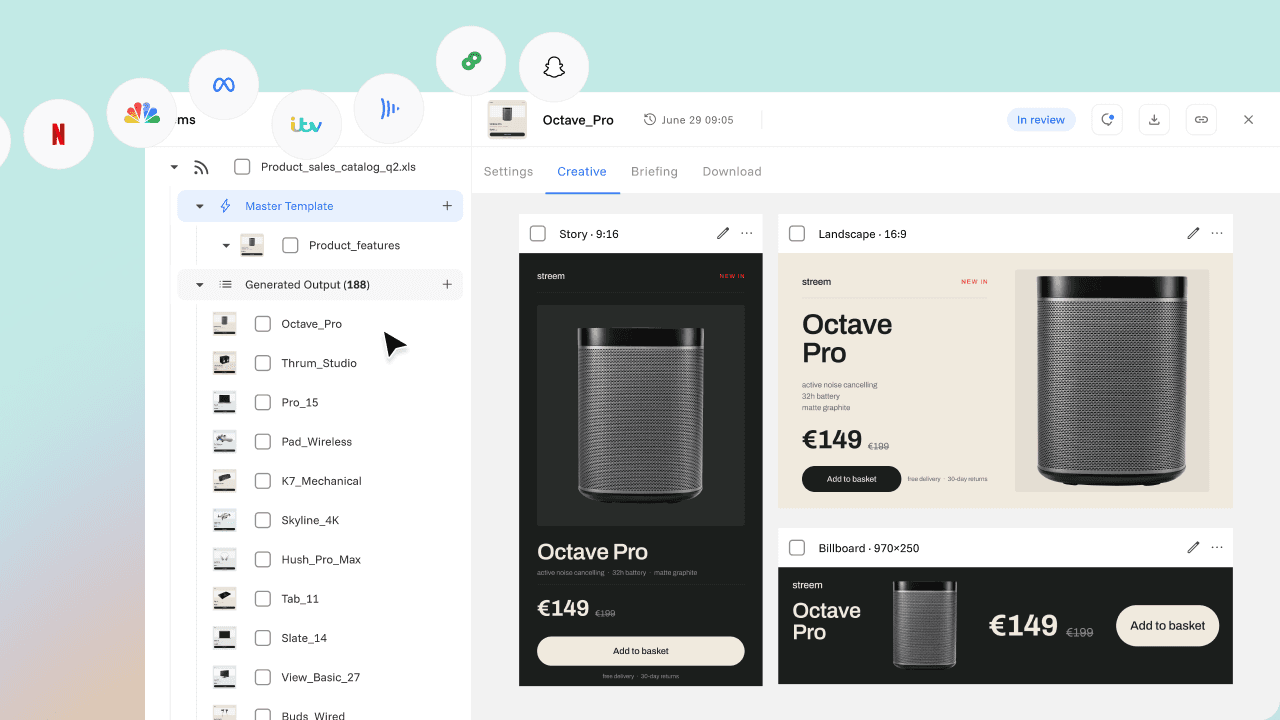
Nous avons reconnu les défis créatifs et les exigences introduits par un écosystème vidéo en constante augmentation, c'est pourquoi nous aidons les agences créatives et de production depuis plus de deux ans à s'assurer qu'elles peuvent créer tous les fichiers exacts BVOD (SVOD et AVOD) à partir d'un maître unique pour la télévision ou le numérique à partager directement avec les agences médias, garantissant que les fichiers de qualité télévision parviennent au bon appareil, y compris les télévisions de salon connectées, dans une forme parfaite.


*Source OZTAM & Enquête d'établissement TAM régional Juillet 21 - Décembre 21 / Janvier 2022 - Juin 2022

Tags

Nouvelles

Anticipez les tendances

Vous êtes curieux des dernières tendances en marketing et publicité ? Abonnez-vous à notre newsletter mensuelle Promarketers.

27 févr. 2026

Navigating Channel 4’s 2026 closed caption mandate

As ad compliance requirements tighten across the UK and Europe, closed captioning has evolved from an accessibility checkbox to a strategic necessity. Whether you're managing CTV campaigns or social media creative, automated ad testing for caption quality is no longer optional - it's fundamental to reaching today's fragmented, multi-screen audiences.

The advertising landscape is facing a seismic shift. By March 1, Channel 4 will become the first UK broadcaster to mandate closed captions across all advertising - including linear TV, streaming, and sponsorships.

The mandate is  a redefined standard for global inclusivity. Here is everything you need to know about the new mandate and how to stay ahead of the curve.

26 févr. 2026

One platform, many realities: How creative automation platforms resolve the global vs. local tension

Scaling global marketing without losing local relevance requires more than brand guidelines and templates - it requires a creative automation platform designed for both global control and local flexibility. Most systems optimize for standardization, but scaling ad creative production across markets demands architecture that enables creative variation and adaptation by local experts without fragmenting brand governance.

Many global advertisers are chasing the same ideal: scale without losing relevance.

Consistency without uniformity.
Efficiency without bureaucracy.

It sounds simple. In practice, it’s one of the hardest tensions to resolve in modern marketing.

The global vs. local challenge isn’t new, but it’s becoming more urgent. As brands expand across markets, channels, and cultures, the question is no longer whether you should scale globally, but how you do so without erasing the nuance that makes marketing effective in the first place.

Everyone is looking for this balance. Very few get it right.

11 févr. 2026

EPTVI Initiative launches Stage Two to help programmatic TV scale across Europe’s largest advertising markets

Broadcasters, streamers, agencies and ad tech companies including Google Ad Manager, Equativ, Adform, LiveRamp, The Trade Desk, FreeWheel and Cape.io begin work on practical solutions to reduce complexity and speed up adoption.

4 févr. 2026

The guardrails of growth: Why creative intelligence demands compliance

Generative AI can produce thousands of creative variants, but most compliance systems are still manual, fragmented, and reactive, unable to keep pace with today’s velocity. To move fast without breaking things, the industry needs a new approach: real-time verification, programmatic enforcement, and end-to-end visibility. Embedded inside the stack, not bolted on at the end.

9 janv. 2026

Every Word Counts - Cape Closed Captioning

Captions have become more than an accessibility tool, they’re now essential for how we watch, understand, and engage with content. Clear, inclusive, and attention-smart, captioning helps every story reach everyone.

4 déc. 2025

Flying high with AI: How Cape.io revolutionized KLM's email marketing with AirMail

Discover how Cape.io partnered with KLM to build AirMail, an innovative AI co-pilot that generates highly customized email campaigns with unprecedented speed, efficiency, and scale.

Nouvelles

Anticipez les tendances

Vous êtes curieux des dernières tendances en marketing et publicité ? Abonnez-vous à notre newsletter mensuelle Promarketers.

27 févr. 2026

Navigating Channel 4’s 2026 closed caption mandate

As ad compliance requirements tighten across the UK and Europe, closed captioning has evolved from an accessibility checkbox to a strategic necessity. Whether you're managing CTV campaigns or social media creative, automated ad testing for caption quality is no longer optional - it's fundamental to reaching today's fragmented, multi-screen audiences.

The advertising landscape is facing a seismic shift. By March 1, Channel 4 will become the first UK broadcaster to mandate closed captions across all advertising - including linear TV, streaming, and sponsorships.

The mandate is  a redefined standard for global inclusivity. Here is everything you need to know about the new mandate and how to stay ahead of the curve.

26 févr. 2026

One platform, many realities: How creative automation platforms resolve the global vs. local tension

Scaling global marketing without losing local relevance requires more than brand guidelines and templates - it requires a creative automation platform designed for both global control and local flexibility. Most systems optimize for standardization, but scaling ad creative production across markets demands architecture that enables creative variation and adaptation by local experts without fragmenting brand governance.

Many global advertisers are chasing the same ideal: scale without losing relevance.

Consistency without uniformity.
Efficiency without bureaucracy.

It sounds simple. In practice, it’s one of the hardest tensions to resolve in modern marketing.

The global vs. local challenge isn’t new, but it’s becoming more urgent. As brands expand across markets, channels, and cultures, the question is no longer whether you should scale globally, but how you do so without erasing the nuance that makes marketing effective in the first place.

Everyone is looking for this balance. Very few get it right.

11 févr. 2026

EPTVI Initiative launches Stage Two to help programmatic TV scale across Europe’s largest advertising markets

Broadcasters, streamers, agencies and ad tech companies including Google Ad Manager, Equativ, Adform, LiveRamp, The Trade Desk, FreeWheel and Cape.io begin work on practical solutions to reduce complexity and speed up adoption.

4 févr. 2026

The guardrails of growth: Why creative intelligence demands compliance

Generative AI can produce thousands of creative variants, but most compliance systems are still manual, fragmented, and reactive, unable to keep pace with today’s velocity. To move fast without breaking things, the industry needs a new approach: real-time verification, programmatic enforcement, and end-to-end visibility. Embedded inside the stack, not bolted on at the end.

9 janv. 2026

Every Word Counts - Cape Closed Captioning

Captions have become more than an accessibility tool, they’re now essential for how we watch, understand, and engage with content. Clear, inclusive, and attention-smart, captioning helps every story reach everyone.

4 déc. 2025

Flying high with AI: How Cape.io revolutionized KLM's email marketing with AirMail

Discover how Cape.io partnered with KLM to build AirMail, an innovative AI co-pilot that generates highly customized email campaigns with unprecedented speed, efficiency, and scale.

Nouvelles

Anticipez les tendances

Vous êtes curieux des dernières tendances en marketing et publicité ? Abonnez-vous à notre newsletter mensuelle Promarketers.

27 févr. 2026

Navigating Channel 4’s 2026 closed caption mandate

As ad compliance requirements tighten across the UK and Europe, closed captioning has evolved from an accessibility checkbox to a strategic necessity. Whether you're managing CTV campaigns or social media creative, automated ad testing for caption quality is no longer optional - it's fundamental to reaching today's fragmented, multi-screen audiences.

The advertising landscape is facing a seismic shift. By March 1, Channel 4 will become the first UK broadcaster to mandate closed captions across all advertising - including linear TV, streaming, and sponsorships.

The mandate is  a redefined standard for global inclusivity. Here is everything you need to know about the new mandate and how to stay ahead of the curve.

26 févr. 2026

One platform, many realities: How creative automation platforms resolve the global vs. local tension

Scaling global marketing without losing local relevance requires more than brand guidelines and templates - it requires a creative automation platform designed for both global control and local flexibility. Most systems optimize for standardization, but scaling ad creative production across markets demands architecture that enables creative variation and adaptation by local experts without fragmenting brand governance.

Many global advertisers are chasing the same ideal: scale without losing relevance.

Consistency without uniformity.
Efficiency without bureaucracy.

It sounds simple. In practice, it’s one of the hardest tensions to resolve in modern marketing.

The global vs. local challenge isn’t new, but it’s becoming more urgent. As brands expand across markets, channels, and cultures, the question is no longer whether you should scale globally, but how you do so without erasing the nuance that makes marketing effective in the first place.

Everyone is looking for this balance. Very few get it right.

11 févr. 2026

EPTVI Initiative launches Stage Two to help programmatic TV scale across Europe’s largest advertising markets

Broadcasters, streamers, agencies and ad tech companies including Google Ad Manager, Equativ, Adform, LiveRamp, The Trade Desk, FreeWheel and Cape.io begin work on practical solutions to reduce complexity and speed up adoption.

4 févr. 2026

The guardrails of growth: Why creative intelligence demands compliance

Generative AI can produce thousands of creative variants, but most compliance systems are still manual, fragmented, and reactive, unable to keep pace with today’s velocity. To move fast without breaking things, the industry needs a new approach: real-time verification, programmatic enforcement, and end-to-end visibility. Embedded inside the stack, not bolted on at the end.

9 janv. 2026

Every Word Counts - Cape Closed Captioning

Captions have become more than an accessibility tool, they’re now essential for how we watch, understand, and engage with content. Clear, inclusive, and attention-smart, captioning helps every story reach everyone.

4 déc. 2025

Flying high with AI: How Cape.io revolutionized KLM's email marketing with AirMail

Discover how Cape.io partnered with KLM to build AirMail, an innovative AI co-pilot that generates highly customized email campaigns with unprecedented speed, efficiency, and scale.

Prendre contact

Découvrez tout ce que Cape.io peut faire pour vous

Automatisation Intelligente des Campagnes

Cape.io connecte votre équipe, votre DAM, vos ad servers, vos DSP et vos autres outils, sans qu’il soit nécessaire de tout remplacer

© 2025 Cape.io. Tous droits réservés

Français

Prendre contact

Découvrez tout ce que Cape.io peut faire pour vous

Automatisation Intelligente des Campagnes

Cape.io connecte votre équipe, votre DAM, vos ad servers, vos DSP et vos autres outils, sans qu’il soit nécessaire de tout remplacer

© 2025 Cape.io. Tous droits réservés

Français

Prendre contact

Découvrez tout ce que Cape.io peut faire pour vous

Automatisation Intelligente des Campagnes

Cape.io connecte votre équipe, votre DAM, vos ad servers, vos DSP et vos autres outils, sans qu’il soit nécessaire de tout remplacer

© 2025 Cape.io. Tous droits réservés

Français