24 juin 2020

PeachLive France : Retour vers le futur de la TV - un résumé

La télévision adressable arrive en France à partir du 1er juillet. Peach a organisé un webinaire avec des leaders d'opinion de l'ensemble de la chaîne d'approvisionnement pour discuter de la manière dont ils tirent parti de cette opportunité passionnante.
Author

Cape.io

Author

Cape.io

"Si la TV Addressable permet un meilleur contrôle et suivi des investissements, elle deviendra un sérieux concurrent des GAFAs à l'échelle nationale."

- Guy Chauvel, WNP, dans une conversation sur la domination des GAFAs dans le marché Digital 

Ce webinaire s'est concentré sur : 

  • L'impact que la TV addressable aura en France et les opportunités pour les annonceurs.  

  • Que savons-nous des nouvelles réglementations attendues en juillet ? 

  • Défis stratégiques potentiels que le marché de la télévision rencontrera lors de sa modernisation  

  • Comment l'autorégulation de la publicité devra évoluer pour s'intégrer avec succès à ce nouveau marché 

  • Opportunités & limitations : Jusqu'où est-il possible d'aller avec le ciblage ? 

Veuillez noter que le webinaire est en français. 

"Le système d'autorégulation en place depuis 1992 a toujours été très adaptable. [...] C'est un système qui évolue constamment et est soutenu et porté par la profession. [...] Notre objectif est d'accompagner le marché, sans le contraindre." 

- Mohamed Mansouri, sur l'évolution du contrôle de la Publicité française par l'ARPP

Retardée depuis avril en raison du COVID-19, une nouvelle loi française arrivera enfin en juillet, apportant la TV addressable au pays. Cela apporte la publicité orientée données à l'un des moyens les plus puissants qui restent : la télévision — réunissant le meilleur du linéaire et du Digital en une proposition commerciale unique pour les agences médias et les annonceurs. 

L'impact sur les dépenses publicitaires est prévu entre 100 et 220 millions d'euros jusqu'en 2023 — ainsi qu'augmenter le nombre potentiel d'annonceurs par un facteur de 10 (source : SNPTV). 

Pour Mathieu Lacombe de Danone, la TV addressable est définitivement à l'ordre du jour et il estime que c'est la prochaine étape logique pour la progression de la télévision linéaire. Une segmentation efficace des audiences aidera à réduire le fossé entre la télévision et le Digital et rendra la publicité télévisée un investissement beaucoup plus accessible :

"Le ciblage tribal signifie que nous prenons le temps de raconter une histoire différente à chacune de ces tribus. La TV addressable est la continuation logique de tout ce qui a déjà été initié par le Digital. C'est une façon de continuer à être précis dans la manière dont nous investissons nos dollars publicitaires et comment nous nous commercialisons." 

Hortense Thomine-Desmazures de M6 Publicité a déclaré cependant que pour que la TV Addressable réussisse réellement, il y a un couple de choses qui doivent être rationalisées et disponibles :

"Le prérequis essentiel est de maintenir le niveau de qualité du média TV. C'est un important projet technologique qui nécessite que le flux linéaire soit transféré vers un flux Digital, sans dégrader l'expérience publicitaire. [...] L'autre prérequis sera d'offrir aux annonceurs des outils pour analyser et mesurer la performance de leurs campagnes. La preuve de l'efficacité est primordiale." 

Une véritable "révolution" télévisée est encore en débat. Cependant, Olivier Roberdeau de MindShare pense que les conclusions pourraient venir plus vite que nous ne l'imaginons...

"En ce qui concerne les KPIs, nous pouvons faire confiance à nos clients et annonceurs pour obtenir des retours sur les campagnes [...] La TV addressée étant très proche du Digital, nous pourrons lire les premiers résultats très rapidement."

Si ces problèmes potentiels de début sont apaisés, Guy Chauvel de WNP souligne le véritable pouvoir que la TV Addressable peut offrir aux marketeurs : 

"Ce que cette technologie offre, c'est la capacité de déterminer des segments de population basés sur des critères précis (notamment les données comportementales) qui permettent de proposer un contenu spécifique. De cette manière, nous gagnons beaucoup en pertinence : en termes d'insight, d'idée et d'exécution. Cela multiplie également le volume de contenu créé, produit et utilisé devant ces segments." 

Il reste à voir comment exactement les marketeurs tireront parti de la TV addressable lorsqu'elle arrivera en France le mois prochain. 

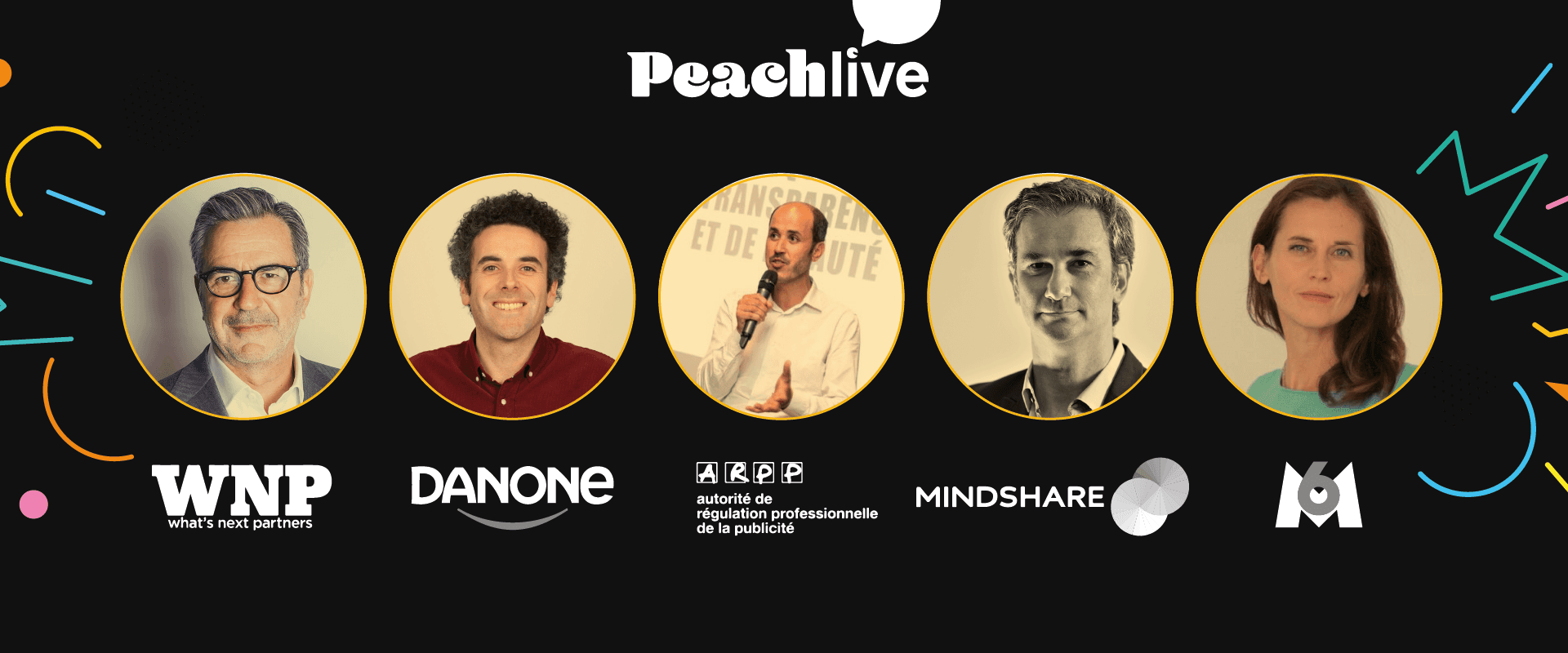
Les intervenants comprenaient : 

  • Guy Chauvel, Fondateur et Président directeur général, WNP

  • Mathieu Lacombe, Head of Media & Digital, Danone France

  • Mohamed Mansouri, Directeur Délégué, ARPP  

  • Olivier Roberdeau, Directeur département Screen (Télévision & Video), Mindshare France

  • Hortense Thomine-Desmazures, Directrice Générale Adjointe chargée du Digital, M6 Publicité

  • Animé par Mathieu Brisset, Directeur Général Europe, Peach

Vous voulez savoir comment Peach peut rendre la TV addressable un peu plus facile ?


Contactez-nous maintenant

Nouvelles

Anticipez les tendances

Vous êtes curieux des dernières tendances en marketing et publicité ? Abonnez-vous à notre newsletter mensuelle Promarketers.

18 mars 2026

No more chocolate at breakfast? Navigating the new LHF ad rules this Easter

As ad compliance requirements evolve in 2026, UK confectionery brands face new restrictions on less healthy food (LHF) advertising. With the January 5 watershed now in effect, ad quality assurance systems must validate timing, placement, and product identifiability to avoid clearance failures this Easter season.

16 mars 2026

The future of inclusion: How Cape.io powered Virgin Media Television’s fully accessible ad break during the Men’s Six Nations

As Channel 4’s closed-captioning mandate came into effect in March 2026, Cape.io partnered with Virgin Media Television, Omnicom Media Group and VoiceBox to deliver a truly accessible ad break during the Guinness Men’s Six Nations. More than ad compliance, this moment proved that accessibility can operate at the highest level of live sports broadcasting.

27 févr. 2026

Navigating Channel 4’s 2026 closed caption mandate

As ad compliance requirements tighten across the UK and Europe, closed captioning has evolved from an accessibility checkbox to a strategic necessity. Whether you're managing CTV campaigns or social media creative, automated ad testing for caption quality is no longer optional - it's fundamental to reaching today's fragmented, multi-screen audiences.

The advertising landscape is facing a seismic shift. By March 1, Channel 4 will become the first UK broadcaster to mandate closed captions across all advertising - including linear TV, streaming, and sponsorships.

The mandate is  a redefined standard for global inclusivity. Here is everything you need to know about the new mandate and how to stay ahead of the curve.

26 févr. 2026

One platform, many realities: How creative automation platforms resolve the global vs. local tension

Scaling global marketing without losing local relevance requires more than brand guidelines and templates - it requires a creative automation platform designed for both global control and local flexibility. Most systems optimize for standardization, but scaling ad creative production across markets demands architecture that enables creative variation and adaptation by local experts without fragmenting brand governance.

Many global advertisers are chasing the same ideal: scale without losing relevance.

Consistency without uniformity.
Efficiency without bureaucracy.

It sounds simple. In practice, it’s one of the hardest tensions to resolve in modern marketing.

The global vs. local challenge isn’t new, but it’s becoming more urgent. As brands expand across markets, channels, and cultures, the question is no longer whether you should scale globally, but how you do so without erasing the nuance that makes marketing effective in the first place.

Everyone is looking for this balance. Very few get it right.

11 févr. 2026

EPTVI Initiative launches Stage Two to help programmatic TV scale across Europe’s largest advertising markets

Broadcasters, streamers, agencies and ad tech companies including Google Ad Manager, Equativ, Adform, LiveRamp, The Trade Desk, FreeWheel and Cape.io begin work on practical solutions to reduce complexity and speed up adoption.

4 févr. 2026

The guardrails of growth: Why creative intelligence demands compliance

Generative AI can produce thousands of creative variants, but most compliance systems are still manual, fragmented, and reactive, unable to keep pace with today’s velocity. To move fast without breaking things, the industry needs a new approach: real-time verification, programmatic enforcement, and end-to-end visibility. Embedded inside the stack, not bolted on at the end.

Nouvelles

Anticipez les tendances

Vous êtes curieux des dernières tendances en marketing et publicité ? Abonnez-vous à notre newsletter mensuelle Promarketers.

18 mars 2026

No more chocolate at breakfast? Navigating the new LHF ad rules this Easter

As ad compliance requirements evolve in 2026, UK confectionery brands face new restrictions on less healthy food (LHF) advertising. With the January 5 watershed now in effect, ad quality assurance systems must validate timing, placement, and product identifiability to avoid clearance failures this Easter season.

16 mars 2026

The future of inclusion: How Cape.io powered Virgin Media Television’s fully accessible ad break during the Men’s Six Nations

As Channel 4’s closed-captioning mandate came into effect in March 2026, Cape.io partnered with Virgin Media Television, Omnicom Media Group and VoiceBox to deliver a truly accessible ad break during the Guinness Men’s Six Nations. More than ad compliance, this moment proved that accessibility can operate at the highest level of live sports broadcasting.

27 févr. 2026

Navigating Channel 4’s 2026 closed caption mandate

As ad compliance requirements tighten across the UK and Europe, closed captioning has evolved from an accessibility checkbox to a strategic necessity. Whether you're managing CTV campaigns or social media creative, automated ad testing for caption quality is no longer optional - it's fundamental to reaching today's fragmented, multi-screen audiences.

The advertising landscape is facing a seismic shift. By March 1, Channel 4 will become the first UK broadcaster to mandate closed captions across all advertising - including linear TV, streaming, and sponsorships.

The mandate is  a redefined standard for global inclusivity. Here is everything you need to know about the new mandate and how to stay ahead of the curve.

26 févr. 2026

One platform, many realities: How creative automation platforms resolve the global vs. local tension

Scaling global marketing without losing local relevance requires more than brand guidelines and templates - it requires a creative automation platform designed for both global control and local flexibility. Most systems optimize for standardization, but scaling ad creative production across markets demands architecture that enables creative variation and adaptation by local experts without fragmenting brand governance.

Many global advertisers are chasing the same ideal: scale without losing relevance.

Consistency without uniformity.
Efficiency without bureaucracy.

It sounds simple. In practice, it’s one of the hardest tensions to resolve in modern marketing.

The global vs. local challenge isn’t new, but it’s becoming more urgent. As brands expand across markets, channels, and cultures, the question is no longer whether you should scale globally, but how you do so without erasing the nuance that makes marketing effective in the first place.

Everyone is looking for this balance. Very few get it right.

11 févr. 2026

EPTVI Initiative launches Stage Two to help programmatic TV scale across Europe’s largest advertising markets

Broadcasters, streamers, agencies and ad tech companies including Google Ad Manager, Equativ, Adform, LiveRamp, The Trade Desk, FreeWheel and Cape.io begin work on practical solutions to reduce complexity and speed up adoption.

4 févr. 2026

The guardrails of growth: Why creative intelligence demands compliance

Generative AI can produce thousands of creative variants, but most compliance systems are still manual, fragmented, and reactive, unable to keep pace with today’s velocity. To move fast without breaking things, the industry needs a new approach: real-time verification, programmatic enforcement, and end-to-end visibility. Embedded inside the stack, not bolted on at the end.

Nouvelles

Anticipez les tendances

Vous êtes curieux des dernières tendances en marketing et publicité ? Abonnez-vous à notre newsletter mensuelle Promarketers.

18 mars 2026

No more chocolate at breakfast? Navigating the new LHF ad rules this Easter

As ad compliance requirements evolve in 2026, UK confectionery brands face new restrictions on less healthy food (LHF) advertising. With the January 5 watershed now in effect, ad quality assurance systems must validate timing, placement, and product identifiability to avoid clearance failures this Easter season.

16 mars 2026

The future of inclusion: How Cape.io powered Virgin Media Television’s fully accessible ad break during the Men’s Six Nations

As Channel 4’s closed-captioning mandate came into effect in March 2026, Cape.io partnered with Virgin Media Television, Omnicom Media Group and VoiceBox to deliver a truly accessible ad break during the Guinness Men’s Six Nations. More than ad compliance, this moment proved that accessibility can operate at the highest level of live sports broadcasting.

27 févr. 2026

Navigating Channel 4’s 2026 closed caption mandate

As ad compliance requirements tighten across the UK and Europe, closed captioning has evolved from an accessibility checkbox to a strategic necessity. Whether you're managing CTV campaigns or social media creative, automated ad testing for caption quality is no longer optional - it's fundamental to reaching today's fragmented, multi-screen audiences.

The advertising landscape is facing a seismic shift. By March 1, Channel 4 will become the first UK broadcaster to mandate closed captions across all advertising - including linear TV, streaming, and sponsorships.

The mandate is  a redefined standard for global inclusivity. Here is everything you need to know about the new mandate and how to stay ahead of the curve.

26 févr. 2026

One platform, many realities: How creative automation platforms resolve the global vs. local tension

Scaling global marketing without losing local relevance requires more than brand guidelines and templates - it requires a creative automation platform designed for both global control and local flexibility. Most systems optimize for standardization, but scaling ad creative production across markets demands architecture that enables creative variation and adaptation by local experts without fragmenting brand governance.

Many global advertisers are chasing the same ideal: scale without losing relevance.

Consistency without uniformity.
Efficiency without bureaucracy.

It sounds simple. In practice, it’s one of the hardest tensions to resolve in modern marketing.

The global vs. local challenge isn’t new, but it’s becoming more urgent. As brands expand across markets, channels, and cultures, the question is no longer whether you should scale globally, but how you do so without erasing the nuance that makes marketing effective in the first place.

Everyone is looking for this balance. Very few get it right.

11 févr. 2026

EPTVI Initiative launches Stage Two to help programmatic TV scale across Europe’s largest advertising markets

Broadcasters, streamers, agencies and ad tech companies including Google Ad Manager, Equativ, Adform, LiveRamp, The Trade Desk, FreeWheel and Cape.io begin work on practical solutions to reduce complexity and speed up adoption.

4 févr. 2026

The guardrails of growth: Why creative intelligence demands compliance

Generative AI can produce thousands of creative variants, but most compliance systems are still manual, fragmented, and reactive, unable to keep pace with today’s velocity. To move fast without breaking things, the industry needs a new approach: real-time verification, programmatic enforcement, and end-to-end visibility. Embedded inside the stack, not bolted on at the end.

Prendre contact

Découvrez tout ce que Cape.io peut faire pour vous

Automatisation Intelligente des Campagnes

Cape.io connecte votre équipe, votre DAM, vos ad servers, vos DSP et vos autres outils, sans qu’il soit nécessaire de tout remplacer

© 2025 Cape.io. Tous droits réservés

Français

Prendre contact

Découvrez tout ce que Cape.io peut faire pour vous

Automatisation Intelligente des Campagnes

Cape.io connecte votre équipe, votre DAM, vos ad servers, vos DSP et vos autres outils, sans qu’il soit nécessaire de tout remplacer

© 2025 Cape.io. Tous droits réservés

Français

Prendre contact

Découvrez tout ce que Cape.io peut faire pour vous

Automatisation Intelligente des Campagnes

Cape.io connecte votre équipe, votre DAM, vos ad servers, vos DSP et vos autres outils, sans qu’il soit nécessaire de tout remplacer

© 2025 Cape.io. Tous droits réservés

Français