Why creative infrastructure is the real bottleneck in media orchestration
For an industry built on optimisation, advertising has a glaring systemic flaw: creative infrastructure hasn’t kept pace with media optimisation. This isn’t a "collaboration" issue or a lack of "empathy" between teams; it’s systemic friction that acts as a direct constraint on the $162.4 billion programmatic market.
カテゴリー

While programmatic media functions as a high-frequency, optimised loop, creative often remains a linear outlier. This mismatch prevents brands from realising the true potential of their media spend. Not because the creative isn't "good," but because the supply chain is broken.
The feedback loop failure
Media execution has reached a state of fluidity. DSPs dynamically adjust bids and delivery using real-time signals. By contrast, creative is still largely a manual, high-cost endeavour. A "static" asset in a "dynamic" world.
As programmatic spend grew by $27.6 billion in 2025, it masked a critical inefficiency: we have built high-speed decisioning engines on top of assets trapped in a slow-motion validation cycle. When media adapts in milliseconds but creative responds in days, the strategy fragments.
The real bottleneck is creative validation, not production
The industry is currently obsessed with production AI. But generating a thousand more assets only compounds the problem if the validation remains manual.
For high-stakes CTV and premium video, generative AI is not a silver bullet. You cannot prompt your way out of brand safety requirements, legal compliance, or technical specs.
The "manual tax" on the creative-to-media pipeline manifests in three lethal ways:
Non-working media bloat: Human-heavy QA and manual spec-checking eat into budgets. This is capital that should be spent on high-end production or media reach, lost instead to administrative friction.
The validation lag: Media engines can swap bids instantly, but they can’t swap assets because they are waiting for a human to "green-light" a variant. Your media is optimised; your agility is not.
Fragmented signals: When creative data remains trapped in spreadsheets and Slack threads, it is invisible to the DSP. The "why" behind performance is lost in the gaps between teams.
From speculation to orchestration
The next phase of AdTech isn't about using AI to "make more videos for free." It is about the systematisation of the creative lifecycle.
We need a Creative Operating System that moves beyond the canvas and into the plumbing:
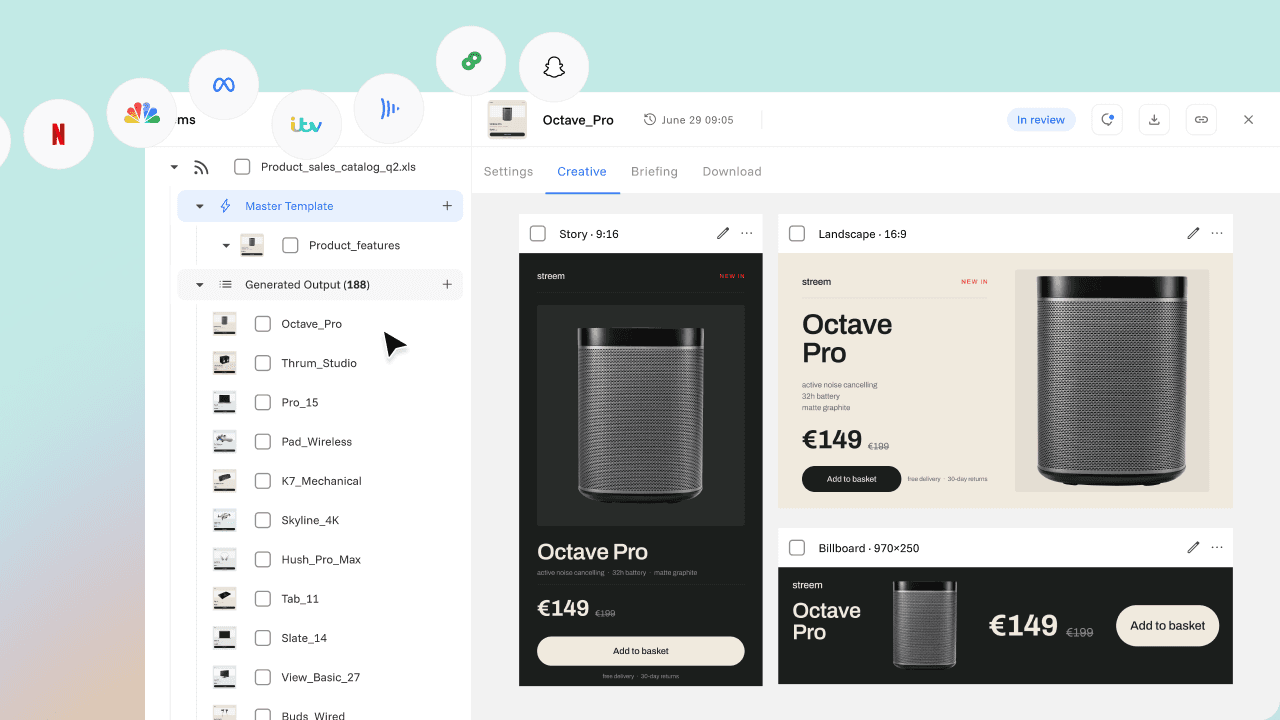
Structured metadata: Turning visual assets into queryable data points that a DSP can actually "read."
Upstream validation: Automated QA ensures assets are market-ready the moment they are rendered, not days later.
Agentic orchestration: Using emerging standards like MCP (Model Context Protocol) not for "autonomous creativity," but for governance. These technologies must act as the control layer, enforcing rules, maintaining integrity, and routing assets across the supply chain.
The bottom line
The companies that win in 2026 will not be those who generate the most "AI content." They will be the ones who control the flow.
By treating the creative supply chain with the same technical rigour as the media supply chain, we stop guessing and start scaling. The point of leverage has shifted: it’s no longer about how much you can make, but how fast you can validate and activate it.
ニュース
一歩先の未来へ
マーケティングと広告の最新トレンドに興味はありませんか?毎月配信のPromarketersニュースレターにぜひご登録ください。

2026/06/02
新たな現実:FIFAライツなきフットボールマーケティング
2026年のワールドカップは、この10年で最大規模の広告イベントの一つになりつつあります。しかし、サッカー熱の波に乗りたいと考えているブランドにとって、「サッカーからインスピレーションを得た表現」と「FIFAの権利侵害」の境界線は、かつてないほど曖昧になっています。非公式スポンサーによるキャンペーンから、アルコールやギャンブルのプロモーションにいたるまで、規制当局や権利保有者は厳しく目を光らせています。この夏、サッカーをテーマにしたキャンペーンを開始する前に、マーケターが知っておくべきポイントを解説します。

2026/05/26
企業は実際にどのようにagentic AIを導入しているのか
エージェント型AI(agentic AI)への移行は、多くのベンダーが説明するような形では起きていません。企業が突然AIラッパーを捨てて、完全に自律的なエージェント・オーケストレーションへと一気に舵を切るような境界線は存在しないのです。代わりに、企業は段階(レイヤー)的に移行を進めており、あるチームでテストフレームワークを試行する一方で、別のチームでは本番システムの安定性を維持するといったアプローチをとっています。

2026/05/26
規制された世界におけるリアルタイム広告
米国におけるギャンブル&スポーツベッティング広告の真の課題を理解する

2026/05/08
ブラジルが投票する。Cape.ioはそれが何を意味するかをすでに知っています。
Cape.ioは4つの版にわたりブラジルの総選挙を支え、500のチャンネルと1億5500万人の有権者を管理してきました。その仕組みをご紹介します。

2026/04/23
Agentic AI、AI wrapper、カスタムAI。進むべき道の選び方
あなたは間もなく、AIイニシアチブに50万ドルを投じようとしています。目の前には3つの選択肢があり、それぞれ全く異なる未来へとあなたを導くでしょう。誤った選択をすれば、18ヶ月後にシステムを再構築することになります。正しい選択をすれば、スケールし、メンテナンスコストが抑えられ、経営陣が約束した通りの成果を真に発揮するシステムを手に入れることができます。その選択とは、既存のAIモデルをラッパーすることか、カスタムAIソリューションをスクラッチから構築することか、あるいはエージェント(Agentic)化することか。ほとんどのチームは、誤った選択肢にロックインされるまで、本当のトレードオフを理解していません。

2026/03/30
広告におけるAIのオペレーショナル化:ボルト留めではなく、組み込まれなければならない理由
広告においてAIを実用化する(Operationalizing AI)ということは、ツールを単にもう一つスタックに追加するということではありません。クリエイティブ制作、コンプライアンス、配信を管理するシステムにインテリジェンスを組み込み、運用の摩擦(operational friction)を増やすことなくオートメーションを拡張することです。

2026/03/18
朝食のチョコレートはもうダメ?このイースターに知っておきたい新しいLHF広告ルールへの対応策
2026年に向けて広告コンプライアンス要件が進化する中、英国の菓子ブランドは、less healthy food(LHF:健康にあまり良くない食品)の広告に関する新たな規制に直面しています。1月5日からウォーターシェッド(放送制限時間帯)規制が実施されたことに伴い、今春のイースターシーズンに掲載非承認となる事態を避けるため、広告のアシュアランス(品質保証)システムは広告の放映タイミング、掲載場所、そして製品の識別可能性(特定力)を検証する必要があります。

2026/03/16
インクルージョンの未来:Cape.ioがいかにしてメンズ・シックス・ネーションズ開催中に、ヴァージン・メディア・テレビジョンの完全バリアフリーなCM枠を実現したか
2026年3月にChannel 4のクローズドキャプション義務化が施行されるにあたり、Cape.ioはVirgin Media Television、Omnicom Media Group、そしてVoiceBoxと提携し、ギネス メンズ・シックス・ネイションズにおいて完全にアクセシブルなCM枠を提供しました。これは単なる広告規制への対応にとどまらず、ライブスポーツ放送の最高峰の舞台においてもアクセシビリティが十分に機能することを証明する瞬間となりました。

2026/02/04
成長のガードレール:なぜクリエイティブ・インテリジェンスにコンプライアンスが必要なのか
生成AI(Generative AI)は数千ものクリエイティブなバリエーションを生み出すことができますが、多くのコンプライアンスシステムは依然として手動かつ断片的で、事後対応的なままであり、今日のスピードに追いつくことができていません。問題を起こさずに迅速に動くために、業界には新たなアプローチが必要です。それは、リアルタイムの検証、プログラムによる強制、そしてエンドツーエンドの可視化です。これらはプロセスの最後に追加されるべきものではなく、スタック自体に組み込まれるべきものです。

2026/01/09
Every Word Counts - Cape Closed Captioning
キャプション(字幕)は単なるアクセシビリティ向上のためのツールに留まらず、今やコンテンツを視聴し、理解し、楽しむ上で欠かせないものとなっています。明確でインクルーシブ、そして視聴者の注意に配慮したキャプションは、あらゆるストーリーをすべての人に届ける手助けをします。