/
/
/
Jak skalować kreacje programatycznej Cyfrowej reklamy zewnętrznej: rozwiązanie problemu wąskiego gardła formatów
Jak skalować kreacje programatycznej Cyfrowej reklamy zewnętrznej: rozwiązanie problemu wąskiego gardła formatów
Cyfrowa reklama zewnętrzna oferuje markom ogromny potencjał kreatywny, od hiperlokalnych komunikatów po dynamiczne kampanie uruchamiane przez pogodę, czas i lokalizację. Jednak urzeczywistnienie tego potencjału oznacza produkcję ogromnej liczby odmian kreacji w zfragmentowanym krajobrazie rozmiarów i formatów ekranów.
Key takeaways
Programmatic buying pozwala na szybkie skalowanie mediów, ale kreacja wciąż musi działać na niezliczonych rozmiarach ekranów, proporcjach obrazu i formatach wydawców.
Scentralizuj formaty i zautomatyzuj zmianę rozmiaru, aby kreacje mogły dostosowywać się do różnych środowisk bez konieczności ręcznego przebudowywania każdej wersji.
Modułowy proces roboczy DOOH od Cape.io umożliwia edycję pojedynczej kampanii i generowanie kreacji dostosowanych do konkretnych formatów, dzięki czemu kampanie wyzwalane czynnikami geograficznymi i pogodowymi są bardziej praktyczne na dużą skalę.

Programmatic Digital Out-of-Home (pDOOH) przeżywa ogromny wzrost. Inwestycje w pDOOH wzrosną średnio o 49% w ciągu najbliższych 18 miesięcy, a 91% kupujących włączy je do swojego szerszego planowania digital i programmatycznego — w porównaniu do zaledwie 41% dwa lata temu. Prawie jedna trzecia reklamodawców przeznacza na ten cel całkowicie nowe budżety.
Pieniądze, zasoby reklamowe i infrastruktura zakupu mediów szybko dojrzały. Jednak produkcja kreacji nie nadążyła za tym tempem.
Dziś zespoły mediowe mogą kupować wyświetlenia na tysiącach ekranów, w różnych porach dnia i obszarach geograficznych za pomocą kilku kliknięć. Jednak rzeczywista Kreacja pojawiająca się na tych ekranach jest nadal tworzona tak, jak dekadę temu: jeden projektant, jeden plik, jeden rozmiar na raz. Strona zakupowa pobiegła naprzód, pozostawiając produkcję kreacji na linii startu.
Ta luka to miejsce, w którym kampanie wielokanałowe po cichu tracą swoją przewagę i jest to dokładnie ten problem, do którego rozwiązania została stworzona Platforma Automatyzacja kreacji Cape.io.
Ogromnym wyzwaniem w PDOOH jest to, że procesy kreatywne nie nadążyły za pDOOH: wąskie gardło zmiany rozmiaru
Zapytaj jakąkolwiek markę lub agencję prowadzącą poważną kampanię DOOH, co jest ich największą przeszkodą, a odpowiedź rzadko brzmi: plan mediowy. Jest to przekształcenie pojedynczej kreacji w setki wariantów rozmiarów i proporcji, których wymaga prawdziwy zakup DOOH.
Standardowa kampania wymaga:
Poziomego formatu 16:9 dla przydrożnych cyfrowych billboardów.
Wysokich pionowych ekranów w środowiskach tranzytowych i handlowych.
Ultra-szerokich pasów dla galerii handlowych i lotnisk.
Kwadratowych formatów dla mebli miejskich.
Tuzinów niestandardowych wymiarów specyficznych dla wydawców.
Wykonywane ręcznie, nie jest to zadanie projektowe; to koszmar wersjonowania. Każdy format wymaga własnego kadrowania, logiki układu i etapu Zapewnienie jakości (QA). Zużywa to harmonogramy produkcji, wprowadza niespójności z Marką i zamienia prostą poprawkę klienta na późnym etapie w pełny cykl ponownej produkcji.
To ograniczenie blokuje to, co jest możliwe pod kątem kreatywnym. Marki mają pomysły na geolokalizowaną, dostosowaną do pory dnia i dynamicznie spersonalizowaną reklamę zewnętrzną. Jednak produkcja samej liczby wymaganych zasobów była historycznie zbyt wolna i kosztowna, aby próbować jej na dużą skalę.
Jak Cape.io przyspiesza produkcję DOOH
Cape.io opiera się na prostym założeniu: zaprojektuj kampanię raz, a Platforma zajmie się powielaniem. Oto jak całkowicie eliminujemy wąskie gardło formatów.
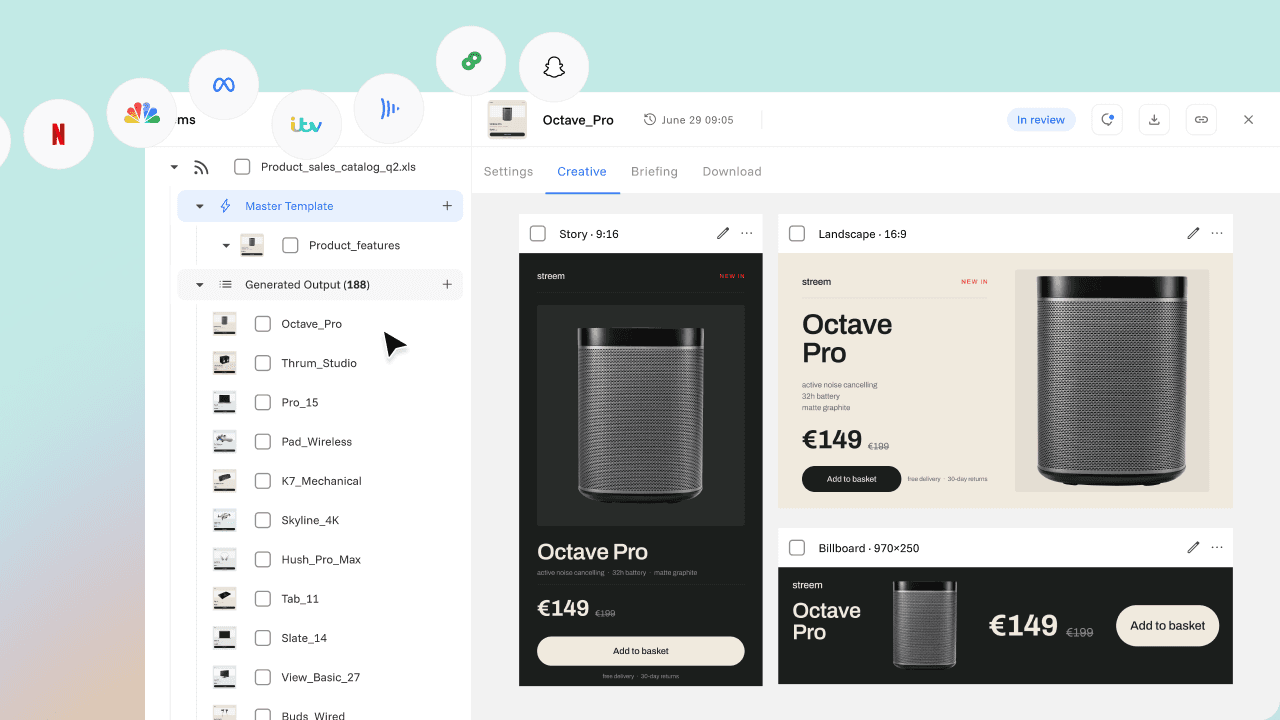
Zacznij od scentralizowanej biblioteki formatów: Biblioteka Cape.io obejmuje pełną gamę rozmiarów DOOH i pDOOH, w tym niestandardowe rozmiary specyficzne dla wydawców. Zamiast zlecać projektantowi przebudowę układu, wybierasz każdy format potrzebny w kampanii bezpośrednio z biblioteki za jednym razem.
Algorytmiczny transfer stylu: Cape.io automatycznie stosuje swoją logikę układu, typografię, kolory i umiejscowienie grafiki do każdego wybranego formatu. Setki indywidualnych wersji stają się jedną decyzją projektową. Projektanci zachowują pełną manualną kontrolę, aby precyzyjnie dostosować określone elementy.
Dynamiczne szablony i edycja zbiorcza: Po zbudowaniu kampanii nie budujesz już kreacji od nowa; edytujesz ją. Zmień nagłówek lub podmień tło, a ta zmiana natychmiast rozprzestrzeni się na każdy format w zestawie.
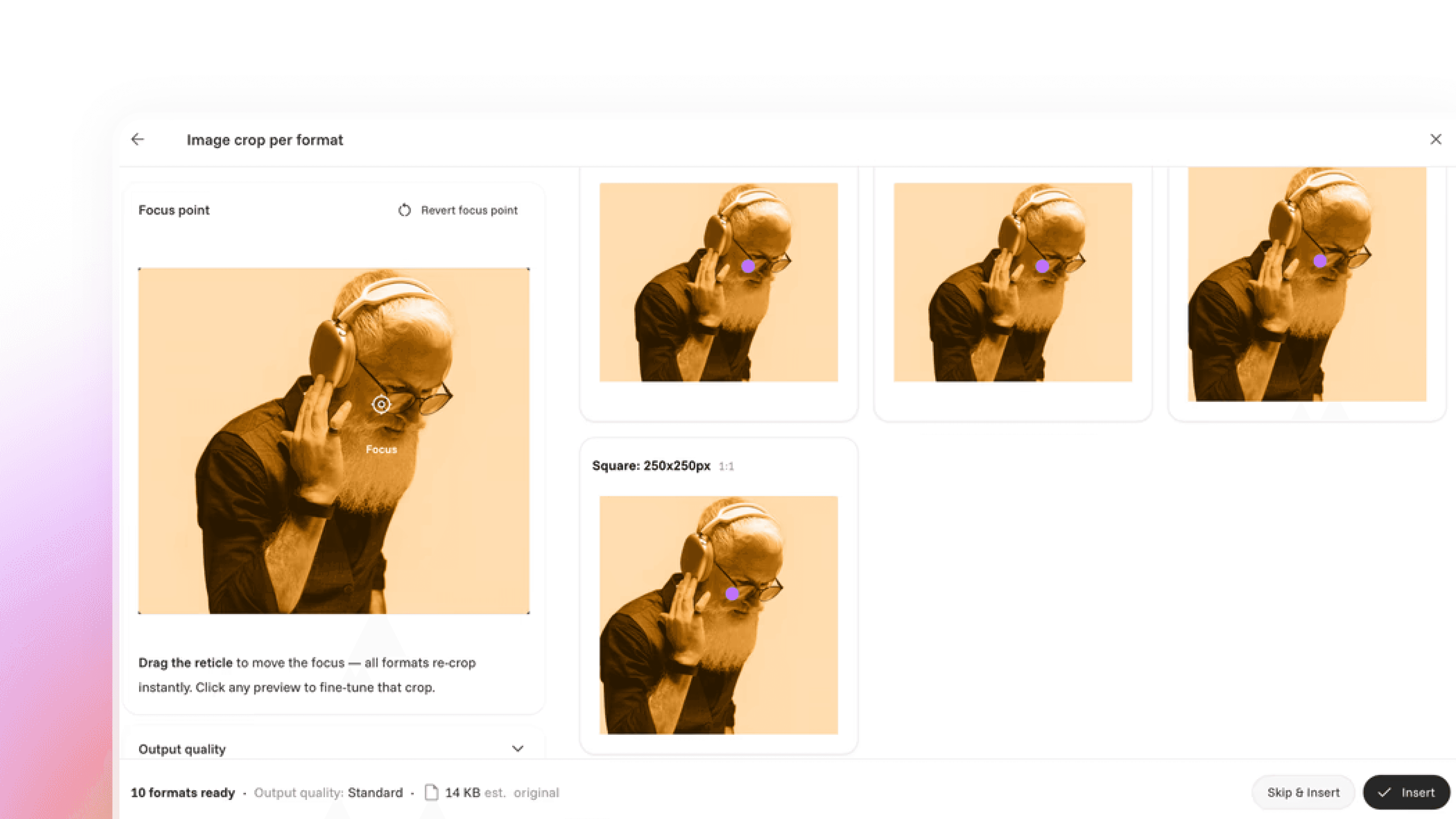
Zmiana rozmiaru oparta na AI: Różnorodność formatów DOOH jest brutalna dla skalowania. Zdjęcie główne skomponowane dla billboardu 16:9 rzadko sprawdza się na ekranie tranzytowym 9:16. Narzędzie do automatycznego kadrowania AI w Cape.io analizuje każdy obraz tła i inteligentnie określa, jak go przeskalować i zmienić jego pozycję dla każdego formatu, utrzymując obiekt w kadrze i nienaruszoną kompozycję. Projektanci nadal mają ostateczną władzę edycji.
Teraz, gdy możemy zmieniać kreacje DOOH z błyskawiczną prędkością, gdy tworzenie i aktualizowanie kreacji staje się tak szybkie, kampanie mogą wreszcie korzystać z wariantów, takich jak dostosowywanie przekazu do geografii, pogody lub pory dnia, zamiast zadowalać się jedną statyczną kreacją.
Przypadki użycia Automatyzacja kreacji DOOH według ról
Marki korporacyjne o wysokich wydatkach na OOH: Czas produkcji nie dyktuje już kreatywnych ambicji. Zlokalizowane, dostosowane do pory dnia i zawsze aktualne kreacje stają się osiągalne na wszystkich Twoich ekranach, bez konieczności zwiększania liczby projektantów wewnętrznych.
Agencje kreatywne i mediowe: Szablony i edycje zbiorcze pozwalają jednemu zespołowi produkcyjnemu obsługiwać więcej kampanii klientów i zarządzać poprawkami bez liniowego wzrostu płatnych godzin. Marża jest chroniona bez poświęcania jakości.
Wydawcy DOOH: Lepsza Kreacja jest lepsza dla każdego. Każdy niestandardowy format w Twoich zasobach staje się łatwiejszy do zapełnienia przez reklamodawców wysokiej jakości kreacjami spójnymi z Marką, co eliminuje poważną barierę.
Systemy DSP DOOH (Demand-Side Platforms): Szybszy czas realizacji kreacji oznacza mniej wstrzymanych kampanii i więcej zasobów aktywowanych z odpowiednio dopasowanymi rozmiarami, co bezpośrednio poprawia wskaźniki wypełnienia i efektywność kampanii.
Najczęściej zadawane pytania (FAQ)
Co to jest Programmatic DOOH (pDOOH)? Programmatic DOOH to zautomatyzowany zakup, sprzedaż i dostarczanie cyfrowej reklamy zewnętrznej. Pozwala marketerom kupować przestrzeń reklamową na billboardach i ekranach tranzytowych w czasie rzeczywistym w oparciu o określone wyzwalacze danych, takie jak pogoda, pora dnia czy ruch pieszy odbiorców.
W jaki sposób automatyzacja kreacji ulepsza kampanie DOOH? Oprogramowanie do automatyzacji kreacji eliminuje ręczne wersjonowanie reklam. Dzięki zastosowaniu kadrowania AI i dynamicznych szablonów, marki mogą natychmiast generować setki rozmiarów reklam DOOH z jednego głównego projektu, co pozwala na szybsze uruchamianie kampanii i hiper-zlokalizowany przekaz.
Czy Cape.io obsługuje niestandardowe rozmiary reklam wydawców? Tak. Cape.io posiada wszechstronną bibliotekę formatów, która obejmuje zarówno standardowe wymiary DOOH, jak i specyficzne, niestandardowe wymagania wydawców, umożliwiając projektantom automatyczne skalowanie kreacji, aby dokładnie dopasować ją do każdego ekranu.
Chcesz przeskalować swoją reklamę zewnętrzną? Skontaktuj się z naszym zespołem, aby omówić listę formatów DOOH i zobaczyć Platformę Cape.io w działaniu.
Category