24 jun 2020

PeachLive Francia: Regreso al Futuro de la TV - un resumen

La TV direccionable está llegando a Francia a partir del 1 de julio. Peach organizó un seminario web con líderes de opinión de toda la cadena de suministro para discutir cómo están aprovechando esta emocionante oportunidad.

Author

Cape.io

Author

Cape.io

"Si la TV direccionable permite un mejor control y monitoreo de inversiones, se convertirá en un serio competidor de los GAFAs a nivel nacional."

- Guy Chauvel, WNP, en una conversación sobre el dominio de los GAFAs en el mercado digital

Este seminario web se centró en:

  • El impacto que la TV direccionable tendrá en Francia y las oportunidades para los anunciantes.

  • ¿Qué sabemos sobre las nuevas regulaciones esperadas en julio?

  • Desafíos estratégicos potenciales que el mercado de la TV enfrentará mientras se moderniza

  • Cómo la autorregulación publicitaria necesitará evolucionar para integrarse exitosamente con este nuevo mercado

  • Oportunidades & limitaciones: ¿Hasta dónde es posible llegar con la segmentación?

Tenga en cuenta que el seminario web está en francés.

"El sistema de autorregulación vigente desde 1992 siempre ha sido muy adaptable. [...] Es un sistema que está en constante evolución y es sostenido y llevado por la profesión. [...] Nuestro objetivo es acompañar al mercado, sin restringirlo."

- Mohamed Mansouri, sobre la evolución del control publicitario francés por la ARPP

Retrasada desde abril debido al COVID-19, una nueva ley francesa llegará finalmente en julio, trayendo la TV direccionable al país. Esto trae la publicidad impulsada por datos a lo que sigue siendo uno de los medios más poderosos: la TV, reuniendo lo mejor de la televisión lineal y digital en una única propuesta de venta para las agencias de medios y anunciantes.

Se prevé que el impacto en el gasto publicitario sea de €100 a €220 millones hasta 2023, además de tener el potencial de aumentar el número de anunciantes potenciales por un factor de 10 (fuente: SNPTV).

Para Mathieu Lacombe de Danone, la TV direccionable definitivamente está en la agenda y cree que es el próximo paso lógico para la progresión de la TV lineal. La segmentación efectiva de audiencias ayudará a reducir la brecha entre la TV y lo digital y hará que la publicidad en TV sea una inversión mucho más accesible para muchos:

"La segmentación tribal significa que nos tomamos el tiempo para tener una narrativa diferente para cada una de esas tribus. La TV direccionable es la continuación lógica de todo lo que ya ha comenzado por digital. Es una manera de continuar siendo precisos en cómo invertimos nuestros dólares publicitarios y cómo nos comercializamos."

Hortense Thomine-Desmazures de M6 Publicité afirmó, sin embargo, que para que la TV direccionable sea verdaderamente exitosa hay un par de cosas que necesitan ser optimizadas y estar disponibles:

"El requisito esencial es mantener el nivel de calidad del medio televisivo. Este es un proyecto tecnológico importante que requiere que el flujo lineal se cambie a un flujo digital, sin degradar la experiencia publicitaria. [...] El otro requisito será ofrecer a los anunciantes algunas herramientas para analizar y medir el rendimiento de sus campañas. La prueba de eficacia es primordial."

Aún se debate una verdadera "revolución" de la TV. Sin embargo, Olivier Roberdeau de MindShare piensa que las conclusiones podrían llegar más rápido de lo que imaginamos...

"En cuanto a los KPI, podemos confiar en nuestros clientes y anunciantes para obtener retroalimentación sobre las campañas [...] La TV dirigida, siendo muy cercana al digital, podremos leer los primeros resultados muy rápidamente."

Si estos posibles problemas iniciales se solucionan, Guy Chauvel de WNP destaca el verdadero poder que la TV direccionable puede ofrecer a los mercadólogos:

"Lo que ofrece esta tecnología es la capacidad de determinar segmentos de poblaciones basados en criterios precisos (especialmente datos de comportamiento) que permiten direccionar contenido específico. De esta manera, ganamos mucha relevancia: en términos de perspectiva, idea y ejecución. También multiplica el volumen de contenido creado, producido y utilizado frente a estos segmentos".

Queda por ver cómo exactamente los mercadólogos aprovecharán al máximo la TV direccionable cuando llegue a Francia el próximo mes.

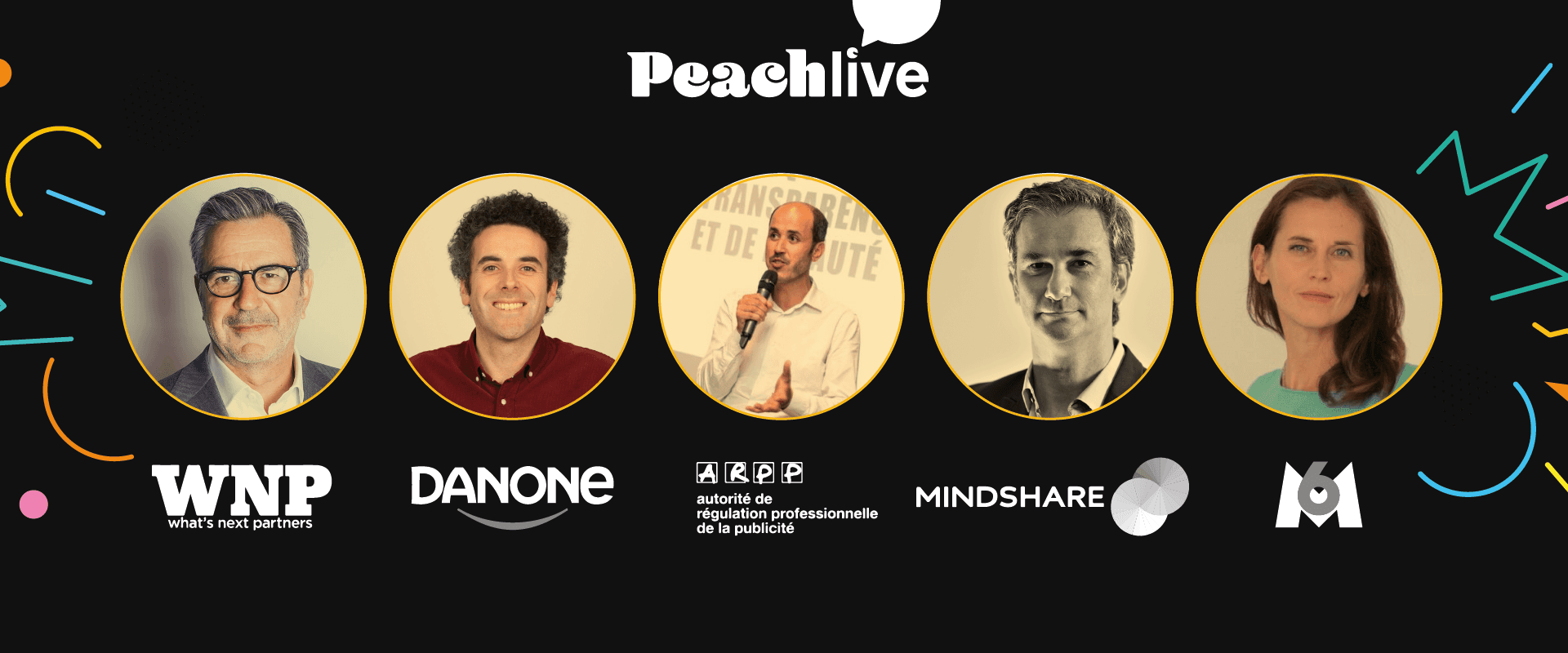
Los oradores incluyeron:

  • Guy Chauvel, Fundador y Presidente Director General, WNP

  • Mathieu Lacombe, Jefe de Medios y Digital, Danone France

  • Mohamed Mansouri, Director Delegado, ARPP

  • Olivier Roberdeau, Director del Departamento Screen (Televisión & Video), Mindshare France

  • Hortense Thomine-Desmazures, Directora General Adjunta a cargo del Digital, M6 Publicité

  • Animado por Mathieu Brisset, Director General Europa, Peach

¿Quieres saber cómo Peach puede hacer que la TV direccionable sea un poco más fácil?


Contáctanos ahora

Noticias

Mantente a la vanguardia

¿Tienes curiosidad sobre lo último en marketing y publicidad? Suscríbete a nuestro boletín mensual de Promarketers.

23 abr 2026

Agentic AI vs AI wrappers vs custom AI: How to choose your path

You're about to spend $500K on an AI initiative. You've got 3 options on the table, and they'll lead you to wildly different places. Pick wrong, and you're rebuilding in 18 months. Pick right, and you'll have a system that scales, costs less to maintain, and actually does what executives promised.

The choice is between wrapping existing AI models, building custom AI solutions from scratch, or going agentic. Most teams don't understand the real trade-offs until they're locked into the wrong one.

30 mar 2026

Operationalizing AI in advertising: Why it must be embedded, not bolted on

Operationalizing AI in advertising isn’t about adding another tool to your stack. It’s about embedding intelligence into the systems that govern creative production, compliance, and delivery, so automation scales without creating more operational friction.

18 mar 2026

No more chocolate at breakfast? Navigating the new LHF ad rules this Easter

As ad compliance requirements evolve in 2026, UK confectionery brands face new restrictions on less healthy food (LHF) advertising. With the January 5 watershed now in effect, ad quality assurance systems must validate timing, placement, and product identifiability to avoid clearance failures this Easter season.

16 mar 2026

The future of inclusion: How Cape.io powered Virgin Media Television’s fully accessible ad break during the Men’s Six Nations

As Channel 4’s closed-captioning mandate came into effect in March 2026, Cape.io partnered with Virgin Media Television, Omnicom Media Group and VoiceBox to deliver a truly accessible ad break during the Guinness Men’s Six Nations. More than ad compliance, this moment proved that accessibility can operate at the highest level of live sports broadcasting.

27 feb 2026

Navigating Channel 4’s 2026 closed caption mandate

As ad compliance requirements tighten across the UK and Europe, closed captioning has evolved from an accessibility checkbox to a strategic necessity. Whether you're managing CTV campaigns or social media creative, automated ad testing for caption quality is no longer optional - it's fundamental to reaching today's fragmented, multi-screen audiences.

The advertising landscape is facing a seismic shift. By March 1, Channel 4 will become the first UK broadcaster to mandate closed captions across all advertising - including linear TV, streaming, and sponsorships.

The mandate is  a redefined standard for global inclusivity. Here is everything you need to know about the new mandate and how to stay ahead of the curve.

26 feb 2026

One platform, many realities: How creative automation platforms resolve the global vs. local tension

Scaling global marketing without losing local relevance requires more than brand guidelines and templates - it requires a creative automation platform designed for both global control and local flexibility. Most systems optimize for standardization, but scaling ad creative production across markets demands architecture that enables creative variation and adaptation by local experts without fragmenting brand governance.

Many global advertisers are chasing the same ideal: scale without losing relevance.

Consistency without uniformity.
Efficiency without bureaucracy.

It sounds simple. In practice, it’s one of the hardest tensions to resolve in modern marketing.

The global vs. local challenge isn’t new, but it’s becoming more urgent. As brands expand across markets, channels, and cultures, the question is no longer whether you should scale globally, but how you do so without erasing the nuance that makes marketing effective in the first place.

Everyone is looking for this balance. Very few get it right.

Noticias

Mantente a la vanguardia

¿Tienes curiosidad sobre lo último en marketing y publicidad? Suscríbete a nuestro boletín mensual de Promarketers.

23 abr 2026

Agentic AI vs AI wrappers vs custom AI: How to choose your path

You're about to spend $500K on an AI initiative. You've got 3 options on the table, and they'll lead you to wildly different places. Pick wrong, and you're rebuilding in 18 months. Pick right, and you'll have a system that scales, costs less to maintain, and actually does what executives promised.

The choice is between wrapping existing AI models, building custom AI solutions from scratch, or going agentic. Most teams don't understand the real trade-offs until they're locked into the wrong one.

30 mar 2026

Operationalizing AI in advertising: Why it must be embedded, not bolted on

Operationalizing AI in advertising isn’t about adding another tool to your stack. It’s about embedding intelligence into the systems that govern creative production, compliance, and delivery, so automation scales without creating more operational friction.

18 mar 2026

No more chocolate at breakfast? Navigating the new LHF ad rules this Easter

As ad compliance requirements evolve in 2026, UK confectionery brands face new restrictions on less healthy food (LHF) advertising. With the January 5 watershed now in effect, ad quality assurance systems must validate timing, placement, and product identifiability to avoid clearance failures this Easter season.

16 mar 2026

The future of inclusion: How Cape.io powered Virgin Media Television’s fully accessible ad break during the Men’s Six Nations

As Channel 4’s closed-captioning mandate came into effect in March 2026, Cape.io partnered with Virgin Media Television, Omnicom Media Group and VoiceBox to deliver a truly accessible ad break during the Guinness Men’s Six Nations. More than ad compliance, this moment proved that accessibility can operate at the highest level of live sports broadcasting.

27 feb 2026

Navigating Channel 4’s 2026 closed caption mandate

As ad compliance requirements tighten across the UK and Europe, closed captioning has evolved from an accessibility checkbox to a strategic necessity. Whether you're managing CTV campaigns or social media creative, automated ad testing for caption quality is no longer optional - it's fundamental to reaching today's fragmented, multi-screen audiences.

The advertising landscape is facing a seismic shift. By March 1, Channel 4 will become the first UK broadcaster to mandate closed captions across all advertising - including linear TV, streaming, and sponsorships.

The mandate is  a redefined standard for global inclusivity. Here is everything you need to know about the new mandate and how to stay ahead of the curve.

26 feb 2026

One platform, many realities: How creative automation platforms resolve the global vs. local tension

Scaling global marketing without losing local relevance requires more than brand guidelines and templates - it requires a creative automation platform designed for both global control and local flexibility. Most systems optimize for standardization, but scaling ad creative production across markets demands architecture that enables creative variation and adaptation by local experts without fragmenting brand governance.

Many global advertisers are chasing the same ideal: scale without losing relevance.

Consistency without uniformity.
Efficiency without bureaucracy.

It sounds simple. In practice, it’s one of the hardest tensions to resolve in modern marketing.

The global vs. local challenge isn’t new, but it’s becoming more urgent. As brands expand across markets, channels, and cultures, the question is no longer whether you should scale globally, but how you do so without erasing the nuance that makes marketing effective in the first place.

Everyone is looking for this balance. Very few get it right.

Noticias

Mantente a la vanguardia

¿Tienes curiosidad sobre lo último en marketing y publicidad? Suscríbete a nuestro boletín mensual de Promarketers.

23 abr 2026

Agentic AI vs AI wrappers vs custom AI: How to choose your path

You're about to spend $500K on an AI initiative. You've got 3 options on the table, and they'll lead you to wildly different places. Pick wrong, and you're rebuilding in 18 months. Pick right, and you'll have a system that scales, costs less to maintain, and actually does what executives promised.

The choice is between wrapping existing AI models, building custom AI solutions from scratch, or going agentic. Most teams don't understand the real trade-offs until they're locked into the wrong one.

30 mar 2026

Operationalizing AI in advertising: Why it must be embedded, not bolted on

Operationalizing AI in advertising isn’t about adding another tool to your stack. It’s about embedding intelligence into the systems that govern creative production, compliance, and delivery, so automation scales without creating more operational friction.

18 mar 2026

No more chocolate at breakfast? Navigating the new LHF ad rules this Easter

As ad compliance requirements evolve in 2026, UK confectionery brands face new restrictions on less healthy food (LHF) advertising. With the January 5 watershed now in effect, ad quality assurance systems must validate timing, placement, and product identifiability to avoid clearance failures this Easter season.

16 mar 2026

The future of inclusion: How Cape.io powered Virgin Media Television’s fully accessible ad break during the Men’s Six Nations

As Channel 4’s closed-captioning mandate came into effect in March 2026, Cape.io partnered with Virgin Media Television, Omnicom Media Group and VoiceBox to deliver a truly accessible ad break during the Guinness Men’s Six Nations. More than ad compliance, this moment proved that accessibility can operate at the highest level of live sports broadcasting.

27 feb 2026

Navigating Channel 4’s 2026 closed caption mandate

As ad compliance requirements tighten across the UK and Europe, closed captioning has evolved from an accessibility checkbox to a strategic necessity. Whether you're managing CTV campaigns or social media creative, automated ad testing for caption quality is no longer optional - it's fundamental to reaching today's fragmented, multi-screen audiences.

The advertising landscape is facing a seismic shift. By March 1, Channel 4 will become the first UK broadcaster to mandate closed captions across all advertising - including linear TV, streaming, and sponsorships.

The mandate is  a redefined standard for global inclusivity. Here is everything you need to know about the new mandate and how to stay ahead of the curve.

26 feb 2026

One platform, many realities: How creative automation platforms resolve the global vs. local tension

Scaling global marketing without losing local relevance requires more than brand guidelines and templates - it requires a creative automation platform designed for both global control and local flexibility. Most systems optimize for standardization, but scaling ad creative production across markets demands architecture that enables creative variation and adaptation by local experts without fragmenting brand governance.

Many global advertisers are chasing the same ideal: scale without losing relevance.

Consistency without uniformity.
Efficiency without bureaucracy.

It sounds simple. In practice, it’s one of the hardest tensions to resolve in modern marketing.

The global vs. local challenge isn’t new, but it’s becoming more urgent. As brands expand across markets, channels, and cultures, the question is no longer whether you should scale globally, but how you do so without erasing the nuance that makes marketing effective in the first place.

Everyone is looking for this balance. Very few get it right.

Ponte en contacto

Te mostraremos lo que Cape.io puede hacer.

Automatización de Campañas Inteligentes

Cape.io conecta a tu equipo, DAM, servidores de anuncios, DSP, herramientas y más, para que no necesites desmantelar y reemplazar.

© 2025 Cape.io. Todos los derechos reservados

Spanish

Ponte en contacto

Te mostraremos lo que Cape.io puede hacer.

Automatización de Campañas Inteligentes

Cape.io conecta a tu equipo, DAM, servidores de anuncios, DSP, herramientas y más, para que no necesites desmantelar y reemplazar.

© 2025 Cape.io. Todos los derechos reservados

Spanish

Ponte en contacto

Te mostraremos lo que Cape.io puede hacer.

Automatización de Campañas Inteligentes

Cape.io conecta a tu equipo, DAM, servidores de anuncios, DSP, herramientas y más, para que no necesites desmantelar y reemplazar.

© 2025 Cape.io. Todos los derechos reservados

Spanish