Opérationnaliser l'IA dans la publicité : Pourquoi elle doit être intégrée et non greffée
Opérationnaliser l'IA dans la publicité : Pourquoi elle doit être intégrée et non greffée
L’opérationnalisation de l’IA dans la publicité ne consiste pas à ajouter un outil supplémentaire à votre pile technologique. Il s'agit d'intégrer l'intelligence au sein même des systèmes qui régissent la production créative, la conformité et la diffusion, afin que l'automatisation se développe sans créer davantage de frictions opérationnelles.

Points clés
L'ajout de l'IA en tant que fonctionnalité autonome ne supprime pas la complexité opérationnelle de la publicité, de la production créative et de la déclinaison de versions jusqu'à la QA, au trafficking et à l'activation.
Intégrez l'IA directement dans les systèmes de gestion des versions créatives, des métadonnées, de la QA et de la diffusion afin qu'elle puisse fonctionner selon les contraintes réelles des campagnes.
Le fossé se situe entre l'expérimentation de l'IA et son intégration dans des workflows qui génèrent des résultats commerciaux. Une étude de Gartner citée dans l'article révèle que seulement 5 % des marketeurs utilisant l'IA générative font état de gains significatifs sur leurs résultats commerciaux.

Chaque semaine, une nouvelle démonstration de faisabilité prometteuse surgit, promettant de « corriger » la production créative en quelques prompts. Quelques clics, quelques variantes, et quelques hochements de tête impressionnés.
En tant que Product Owner chargé d'intégrer intelligemment l'IA dans nos cœurs de produits et de la faire adopter durablement par nos utilisateurs, j'ai appris qu'une fois sous le capot, ces fonctionnalités « greffées » échouent généralement à plus grande échelle. En effet, le programmatique n'est pas un simple guichet unique, mais une chaîne d'approvisionnement qui englobe la production créative, la conformité, le trafficking et l'activation.
La réalité des 5 %
Ce fossé n'est pas seulement anecdotique ; des conclusions récentes de Gartner mettent en lumière une réalité sobre : parmi les spécialistes du marketing utilisant l'IA générative, seuls 5 % constatent des gains significatifs sur leurs résultats commerciaux. Comme le souligne Sharon Cantor Ceurvorst, VP of Research chez Gartner : les CMO qui se contentent de greffer l'IA sur des processus existants ne parviendront pas à stimuler la croissance.
Cela correspond à ce que nous observons au sein du Produit chez Cape.io. Le cycle de vie du programmatique est complexe, marqué par des silos fragmentés et des éléments mouvants. Un actif passe des équipes créatives à la conformité, puis au trafficking, avant de traverser le parcours du combattant des DSP et SSP, chacun ayant ses propres spécifications rigides et politiques changeantes.
Si l'IA reste en dehors du workflow, elle ne fait pas gagner de temps. Elle crée une nouvelle catégorie de tâches : la surveillance manuelle, la gestion des exceptions et les corrections répétitives à travers les opérations créatives et la production publicitaire.
Le passage de la fonctionnalité à l'infrastructure
L'IA qui comptera réellement en 2026 n'est pas un outil en soi. C'est une infrastructure, une IA intégrée qui vit au cœur des workflows créatifs et publicitaires. Un outil greffé produit un résultat brut (output), tandis que les implémentations d'infrastructure produisent un impact concret (outcome).
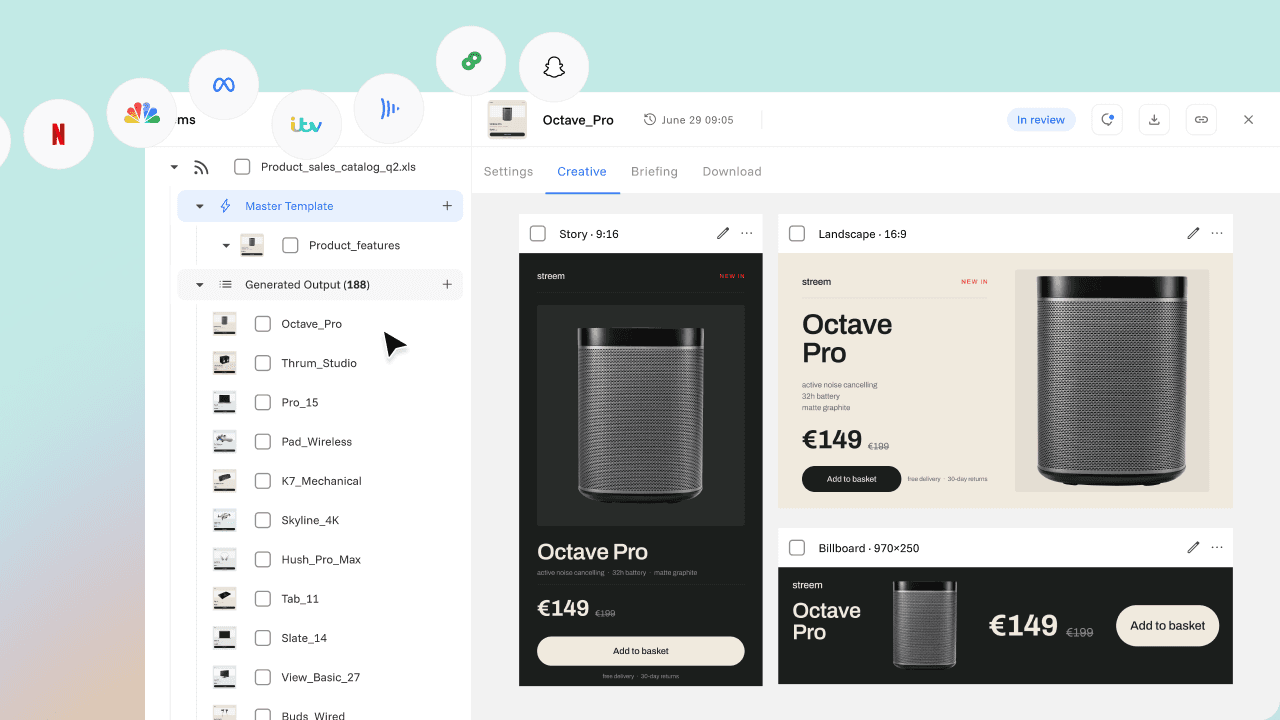
Pour que l'IA soit opérationnelle, elle doit vivre au sein de la « Source of Truth » (Source de vérité). Elle doit être tissée dans le versioning, la QA et les métadonnées de diffusion. L'IA intégrée peut réagir à des contraintes réelles, et pas seulement à des prompts, grâce à un écosystème d'agents intégré. Elle peut comprendre qu'un spot TV connectée de 15 secondes destiné à un marché européen spécifique comporte des règles différentes d'un montage pour les réseaux sociaux aux États-Unis, car le workflow et les données intègrent ces spécificités.
Chez Cape.io, nous nous sommes concentrés sur cette philosophie, de la pré-production à la post-production, avec Cape Check & Go. Ce n'est pas un module complémentaire que l'on vérifie en fin de journée ; c'est une couche d'intelligence entraînée qui supervise l'intégralité du flux. Il s'agit de « dé-risquer » la production.
Combler le fossé entre création et média
Nous parlons souvent du « mur qui s'effondre » entre création et média. Mais cette frontière ne s'efface que si les deux parties partagent les mêmes données.
L'IA intégrée devient alors ce pont. La QA ne peut pas être l'étape de validation finale du programmatique : elle doit s'exécuter en continu à mesure que les formats et les assets évoluent. Les variantes n'ont de valeur que si vous pouvez les lier à des résultats et suivre chaque version tout au long de la campagne. De plus, avec la disparition des cookies, l'avantage va aux équipes qui associent des signaux médias respectueux de la vie privée à des métadonnées créatives durables. Connecter ces données, même de manière agrégée, offre aux équipes un moyen fiable de lier les créations et les marchés au sein d'un workflow holistique axé sur la performance, pour se concentrer sur des ajustements rapides tout en évitant le gaspillage de budget et de temps.
L'essentiel
En 2026, l'avantage concurrentiel ne résidera pas dans la capacité à générer le plus de contenu ou à greffer le dernier LLM à un produit. À l'ère de l'abondance, le contenu est bon marché. Les gagnants seront les équipes capables de déployer leur créativité à l'échelle du programmatique sans jamais perdre le contrôle.
L'IA ne devrait pas être un outil de création distinct posé sur votre bureau. Elle doit être le moteur silencieux qui garantit que chaque asset, du premier brief à l'impression finale, est conforme, performant et prêt pour le monde réel.
Commencez à intégrer l'intelligence au cœur de votre infrastructure.
Catégorie