/
/
Vous n'avez pas un problème d'IA. Vous avez un problème de confiance.
Vous n'avez pas un problème d'IA. Vous avez un problème de confiance.
On vend de l'intelligence à chaque marketeur. Mais l'intelligence sans responsabilité n'est que du bruit à grande échelle. Voici ce qu'est réellement la vraie question.

Votre boîte de réception en est inondée depuis deux ans maintenant. IA par-ci. Automatisation intelligente par-là. Chaque plateforme promettant de penser pour vous, de mettre à l'échelle pour vous, de décider pour vous. Et pourtant, vous êtes toujours là à vérifier manuellement les flux à 23 heures avant un lancement, à analyser le bilan trois semaines après la fin d'une campagne, à vous demander encore pourquoi la version mise en ligne n'était pas celle qui avait été approuvée. Les outils sont devenus plus intelligents. L'anxiété, elle, n'a pas disparu. Ce n'est pas une coïncidence. C'est un signal.
Peut-on réellement faire confiance à l'automatisation ?
La question que chaque CMO, directeur de création et responsable de performance se pose en secret n'est pas « comment automatiser plus ? ». C'est plutôt : « Peut-on réellement faire confiance à l'exécution automatisée des campagnes pour qu'elle fonctionne à grande échelle sans bug ? »
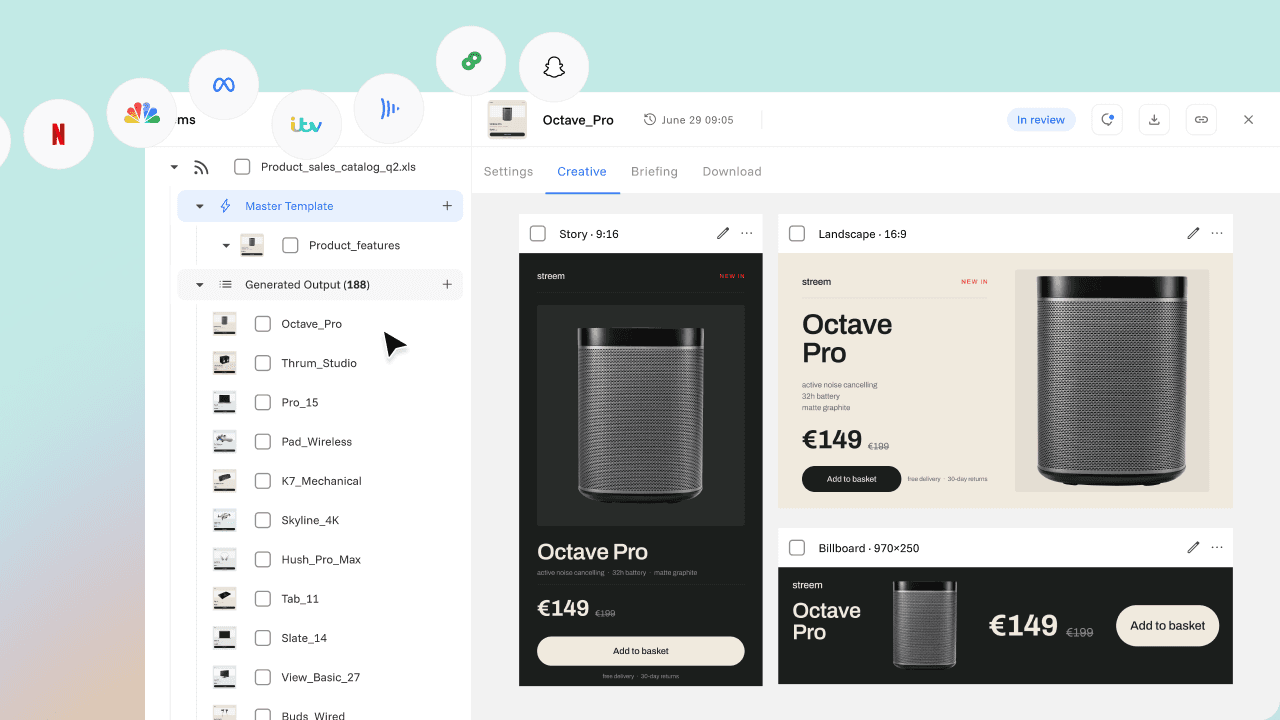
À l'heure actuelle, la réponse honnête sur l'ensemble du marché est non. Des flux s'interrompent en cours de diffusion, des failles de conformité apparaissent après les dépenses, et les systèmes sont incapables de tirer des enseignements de ce qui vient de se passer. C'est le problème de confiance de cette catégorie — et c'est précisément le problème pour lequel nous avons été conçus. Nous avons fait de la confiance le produit lui-même, et non une simple fonctionnalité. C’est la condition préalable absolue à l'Intelligent Campaign Automation.
Le coût réel de l'erreur
Pensez à ce qui se casse réellement. C'est rarement la grosse panne bien visible. C'est plutôt le flux qui se vide discrètement pendant six heures lors d'une journée d'activité record. C'est la création qui est diffusée sur un marché pour lequel elle n'a jamais été validée. C'est la version de l'actif qui était correcte à 98 %, et ce sont ces 2 % restants qui vous coûtent la relation avec votre client.
L'impact budgétaire est réel. Les dommages pour la marque sont réels. Mais le coût le plus profond réside dans l'impact sur les personnes qui font le travail. Lorsque vous ne pouvez pas faire confiance à vos systèmes, vous compensez par une vigilance humaine accrue. Vous accumulez les listes de contrôle. Vous doublez les efforts. Vous recrutez des profils pour gérer l'anxiété plutôt que pour penser la création.
La taxe invisible
Le coût réel de la non-conformité ne se limite pas à l'amende ou au retrait de la campagne. C'est la culture qui se développe autour de la peur de l'erreur — les niveaux de révision manuelle, la paralysie décisionnelle, l'aversion au risque créatif qui vide lentement le travail de sa substance. C'est la taxe que la plupart des organisations paient sans jamais la voir figurer sur une ligne de budget.
Ce qu'exige réellement l'intelligence
Le fait est que pour prétendre être intelligent, il faut le mériter. Et cela se mérite sur quatre fronts :
01 : Exécuter les campagnes plus efficacement
Libérer de la vitesse et de l'échelle pour créer une véritable capacité pour votre équipe, et non une automatisation qui crée simplement une nouvelle catégorie de travail de QA.
02 : Détecter les problèmes de conformité avant la diffusion
Intégrer les pré-tests, l'intégrité des flux et la gouvernance de marque directement dans le flux de travail, plutôt que de s'en remettre à des tableaux de bord qui vous indiquent ce qui a échoué une fois le budget dépensé.
03 : Boucler la boucle de rétroaction
Fournir des signaux instantanés, pas des bilans post-mortem. Une intelligence de campagne qui réagit sur le moment.
04 : Consolider les décisions sur votre propre historique
Une optimisation basée sur vos schémas, votre audience et l'historique de vos performances, pour que chaque campagne soit plus performante à mesure que vous utilisez le système.
La plupart des plateformes n'offrent qu'un ou deux de ces aspects. Elles appellent cela de l'intelligence. Ce n'en est pas. L'intelligence, c'est ce qui se produit lorsque ces quatre piliers fonctionnent ensemble et que l'ensemble s'inscrit dans une culture de confiance qui donne envie aux gens de l'utiliser plutôt que de la contourner.
Pourquoi notre intelligence est réelle et non théorique
Pourquoi pouvons-nous rendre cela réel là où d'autres échouent ? Notre héritage de la diffusion télévisuelle (linéaire + IPTV). Nous avons vécu des échecs de conformité, des réglementations strictes et des flux interrompus à l'échelle mondiale pendant près de trois décennies. Nous savons exactement ce qu'une campagne vide fait à une marque et à un budget. Cet historique est notre barrière structurelle. C'est ce qui rend notre intelligence réelle, éprouvée sur le terrain et conçue pour l'entreprise.
La personne pour qui vous construisez a changé
Un rôle est en train d'émerger et n'a pas encore de titre de poste bien défini. C'est le directeur artistique capable de lire un rapport de performance sans avoir besoin de traducteur. Le planificateur média qui a un avis sur la rédaction. Le responsable de performance qui se soucie sincèrement de la qualité de la création qu'il optimise.
Appelez-les ingénieurs de la création. Scientifiques de la création. Quel que soit le titre final, ils sont déjà dans votre organisation, et ils sont frustrés. Ils sont frustrés parce que les outils qu'ils utilisent ont été conçus pour des spécialistes travaillant en silos. La plateforme créative ne communique pas avec la couche d'activation. La vérification de conformité intervient après la création. Les données de performance résident dans un endroit où l'équipe créative ne regarde jamais. La convergence est réelle. L'infrastructure pour la soutenir ne l'est généralement pas encore.
Deux concepts à prendre au sérieux
Il y a deux concepts vers lesquels l'industrie devrait tendre. Aucun des deux n'existe encore de manière optimale, mais tous deux pointent vers quelque chose d'important.
Un indicateur qui a du sens : CAPE.IO SCORE™
Imaginez une mesure de type NPS pour l'intelligence des campagnes — un score unique qui englobe l'état de conformité, la sécurité de la marque (brand safety), la préparation aux performances, l'intégrité des flux et la maturité de l'optimisation. Pas un tableau de bord de type feux tricolores. Un chiffre qui se consolide avec le temps, autour duquel votre équipe peut se rassembler et qu'un client peut comprendre en un coup d'œil. L'analogie la plus proche en marketing est le suivi de la santé de marque, sauf que celui-ci se mettrait à jour en quasi-temps réel et vous dirait quoi faire, et pas seulement comment vous vous en sortez.
La boucle d'intelligence de campagne auto-consolidante
Créer & valider ➔ Activer sur toutes les destinations ➔ Capturer les signaux de performance ➔ Affiner le modèle.
Les plateformes qui l'emporteront dans cinq ans ne seront pas celles dotées de l'algorithme le plus intelligent. Ce seront celles où chaque campagne rend la suivante meilleure. Celles où vos données historiques sont un actif, et non un cimetière de fichiers PDF dans un dossier partagé. Celles où l'ajout d'une nouvelle destination ou d'une nouvelle intégration ne signifie pas repartir de zéro, mais débloquer un nouveau niveau d'optimisation cross-canal qui s'appuie sur tout ce que vous avez déjà construit. Ce n'est pas une simple fonctionnalité. C'est un modèle d'intelligence totalement différent.
La jonction entre création et optimisation
La catégorie qui compte n'est pas seulement la Creative automation, et ce n'est pas non plus uniquement l'optimisation média. Nous nous situons pile à la jonction des deux — et c'est exactement là tout l'intérêt. La réduction des risques et la prise de décision créative intelligente sont les deux faces d'une même pièce. Ce n'est pas un problème de positionnement ; c'est notre force de frappe.
La réduction des risques et la qualité créative ne sont pas opposées. Une création conforme, respectueuse de la marque et testée au préalable n'est pas une version édulcorée. C'est la version de la confiance. Celle qui est diffusée sans que personne n'ait à vérifier son téléphone à minuit. Celle qu'un client valide parce que le processus qui l'a produite lui donne toutes les raisons d'y croire.
C'est là tout le changement. Passer d'une automatisation perçue comme un outil de production à une intelligence considérée comme un avantage concurrentiel. La différence ne réside pas dans la technologie. Elle réside dans l'infrastructure de confiance sous-jacente et dans la question de savoir si la plateforme que vous utilisez a mérité le droit de s'appeler intelligente.
La question n'est pas de savoir s'il faut utiliser l'intelligence de campagne. C'est de savoir si la vôtre a gagné votre confiance.

Catégorie