28 cze 2020
Pobierz nasz nowy raport na temat przepływów pracy związanych z cyfrowymi zasobami wideo
Nasze najnowsze sprawozdanie „Uzyskaj kontrolę nad swoim przepływem pracy z zasobami wideo” jest już dostępne

To zostało pierwotnie opublikowane na stronie internetowej Peach. Dowiedz się więcej o rebrandingu z Peach do Cape.io.
Wydatki na reklamy wideo Digital rosną, ale za kulisami branża nadal mocno opiera się na nieefektywnych technologiach i procesach z lat minionych. Tak, dokładnie jak w 1995 roku. Ale podczas gdy powiedzieliśmy „do widzenia” VHS, modemom dial-up i Tickle Me Elmo*, agencje medialne nadal wysyłają e-maile tam i z powrotem oraz ręcznie sprawdzają zasoby wideo, tylko po to, aby aktywować reklamy cyfrowe. O co chodzi? I co ważniejsze, co można zrobić, aby to naprawić?
Odpowiadamy na te pytania i inne w naszym nowym raporcie „Przejmij kontrolę nad swoim workflow zasobów wideo”, który jest już dostępny. Raport identyfikuje główne problemy w ekosystemie i przedstawia rozwiązania zapewniające skuteczne dostarczanie reklam w przyszłości.
Wykorzystując dane z unikalnych ankiet i wywiadów z wiodącymi globalnymi agencjami medialnymi, zaglądamy pod maskę agencji medialnych, aby odkryć punkty bólu powodujące opóźnienia kampanii, problemy z jakością, zagrożenia bezpieczeństwa oraz mnóstwo frustracji i kosztów. Na przykład, czy wiesz, że:
70% agencji medialnych ma problemy ze źródłami zasobów
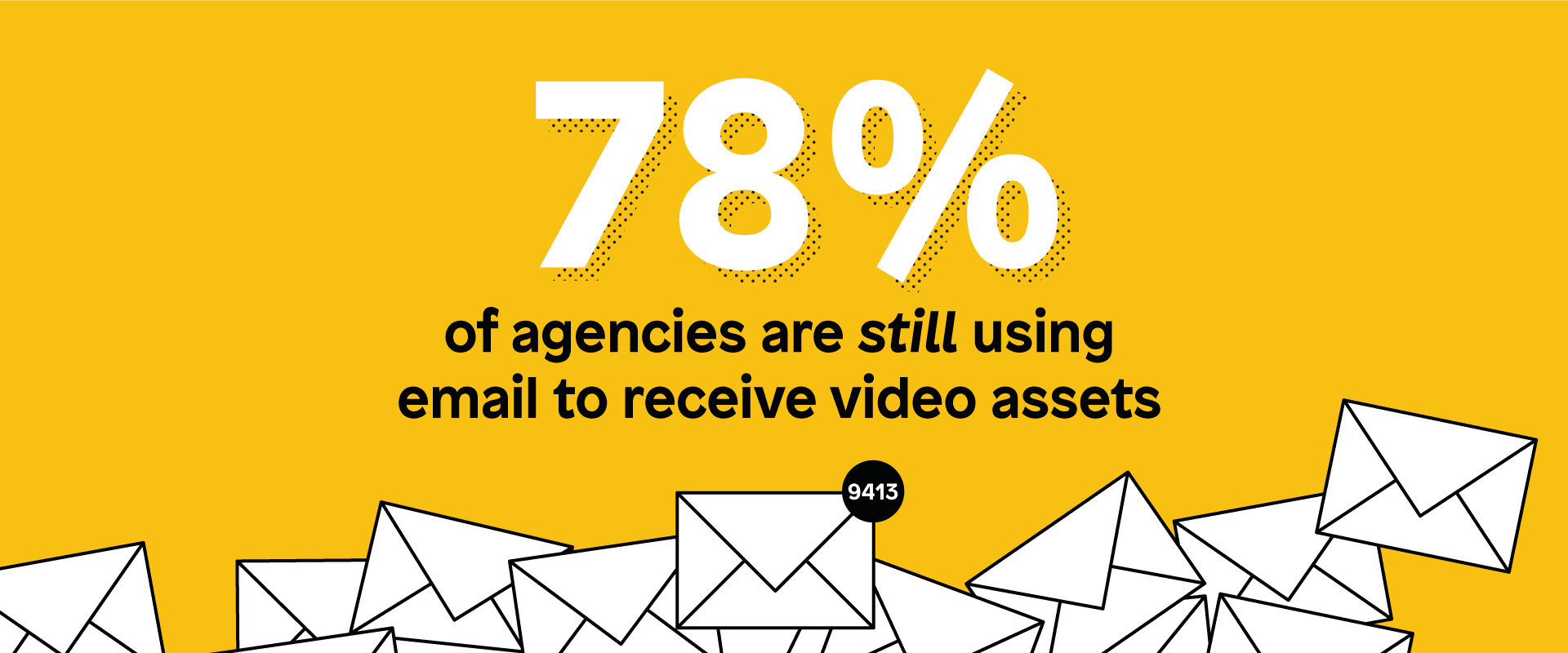
78% nadal używa e-maila do odbierania zasobów wideo
85% nadal ręcznie sprawdza zasoby wideo!
Brzmi znajomo? Nie martw się, nie jesteś sam.
Bądź o krok przed konkurencją: Wypełnij formularz, aby pobrać „Przejmij kontrolę nad swoim workflow zasobów wideo” teraz.
*Okej, w 2020 roku wciąż jest miejsce dla Tickle Me Elmo

Aktualności
Bądź na bieżąco z trendami
Ciekawy najnowszych trendów w marketingu i reklamie? Zapisz się do naszego miesięcznego biuletynu Promarketers.

23 kwi 2026
Agentic AI vs AI wrappers vs custom AI: How to choose your path
You're about to spend $500K on an AI initiative. You've got 3 options on the table, and they'll lead you to wildly different places. Pick wrong, and you're rebuilding in 18 months. Pick right, and you'll have a system that scales, costs less to maintain, and actually does what executives promised.
The choice is between wrapping existing AI models, building custom AI solutions from scratch, or going agentic. Most teams don't understand the real trade-offs until they're locked into the wrong one.

30 mar 2026
Operationalizing AI in advertising: Why it must be embedded, not bolted on
Operationalizing AI in advertising isn’t about adding another tool to your stack. It’s about embedding intelligence into the systems that govern creative production, compliance, and delivery, so automation scales without creating more operational friction.

18 mar 2026
No more chocolate at breakfast? Navigating the new LHF ad rules this Easter
As ad compliance requirements evolve in 2026, UK confectionery brands face new restrictions on less healthy food (LHF) advertising. With the January 5 watershed now in effect, ad quality assurance systems must validate timing, placement, and product identifiability to avoid clearance failures this Easter season.

16 mar 2026
The future of inclusion: How Cape.io powered Virgin Media Television’s fully accessible ad break during the Men’s Six Nations
As Channel 4’s closed-captioning mandate came into effect in March 2026, Cape.io partnered with Virgin Media Television, Omnicom Media Group and VoiceBox to deliver a truly accessible ad break during the Guinness Men’s Six Nations. More than ad compliance, this moment proved that accessibility can operate at the highest level of live sports broadcasting.

27 lut 2026
Navigating Channel 4’s 2026 closed caption mandate
As ad compliance requirements tighten across the UK and Europe, closed captioning has evolved from an accessibility checkbox to a strategic necessity. Whether you're managing CTV campaigns or social media creative, automated ad testing for caption quality is no longer optional - it's fundamental to reaching today's fragmented, multi-screen audiences.
The advertising landscape is facing a seismic shift. By March 1, Channel 4 will become the first UK broadcaster to mandate closed captions across all advertising - including linear TV, streaming, and sponsorships.
The mandate is a redefined standard for global inclusivity. Here is everything you need to know about the new mandate and how to stay ahead of the curve.

26 lut 2026
One platform, many realities: How creative automation platforms resolve the global vs. local tension
Scaling global marketing without losing local relevance requires more than brand guidelines and templates - it requires a creative automation platform designed for both global control and local flexibility. Most systems optimize for standardization, but scaling ad creative production across markets demands architecture that enables creative variation and adaptation by local experts without fragmenting brand governance.
Many global advertisers are chasing the same ideal: scale without losing relevance.
Consistency without uniformity.
Efficiency without bureaucracy.
It sounds simple. In practice, it’s one of the hardest tensions to resolve in modern marketing.
The global vs. local challenge isn’t new, but it’s becoming more urgent. As brands expand across markets, channels, and cultures, the question is no longer whether you should scale globally, but how you do so without erasing the nuance that makes marketing effective in the first place.
Everyone is looking for this balance. Very few get it right.
Aktualności
Bądź na bieżąco z trendami
Ciekawy najnowszych trendów w marketingu i reklamie? Zapisz się do naszego miesięcznego biuletynu Promarketers.

23 kwi 2026
Agentic AI vs AI wrappers vs custom AI: How to choose your path
You're about to spend $500K on an AI initiative. You've got 3 options on the table, and they'll lead you to wildly different places. Pick wrong, and you're rebuilding in 18 months. Pick right, and you'll have a system that scales, costs less to maintain, and actually does what executives promised.
The choice is between wrapping existing AI models, building custom AI solutions from scratch, or going agentic. Most teams don't understand the real trade-offs until they're locked into the wrong one.

30 mar 2026
Operationalizing AI in advertising: Why it must be embedded, not bolted on
Operationalizing AI in advertising isn’t about adding another tool to your stack. It’s about embedding intelligence into the systems that govern creative production, compliance, and delivery, so automation scales without creating more operational friction.

18 mar 2026
No more chocolate at breakfast? Navigating the new LHF ad rules this Easter
As ad compliance requirements evolve in 2026, UK confectionery brands face new restrictions on less healthy food (LHF) advertising. With the January 5 watershed now in effect, ad quality assurance systems must validate timing, placement, and product identifiability to avoid clearance failures this Easter season.

16 mar 2026
The future of inclusion: How Cape.io powered Virgin Media Television’s fully accessible ad break during the Men’s Six Nations
As Channel 4’s closed-captioning mandate came into effect in March 2026, Cape.io partnered with Virgin Media Television, Omnicom Media Group and VoiceBox to deliver a truly accessible ad break during the Guinness Men’s Six Nations. More than ad compliance, this moment proved that accessibility can operate at the highest level of live sports broadcasting.

27 lut 2026
Navigating Channel 4’s 2026 closed caption mandate
As ad compliance requirements tighten across the UK and Europe, closed captioning has evolved from an accessibility checkbox to a strategic necessity. Whether you're managing CTV campaigns or social media creative, automated ad testing for caption quality is no longer optional - it's fundamental to reaching today's fragmented, multi-screen audiences.
The advertising landscape is facing a seismic shift. By March 1, Channel 4 will become the first UK broadcaster to mandate closed captions across all advertising - including linear TV, streaming, and sponsorships.
The mandate is a redefined standard for global inclusivity. Here is everything you need to know about the new mandate and how to stay ahead of the curve.

26 lut 2026
One platform, many realities: How creative automation platforms resolve the global vs. local tension
Scaling global marketing without losing local relevance requires more than brand guidelines and templates - it requires a creative automation platform designed for both global control and local flexibility. Most systems optimize for standardization, but scaling ad creative production across markets demands architecture that enables creative variation and adaptation by local experts without fragmenting brand governance.
Many global advertisers are chasing the same ideal: scale without losing relevance.
Consistency without uniformity.
Efficiency without bureaucracy.
It sounds simple. In practice, it’s one of the hardest tensions to resolve in modern marketing.
The global vs. local challenge isn’t new, but it’s becoming more urgent. As brands expand across markets, channels, and cultures, the question is no longer whether you should scale globally, but how you do so without erasing the nuance that makes marketing effective in the first place.
Everyone is looking for this balance. Very few get it right.
Aktualności
Bądź na bieżąco z trendami
Ciekawy najnowszych trendów w marketingu i reklamie? Zapisz się do naszego miesięcznego biuletynu Promarketers.

23 kwi 2026
Agentic AI vs AI wrappers vs custom AI: How to choose your path
You're about to spend $500K on an AI initiative. You've got 3 options on the table, and they'll lead you to wildly different places. Pick wrong, and you're rebuilding in 18 months. Pick right, and you'll have a system that scales, costs less to maintain, and actually does what executives promised.
The choice is between wrapping existing AI models, building custom AI solutions from scratch, or going agentic. Most teams don't understand the real trade-offs until they're locked into the wrong one.

30 mar 2026
Operationalizing AI in advertising: Why it must be embedded, not bolted on
Operationalizing AI in advertising isn’t about adding another tool to your stack. It’s about embedding intelligence into the systems that govern creative production, compliance, and delivery, so automation scales without creating more operational friction.

18 mar 2026
No more chocolate at breakfast? Navigating the new LHF ad rules this Easter
As ad compliance requirements evolve in 2026, UK confectionery brands face new restrictions on less healthy food (LHF) advertising. With the January 5 watershed now in effect, ad quality assurance systems must validate timing, placement, and product identifiability to avoid clearance failures this Easter season.

16 mar 2026
The future of inclusion: How Cape.io powered Virgin Media Television’s fully accessible ad break during the Men’s Six Nations
As Channel 4’s closed-captioning mandate came into effect in March 2026, Cape.io partnered with Virgin Media Television, Omnicom Media Group and VoiceBox to deliver a truly accessible ad break during the Guinness Men’s Six Nations. More than ad compliance, this moment proved that accessibility can operate at the highest level of live sports broadcasting.

27 lut 2026
Navigating Channel 4’s 2026 closed caption mandate
As ad compliance requirements tighten across the UK and Europe, closed captioning has evolved from an accessibility checkbox to a strategic necessity. Whether you're managing CTV campaigns or social media creative, automated ad testing for caption quality is no longer optional - it's fundamental to reaching today's fragmented, multi-screen audiences.
The advertising landscape is facing a seismic shift. By March 1, Channel 4 will become the first UK broadcaster to mandate closed captions across all advertising - including linear TV, streaming, and sponsorships.
The mandate is a redefined standard for global inclusivity. Here is everything you need to know about the new mandate and how to stay ahead of the curve.

26 lut 2026
One platform, many realities: How creative automation platforms resolve the global vs. local tension
Scaling global marketing without losing local relevance requires more than brand guidelines and templates - it requires a creative automation platform designed for both global control and local flexibility. Most systems optimize for standardization, but scaling ad creative production across markets demands architecture that enables creative variation and adaptation by local experts without fragmenting brand governance.
Many global advertisers are chasing the same ideal: scale without losing relevance.
Consistency without uniformity.
Efficiency without bureaucracy.
It sounds simple. In practice, it’s one of the hardest tensions to resolve in modern marketing.
The global vs. local challenge isn’t new, but it’s becoming more urgent. As brands expand across markets, channels, and cultures, the question is no longer whether you should scale globally, but how you do so without erasing the nuance that makes marketing effective in the first place.
Everyone is looking for this balance. Very few get it right.
Skontaktuj się
Pokażemy Ci, co Cape.io może zrobić.
Intelligent Campaign Automation
Cape.io łączy się z Twoim DAM, serwerami reklam, DSP, narzędziami do zarządzania przepływem pracy i nie tylko, więc nie musisz wymieniać ani zastępować.

Skontaktuj się
Pokażemy Ci, co Cape.io może zrobić.
Intelligent Campaign Automation
Cape.io łączy się z Twoim DAM, serwerami reklam, DSP, narzędziami do zarządzania przepływem pracy i nie tylko, więc nie musisz wymieniać ani zastępować.

Skontaktuj się
Pokażemy Ci, co Cape.io może zrobić.
Intelligent Campaign Automation
Cape.io łączy się z Twoim DAM, serwerami reklam, DSP, narzędziami do zarządzania przepływem pracy i nie tylko, więc nie musisz wymieniać ani zastępować.