/
/
La singularité des médias créatifs : jeter un pont entre écosystèmes ouverts et fermés
La singularité des médias créatifs : jeter un pont entre écosystèmes ouverts et fermés
Nous entrons dans l'ère de la Singularité Créatif-Média, un état où l'intelligence créative et l'exécution média se combinent de manière fluide sur chaque canal. Pour y parvenir, il est nécessaire de dépasser les solutions ponctuelles et fragmentées d'hier.

Pendant des années, les marques d'envergure ont traité la publicité numérique comme un jeu à deux visages. D'un côté, vous avez les écosystèmes fermés, ces réseaux sociaux protégés où le ciblage est instantané et le Création doit être hyper-personnalisé. De l'autre, vous avez l'internet ouvert, à savoir l'univers de la TV connectée (CTV), du display programmatique et de la diffusion linéaire, axé sur la portée, les spécifications techniques et la distribution.
Parce que ces environnements se sont développés sur des piles technologiques différentes, les marques ont naturellement créé des équipes, des flux de travail et des budgets distincts pour les gérer.
Mais dans un paysage moderne et natif de l'IA, où le Création est devenu le facteur déterminant numéro un de la performance média, cette division n'est plus seulement inefficace. Elle détruit activement votre retour sur les dépenses publicitaires (ROAS).
Nous entrons dans l'ère de la Singularité Créative-Média, un état où l'intelligence créative et l'exécution média fusionnent de manière fluide sur chaque canal unique. Pour y parvenir, il est nécessaire de dépasser les solutions ponctuelles et fragmentées d'hier.
La friction : des données enfermées dans des silos
Le principal obstacle à la rapidité des campagnes modernes est la friction organisationnelle et technique. Les spécialistes du marketing se retrouvent pris entre des solutions ponctuelles : certaines plateformes excellent exclusivement dans l'optimisation sur les réseaux sociaux, tandis que les serveurs publicitaires historiques se concentrent sur l'infrastructure numérique mais peinent à assurer une orchestration sur l'ensemble du tunnel de conversion.
Lorsque votre technologie vous oblige à choisir une seule voie, vos données se retrouvent piégées. Vous exécutez un flux de travail Création isolé pour vos équipes réseaux sociaux et un processus de distribution totalement indépendant pour vos équipes de télévision avancée et de diffusion.
Cette fragmentation de l'écosystème crée une zone d'ombre majeure. Si un élément Création génère des pics de conversion massifs sur les réseaux sociaux, cette information reste invisible pour les acheteurs médias qui gèrent vos achats programmatiques en TV connectée (CTV). Le temps que vos équipes extraient, recoupent et normalisent manuellement ces rapports de performance des semaines plus tard, l'engouement du consommateur a disparu, l'effet de nouveauté du Création s'est estompé et le budget média a été gaspillé.
Vous ne pouvez pas atteindre une véritable singularité créative-média si votre veille est structurellement cloisonnée.
L'omnichannel est une question de normalisation, pas seulement de distribution
Il existe une idée reçue selon laquelle la publicité omnicanale signifie simplement avoir la capacité de diffuser une Publicité à plusieurs endroits à la fois. Une véritable orchestration omnicanale n'est pas une simple fonction de diffusion ; c'est une fonction de traduction.
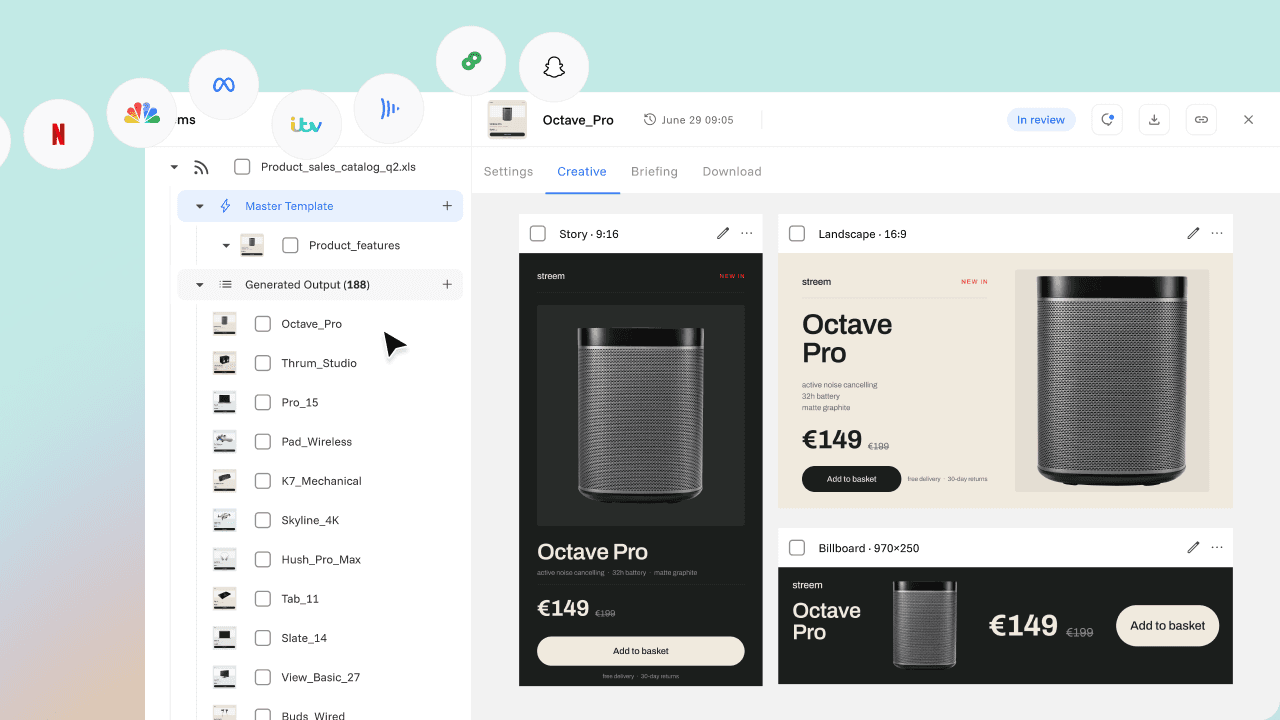
Une véritable orchestration nécessite une infrastructure sous-jacente qui unifie la production du Créatif, la validation de la conformité et l'activation des médias simultanément dans les écosystèmes ouverts et fermés. Cela signifie fonctionner de manière transparente sur des milliers de destinations, allant des principales plateformes sociales à des centaines de réseaux de diffusion et de TV connectée (CTV).
La magie opère lorsque vous normalisez les données de ces environnements en temps réel. Lorsque votre système analyse et structure les signaux de performance de divers canaux en une source unique de vérité, votre flux de travail Créative devient une boucle d'apprentissage continue.
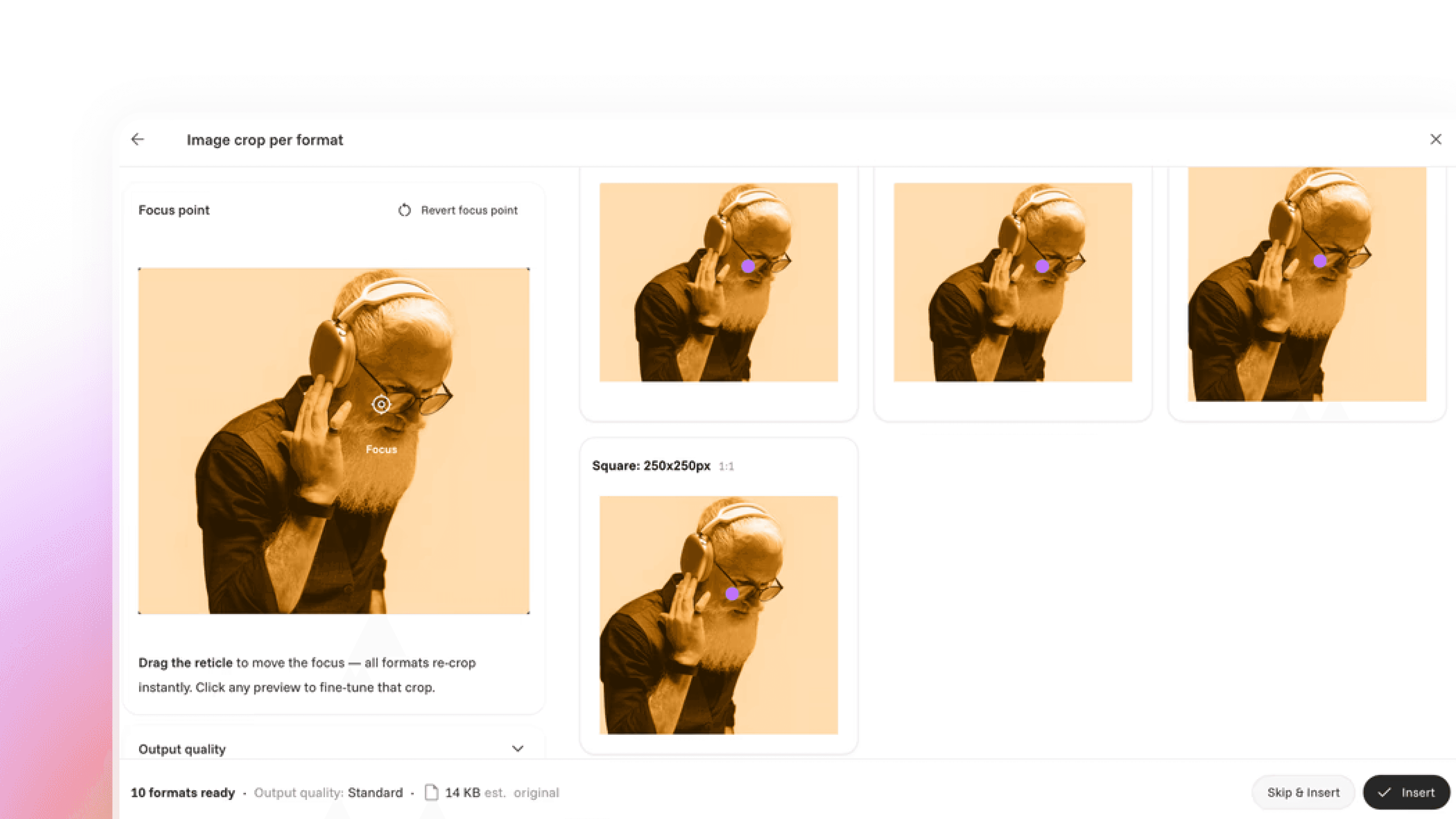
Ce que cela donne en pratique : Un signal de performance prédictif ou un pic d'engagement d'audience détecté sur une campagne TikTok informe instantanément un ajustement automatique du Création, un redimensionnement de la mise en page ou une réaffectation budgétaire pour vos Publicités en streaming sur Hulu ou sur les réseaux de diffusion linéaire.
Rapprocher les écosystèmes fermés et le web ouvert
Pour survivre à la prochaine vague d'évolution de l'adtech, les directions marketing des grandes entreprises doivent transcender les déconnexions culturelles et techniques entre les équipes de conception et les équipes médias.
L'avantage ne viendra plus de la simple production d'un volume de contenu plus élevé. Il viendra de la construction d'un écosystème unifié où les éléments Créatifs sont générés avec une conformité intégrée, testés en amont de la diffusion pour évaluer leur impact, et optimisés en continu tout au long du parcours client.
Les écosystèmes fermés et le web ouvert resteront toujours des environnements distincts pour les consommateurs. Mais pour les marques d'envergure, votre infrastructure technologique doit les traiter comme une seule et même toile harmonieuse. C'est la promesse de la singularité créative-média, et c'est le seul moyen de concevoir des campagnes à la vitesse des machines tout en gardant l'humain fermement aux commandes.
Arrêtez de gaspiller votre ROAS dans des flux de travail fragmentés.
Si vos équipes créatives et médias continuent de travailler avec des outils inadaptés et des indicateurs isolés, vous gaspillez votre budget média. Réservez une brève séance de stratégie de 15 minutes avec un spécialiste de Cape.io pour découvrir comment unifier le cycle de vie de vos campagnes, de la production à l'activation cross-canal.
Catégorie