Sora 2 shutdown: what it means for AI-powered creative when the model goes dark
What happens to your campaigns when the tool underneath them simply disappears?

When the model goes dark
On September 24, 2026, one of the best-known AI video models stopped answering. OpenAI switched off the Sora 2 API, and every product, plugin and pipeline built on it started returning errors. There was no successor model to switch to and no upgrade path inside OpenAI's own product line.
For most marketers, it was a headline. For teams that had wired AI video into their production workflows, it was a wake-up call. The question it raises is bigger than one model: what happens to your campaigns when the tool underneath them simply disappears?
What happened to Sora 2
The wind-down came in two stages. OpenAI announced on March 24, 2026 that Sora was being discontinued, and sent developers a formal deprecation notice the same day. The consumer Sora app and website closed on April 26.
The API lasted five months longer. On September 24, OpenAI removed its Videos API along with every Sora 2 and Sora 2 Pro model version. Any call to those endpoints now fails.
Two details stand out. OpenAI gave no specific reason for the shutdown, and it named no replacement model. Teams that relied on Sora 2 didn't face a model upgrade; they faced choosing a new provider and rebuilding their integration from scratch.
Why this matters for advertising
Brands and agencies use AI video for concepting, versioning, localization and social cut-downs, often at a volume no production team could match by hand.
That speed is real. But when a single model sits at the centre of a workflow, the workflow inherits that model's risks. Pricing can change, outputs can shift between versions, and, as Sora 2 showed, access can end entirely. For an industry that runs on fixed flight dates and tight approval windows, losing a production tool mid-campaign is a huge delivery risk.
Three risks the shutdown exposes
1. Dependency risk. If one model powers a workflow, that model is a single point of failure. Teams that hard-coded Sora 2 into their pipelines had to find a new provider, rewrite integrations and re-test outputs, all on someone else's timeline.
2. Consistency risk. Switching models isn't like switching file formats. A new model produces a different look, handles prompts differently and fails in different ways. Assets made last quarter may not be reproducible next quarter, which matters for long-running campaigns and brand consistency.
3. Compliance and provenance risk. Every change of model resets what you know about its output. Does it meet broadcast specs? Does it respect regional ad rules? Can you show how an asset was made and who approved it? Without a consistent check, each new tool brings back the uncertainty you thought you'd already solved.
Validation is the constant
The AI model landscape will keep shifting. New tools will launch, others will be retired, and the best option for a given task will change quarter to quarter. What shouldn't change is the standard every asset has to meet before it goes live.
That's the role of validation. A model-agnostic validation layer checks the output, not the tool that made it. Whether a video came from an AI model, a production house or a mix of both, it gets the same checks: technical specs, platform requirements, regional ad regulations and brand rules, plus an audit trail of who approved what.
When validation sits outside any single generative tool, swapping that tool becomes a manageable change rather than a crisis. Your quality bar stays put, even when the technology underneath moves.
A practical checklist for creative and media teams
Map your AI dependencies. List every GenAI tool in your production workflow, what it's used for, and what would stop if it went offline tomorrow.
Avoid single points of failure. For critical tasks, know your second option and test it before you need it.
Keep source files and prompts. Archive the inputs behind AI-generated assets so you can recreate or adapt them on a different model.
Validate outputs, not tools. Run every asset through the same technical, regulatory and brand checks, whatever generated it.
Keep an audit trail. Record how each asset was made and who approved it. That record is your safety net when tools, teams or regulations change.
Watch deprecation notices. Providers usually announce shutdowns months ahead. Make someone responsible for tracking them.
Build on what stays put
The Sora 2 shutdown won't be the last of its kind. GenAI tools will keep arriving and leaving faster than campaign cycles. The teams that come through it best won't be the ones that picked the "right" model. They'll be the ones whose workflows don't depend on any single model.
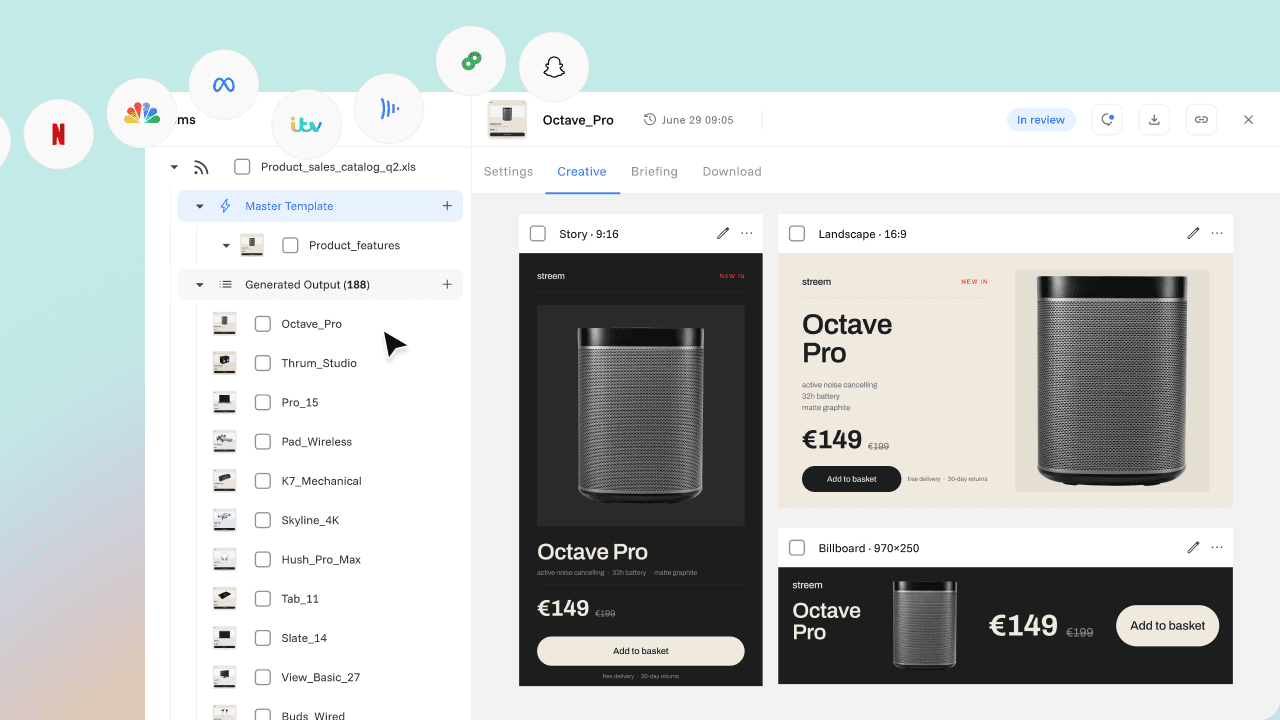
Cape.io's Intelligent Campaign Automation platform gives creative and media teams one connected space to plan, create, validate and activate campaigns. Its validation layer runs AI-powered compliance checks, automated preflight QA and audit-tracked approvals on every asset, whatever tool produced it.
Kategoria