/
/
The creative-media singularity: Pomost pomiędzy otwartymi i zamkniętymi ekosystemami
The creative-media singularity: Pomost pomiędzy otwartymi i zamkniętymi ekosystemami
Wkraczamy w erę osobliwości Kreacja-Media, stanu, w którym inteligencja kreatywna i realizacja mediów płynnie łączą się w każdym kanale. Jej osiągnięcie wymaga wyjścia poza fragmentaryczne, punktowe rozwiązania z przeszłości.

Przez lata marki korporacyjne traktowały reklamę cyfrową jako grę dwóch połówek. Z jednej strony mamy zamknięte ekosystemy (tzw. social walled gardens), gdzie targetowanie jest błyskawiczne, a Kreacja musi być hiper-personalizowana. Z drugiej strony mamy otwarty internet – świat Connected TV (CTV), programmatic display i telewizji linearnej, napędzany skalą, specyfikacjami technicznymi i dystrybucją.
Ponieważ środowiska te rozwijały się na różnych stosach technologicznych, marki naturalnie budowały oddzielne zespoły, osobne procesy robocze i odrębne budżety do zarządzania nimi.
Jednak w nowoczesnym świecie opartym na AI, gdzie Kreacja stała się pojedynczym, najsilniejszym czynnikiem decydującym o efektywności mediów, ten podział nie jest już tylko nieefektywny. Aktywnie niszczy on zwrot z wydatków na Reklamę (ROAS).
Wkraczamy w erę Osobliwości Kreacji i Mediów (Creative-Media Singularity) – stanu, w którym inteligencja kreatywna i realizacja mediów płynnie łączą się na każdym kanale. Osiągnięcie tego wymaga wyjścia poza fragmentaryczne, punktowe rozwiązania z przeszłości.
Tarcie: dane zamknięte w silosach
Główną przeszkodą dla tempa współczesnych kampanii jest tarcie organizacyjne i techniczne. Marketerzy znajdują się w pułapce między punktowymi rozwiązaniami: niektóre platformy doskonale radzą sobie wyłącznie z optymalizacją w mediach społecznościowych, podczas gdy tradycyjne serwery reklamowe stawiają na infrastrukturę cyfrową, ale mają trudności z orkiestracją pełnego lejka zakupowego.
Gdy technologia zmusza Cię do wyboru jednej ścieżki, Twoje dane zostają uwięzione. Prowadzisz jeden odizolowany proces twórczy dla zespołów ds. social media i zupełnie niezależny proces dystrybucji dla zespołów ds. zaawansowanej telewizji i transmisji linearnej.
Ta fragmentacja ekosystemu tworzy poważną martwą strefę. Jeśli komponent kreatywny generuje ogromne skoki konwersji w mediach społecznościowych, ta wiedza pozostaje niewidoczna dla na kupców mediów zarządzających zakupem programmatic Connected TV (CTV). Zanim Twoje zespoły manualnie wyciągną, powiążą i znormalizują te raporty z wyników kilka tygodni później, dynamika konsumencka minie, Kreacja się zużyje, a budżet mediowy zostanie zmarnowany.
Nie można osiągnąć prawdziwej osobliwości Kreacji i mediów, jeśli inteligencja jest strukturalnie odizolowana.
Wielokanałowość (Omnichannel) opiera się na normalizacji, a nie tylko na dystrybucji
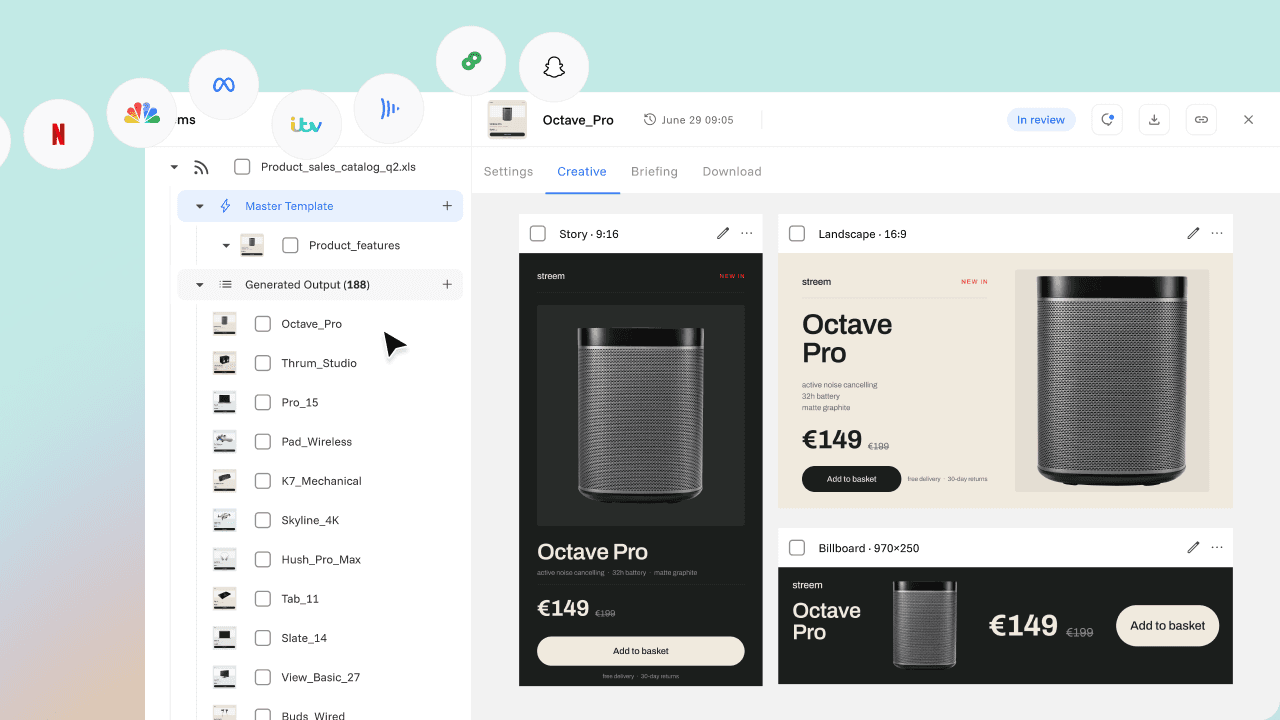
Istnieje powszechne błędne przekonanie, że reklama wielokanałowa oznacza po prostu możliwość jednoczesnego wypchnięcia reklamy w wiele miejsc. Prawdziwa orkiestracja omnichannel nie jest funkcją dostarczania; to funkcja tłumaczenia.
Prawdziwa orkiestracja wymaga bazowej infrastruktury, która ujednolica produkcję kreatywną, walidację zgodności i aktywację mediów jednocześnie w ekosystemach otwartych i zamkniętych. Oznacza to płynne działanie w tysiącach miejsc docelowych, od głównych platform społecznościowych po setki sieci telewizyjnych i Connected TV (CTV).
Magia dzieje się wtedy, gdy normalizujesz dane w tych środowiskach w czasie rzeczywistym. Gdy Twój system odczytuje i strukturyzuje sygnały o wynikach z różnych kanałów w jedno źródło prawdy, Twój proces twórczy staje się ciągłą pętlą uczenia się.
Jak to wygląda w praktyce: Predykcyjny sygnał wydajności lub nagły wzrost zaangażowania odbiorców wykryty w kampanii na TikToku natychmiast inicjuje automatyczną korektę Kreacji, zmianę rozmiaru układu lub realokację budżetu dla Twoich reklam streamingowych na Hulu lub w linearnych sieciach telewizyjnych.
Budowanie mostu między walled gardens a otwartym internetem
Aby przetrwać kolejną falę ewolucji adtech, organizacje marketingu korporacyjnego muszą przezwyciężyć kulturowe i techniczne rozbieżności między zespołami projektowymi a zespołami ds. mediów.
Przewaga nie będzie już wynikać z samego produkowania większej ilości treści. Będzie ona wynikać z budowy ujednoliconego ekosystemu, w którym komponenty kreatywne są generowane z wbudowaną zgodnością, testowane pod kątem wpływu przed emisją i stale optymalizowane na całej ścieżce klienta.
Platformy typu walled gardens i otwarty internet zawsze pozostaną odrębnymi środowiskami dla konsumentów. Jednak w przypadku marek korporacyjnych, Twoja infrastruktura technologiczna musi traktować je jako jedno, harmonijne płótno. Taka jest obietnica osobliwości Kreacji i mediów i jest to jedyny sposób na budowanie kampanii z prędkością maszynową, przy jednoczesnym zachowaniu pełnej kontroli przez człowieka.
Przestań tracić ROAS przez fragmentaryczne procesy pracy.
Jeśli Twoje zespoły ds. Kreacji i mediów nadal pracują na niedopasowanych narzędziach i odizolowanych metrykach, marnujesz budżet mediowy. Zarezerwuj krótkie, 15-minutowe spotkanie strategiczne ze specjalistą Cape.io, aby zobaczyć, jak możemy ujednolicić cykl życia Twojej kampanii – od produkcji po wielokanałową aktywację.
Kategoria