Nowość: Peach Go

Nowy rodzaj narzędzia do transferu plików, stworzonego do reklamy w erze AI

To zostało pierwotnie opublikowane na stronie internetowej Peach. Dowiedz się więcej o rebrandingu z Peach na Cape.io.

Jesteśmy podekscytowani uruchomieniem Peach Go, nowego produktu Peach zaprojektowanego do zmiany sposobu, w jaki aktywowane są kampanie cyfrowe. 

Peach Go to nowy sposób myślenia o transferze plików, który sprawia, że jest on szybszy, inteligentniejszy i o wiele bardziej efektywny. Status quo ostatnich 20 lat często traktował kreatywność jako sprawę drugorzędną — zasoby cyfrowe są źle zarządzane za pomocą e-maila i innych narzędzi, które nie są stworzone do tej pracy. W Peach chcemy to naprawić i wyznaczyć standardy na przyszłość inteligentnych, bezpiecznych i efektywnych procesów kreatywnych.

Jaki jest problem?

Przez wiele lat rozmawialiśmy z ludźmi z branży reklamowej i to szokujące, że nawet w 2024 roku uruchamianie kampanii cyfrowych i Connected TV jest często chaotycznym procesem: zbyt wiele wymian między wszystkimi, zbyt wiele przeskoków między systemami, niebezpieczne narzędzia i takie, które nie są zaprojektowane do tej pracy. Oto kilka rzeczy, które słyszymy:

  • Opóźnione kampanie z powodu problemów z jakością i złożoności przepływu pracy — prowadzące ostatecznie do utraty przychodów reklamodawców, do słabo zoptymalizowanych wydatków na media i niepowodzenia w dotarciu do klientów

  • Rzadko kiedy istnieje 360° widok na to, jak i gdzie używane są zasoby, co utrudnia ich optymalizację i zrozumienie efektywności 

  • Znalezienie właściwych specyfikacji plików pozostaje zbyt trudne

Widzimy wiele tych problemów zaczynających się od używania narzędzi takich jak e-mail, systemy transferu plików jak WeTransfer czy Dropbox, a nawet komunikatory jak WhatsApp (naprawdę ludzie, prosimy nie używać WhatsApp do przesyłania zasobów reklamowych). Żadne z nich nie są stworzone do tego, jak powstaje reklama — przez media, reklamodawców, twórców i produkcję. 

Rozmawialiśmy z kilkoma wczesnymi użytkownikami beta Peach Go — i mają oni liczne problemy z tymi narzędziami. Niezależnie od tego, czy chodzi o brak bezpieczeństwa, brak widoczności czy po prostu słabe dopasowanie i UX do przepływu pracy reklamy — wierzymy, że Peach Go rozwiąże te problemy i wiele więcej.

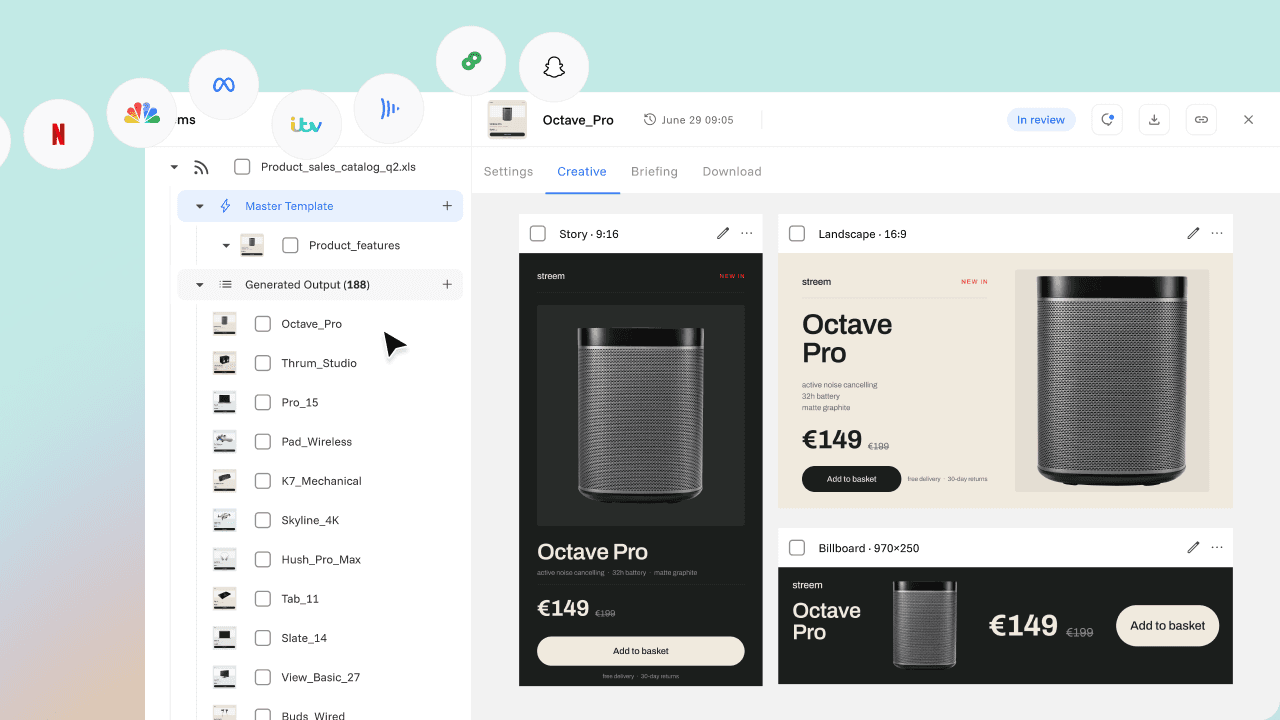
Peach Go screenshots


Czym jest Peach Go? (I dlaczego potrzebujemy lepszego narzędzia do transferu plików?)

Dziś Peach Go oferuje następujące możliwości: 

  • Szybki transfer plików, wspierający wideo, obrazy, pliki VAST, PDF, HTML5, ZIP, foldery… praktycznie wszystko, czego chcesz

  • Automatyczne skanowanie plików w poszukiwaniu złośliwego oprogramowania i wirusów, aby zapewnić nadawcom i odbiorcom pewność

  • Wybieraj, które pliki pobrać oszczędzając czas i miejsce na dysku, nawet jeśli są w przesłanych folderach

  • Transfery chronione hasłem

  • Utwórz konto, aby móc szybciej przesyłać pliki, mieć dostęp do poprzednich plików, z dodatkowymi korzyściami wkrótce

  • Wszystko zbudowane na niezawodnej infrastrukturze bezpieczeństwa

  • Wkrótce dostęp do bogatej metadanych zasobów i podglądów 

Co więcej, Peach Go jest całkowicie darmowy do rozpoczęcia używania. To ważne, ponieważ ułatwia, gdy narzędzia są super łatwe do rozpoczęcia dla wszystkich zaangażowanych. Udostępniasz jakieś pliki? Żaden problem — nie trzeba onboardingu dla siebie ani nikogo, z kim pracujesz.

Możesz również zarejestrować się, aby:

  • Zwiększyć transfery z 2GB do 5GB

  • Zwiększyć czas wygaśnięcia plików z 14 do 30 dni

  • Pominąć weryfikację e-mail przy każdym wysyłaniu plików

  • Więcej wkrótce

Ale to dopiero początek… 

Przyszłość Peach Go

Files moving around like crazy

Peach Go od samego początku został zbudowany z myślą o AI, pomagając ci uczynić twój kreatywny proces bardziej efektownym, a workflow prostszym i sprytniejszym. 

Rozważamy możliwości, które byłyby niemal niemożliwe bez najnowszych innowacji AI. Skala i szybkość są istotne dla szybko zmieniających się kampanii cyfrowych. AI umożliwia przynoszenie niemal natychmiastowych wniosków dotyczących efektywności, brandingowych, różnorodności i zrównoważonych kwestii, które wcześniej wymagałyby mozolnej ręcznej pracy. 

Sposób, w jaki podchodzimy do kontroli jakości na dużą skalę dla zasobów cyfrowych, można również ponownie wyobrazić — oferując kreatywne i kanałowe rekomendacje — nie tylko upewniając się, że reklama spełnia wymagania techniczne. 

Poza AI, rozważamy sposoby na ścisłą integrację z platformami reklamowymi, oferowanie użytkownikom widoczności zasobów i tworzenie niezawodnych funkcji bezpieczeństwa dla reklamodawców i wydawców.

Jeśli jesteś zaangażowany w cyfrowe przepływy pracy i chciałbyś wpłynąć na przyszłość Peach Go, z przyjemnością usłyszymy od Ciebie: skontaktuj się z nami lub zacznij przesyłać pliki już teraz.

Jak Peach Go będzie współpracować z resztą Peach Suite?

W Peach od lat współpracujemy ze światem reklamy, budując narzędzia takie jak Peach Connect, Cape, Advalidation i Caria, które znacznie poprawiają szybkość i efektywność przepływów pracy w reklamach w obszarach takich jak telewizja i wersjonowanie kreatywne. Peach Go uzupełni te narzędzia.

Na przykład, Peach Connect jest zbudowany do dostarczania reklam do ponad 18,000 nadawców i platform cyfrowych i jest zoptymalizowany do pracy z wysoko zorganizowanymi danymi, współpracy i przepływami pracy wymaganymi dla dużych konwergentnych telewizji (liniowych i BVOD) oraz naszych globalnych klientów korporacyjnych. Z kolei Cape jest zbudowany dla zespołów, które potrzebują efektywnego i wysoko zintegrowanego narzędzia do wersjonowania reklam, publikacji i współpracy. 

Ale nie każda praca reklamowa wygląda tak — wiele kampanii cyfrowych musi być bardzo elastycznych z różnymi platformami, zespołami i narzędziami. Peach Go jest zbudowany, aby wspierać te bardzo elastyczne przepływy pracy — czynić je szybszymi, bardziej efektywnymi, z lepszą współpracą i dużo bardziej inteligentnymi. 

Gotowy, aby wypróbować Peach Go?

Zacznij przesyłać zasoby z Peach Go już teraz, za darmo. 

Wypróbuj Peach Go za darmo

— Doug Conely i zespół Peach Go

Aktualności

Bądź na bieżąco z trendami

Ciekawy najnowszych trendów w marketingu i reklamie?
Zapisz się do naszego miesięcznego biuletynu Promarketers.

18 mar 2026

No more chocolate at breakfast? Navigating the new LHF ad rules this Easter

As ad compliance requirements evolve in 2026, UK confectionery brands face new restrictions on less healthy food (LHF) advertising. With the January 5 watershed now in effect, ad quality assurance systems must validate timing, placement, and product identifiability to avoid clearance failures this Easter season.

16 mar 2026

The future of inclusion: How Cape.io powered Virgin Media Television’s fully accessible ad break during the Men’s Six Nations

As Channel 4’s closed-captioning mandate came into effect in March 2026, Cape.io partnered with Virgin Media Television, Omnicom Media Group and VoiceBox to deliver a truly accessible ad break during the Guinness Men’s Six Nations. More than ad compliance, this moment proved that accessibility can operate at the highest level of live sports broadcasting.

27 lut 2026

Navigating Channel 4’s 2026 closed caption mandate

As ad compliance requirements tighten across the UK and Europe, closed captioning has evolved from an accessibility checkbox to a strategic necessity. Whether you're managing CTV campaigns or social media creative, automated ad testing for caption quality is no longer optional - it's fundamental to reaching today's fragmented, multi-screen audiences.

The advertising landscape is facing a seismic shift. By March 1, Channel 4 will become the first UK broadcaster to mandate closed captions across all advertising - including linear TV, streaming, and sponsorships.

The mandate is  a redefined standard for global inclusivity. Here is everything you need to know about the new mandate and how to stay ahead of the curve.

26 lut 2026

One platform, many realities: How creative automation platforms resolve the global vs. local tension

Scaling global marketing without losing local relevance requires more than brand guidelines and templates - it requires a creative automation platform designed for both global control and local flexibility. Most systems optimize for standardization, but scaling ad creative production across markets demands architecture that enables creative variation and adaptation by local experts without fragmenting brand governance.

Many global advertisers are chasing the same ideal: scale without losing relevance.

Consistency without uniformity.
Efficiency without bureaucracy.

It sounds simple. In practice, it’s one of the hardest tensions to resolve in modern marketing.

The global vs. local challenge isn’t new, but it’s becoming more urgent. As brands expand across markets, channels, and cultures, the question is no longer whether you should scale globally, but how you do so without erasing the nuance that makes marketing effective in the first place.

Everyone is looking for this balance. Very few get it right.

11 lut 2026

EPTVI Initiative launches Stage Two to help programmatic TV scale across Europe’s largest advertising markets

Broadcasters, streamers, agencies and ad tech companies including Google Ad Manager, Equativ, Adform, LiveRamp, The Trade Desk, FreeWheel and Cape.io begin work on practical solutions to reduce complexity and speed up adoption.

4 lut 2026

The guardrails of growth: Why creative intelligence demands compliance

Generative AI can produce thousands of creative variants, but most compliance systems are still manual, fragmented, and reactive, unable to keep pace with today’s velocity. To move fast without breaking things, the industry needs a new approach: real-time verification, programmatic enforcement, and end-to-end visibility. Embedded inside the stack, not bolted on at the end.

Aktualności

Bądź na bieżąco z trendami

Ciekawy najnowszych trendów w marketingu i reklamie?
Zapisz się do naszego miesięcznego biuletynu Promarketers.

18 mar 2026

No more chocolate at breakfast? Navigating the new LHF ad rules this Easter

As ad compliance requirements evolve in 2026, UK confectionery brands face new restrictions on less healthy food (LHF) advertising. With the January 5 watershed now in effect, ad quality assurance systems must validate timing, placement, and product identifiability to avoid clearance failures this Easter season.

16 mar 2026

The future of inclusion: How Cape.io powered Virgin Media Television’s fully accessible ad break during the Men’s Six Nations

As Channel 4’s closed-captioning mandate came into effect in March 2026, Cape.io partnered with Virgin Media Television, Omnicom Media Group and VoiceBox to deliver a truly accessible ad break during the Guinness Men’s Six Nations. More than ad compliance, this moment proved that accessibility can operate at the highest level of live sports broadcasting.

27 lut 2026

Navigating Channel 4’s 2026 closed caption mandate

As ad compliance requirements tighten across the UK and Europe, closed captioning has evolved from an accessibility checkbox to a strategic necessity. Whether you're managing CTV campaigns or social media creative, automated ad testing for caption quality is no longer optional - it's fundamental to reaching today's fragmented, multi-screen audiences.

The advertising landscape is facing a seismic shift. By March 1, Channel 4 will become the first UK broadcaster to mandate closed captions across all advertising - including linear TV, streaming, and sponsorships.

The mandate is  a redefined standard for global inclusivity. Here is everything you need to know about the new mandate and how to stay ahead of the curve.

26 lut 2026

One platform, many realities: How creative automation platforms resolve the global vs. local tension

Scaling global marketing without losing local relevance requires more than brand guidelines and templates - it requires a creative automation platform designed for both global control and local flexibility. Most systems optimize for standardization, but scaling ad creative production across markets demands architecture that enables creative variation and adaptation by local experts without fragmenting brand governance.

Many global advertisers are chasing the same ideal: scale without losing relevance.

Consistency without uniformity.
Efficiency without bureaucracy.

It sounds simple. In practice, it’s one of the hardest tensions to resolve in modern marketing.

The global vs. local challenge isn’t new, but it’s becoming more urgent. As brands expand across markets, channels, and cultures, the question is no longer whether you should scale globally, but how you do so without erasing the nuance that makes marketing effective in the first place.

Everyone is looking for this balance. Very few get it right.

11 lut 2026

EPTVI Initiative launches Stage Two to help programmatic TV scale across Europe’s largest advertising markets

Broadcasters, streamers, agencies and ad tech companies including Google Ad Manager, Equativ, Adform, LiveRamp, The Trade Desk, FreeWheel and Cape.io begin work on practical solutions to reduce complexity and speed up adoption.

4 lut 2026

The guardrails of growth: Why creative intelligence demands compliance

Generative AI can produce thousands of creative variants, but most compliance systems are still manual, fragmented, and reactive, unable to keep pace with today’s velocity. To move fast without breaking things, the industry needs a new approach: real-time verification, programmatic enforcement, and end-to-end visibility. Embedded inside the stack, not bolted on at the end.

Aktualności

Bądź na bieżąco z trendami

Ciekawy najnowszych trendów w marketingu i reklamie?
Zapisz się do naszego miesięcznego biuletynu Promarketers.

18 mar 2026

No more chocolate at breakfast? Navigating the new LHF ad rules this Easter

As ad compliance requirements evolve in 2026, UK confectionery brands face new restrictions on less healthy food (LHF) advertising. With the January 5 watershed now in effect, ad quality assurance systems must validate timing, placement, and product identifiability to avoid clearance failures this Easter season.

16 mar 2026

The future of inclusion: How Cape.io powered Virgin Media Television’s fully accessible ad break during the Men’s Six Nations

As Channel 4’s closed-captioning mandate came into effect in March 2026, Cape.io partnered with Virgin Media Television, Omnicom Media Group and VoiceBox to deliver a truly accessible ad break during the Guinness Men’s Six Nations. More than ad compliance, this moment proved that accessibility can operate at the highest level of live sports broadcasting.

27 lut 2026

Navigating Channel 4’s 2026 closed caption mandate

As ad compliance requirements tighten across the UK and Europe, closed captioning has evolved from an accessibility checkbox to a strategic necessity. Whether you're managing CTV campaigns or social media creative, automated ad testing for caption quality is no longer optional - it's fundamental to reaching today's fragmented, multi-screen audiences.

The advertising landscape is facing a seismic shift. By March 1, Channel 4 will become the first UK broadcaster to mandate closed captions across all advertising - including linear TV, streaming, and sponsorships.

The mandate is  a redefined standard for global inclusivity. Here is everything you need to know about the new mandate and how to stay ahead of the curve.

26 lut 2026

One platform, many realities: How creative automation platforms resolve the global vs. local tension

Scaling global marketing without losing local relevance requires more than brand guidelines and templates - it requires a creative automation platform designed for both global control and local flexibility. Most systems optimize for standardization, but scaling ad creative production across markets demands architecture that enables creative variation and adaptation by local experts without fragmenting brand governance.

Many global advertisers are chasing the same ideal: scale without losing relevance.

Consistency without uniformity.
Efficiency without bureaucracy.

It sounds simple. In practice, it’s one of the hardest tensions to resolve in modern marketing.

The global vs. local challenge isn’t new, but it’s becoming more urgent. As brands expand across markets, channels, and cultures, the question is no longer whether you should scale globally, but how you do so without erasing the nuance that makes marketing effective in the first place.

Everyone is looking for this balance. Very few get it right.

11 lut 2026

EPTVI Initiative launches Stage Two to help programmatic TV scale across Europe’s largest advertising markets

Broadcasters, streamers, agencies and ad tech companies including Google Ad Manager, Equativ, Adform, LiveRamp, The Trade Desk, FreeWheel and Cape.io begin work on practical solutions to reduce complexity and speed up adoption.

4 lut 2026

The guardrails of growth: Why creative intelligence demands compliance

Generative AI can produce thousands of creative variants, but most compliance systems are still manual, fragmented, and reactive, unable to keep pace with today’s velocity. To move fast without breaking things, the industry needs a new approach: real-time verification, programmatic enforcement, and end-to-end visibility. Embedded inside the stack, not bolted on at the end.

Skontaktuj się

Pokażemy Ci, co Cape.io może zrobić.

Intelligent Campaign Automation

Cape.io łączy się z Twoim DAM, serwerami reklam, DSP, narzędziami do zarządzania przepływem pracy i nie tylko, więc nie musisz wymieniać ani zastępować.

© 2025 Cape.io. Wszelkie prawa zastrzeżone

Polski

Skontaktuj się

Pokażemy Ci, co Cape.io może zrobić.

Intelligent Campaign Automation

Cape.io łączy się z Twoim DAM, serwerami reklam, DSP, narzędziami do zarządzania przepływem pracy i nie tylko, więc nie musisz wymieniać ani zastępować.

© 2025 Cape.io. Wszelkie prawa zastrzeżone

Polski

Skontaktuj się

Pokażemy Ci, co Cape.io może zrobić.

Intelligent Campaign Automation

Cape.io łączy się z Twoim DAM, serwerami reklam, DSP, narzędziami do zarządzania przepływem pracy i nie tylko, więc nie musisz wymieniać ani zastępować.

© 2025 Cape.io. Wszelkie prawa zastrzeżone

Polski