Peach at Future of TV Advertising in London

Here’s our top takeaways from the great two day event
Category:

This was originally posted on the Peach website. Find out more about the rebrand from Peach to Cape.io.

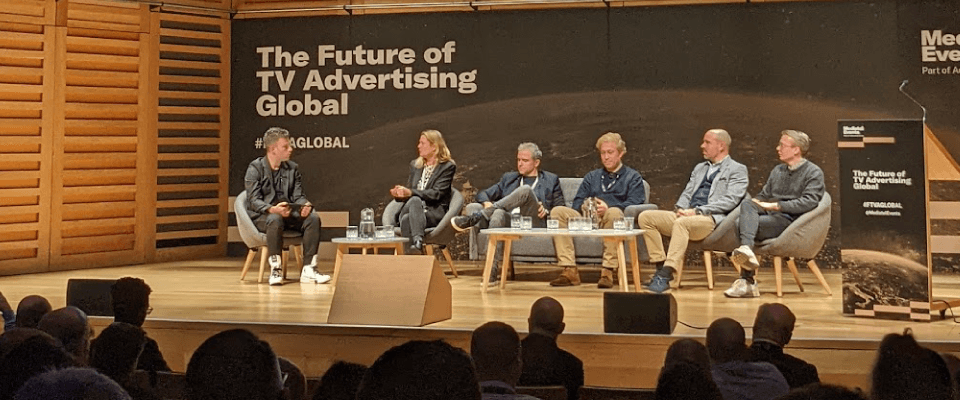
This year’s Future of TV Advertising was all about new competition, innovations, ways of measurement across platforms and new ways to utilise data. This event really highlighted the breadth of where TV is heading, the current complexity and how we could soon be reaching a new golden age of TV advertising. 

Across all the panels and presentations, there were definitely some key themes that stood out at this year’s event:

  • Converged TV — whether it’s linear, AVoD, BVoD, AV or whatever, everyone wants to know how it can all work better together. Wth Netflix, Disney+, ITVX and many more advertising led services joining the party, navigating this as an advertiser or agency becomes ever more complex.

  • Measurement — as the landscape changes and linear TV and digital converge, advertisers want to understand impact. Netflix’s recent BARB announcement was a key talking point. 

  • Focus on keeping a great UX for CTV — No one wants to remake the mistakes we saw and still see with digital advertising (dodgy ad creative we’re looking at you). The industry needs to ensure broadcast’s reputation for perfect quality ads transfers over to CTV so users enjoy a great ad experience. 

As for the talks themselves, here are the ones that we found particularly interesting: 

Day 1

Jeremi Gorman, Netflix: They want ads to be a great experience — something you look forward to, like the Superbowl or even Piccadilly Circus! Their new team is a mix of experts from the worlds of TV and digital — and aim to bring the best of both worlds together. Plus, what we’ve seen now is just the start: expect localisation, new ad formats and more.


Andy Jones, Samsung Ads: 2/3 U.K. respondents are happy to exchange content for ads but those ads should be tailored towards them. Content is still king, but data is the new kingdom!


Day 2

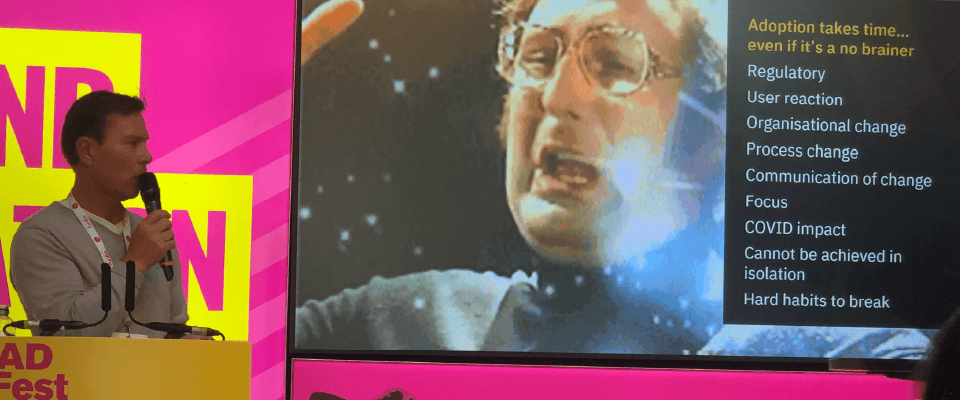
Lolly Mason, Peach: The industry has a habit of finding solutions to make things easier for them. That’s all well and good, but the user experience shouldn’t be sacrificed in the process. We need to bring the same rigour into the CTV environment as we do with traditional broadcast. Ensuring creative quality and regulation will give brands the right level of assurance to then invest more and put more focus on these new TV streams. You can watch the full stream here


Rita Ferro, Disney: Disney provides advertisers a brand safe environment as they’ve been in the market for years and excel at content creation and audience targeting themselves. With a cookieless future incoming, Disney has been investing in their own first party data that is scalable across all markets and are excited to see it in action when their ad tier launches this month. 

Nicola Lewis, Finecast: By the end of 2022, Finecast will have served over 11 billion TV impressions across 14 markets. However, less than 1% of those ads have been creatively optimised, despite the biggest driver in advertising effectiveness being the creative. This is a clear area of growth but comes with challenges. To make it work you need to have the right people, partners and platforms collaborating together. 

News

Stay ahead of the curve

Curious about the latest in marketing and advertising?
Subscribe to our monthly Promarketers newsletter.

Apr 23, 2026

Agentic AI vs AI wrappers vs custom AI: How to choose your path

You're about to spend $500K on an AI initiative. You've got 3 options on the table, and they'll lead you to wildly different places. Pick wrong, and you're rebuilding in 18 months. Pick right, and you'll have a system that scales, costs less to maintain, and actually does what executives promised.

The choice is between wrapping existing AI models, building custom AI solutions from scratch, or going agentic. Most teams don't understand the real trade-offs until they're locked into the wrong one.

Mar 30, 2026

Operationalizing AI in advertising: Why it must be embedded, not bolted on

Operationalizing AI in advertising isn’t about adding another tool to your stack. It’s about embedding intelligence into the systems that govern creative production, compliance, and delivery, so automation scales without creating more operational friction.

Mar 18, 2026

No more chocolate at breakfast? Navigating the new LHF ad rules this Easter

As ad compliance requirements evolve in 2026, UK confectionery brands face new restrictions on less healthy food (LHF) advertising. With the January 5 watershed now in effect, ad quality assurance systems must validate timing, placement, and product identifiability to avoid clearance failures this Easter season.

Mar 16, 2026

The future of inclusion: How Cape.io powered Virgin Media Television’s fully accessible ad break during the Men’s Six Nations

As Channel 4’s closed-captioning mandate came into effect in March 2026, Cape.io partnered with Virgin Media Television, Omnicom Media Group and VoiceBox to deliver a truly accessible ad break during the Guinness Men’s Six Nations. More than ad compliance, this moment proved that accessibility can operate at the highest level of live sports broadcasting.

Feb 27, 2026

Navigating Channel 4’s 2026 closed caption mandate

As ad compliance requirements tighten across the UK and Europe, closed captioning has evolved from an accessibility checkbox to a strategic necessity. Whether you're managing CTV campaigns or social media creative, automated ad testing for caption quality is no longer optional - it's fundamental to reaching today's fragmented, multi-screen audiences.

The advertising landscape is facing a seismic shift. By March 1, Channel 4 will become the first UK broadcaster to mandate closed captions across all advertising - including linear TV, streaming, and sponsorships.

The mandate is  a redefined standard for global inclusivity. Here is everything you need to know about the new mandate and how to stay ahead of the curve.

Feb 26, 2026

One platform, many realities: How creative automation platforms resolve the global vs. local tension

Scaling global marketing without losing local relevance requires more than brand guidelines and templates - it requires a creative automation platform designed for both global control and local flexibility. Most systems optimize for standardization, but scaling ad creative production across markets demands architecture that enables creative variation and adaptation by local experts without fragmenting brand governance.

Many global advertisers are chasing the same ideal: scale without losing relevance.

Consistency without uniformity.
Efficiency without bureaucracy.

It sounds simple. In practice, it’s one of the hardest tensions to resolve in modern marketing.

The global vs. local challenge isn’t new, but it’s becoming more urgent. As brands expand across markets, channels, and cultures, the question is no longer whether you should scale globally, but how you do so without erasing the nuance that makes marketing effective in the first place.

Everyone is looking for this balance. Very few get it right.

News

Stay ahead of the curve

Curious about the latest in marketing and advertising?
Subscribe to our monthly Promarketers newsletter.

Apr 23, 2026

Agentic AI vs AI wrappers vs custom AI: How to choose your path

You're about to spend $500K on an AI initiative. You've got 3 options on the table, and they'll lead you to wildly different places. Pick wrong, and you're rebuilding in 18 months. Pick right, and you'll have a system that scales, costs less to maintain, and actually does what executives promised.

The choice is between wrapping existing AI models, building custom AI solutions from scratch, or going agentic. Most teams don't understand the real trade-offs until they're locked into the wrong one.

Mar 30, 2026

Operationalizing AI in advertising: Why it must be embedded, not bolted on

Operationalizing AI in advertising isn’t about adding another tool to your stack. It’s about embedding intelligence into the systems that govern creative production, compliance, and delivery, so automation scales without creating more operational friction.

Mar 18, 2026

No more chocolate at breakfast? Navigating the new LHF ad rules this Easter

As ad compliance requirements evolve in 2026, UK confectionery brands face new restrictions on less healthy food (LHF) advertising. With the January 5 watershed now in effect, ad quality assurance systems must validate timing, placement, and product identifiability to avoid clearance failures this Easter season.

Mar 16, 2026

The future of inclusion: How Cape.io powered Virgin Media Television’s fully accessible ad break during the Men’s Six Nations

As Channel 4’s closed-captioning mandate came into effect in March 2026, Cape.io partnered with Virgin Media Television, Omnicom Media Group and VoiceBox to deliver a truly accessible ad break during the Guinness Men’s Six Nations. More than ad compliance, this moment proved that accessibility can operate at the highest level of live sports broadcasting.

Feb 27, 2026

Navigating Channel 4’s 2026 closed caption mandate

As ad compliance requirements tighten across the UK and Europe, closed captioning has evolved from an accessibility checkbox to a strategic necessity. Whether you're managing CTV campaigns or social media creative, automated ad testing for caption quality is no longer optional - it's fundamental to reaching today's fragmented, multi-screen audiences.

The advertising landscape is facing a seismic shift. By March 1, Channel 4 will become the first UK broadcaster to mandate closed captions across all advertising - including linear TV, streaming, and sponsorships.

The mandate is  a redefined standard for global inclusivity. Here is everything you need to know about the new mandate and how to stay ahead of the curve.

Feb 26, 2026

One platform, many realities: How creative automation platforms resolve the global vs. local tension

Scaling global marketing without losing local relevance requires more than brand guidelines and templates - it requires a creative automation platform designed for both global control and local flexibility. Most systems optimize for standardization, but scaling ad creative production across markets demands architecture that enables creative variation and adaptation by local experts without fragmenting brand governance.

Many global advertisers are chasing the same ideal: scale without losing relevance.

Consistency without uniformity.
Efficiency without bureaucracy.

It sounds simple. In practice, it’s one of the hardest tensions to resolve in modern marketing.

The global vs. local challenge isn’t new, but it’s becoming more urgent. As brands expand across markets, channels, and cultures, the question is no longer whether you should scale globally, but how you do so without erasing the nuance that makes marketing effective in the first place.

Everyone is looking for this balance. Very few get it right.

News

Stay ahead of the curve

Curious about the latest in marketing and advertising?
Subscribe to our monthly Promarketers newsletter.

Apr 23, 2026

Agentic AI vs AI wrappers vs custom AI: How to choose your path

You're about to spend $500K on an AI initiative. You've got 3 options on the table, and they'll lead you to wildly different places. Pick wrong, and you're rebuilding in 18 months. Pick right, and you'll have a system that scales, costs less to maintain, and actually does what executives promised.

The choice is between wrapping existing AI models, building custom AI solutions from scratch, or going agentic. Most teams don't understand the real trade-offs until they're locked into the wrong one.

Mar 30, 2026

Operationalizing AI in advertising: Why it must be embedded, not bolted on

Operationalizing AI in advertising isn’t about adding another tool to your stack. It’s about embedding intelligence into the systems that govern creative production, compliance, and delivery, so automation scales without creating more operational friction.

Mar 18, 2026

No more chocolate at breakfast? Navigating the new LHF ad rules this Easter

As ad compliance requirements evolve in 2026, UK confectionery brands face new restrictions on less healthy food (LHF) advertising. With the January 5 watershed now in effect, ad quality assurance systems must validate timing, placement, and product identifiability to avoid clearance failures this Easter season.

Mar 16, 2026

The future of inclusion: How Cape.io powered Virgin Media Television’s fully accessible ad break during the Men’s Six Nations

As Channel 4’s closed-captioning mandate came into effect in March 2026, Cape.io partnered with Virgin Media Television, Omnicom Media Group and VoiceBox to deliver a truly accessible ad break during the Guinness Men’s Six Nations. More than ad compliance, this moment proved that accessibility can operate at the highest level of live sports broadcasting.

Feb 27, 2026

Navigating Channel 4’s 2026 closed caption mandate

As ad compliance requirements tighten across the UK and Europe, closed captioning has evolved from an accessibility checkbox to a strategic necessity. Whether you're managing CTV campaigns or social media creative, automated ad testing for caption quality is no longer optional - it's fundamental to reaching today's fragmented, multi-screen audiences.

The advertising landscape is facing a seismic shift. By March 1, Channel 4 will become the first UK broadcaster to mandate closed captions across all advertising - including linear TV, streaming, and sponsorships.

The mandate is  a redefined standard for global inclusivity. Here is everything you need to know about the new mandate and how to stay ahead of the curve.

Feb 26, 2026

One platform, many realities: How creative automation platforms resolve the global vs. local tension

Scaling global marketing without losing local relevance requires more than brand guidelines and templates - it requires a creative automation platform designed for both global control and local flexibility. Most systems optimize for standardization, but scaling ad creative production across markets demands architecture that enables creative variation and adaptation by local experts without fragmenting brand governance.

Many global advertisers are chasing the same ideal: scale without losing relevance.

Consistency without uniformity.
Efficiency without bureaucracy.

It sounds simple. In practice, it’s one of the hardest tensions to resolve in modern marketing.

The global vs. local challenge isn’t new, but it’s becoming more urgent. As brands expand across markets, channels, and cultures, the question is no longer whether you should scale globally, but how you do so without erasing the nuance that makes marketing effective in the first place.

Everyone is looking for this balance. Very few get it right.

Get in touch

Let us show you what Cape.io can do.

Intelligent Campaign Automation

Cape.io connects up your team, DAM, ad servers, DSPs, tools, and more, so you don’t need to rip and replace.

Copyright © 2026 Cape.io all rights reserved

English

Get in touch

Let us show you what Cape.io can do.

Intelligent Campaign Automation

Cape.io connects up your team, DAM, ad servers, DSPs, tools, and more, so you don’t need to rip and replace.

Copyright © 2026 Cape.io all rights reserved

English

Get in touch

Let us show you what Cape.io can do.

Intelligent Campaign Automation

Cape.io connects up your team, DAM, ad servers, DSPs, tools, and more, so you don’t need to rip and replace.

Copyright © 2026 Cape.io all rights reserved

English