Why Local Activation Matters
High-performing digital advertising isn’t about reaching as many people as possible—it’s about reaching the right people with the right message at the right time. That’s what local activation is all about.
Whether you’re a global brand launching in multiple countries, a franchise business with hundreds of outlets, or even a regional gym chain with locations across one state, success often comes down to the same thing: being relevant locally.
Local activations bring campaigns closer to the customer—showing offers that match what people need in their city, their store, or even at their time of day. But while the concept sounds simple, in practice, it’s one of the biggest challenges digital teams face.
Let’s explore why.
The Six Biggest Challenges in Local Campaigns
Diverse Needs: Different climates, products, and customer behaviors demand unique messaging.
Workflow Chaos: Manual emails and approvals slow campaigns down.
Knowledge Gaps: Global HQ vs. local teams struggle to balance control and relevance.
Personalized Creative: Scaling custom ads without burning out design teams.
Targeting Accuracy: Avoiding wasted spend or competing outlets.
Compliance Risks: Maintaining brand-safe, legally accurate ads.
Let's explore each in depth.
1. Diverse Local Needs
Every location is different. A clothing brand might sell more winter jackets in Chicago while swimwear flies off the shelves in Miami. A quick-service restaurant in one neighborhood might push family meal deals, while another location focuses on student discounts.
Budgets, inventories, and customer behaviors shift dramatically across local markets and channels outlets, making it hard to design “one-size-fits-all” campaigns.
👉 The challenge: How do you tailor messaging, offers, and products for each local audience—without creating chaos in the process?
2. Complicated Workflows
Most digital teams already juggle agencies, local managers, and headquarters. Add multiple markets or hundreds of outlets, and the workflow becomes a tangled mess of emails, spreadsheets, and approvals.
Suddenly, a simple local promotion takes weeks to launch, and by the time the campaign goes live, the offer may already be outdated.
👉 The challenge: Simplifying the process so that local campaigns move fast, stay aligned, and don’t collapse under their own weight.
3. Limited Local Knowledge
Centralized marketing teams own the global brand and overarching strategy. At the same time, local teams have expertise on their customers and community. Combining that knowledge is critical.
It's a difficult balancing act. Too much central control and campaigns feel generic. Too much local freedom and brand consistency gets lost.
👉 The challenge: Striking the balance between global consistency and local relevance.
4. Need for Personalised Assets
We all can spot a generic ad from a mile away. So can your customers. If every local gym, realtor, or dealership runs the same templated creative, campaigns lose impact.
But producing personalised assets for each outlet—different headlines, images, offers, or languages—can be an overwhelming and resource-heavy task.
👉 The challenge: scaling personalisation without turning your creative team into a 24/7 production studio.
5. Right Audience Targeting
Getting local campaigns in front of the right people may sound simple, but it is surprisingly complex.
Target too wide, and you waste budget. Target too narrowly, and you miss opportunities. For multi-location businesses, you also risk stores competing with each other if ads overlap in the same area.
👉 The challenge: nailing geo-targeting, demographic filters, and behavioral targeting—without overcomplicating setup.
6. Compliance and Brand Consistency
Last but not least, compliance. Every campaign needs to be on-brand, on-message, and legally accurate (especially with pricing or terms).
Local teams may want flexibility—but if logos, fonts, or messaging stray too far from guidelines, the brand identity becomes diluted.
👉 The challenge: giving outlets the freedom to localise without breaking the brand.
Making It Real: Everyday Examples
These challenges aren’t just theory. Here’s what they look like in practice:
A national pizza chain wants to promote lunch deals downtown, while suburban outlets push family-sized dinners—both must run at the same time, with different targeting and prices.
A car dealer network needs to ensure each showroom advertises only the vehicles they have in stock—without ads competing in the same ZIP code.
A gym franchise wants to run a January campaign but let local managers add their own photos, copy tweaks, or discounts—all while keeping the brand consistent.
A travel company needs to launch hundreds of campaigns across destinations, adjusting offers dynamically as flight availability or pricing changes.
How Cape Helps
Cape doesn’t just simplify local activation — it transforms it into a scalable, efficient, and brand-safe process. Whether you’re running campaigns across hundreds of stores, dealers, or markets, Cape equips both HQ and local outlets with the right balance of control and flexibility.
Three Flexible Setups
Fully Automated
HQ or the agency runs the entire process, with campaigns generated and published automatically based on feeds or spreadsheets.
Local outlets don’t need to lift a finger, but ads are hyperlocal — with targeting, offers, and creative elements all pulled dynamically from datasets.
Example: New York Pizza manages nearly 300 branches via one central feed, allowing branch managers to allocate budgets and channels directly in a spreadsheet, while campaigns are published automatically.
Local Opt-In & Customisation
HQ sets up master campaigns, and local outlets have the option to opt in, customize copy, visuals, or budgets, and then approve before launch.
This empowers dealers, franchisees, or local managers to adapt messaging while HQ retains oversight.
Example: A leading auto company’s dealer network leverages Cape to fine-tune messaging and budget allocation, ensuring each campaign reflects local needs while maintaining brand consistency.
Campaign Library
HQ builds a library of campaign concepts with ready-to-use templates across display, social, video, email, and more.
Local markets or outlets can select the concepts that fit their needs, customise them (including feeds for live pricing or availability), and launch instantly.
Example: KLM centralised over 1,000 campaigns per year across 67 markets and 12 languages by giving local teams access to a campaign library with built-in translation and API integrations.
What Cape Enables
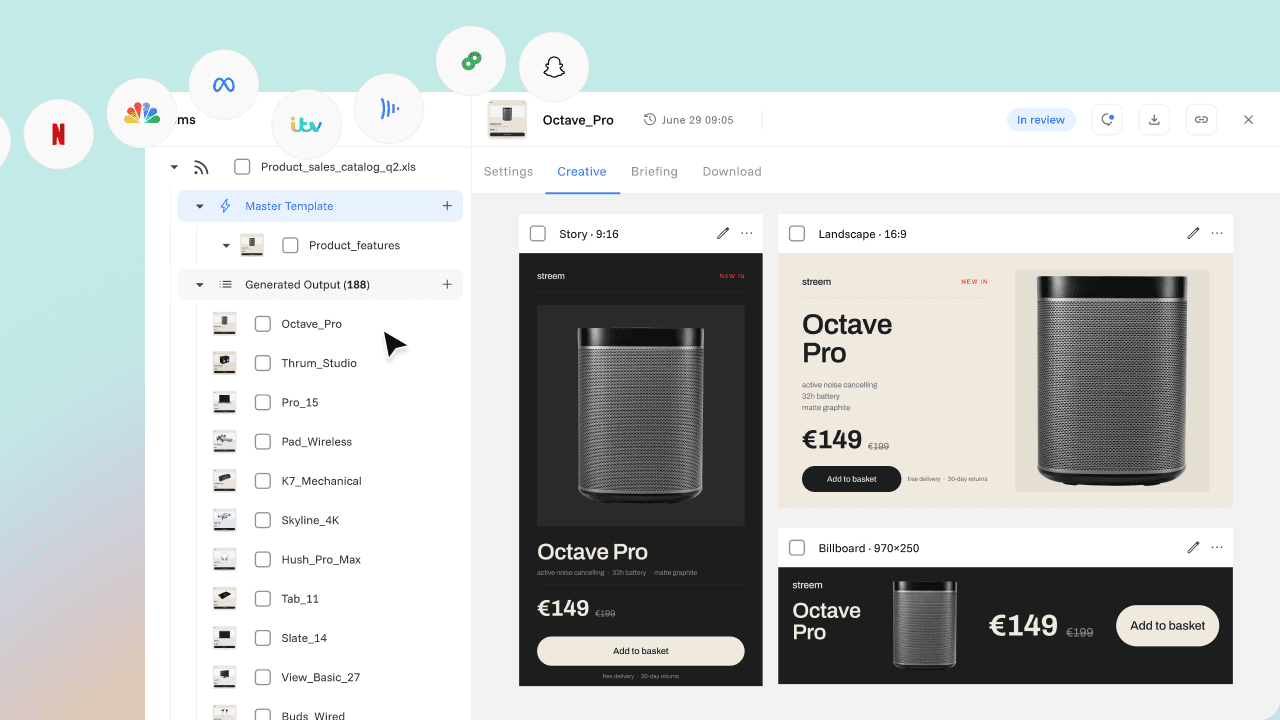
Automated Creation of Localised Assets – Generate hundreds of creative variations (by city, language, price, or offer) without repetitive manual work.
Effortless Publishing – Push campaigns live across multiple ad platforms at once, with geo-targeting and demographic filters already in place.
Task Efficiency & Speed – Replace email chains and manual uploads with a centralised, feed-based workflow.
Empowered Local Teams – Outlets with or without marketing expertise can easily review, approve, or customize campaigns within brand guidelines.
Built-in Quality Control – Optional checkpoints ensure compliance, legal accuracy, and brand consistency, even in automated setups.
The Result
Cape bridges the gap between global strategy and local execution. Campaigns feel personal and relevant to customers in their city or store, while central teams stay in control of brand, compliance, and efficiency. The result is faster, smarter, and more impactful local activation.
Key Takeaway
Local activation succeeds when campaigns balance global consistency with local relevance. Cape enables this by combining automation, personalization, compliance, and geo-targeting—turning local complexity into a competitive advantage.
Final Word
Local activation is where strategy meets execution – and where many digital teams can either succeed or fail.
From diverse local needs to workflow chaos, from compliance worries to the demand for personalisation, the challenges are significant.
However, when enabled with the right tools, these challenges become opportunities: opportunities to connect with customers on a local level, build stronger brand loyalty, and unlock new growth.
Cape was built for this exact moment – to take the complexity out of local activations and turn them into your competitive edge.
👉 Curious which setup works best for your brand? Schedule a demo with Cape, and let’s explore how to make local work for you.