Why creative infrastructure is the real bottleneck in media orchestration

For an industry built on optimisation, advertising has a glaring systemic flaw: creative infrastructure hasn’t kept pace with media optimisation. This isn’t a "collaboration" issue or a lack of "empathy" between teams; it’s systemic friction that acts as a direct constraint on the $162.4 billion programmatic market.

Category

Joe

Hollywood

Joe

Hollywood

While programmatic media functions as a high-frequency, optimised loop, creative often remains a linear outlier. This mismatch prevents brands from realising the true potential of their media spend. Not because the creative isn't "good," but because the supply chain is broken.

The feedback loop failure

Media execution has reached a state of fluidity. DSPs dynamically adjust bids and delivery using real-time signals. By contrast, creative is still largely a manual, high-cost endeavour. A "static" asset in a "dynamic" world.

As programmatic spend grew by $27.6 billion in 2025, it masked a critical inefficiency: we have built high-speed decisioning engines on top of assets trapped in a slow-motion validation cycle. When media adapts in milliseconds but creative responds in days, the strategy fragments.

The real bottleneck is creative validation, not production

The industry is currently obsessed with production AI. But generating a thousand more assets only compounds the problem if the validation remains manual. 

For high-stakes CTV and premium video, generative AI is not a silver bullet. You cannot prompt your way out of brand safety requirements, legal compliance, or technical specs. 

The "manual tax" on the creative-to-media pipeline manifests in three lethal ways:

  • Non-working media bloat: Human-heavy QA and manual spec-checking eat into budgets. This is capital that should be spent on high-end production or media reach, lost instead to administrative friction.

  • The validation lag: Media engines can swap bids instantly, but they can’t swap assets because they are waiting for a human to "green-light" a variant. Your media is optimised; your agility is not.

  • Fragmented signals: When creative data remains trapped in spreadsheets and Slack threads, it is invisible to the DSP. The "why" behind performance is lost in the gaps between teams.

From speculation to orchestration

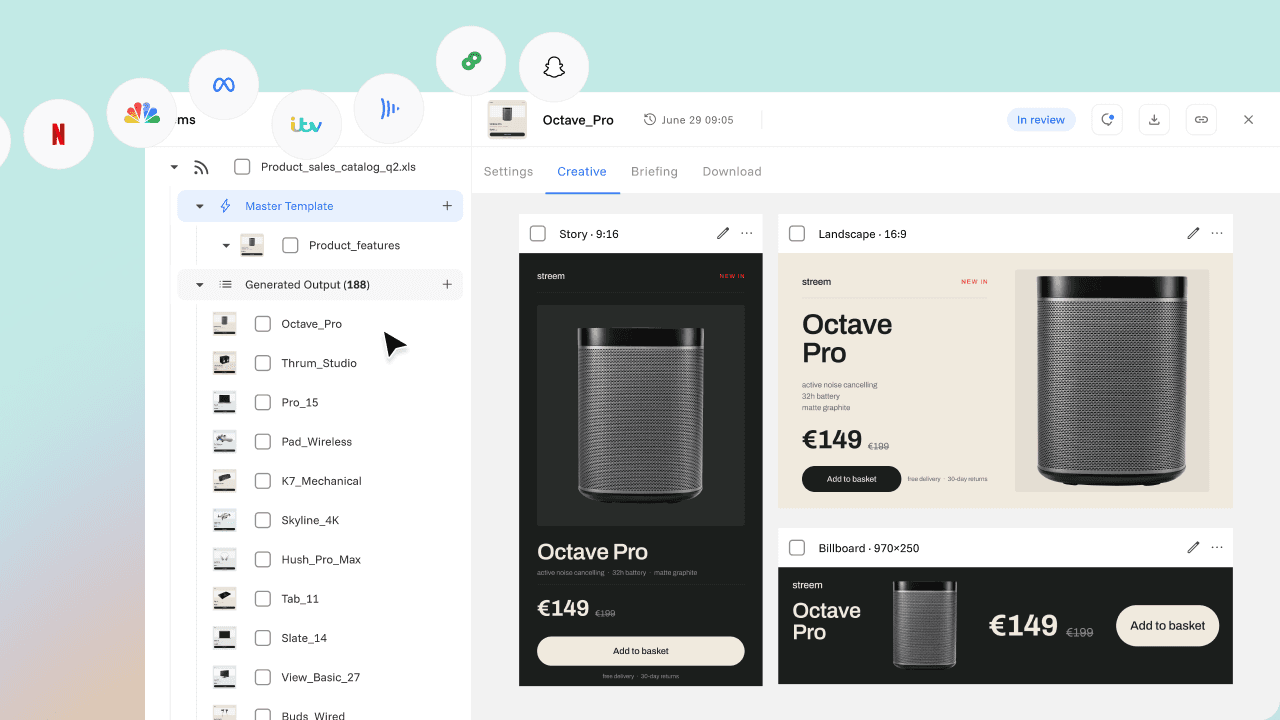
The next phase of AdTech isn't about using AI to "make more videos for free." It is about the systematisation of the creative lifecycle

We need a Creative Operating System that moves beyond the canvas and into the plumbing:

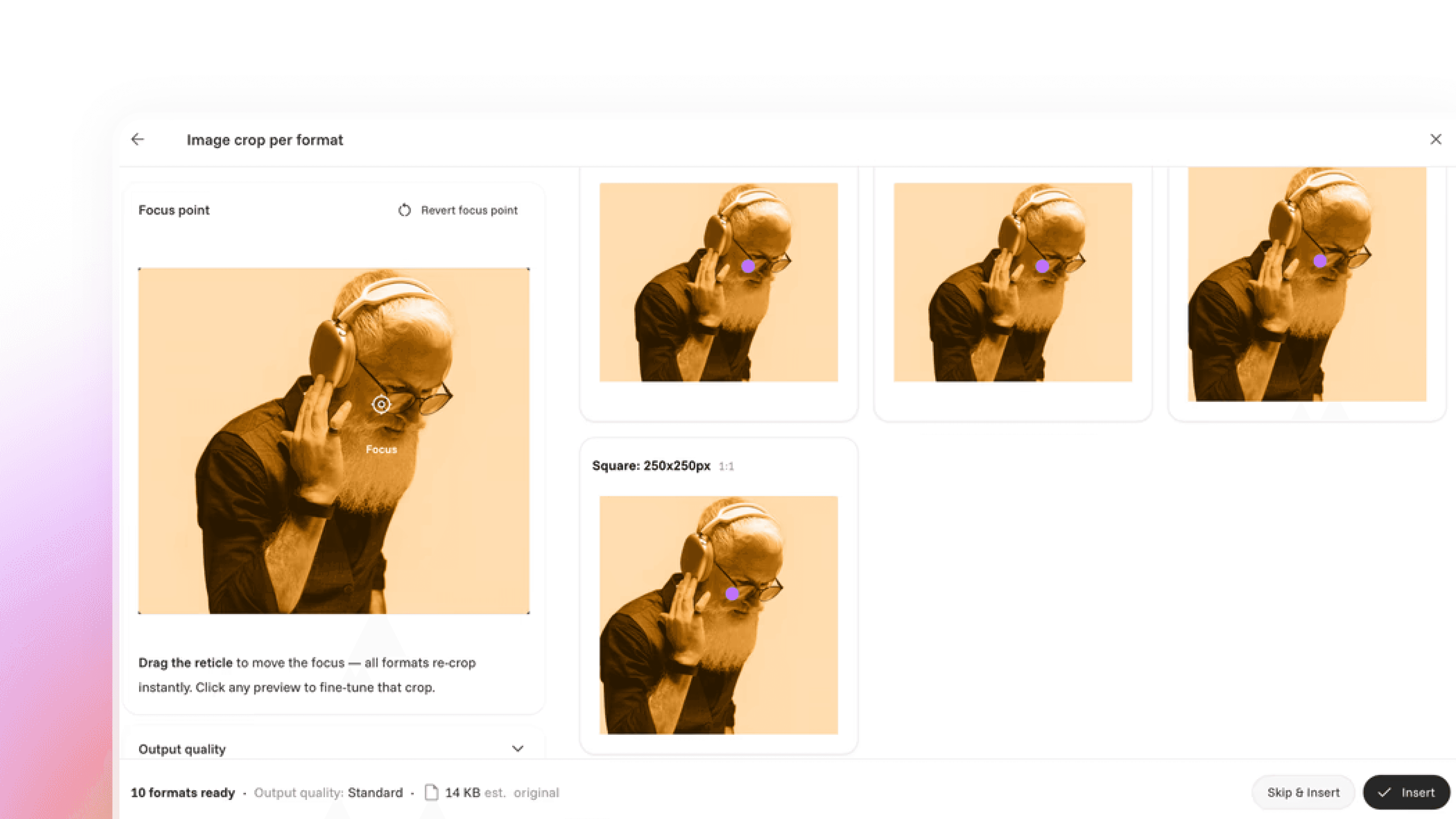
  • Structured metadata: Turning visual assets into queryable data points that a DSP can actually "read."

  • Upstream validation: Automated QA ensures assets are market-ready the moment they are rendered, not days later.

  • Agentic orchestration: Using emerging standards like MCP (Model Context Protocol) not for "autonomous creativity," but for governance. These technologies must act as the control layer, enforcing rules, maintaining integrity, and routing assets across the supply chain.

The bottom line

The companies that win in 2026 will not be those who generate the most "AI content." They will be the ones who control the flow. 

By treating the creative supply chain with the same technical rigour as the media supply chain, we stop guessing and start scaling. The point of leverage has shifted: it’s no longer about how much you can make, but how fast you can validate and activate it.

News

Stay ahead of the curve

Curious about the latest in marketing and advertising? Subscribe to our monthly Promarketers newsletter.

Jun 2, 2026

The new reality: Football marketing without FIFA rights

The 2026 World Cup is shaping up to be one of the biggest advertising moments of the decade. But for brands hoping to ride the wave of football fever, the line between “inspired by football” and “infringing on FIFA rights” has never been thinner. From unofficial sponsor campaigns to alcohol and gambling promotions, regulators and rights holders are watching closely. Here’s what marketers need to know before launching a football-themed campaign this summer.

May 26, 2026

How enterprises are actually adopting agentic AI

The shift to agentic AI isn't happening the way most vendors describe it. There's no cliff where enterprises suddenly ditch their AI wrappers and commit to full agent orchestration. Instead, they're moving through layers, testing frameworks with one team, keeping production systems stable on another.

May 26, 2026

Real-time ads in a regulated world

Understanding the real challenges of gambling & sports betting advertising in the US

May 8, 2026

Brazil votes. Cape.io already knows what that means.

Cape.io has powered Brazil's general elections for four editions, managing 500 channels and 155 million voters. Here's how we do it.

Apr 23, 2026

Agentic AI vs AI wrappers vs custom AI: How to choose your path

You're about to spend $500K on an AI initiative. You've got 3 options on the table, and they'll lead you to wildly different places. Pick wrong, and you're rebuilding in 18 months. Pick right, and you'll have a system that scales, costs less to maintain, and actually does what executives promised. The choice is between wrapping existing AI models, building custom AI solutions from scratch, or going agentic. Most teams don't understand the real trade-offs until they're locked into the wrong one.

Mar 30, 2026

Operationalizing AI in advertising: Why it must be embedded, not bolted on

Operationalizing AI in advertising isn’t about adding another tool to your stack. It’s about embedding intelligence into the systems that govern creative production, compliance, and delivery, so automation scales without creating more operational friction.

Mar 18, 2026

No more chocolate at breakfast? Navigating the new LHF ad rules this Easter

As ad compliance requirements evolve in 2026, UK confectionery brands face new restrictions on less healthy food (LHF) advertising. With the January 5 watershed now in effect, ad quality assurance systems must validate timing, placement, and product identifiability to avoid clearance failures this Easter season.

Mar 16, 2026

The future of inclusion: How Cape.io powered Virgin Media Television’s fully accessible ad break during the Men’s Six Nations

As Channel 4’s closed-captioning mandate came into effect in March 2026, Cape.io partnered with Virgin Media Television, Omnicom Media Group and VoiceBox to deliver a truly accessible ad break during the Guinness Men’s Six Nations. More than ad compliance, this moment proved that accessibility can operate at the highest level of live sports broadcasting.

Feb 4, 2026

The guardrails of growth: Why creative intelligence demands compliance

Generative AI can produce thousands of creative variants, but most compliance systems are still manual, fragmented, and reactive, unable to keep pace with today’s velocity. To move fast without breaking things, the industry needs a new approach: real-time verification, programmatic enforcement, and end-to-end visibility. Embedded inside the stack, not bolted on at the end.

Jan 9, 2026

Every Word Counts - Cape Closed Captioning

Captions have become more than an accessibility tool, they’re now essential for how we watch, understand, and engage with content. Clear, inclusive, and attention-smart, captioning helps every story reach everyone.

Get in touch

Let us show you what Cape.io can do.

Intelligent Campaign Automation

Cape.io connects up your team, DAM, ad servers, DSPs, tools, and more, so you don’t need to rip and replace.

Copyright © 2026 Cape.io all rights reserved

English

Get in touch

Let us show you what Cape.io can do.

Intelligent Campaign Automation

Cape.io connects up your team, DAM, ad servers, DSPs, tools, and more, so you don’t need to rip and replace.

Copyright © 2026 Cape.io all rights reserved

English

Get in touch

Let us show you what Cape.io can do.

Intelligent Campaign Automation

Cape.io connects up your team, DAM, ad servers, DSPs, tools, and more, so you don’t need to rip and replace.

Copyright © 2026 Cape.io all rights reserved

English