Cape.io arbeitet jetzt mit YouTube, Facebook und Instagram zusammen.

Soziale Medien, schneller.

Author

Cape.io

Author

Cape.io

Dieser Blogbeitrag wurde ursprünglich auf der Peach-Website veröffentlicht. Erfahren Sie mehr über das Rebranding von Peach zu Cape.io.

Wir freuen uns, neue Funktionen anzukündigen, die darauf abzielen, Online-Video-Workflows radikal zu verbessern:

  1. Upload, automatische Qualitätskontrolle (QC) und Dateilieferung von neuen Seitenverhältnissen — nicht nur 16:9.

  2. Automatisches Hochladen von Video-Werbungen in Ihren YouTube-Markenkonto, um Kampagnen über YouTube und viele andere Google-Produkte zu aktivieren.

  3. Automatisches Hochladen von Video-Werbungen in Ihre Facebook-Werbeverwaltung Bibliothek, um Videokampagnen über Facebook und Instagram zu aktivieren.

Wie Branchenprofis wissen, unterscheidet sich der Prozess der Bereitstellung von Video-Werbungen für Kampagnen in Online-Video-Werbensystemen in mehreren Aspekten vom herkömmlichen linearen Fernsehen. Zum Beispiel verschiebt die Vielfalt an Bildschirmformen und -größen der Geräte, auf denen Menschen Videoinhalte konsumieren, die Werbemöglichkeit von der traditionellen 16:9 Landschaftarmen kreativen Leinwand zu vielen weiteren Seitenverhältnissen. Darüber hinaus werden die Kampagnenmanagement-Tools von Online-Werbeplattformen zunehmend als Selbstbedienung für den Käufer konzipiert, was Auswirkungen auf den Workflow und die Automatisierung hat.

Diese Unterschiede führen zu zunehmend komplizierten Workflows für Teams, die damit beauftragt sind, Werbung auf immer mehr Bildschirme zu bringen. Die neuen Funktionen von Cape Advanced TV sparen Aufwand und gewährleisten gleichzeitig perfekte Qualität, jedes Mal.


Wählen Sie einfach Social-Media-Kanäle neben Ihren anderen Zielen aus und laden Sie Ihre Dateien hoch. Ihre Videos werden automatisch transkodiert, geprüft und bereitgestellt, um in Ihrem YouTube-Kanal oder der Facebook-Bibliothek veröffentlicht zu werden.

Sie wissen, wo sich Ihre endgültigen Assets befinden. Sie behalten die Kontrolle über Freigaben. Sie wissen, dass die Dateien für jedes Ziel in der richtigen Spezifikation vorliegen. Und da wir professionelle Transkodierungstools verwenden, wissen Sie, dass Ihre sozialen Werbungen bereit sind, veröffentlicht zu werden, pünktlich und jedes Mal.

  • Keine unsicheren E-Mails oder Passwort-Sharing mehr

  • Keine mehrfachen Anmeldungen mehr, um Dateien herunter- und hochzuladen

  • Keine Last-Minute-Qualitätspaniken oder Kampagnenverzögerungen mehr

Seitenverhältnisse

Peach akzeptiert jetzt H264 MP4 (PAL) Dateien für Online-Video-Ziele im folgenden Seitenverhältnisse: 

  • 16:9 1920 x 1080 (Querformat)

  • 1:1 1080 x 1080 (Quadrat)

  • 9:16 1080 x 1920 (Hochformat)

  • 3:4 1080 x 1440 (Hochformat)

  • 4:5 1536 x 1920 (Hochformat)

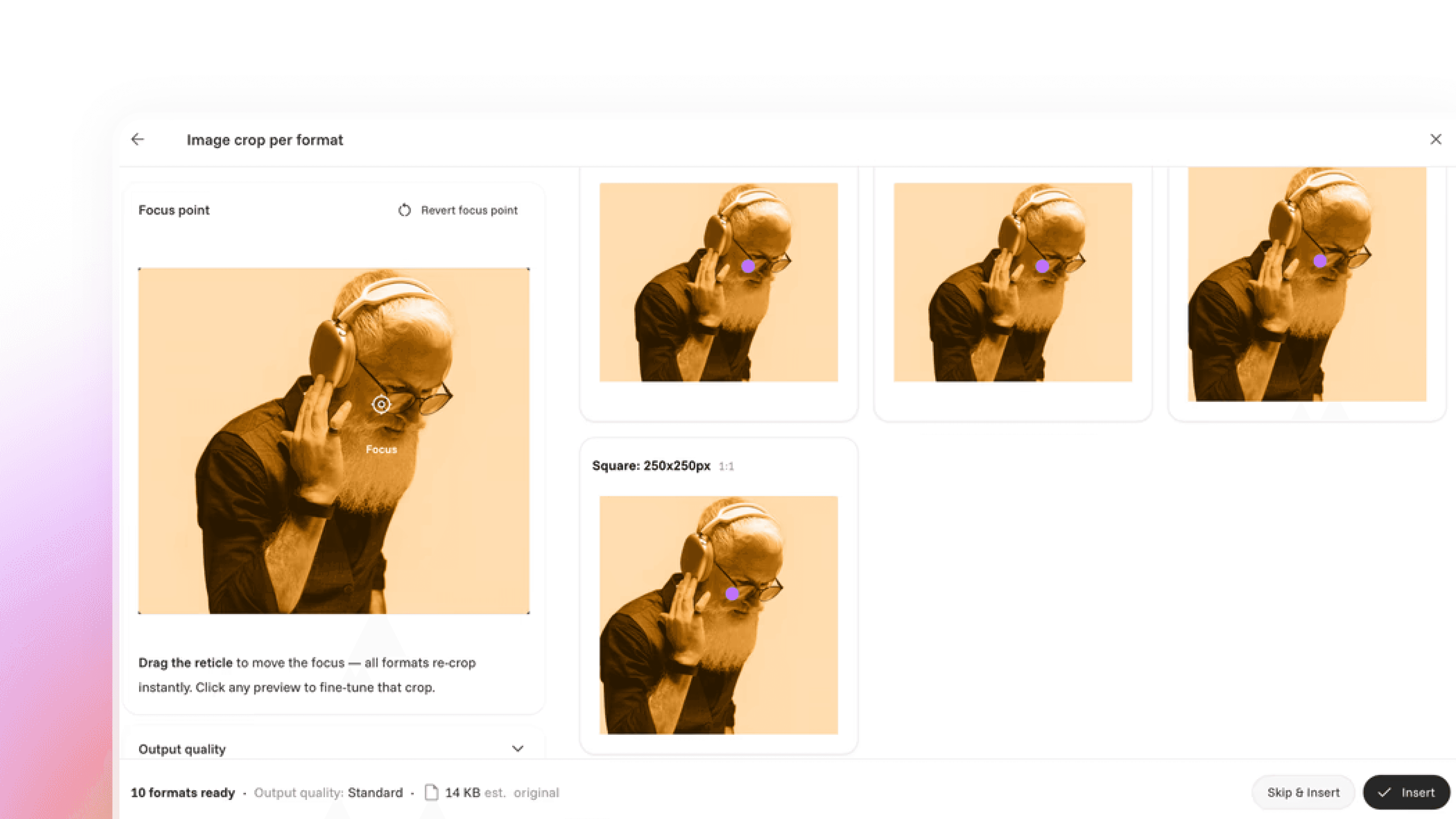
Der Videokonsum auf mobilen Geräten nimmt einen großen (und wachsenden) Anteil der Medienzeit ein. Dort, wo die Blicke hingehen, folgt die Werbung: In den letzten Jahren haben Verlage und Plattformen neue Anzeigenformate verfügbar gemacht, um die Aufmerksamkeit der Benutzer zu gewinnen. Wenn man durch Social-Media-Feeds scrollt, sind mobile Geräte typischerweise im Hochformat. 16:9 (also Querformat) Videos wirken klein, wenn das Telefon im Hochformat gehalten wird. Aus diesem Grund wird der 16:9-Inhalt häufig bearbeitet und zunehmend in diesen neuen hochformatfreundlichen Seitenverhältnissen erstellt.

Bis heute war der Prozess, diesen Werbeinhalt in soziale Kanäle zu bringen, eigenständig, ohne die Vorteile von kooperativer Beschaffung, automatisierter Qualitätskontrolle und zentralisierter Dateilieferung.

Jetzt kann Cape Advanced TV Werbevideos in den benötigten Seitenverhältnissen einlesen, automatisch auf Qualität prüfen und liefern. Besuchen Sie unseren Beitrag über Social-Media-Seitenverhältnisse, um sicherzustellen, dass Sie Ihre Werbung für jede Plattform optimieren.

YouTube, Facebook und Instagram

Sie können jetzt Dateien mit Peach direkt in Ihren YouTube-Markenkonto und Ihre Facebook Werbeverwaltungs-Bibliothek liefern. Dies bringt die Kernvorteile von Peach in einen großen und wachsenden Strom von Aktivitäten.

  • Einfache Beschaffung von Dateien zwischen Teams ohne Aufwand und Last-Minute-Panik.

  • Sicherer Dateitransfer. Einige unserer Marken haben Sicherheitsüberprüfungen, und deren Inhalt sollte nicht per E-Mail-Anhang verschoben werden. Dies ist eine sichere Alternative.

  • Auditierbarer Dateitransfer. Marken und Agenturen können jetzt verfolgen, ob der Inhalt auf YouTube und Facebook verwendet wird.

  • In ein System anmelden: kein Herunter- und Hochladen mehr.

Die durch die IMD Cloud gelieferten Videos werden nicht live gepostet oder für die Öffentlichkeit zugänglich gemacht. Sie behalten die Kontrolle darüber, wann und wo Ihre Anzeigen über Ihre bestehenden YouTube/Facebook-Kampagnenmanagement-Tools auftauchen. 

Senden an soziale Netzwerke mit Cape Advanced TV

Der Workflow ist beruhigend vertraut:

  1. Erstellen Sie Ihre Bestellung und Version

  2. Laden Sie die Datei hoch und durchlaufen Sie die automatische Qualitätskontrolle

  3. Wählen Sie Ihr Marken-YouTube oder Facebook & Instagram Ziel

  4. Brand Manager oder Digital Media Agentur wird benachrichtigt, um den Upload auf die sozialen Plattformen zu ermöglichen

  5. Inhalt kommt in Ihrem Markenkanal und/oder der Werbebibliothek an, bereit, zur Kampagne hinzugefügt zu werden

Für diejenigen, die mit unseren linearen Broadcast-Arbeitsabläufen vertraut sind, besteht der Hauptunterschied darin, dass Sie jetzt mit den Betreibern von Kampagnenmanagement-Tools auf der "Nachfrageseite" (d. h. Konten von Digital Media Agenturen und Video-Werbungsteams oder Social Media Agenturen) zusammenarbeiten und Dateien verfügbar machen, anstatt auf der "Angebotsseite" (d. h. Sendeverkehrsteams).

Wir freuen uns, die Prozesse für alle zu vereinfachen, die Inhalte an soziale Medien liefern. Weitere Details und Empfehlungen zu den von Facebook, Instagram und YouTube akzeptierten Seitenverhältnissen finden Sie in diesem Blogbeitrag.

Und wenn Sie über unsere neuen sozialen Versandmöglichkeiten sprechen möchten oder loslegen wollen, kontaktieren Sie uns.

Neuigkeiten

Sei der Konkurrenz immer einen Schritt voraus

Neugierig auf die neuesten Trends im Marketing und Werbung? Abonniere unseren monatlichen Promarketers-Newsletter und bleibe informiert.

30.03.2026

Operationalizing AI in advertising: Why it must be embedded, not bolted on

Operationalizing AI in advertising isn’t about adding another tool to your stack. It’s about embedding intelligence into the systems that govern creative production, compliance, and delivery, so automation scales without creating more operational friction.

18.03.2026

No more chocolate at breakfast? Navigating the new LHF ad rules this Easter

As ad compliance requirements evolve in 2026, UK confectionery brands face new restrictions on less healthy food (LHF) advertising. With the January 5 watershed now in effect, ad quality assurance systems must validate timing, placement, and product identifiability to avoid clearance failures this Easter season.

16.03.2026

The future of inclusion: How Cape.io powered Virgin Media Television’s fully accessible ad break during the Men’s Six Nations

As Channel 4’s closed-captioning mandate came into effect in March 2026, Cape.io partnered with Virgin Media Television, Omnicom Media Group and VoiceBox to deliver a truly accessible ad break during the Guinness Men’s Six Nations. More than ad compliance, this moment proved that accessibility can operate at the highest level of live sports broadcasting.

27.02.2026

Navigating Channel 4’s 2026 closed caption mandate

As ad compliance requirements tighten across the UK and Europe, closed captioning has evolved from an accessibility checkbox to a strategic necessity. Whether you're managing CTV campaigns or social media creative, automated ad testing for caption quality is no longer optional - it's fundamental to reaching today's fragmented, multi-screen audiences.

The advertising landscape is facing a seismic shift. By March 1, Channel 4 will become the first UK broadcaster to mandate closed captions across all advertising - including linear TV, streaming, and sponsorships.

The mandate is  a redefined standard for global inclusivity. Here is everything you need to know about the new mandate and how to stay ahead of the curve.

26.02.2026

One platform, many realities: How creative automation platforms resolve the global vs. local tension

Scaling global marketing without losing local relevance requires more than brand guidelines and templates - it requires a creative automation platform designed for both global control and local flexibility. Most systems optimize for standardization, but scaling ad creative production across markets demands architecture that enables creative variation and adaptation by local experts without fragmenting brand governance.

Many global advertisers are chasing the same ideal: scale without losing relevance.

Consistency without uniformity.
Efficiency without bureaucracy.

It sounds simple. In practice, it’s one of the hardest tensions to resolve in modern marketing.

The global vs. local challenge isn’t new, but it’s becoming more urgent. As brands expand across markets, channels, and cultures, the question is no longer whether you should scale globally, but how you do so without erasing the nuance that makes marketing effective in the first place.

Everyone is looking for this balance. Very few get it right.

11.02.2026

EPTVI Initiative launches Stage Two to help programmatic TV scale across Europe’s largest advertising markets

Broadcasters, streamers, agencies and ad tech companies including Google Ad Manager, Equativ, Adform, LiveRamp, The Trade Desk, FreeWheel and Cape.io begin work on practical solutions to reduce complexity and speed up adoption.

Neuigkeiten

Sei der Konkurrenz immer einen Schritt voraus

Neugierig auf die neuesten Trends im Marketing und Werbung? Abonniere unseren monatlichen Promarketers-Newsletter und bleibe informiert.

30.03.2026

Operationalizing AI in advertising: Why it must be embedded, not bolted on

Operationalizing AI in advertising isn’t about adding another tool to your stack. It’s about embedding intelligence into the systems that govern creative production, compliance, and delivery, so automation scales without creating more operational friction.

18.03.2026

No more chocolate at breakfast? Navigating the new LHF ad rules this Easter

As ad compliance requirements evolve in 2026, UK confectionery brands face new restrictions on less healthy food (LHF) advertising. With the January 5 watershed now in effect, ad quality assurance systems must validate timing, placement, and product identifiability to avoid clearance failures this Easter season.

16.03.2026

The future of inclusion: How Cape.io powered Virgin Media Television’s fully accessible ad break during the Men’s Six Nations

As Channel 4’s closed-captioning mandate came into effect in March 2026, Cape.io partnered with Virgin Media Television, Omnicom Media Group and VoiceBox to deliver a truly accessible ad break during the Guinness Men’s Six Nations. More than ad compliance, this moment proved that accessibility can operate at the highest level of live sports broadcasting.

27.02.2026

Navigating Channel 4’s 2026 closed caption mandate

As ad compliance requirements tighten across the UK and Europe, closed captioning has evolved from an accessibility checkbox to a strategic necessity. Whether you're managing CTV campaigns or social media creative, automated ad testing for caption quality is no longer optional - it's fundamental to reaching today's fragmented, multi-screen audiences.

The advertising landscape is facing a seismic shift. By March 1, Channel 4 will become the first UK broadcaster to mandate closed captions across all advertising - including linear TV, streaming, and sponsorships.

The mandate is  a redefined standard for global inclusivity. Here is everything you need to know about the new mandate and how to stay ahead of the curve.

26.02.2026

One platform, many realities: How creative automation platforms resolve the global vs. local tension

Scaling global marketing without losing local relevance requires more than brand guidelines and templates - it requires a creative automation platform designed for both global control and local flexibility. Most systems optimize for standardization, but scaling ad creative production across markets demands architecture that enables creative variation and adaptation by local experts without fragmenting brand governance.

Many global advertisers are chasing the same ideal: scale without losing relevance.

Consistency without uniformity.
Efficiency without bureaucracy.

It sounds simple. In practice, it’s one of the hardest tensions to resolve in modern marketing.

The global vs. local challenge isn’t new, but it’s becoming more urgent. As brands expand across markets, channels, and cultures, the question is no longer whether you should scale globally, but how you do so without erasing the nuance that makes marketing effective in the first place.

Everyone is looking for this balance. Very few get it right.

11.02.2026

EPTVI Initiative launches Stage Two to help programmatic TV scale across Europe’s largest advertising markets

Broadcasters, streamers, agencies and ad tech companies including Google Ad Manager, Equativ, Adform, LiveRamp, The Trade Desk, FreeWheel and Cape.io begin work on practical solutions to reduce complexity and speed up adoption.

Neuigkeiten

Sei der Konkurrenz immer einen Schritt voraus

Neugierig auf die neuesten Trends im Marketing und Werbung? Abonniere unseren monatlichen Promarketers-Newsletter und bleibe informiert.

30.03.2026

Operationalizing AI in advertising: Why it must be embedded, not bolted on

Operationalizing AI in advertising isn’t about adding another tool to your stack. It’s about embedding intelligence into the systems that govern creative production, compliance, and delivery, so automation scales without creating more operational friction.

18.03.2026

No more chocolate at breakfast? Navigating the new LHF ad rules this Easter

As ad compliance requirements evolve in 2026, UK confectionery brands face new restrictions on less healthy food (LHF) advertising. With the January 5 watershed now in effect, ad quality assurance systems must validate timing, placement, and product identifiability to avoid clearance failures this Easter season.

16.03.2026

The future of inclusion: How Cape.io powered Virgin Media Television’s fully accessible ad break during the Men’s Six Nations

As Channel 4’s closed-captioning mandate came into effect in March 2026, Cape.io partnered with Virgin Media Television, Omnicom Media Group and VoiceBox to deliver a truly accessible ad break during the Guinness Men’s Six Nations. More than ad compliance, this moment proved that accessibility can operate at the highest level of live sports broadcasting.

27.02.2026

Navigating Channel 4’s 2026 closed caption mandate

As ad compliance requirements tighten across the UK and Europe, closed captioning has evolved from an accessibility checkbox to a strategic necessity. Whether you're managing CTV campaigns or social media creative, automated ad testing for caption quality is no longer optional - it's fundamental to reaching today's fragmented, multi-screen audiences.

The advertising landscape is facing a seismic shift. By March 1, Channel 4 will become the first UK broadcaster to mandate closed captions across all advertising - including linear TV, streaming, and sponsorships.

The mandate is  a redefined standard for global inclusivity. Here is everything you need to know about the new mandate and how to stay ahead of the curve.

26.02.2026

One platform, many realities: How creative automation platforms resolve the global vs. local tension

Scaling global marketing without losing local relevance requires more than brand guidelines and templates - it requires a creative automation platform designed for both global control and local flexibility. Most systems optimize for standardization, but scaling ad creative production across markets demands architecture that enables creative variation and adaptation by local experts without fragmenting brand governance.

Many global advertisers are chasing the same ideal: scale without losing relevance.

Consistency without uniformity.
Efficiency without bureaucracy.

It sounds simple. In practice, it’s one of the hardest tensions to resolve in modern marketing.

The global vs. local challenge isn’t new, but it’s becoming more urgent. As brands expand across markets, channels, and cultures, the question is no longer whether you should scale globally, but how you do so without erasing the nuance that makes marketing effective in the first place.

Everyone is looking for this balance. Very few get it right.

11.02.2026

EPTVI Initiative launches Stage Two to help programmatic TV scale across Europe’s largest advertising markets

Broadcasters, streamers, agencies and ad tech companies including Google Ad Manager, Equativ, Adform, LiveRamp, The Trade Desk, FreeWheel and Cape.io begin work on practical solutions to reduce complexity and speed up adoption.

Kontakt aufnehmen

Lassen Sie uns Ihnen zeigen, was Cape.io leisten kann.

Intelligente Kampagnenautomatisierung

Cape.io vernetzt Ihr Team, DAM, Ad-Server, DSPs, Tools und mehr, sodass Sie nichts herausreißen oder ersetzen müssen.

Copyright © 2025 Cape.io alle Rechte vorbehalten

Deutsch

Kontakt aufnehmen

Lassen Sie uns Ihnen zeigen, was Cape.io leisten kann.

Intelligente Kampagnenautomatisierung

Cape.io vernetzt Ihr Team, DAM, Ad-Server, DSPs, Tools und mehr, sodass Sie nichts herausreißen oder ersetzen müssen.

Copyright © 2025 Cape.io alle Rechte vorbehalten

Deutsch

Kontakt aufnehmen

Lassen Sie uns Ihnen zeigen, was Cape.io leisten kann.

Intelligente Kampagnenautomatisierung

Cape.io vernetzt Ihr Team, DAM, Ad-Server, DSPs, Tools und mehr, sodass Sie nichts herausreißen oder ersetzen müssen.

Copyright © 2025 Cape.io alle Rechte vorbehalten

Deutsch